
The 1930s were a somewhat less genial time to be queer in the United States than the roaring twenties, but both decades were better than the next half century, when the anti-queer backlash had been formalized into police actions and production codes which wove homophobia, misogyny, and sexual repression into the very fabric of popular entertainment. (They tried to impose a production code on burlesque, too, but it didn’t last very long.) Performers who were out and proud in pre-war times found themselves forced back into the closet in a painfully repressed post-war America.
Of course, “better than a worse time” was still far from good, and it’s certain that there were many in this era who preferred to keep their orientation as private as possible. Those who did so successfully could not, for obvious reasons, be included in this post. To them, I raise a glass, with a wish that they could have been celebrated herein as themselves.
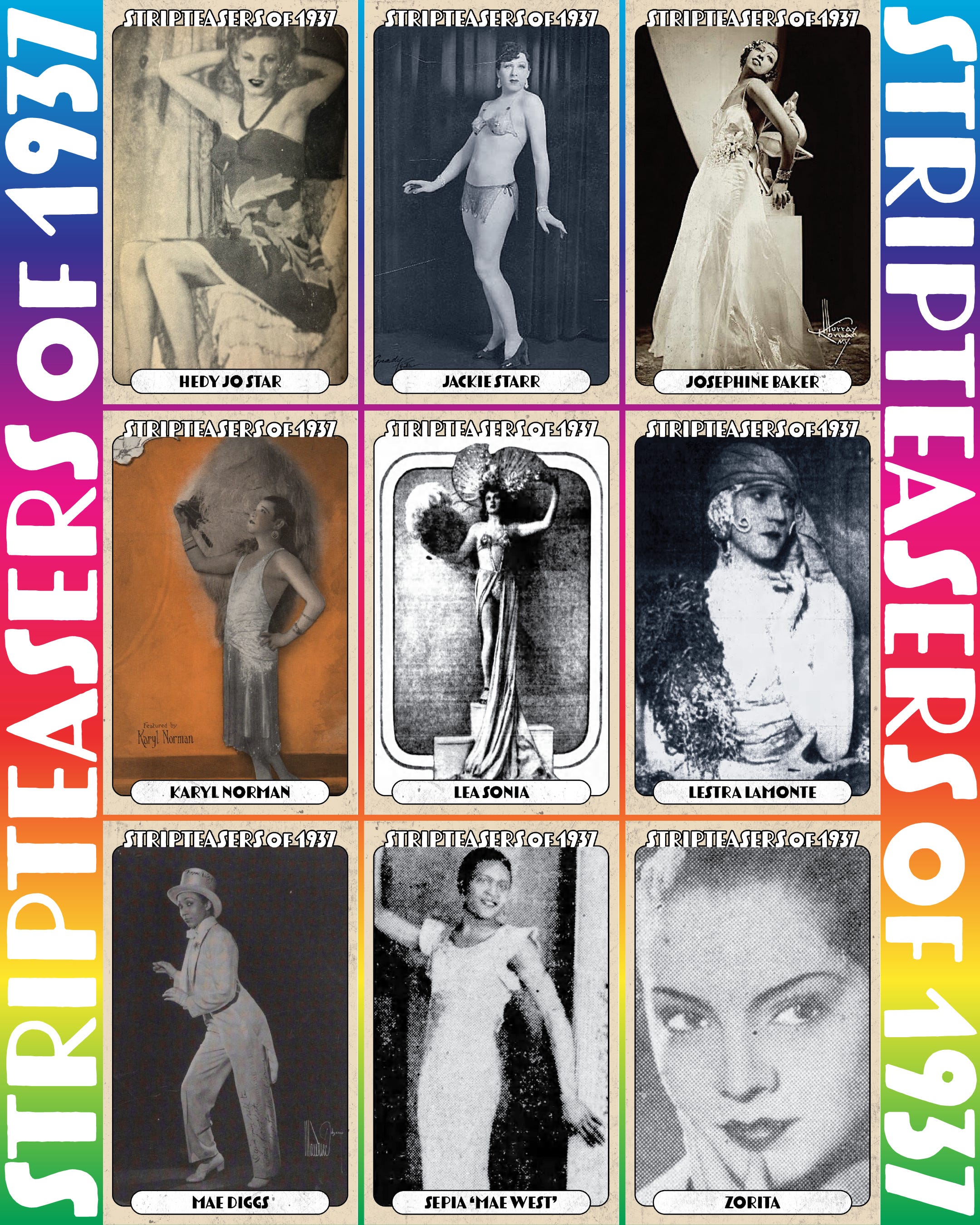
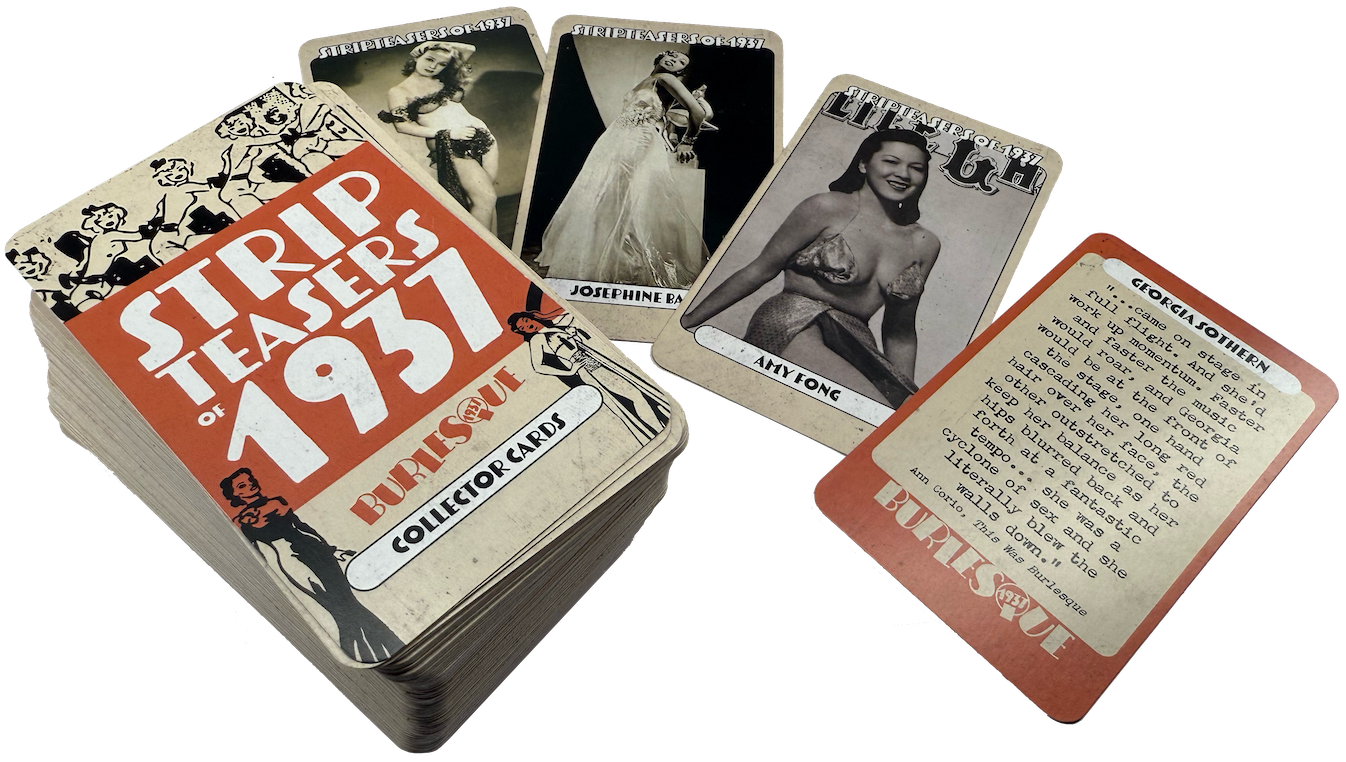
This selection from the Stripteasers of 1937 Collector Card deck includes some who were out, some who were rumored, and anyone who performed in drag. The drag performers may or may not have identified as queer themselves, but their performances are part of queer history.
If you know of any performers I missed, please let me know. How can you celebrate Queer Stripteasers now? By going to see one of the many prideful burlesque shows happening this month. Happy Pride!
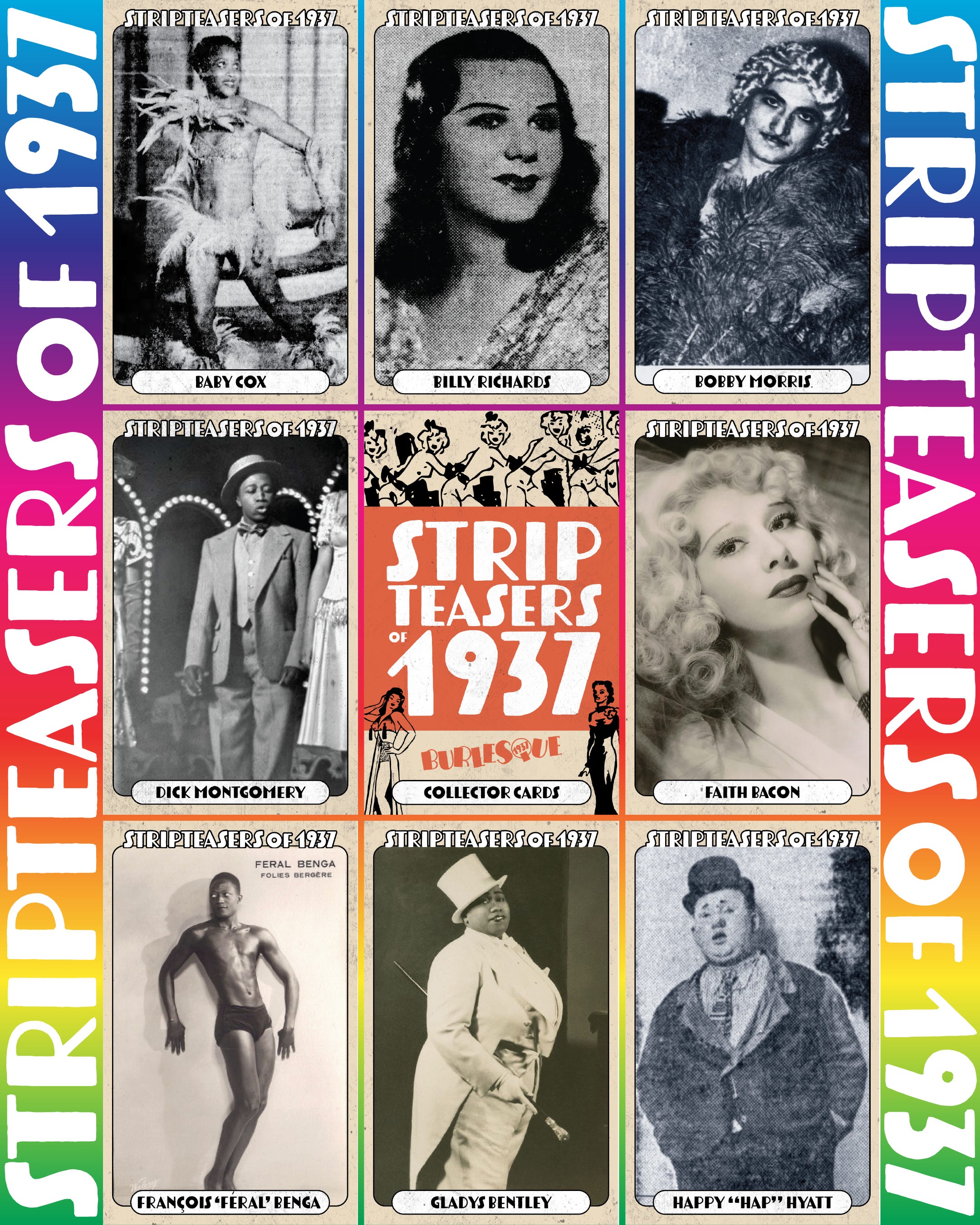
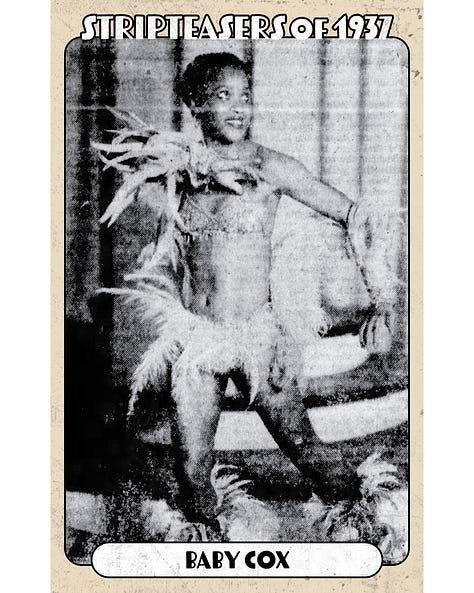
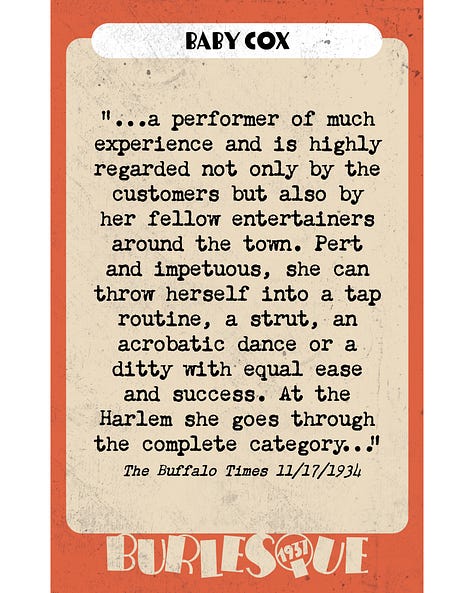
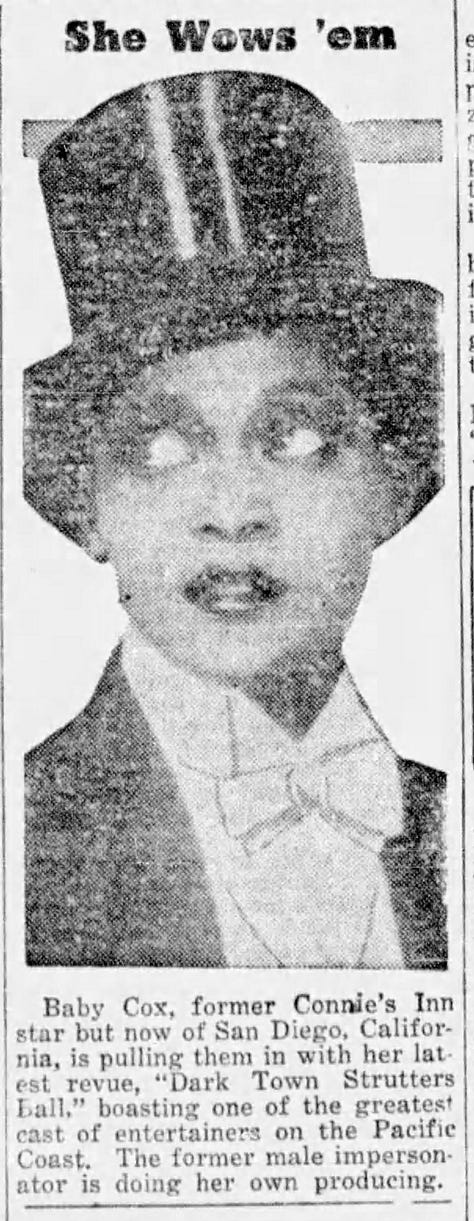
“Connie’s Inn star who could clock Hollywood stars in her nifty male attire.” - The Afro American 3/18/1933. Baby Cox performed in drag early in her career, and also appears on several records with Duke Ellington.
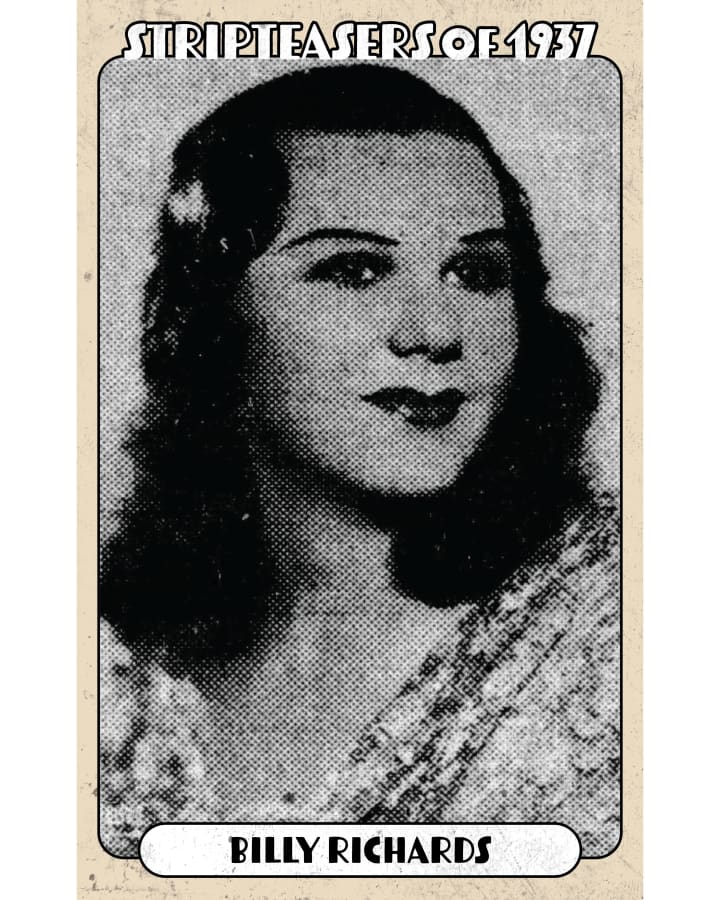
“Billie Richards, female impersonator, still has them all guessing. Some people are difficult to convince. Is it really a man? What do YOU think? How tall are you? What price were butter and eggs yesterday in Indianapolis? I’ll tell you: Billie Richards has the reputation of being the most beautiful woman in Reno.” -Nevada State Journal 12/4/1937
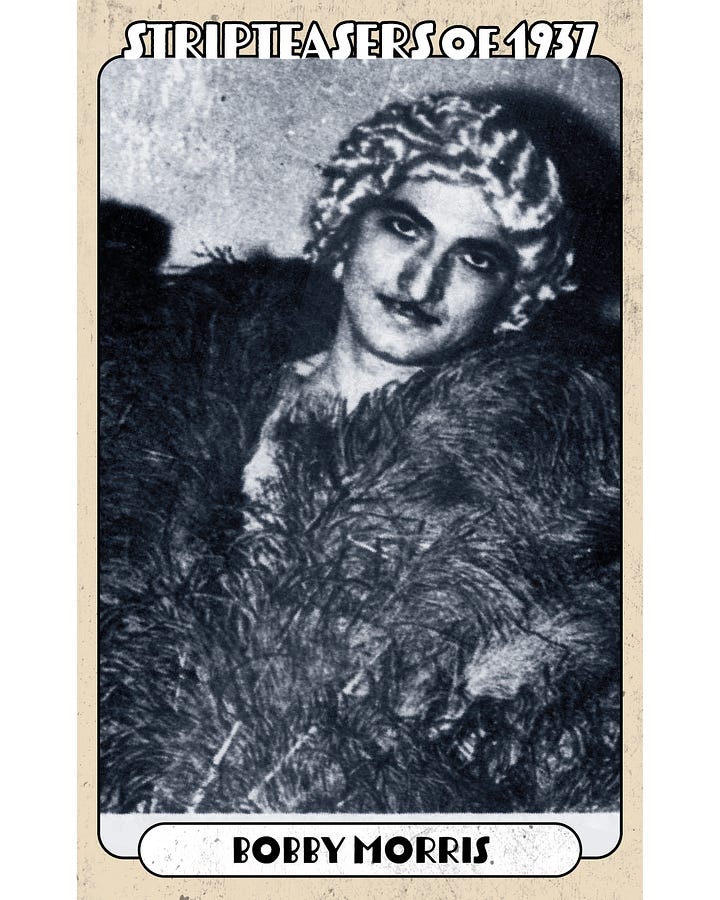
“What interests me is how Morris invited the queer world that was erupting into the public consciousness into the burlesque houses in which he worked, through his combination of drag, burlesque comedy, and striptease, a combination which apparently was conceived as new to critics of the time.” -from the chapter about Morris in Kalle Westerling’s doctoral dissertation Gay Boy and Playboy Reviews: Constructing U.S. Queer Collectivities in Networks of Peripatetic Burlesque and Nightclub Drag Performers, 1933-1939
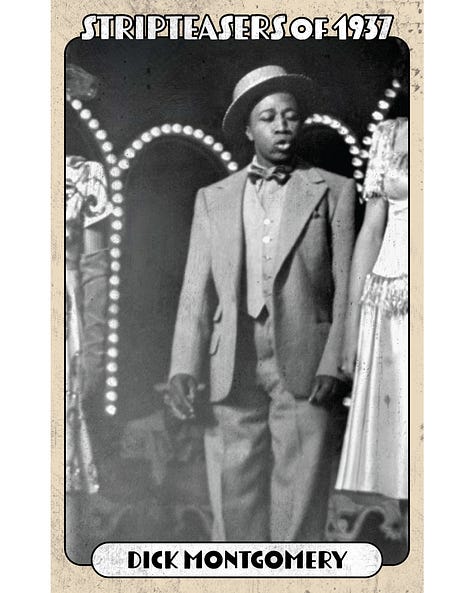
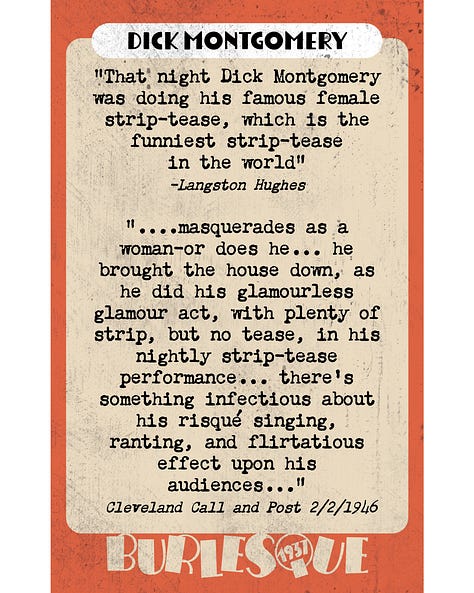
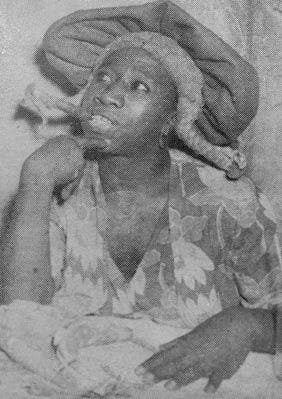
“DICK, you know, masquerades as a woman-or does he, and also quipped that, losing the Carmen role, they cast him in a character part as a man.... anyhow, he brought the house down, as he did his glamourless glamour act, with plenty of strip, but no tease, in his nightly strip-tease performance..... What isn’t generally known, is that Dick Montgomery actually does have a remarkably well-trained singing voice, with excellent technique, and that at one time he had a finer imitation of a woman’s voice than some concert singers boast to call their own... He is reputed to have been a sensational child soprano, received his early training then.....” - Call and Post 2/2/1946
For someone whose career lasted over a decade, Montgomery was remarkably difficult to find pictures of. The only photo found of Montgomery in drag was the low-resolution one from Wikipedia included above. The photo on the card is from his short stint in Carmen Jones.
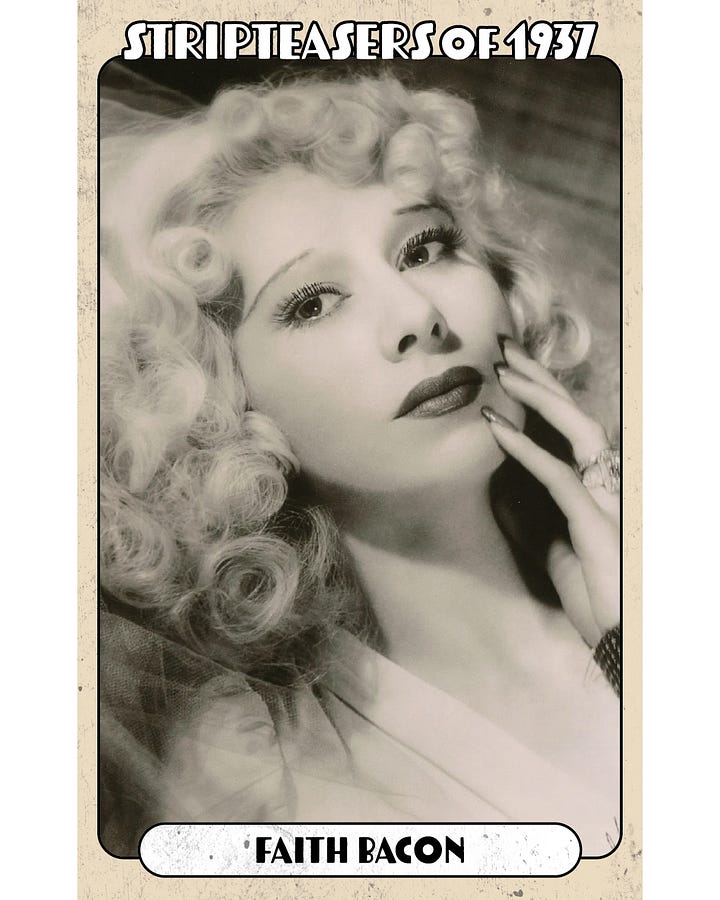
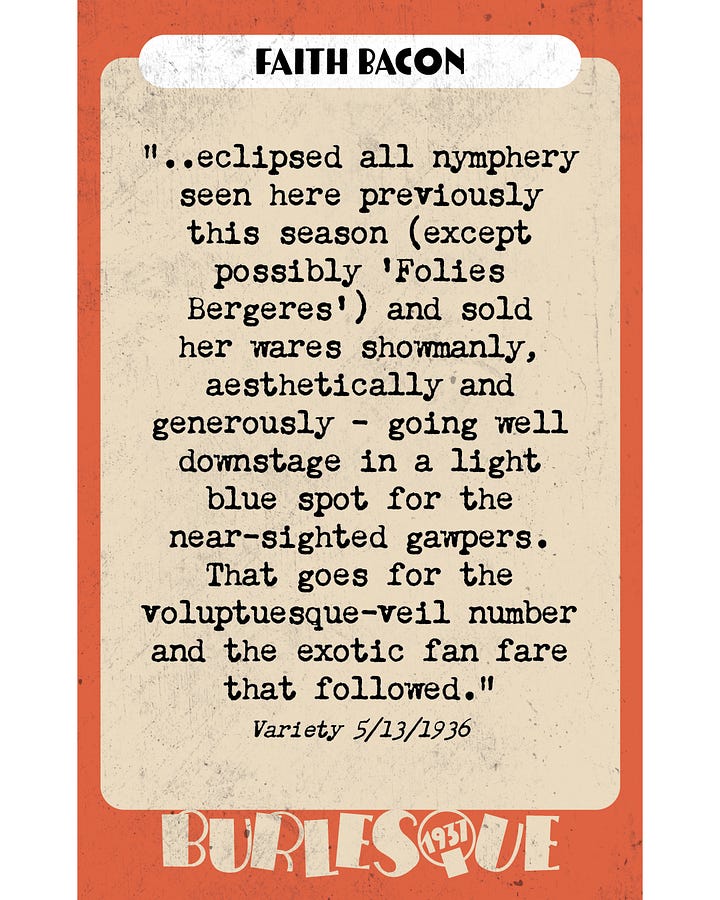
“There would be sightings, whisperings and reports of Faith seen with . . . visiting with . . . another woman. It is possible this was Margie Koch, her secretary-chauffer-manager, who was not a girlfriend but an ‘admirer’… [Bacon] ‘had lesbian lovers wherever they traveled.” — from Feuding Fan Dancers: Faith Bacon, Sally Rand, and the Golden Age of the Showgirl by Leslie Zemeckis
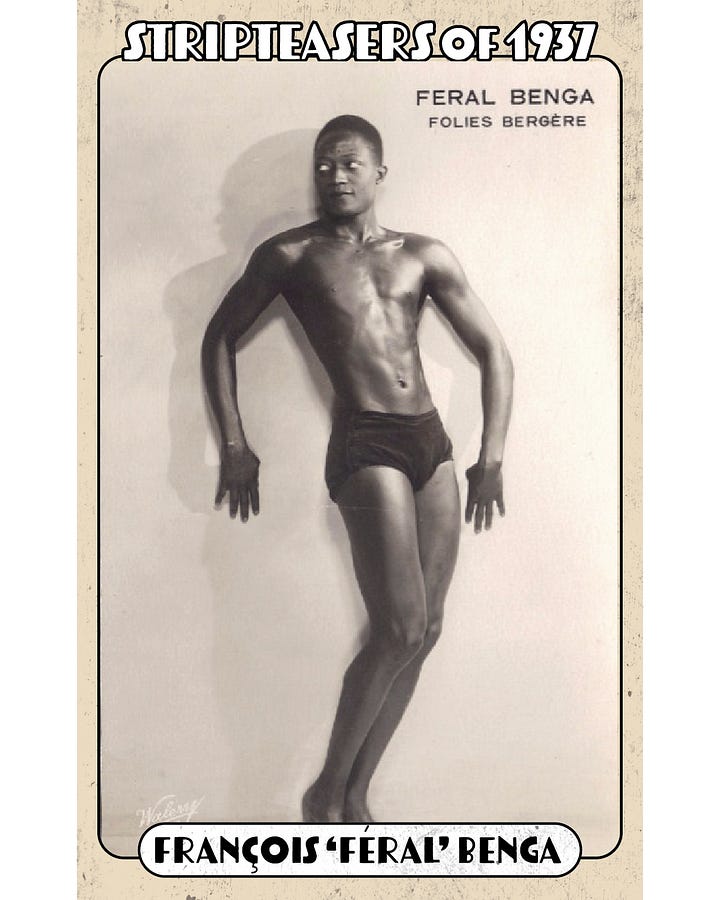
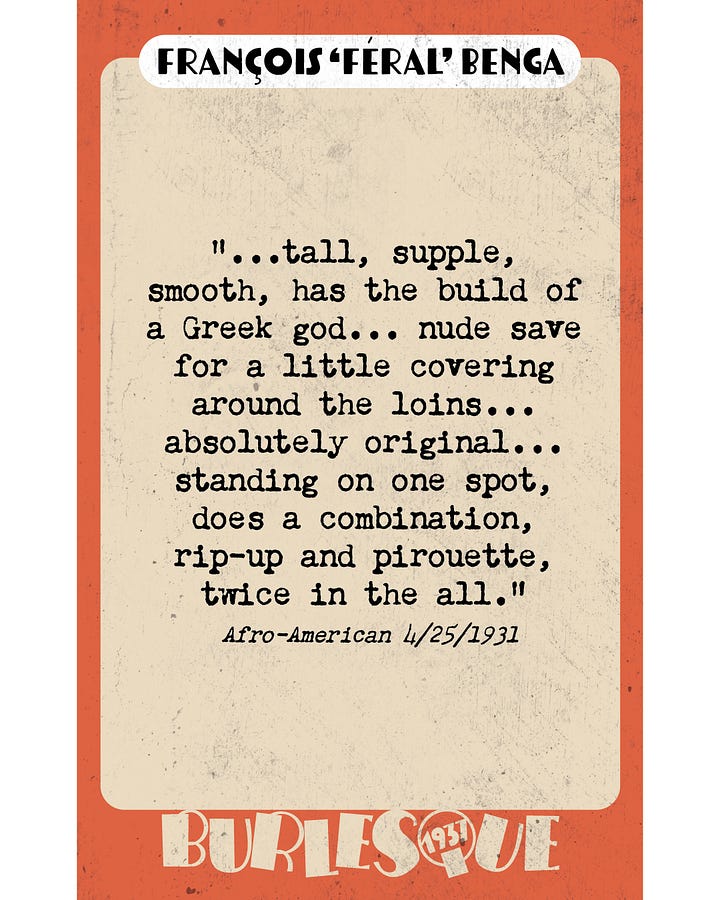
Rumor has it that Benga, in drag, subbed in for Josephine Baker on occasion.
“Still, Benga never achieved Baker’s level of fame, not least because his gender — and his homosexuality — complicated the dominant gender dynamics of primitivism, which centered on the objectification of Black women. For James Smalls, Professor and Chair of Visual Arts at the University of Maryland, Baltimore County, Benga’s body functioned as ‘a site of critique’ of imposed perceptions of masculinity. ‘To many people at the time he may have been threatening, because he represented an objectification of the male body. He welcomed that, it was exactly what he was doing onstage,’ Smalls said… ‘I see it as very avant-garde and modern, going against these elements of primitivism that are very exploitative of women and upending them. But I think that also hurt his career, it did not allow him to develop as she did.’ -From Valentina Di Liscia’s article on Hyperallergic
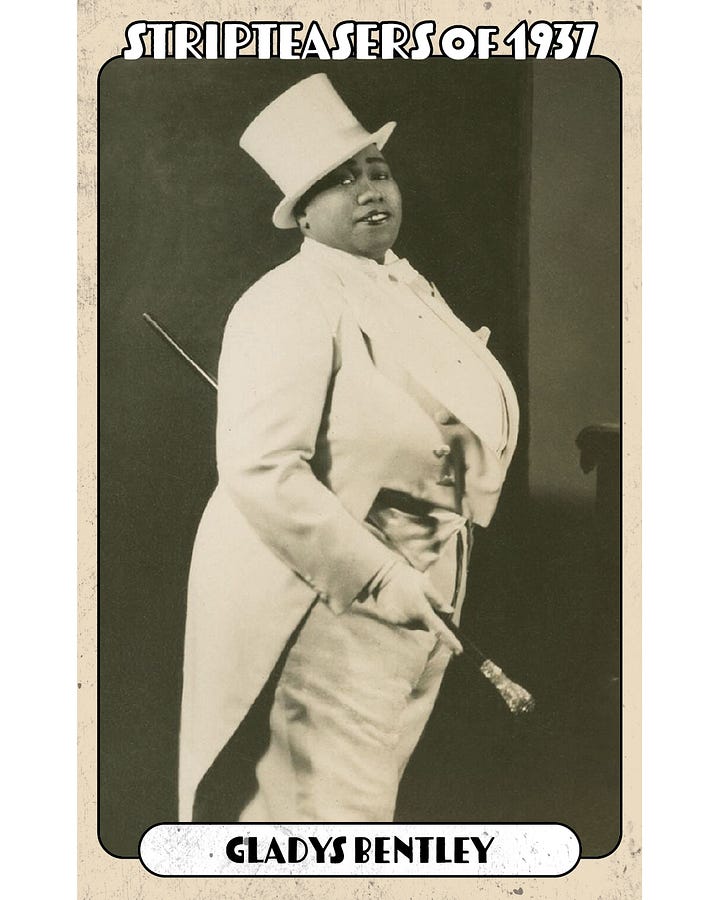
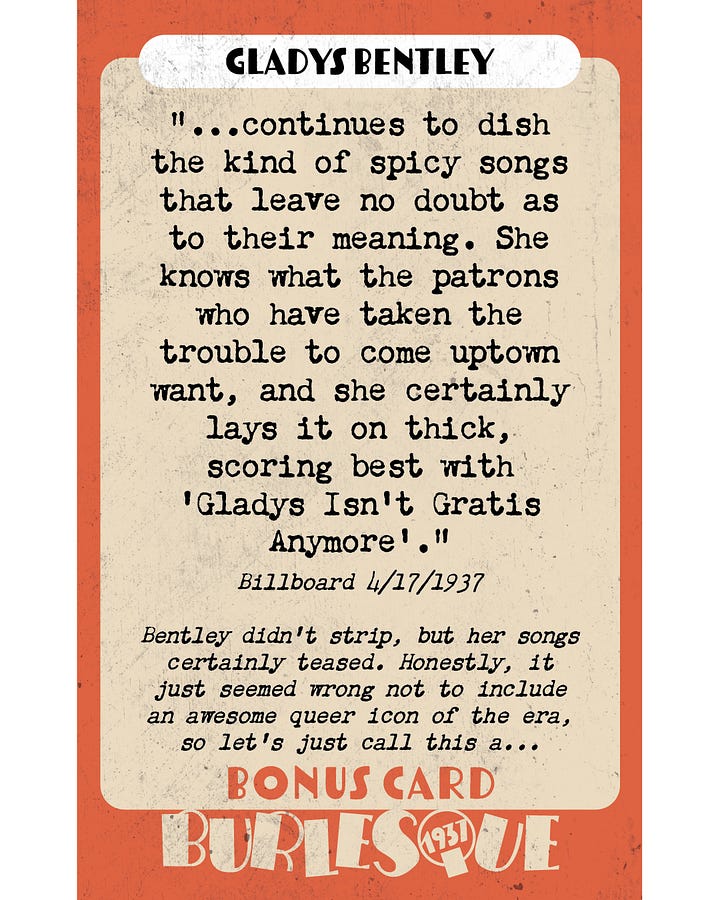
Though Bentley was not a stripteaser, “her name doesn’t have the same recognition as many of her Harlem Renaissance peers, in part, because the risqué nature of her performances would have kept her out of mainstream venues, newspapers and history books.” - from The Great Blues Singer Gladys Bentley Broke All the Rules, by Haleema Shah, Smithsonian Magazine
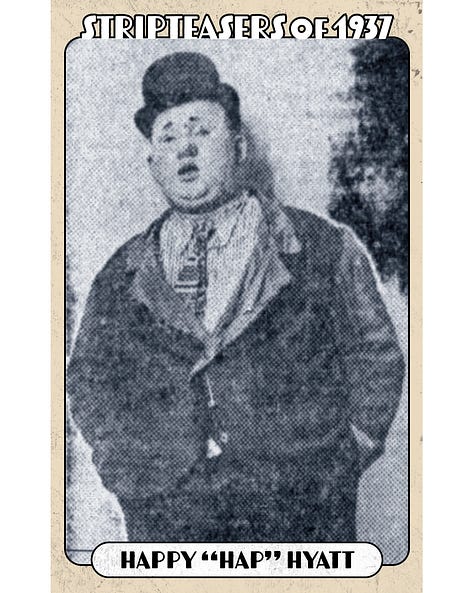
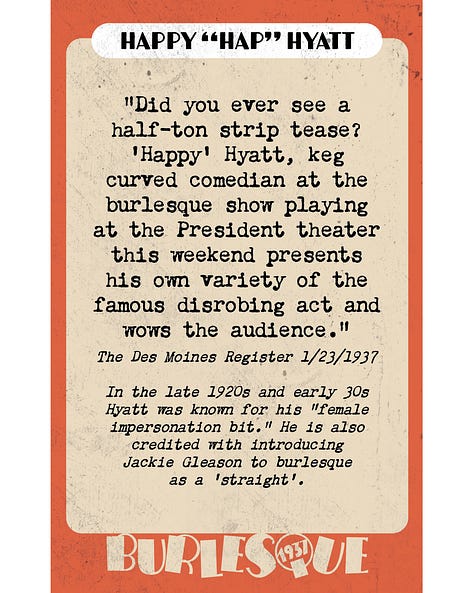
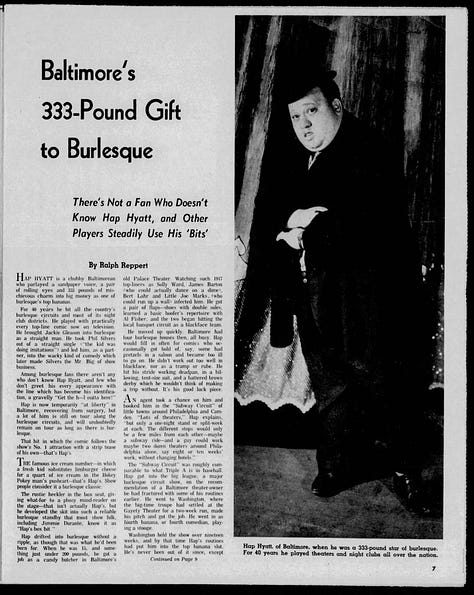
“…irresistibly humorous, reaching the peak of fun when Happy indulges in a female impersonation, a broad travesty as it were, on the svelte Julian Eltinge of another day.” -Times Herald, 1/11/1930 “He brought Jackie Gleason into burlesque as a straight man. He took Phil Silvers out of straight single (‘the kid was doing imitations’) and led him, as a partner, into the wacky kind of comedy which later made Silvers the Mr. Big of show business” -The Baltimore Sun 10/4/1959 Despite this legacy, Hap is barely remembered today, even amongst classic comedy fans.
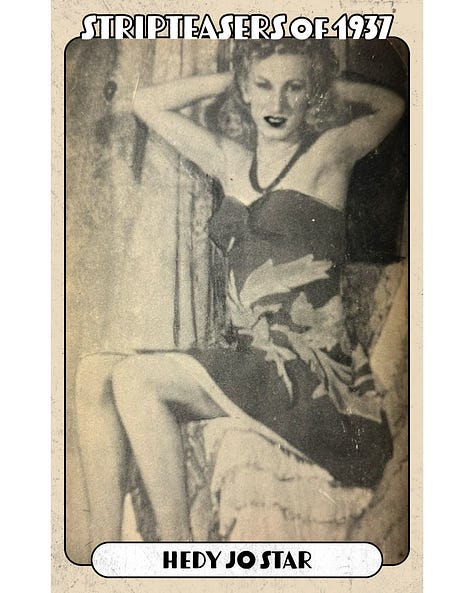
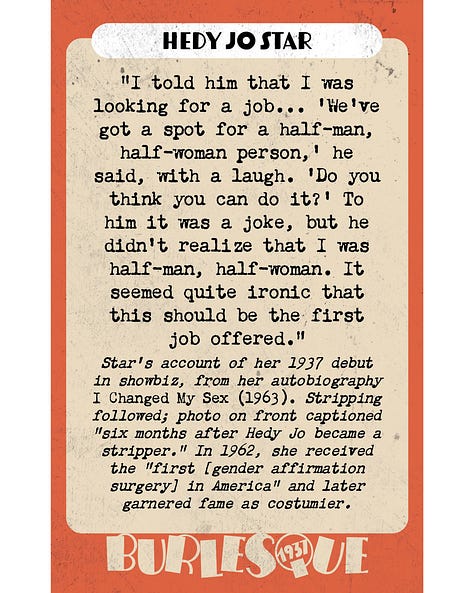
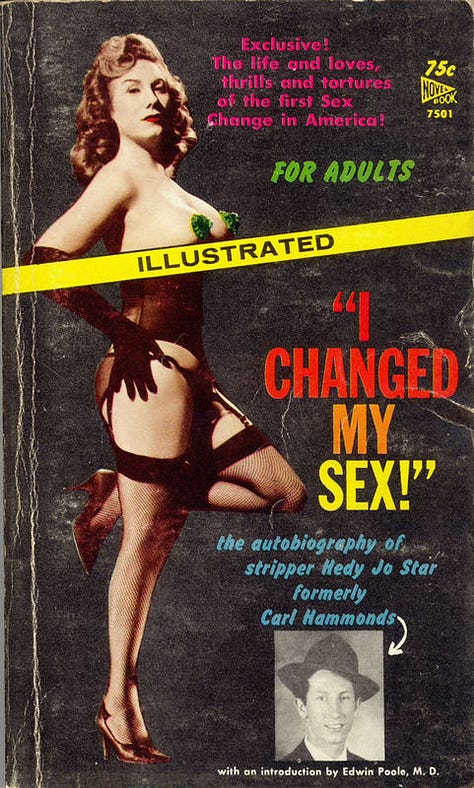
“‘How do you tell the man who loves you that you have male sex organs?’ This is just one of the seventeen shocking, unique questions Carl Hammonds-Hedy Star answers within the pages of this fantastic book! You have heard of Christine Jorgenson - the first Sex Change in history - but you have never read the details of her twin lives as man and then woman - and even Christine's bizarre experiences cannot compare with those of the first Sex Change in America!” - From the back cover of her 1963 autobiography "I Changed My Sex, available to read onsite at the NYPL. More about Star in A Gender Variance Who’s Who.
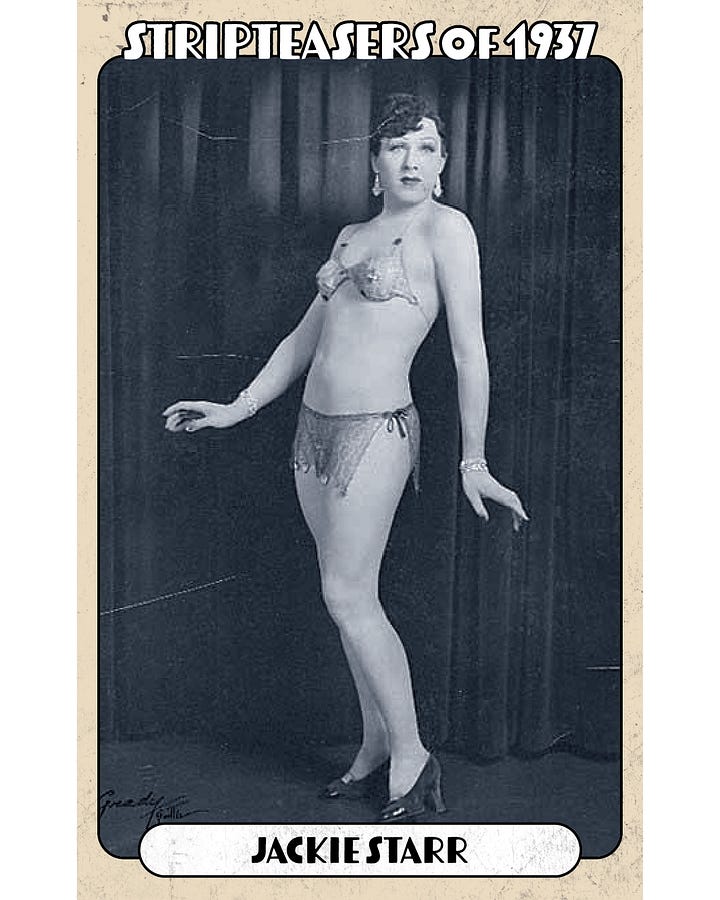
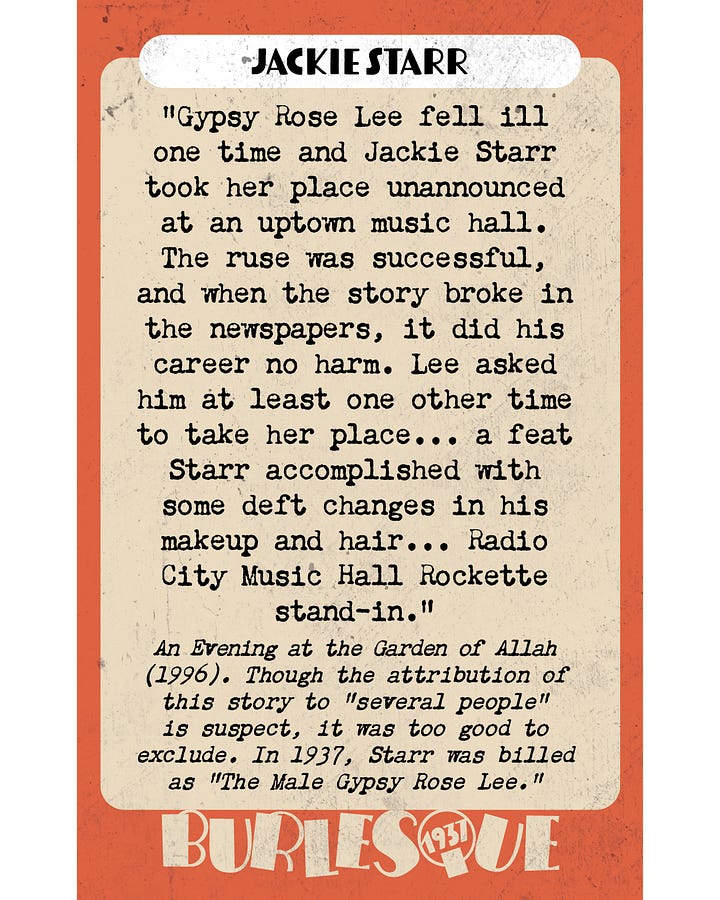
“…even in his seventies, Jackie Starr went out on the town in drag. ‘I’d come in,’ Dusty Harrison, his last lover, said, ‘and there he’d be, sitting on the piano bench, putting polish on his nails, the last touch before going out.’ Two hours earlier, Jackie had begun the long process of applying his makeup. Meticulous treatment over the years kept his skin pale and spotless. When they’d go to the Golden Crown, a downtown Seattle drag bar, the new generation of drags would crowd around.” - from An Evening at the Garden of Allah.
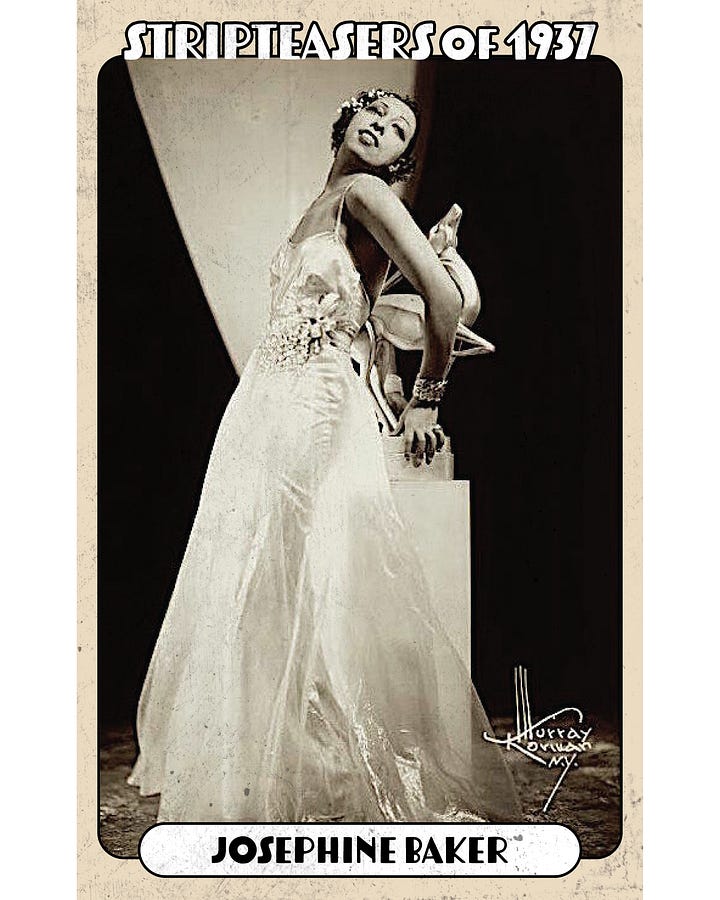
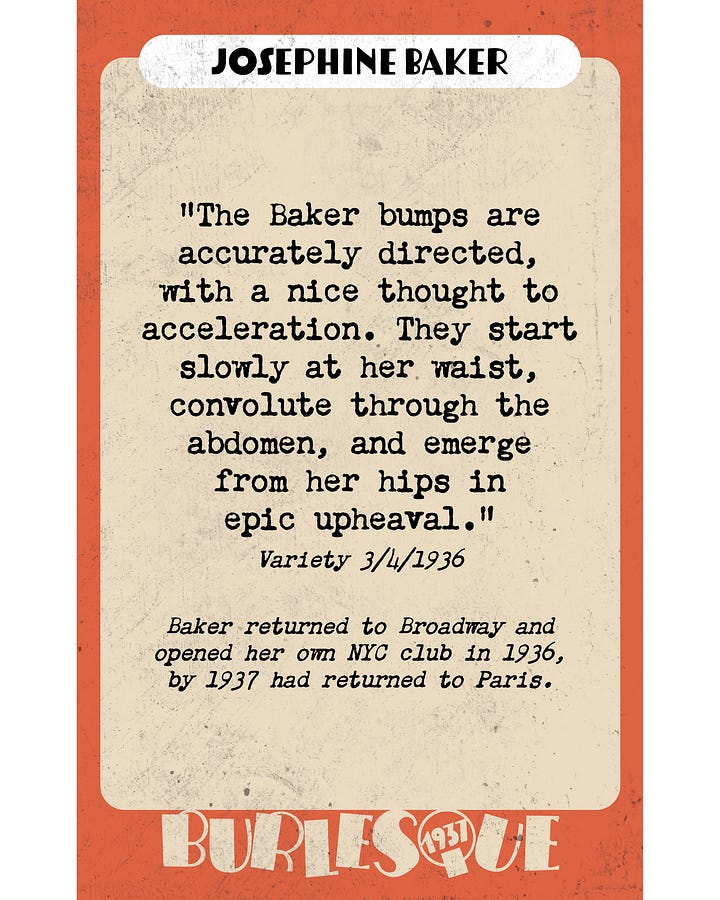
“…make no mistake: Josephine Baker led one queer life. It’s not just that she was lesbian or bisexual, although her sexuality was an important part of it; it’s the fact that nearly everything she did expressed desires and needs that deviated significantly from the prescribed social norms of her times. What’s more, to live life on her own terms, she was always willing to transgress those norms at every turn.” - “Josephine Baker’s Hungry Heart,” G&LR Review.
A bit more about Baker’s bisexuality on Making Queer History.
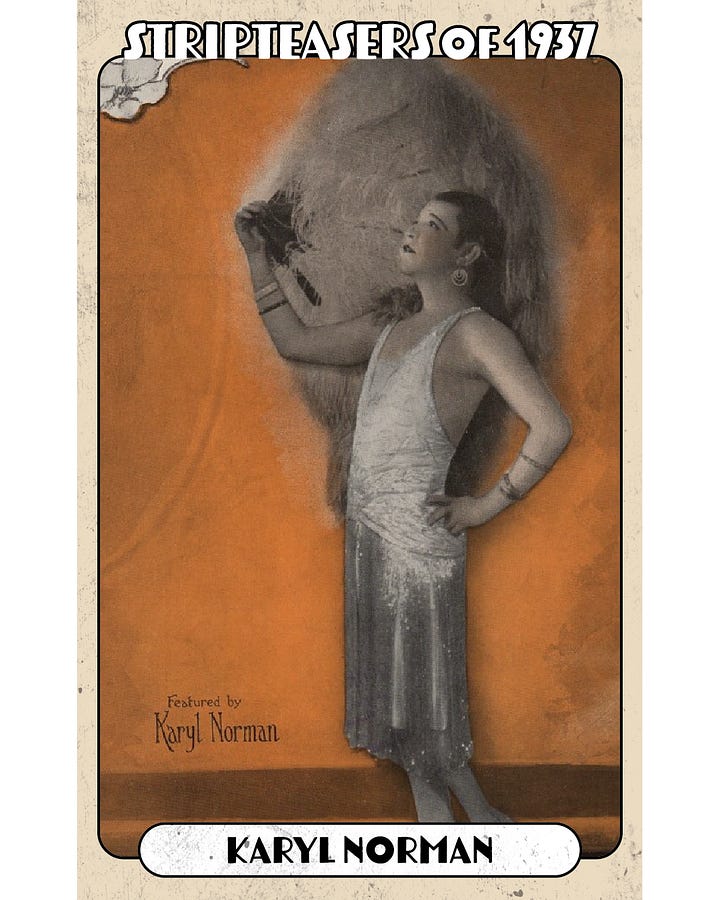
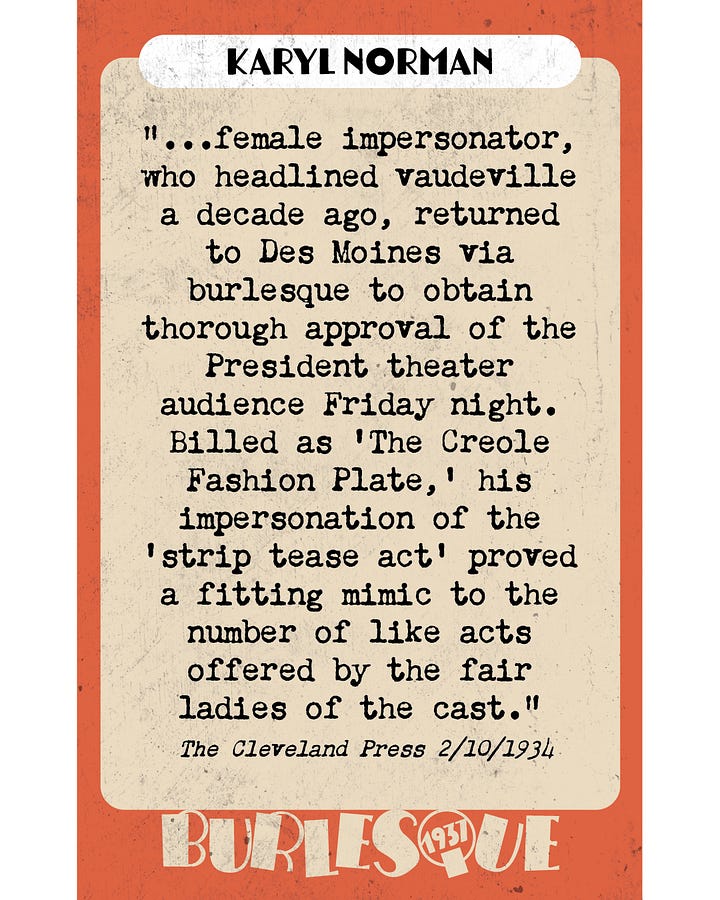
“Norman was known for his fabulous gowns, many made by his mother, his fine voice, and his quick changes of clothes and gender on stage. According to one critic ‘Not only does this impersonator wear his feminine toggery in tiptop shape, but has a voice that fools’em at the start.’ Norman wrote the lyrics of many of his featured songs…” -From Ambidextrous: Karyl Norman.
“The actress Fifi D’Orsay described Norman as ‘...a great performer... a wonderful guy, beloved and respected by everybody, although he was a gay boy... it was harder for them than it is today. He did an act with two pianos and those gorgeous clothes. He had such class and he was so divine.’ In the 1930s, his popularity diminished but he continued to perform in clubs, particularly at Finocchio’s in San Francisco. He was reportedly arrested on a morals charge in Detroit, but was released after the intervention of Eleanor Roosevelt.” - from Performing Arts Archive.
Norman’s Discography. Wikipedia Article.
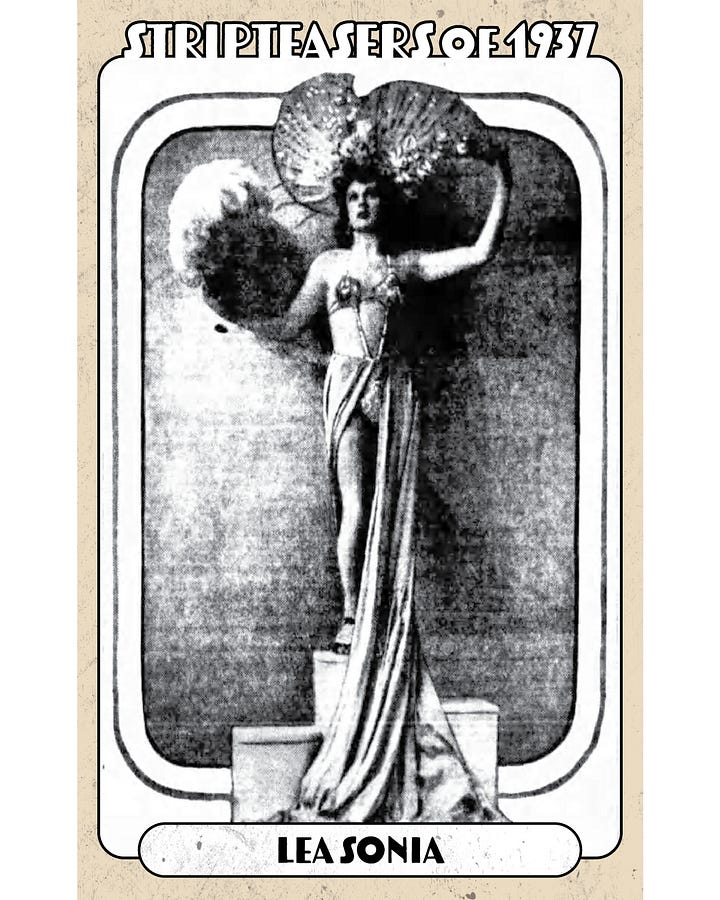
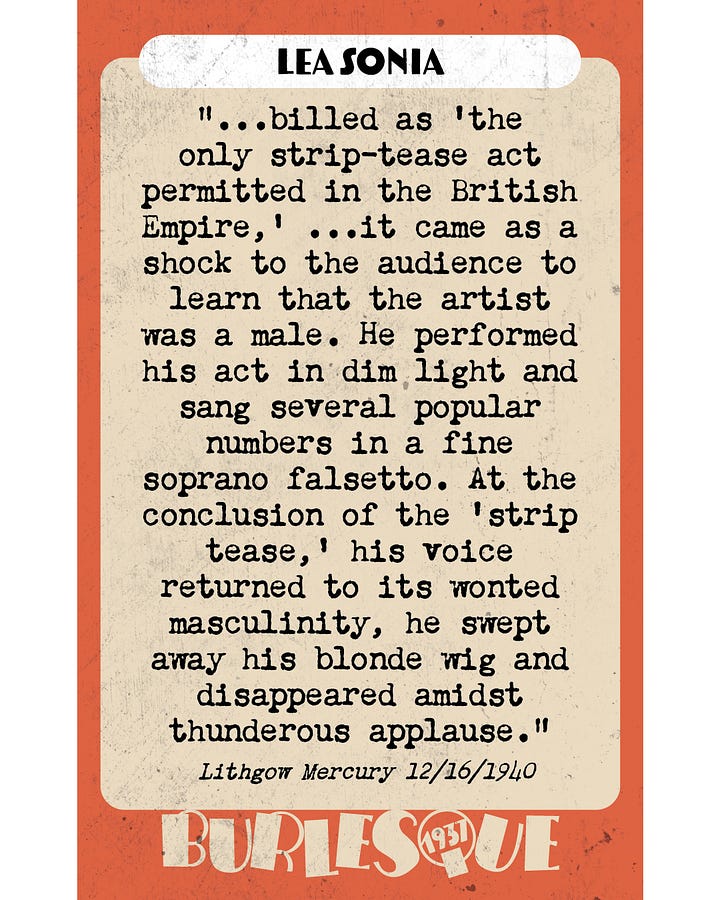
Australia’s premiere — and only, according to one article — drag performer of the era, until her premature death in 1941. A little more about Sonia on Gender Variance Who’s Who.
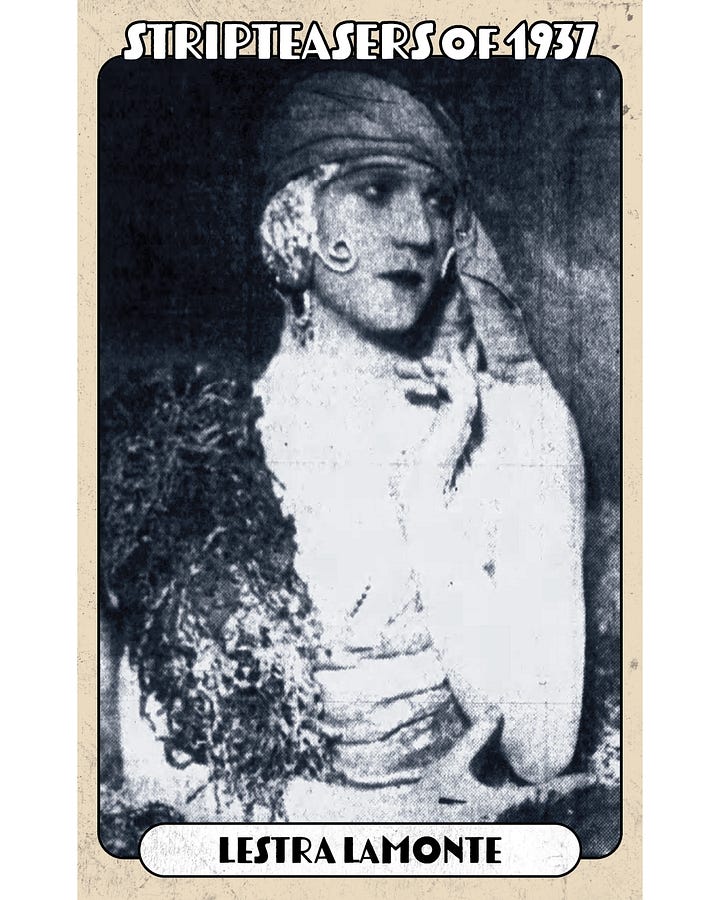
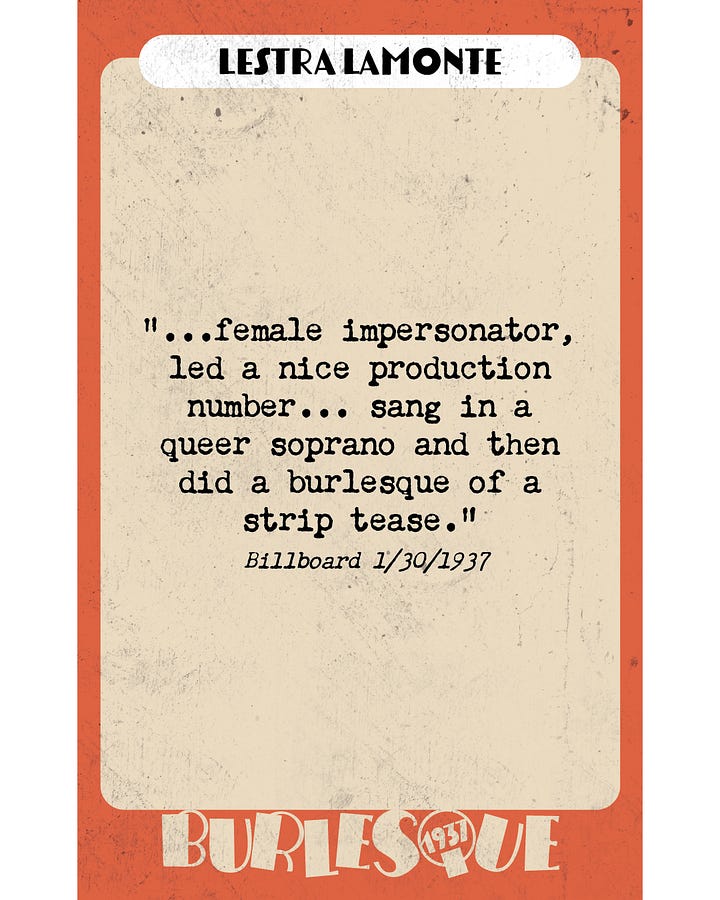
“…performers like Lestra LaMonte helped shift drag from caricature to artistic expression… By the mid-1920s, Lestra was a full-time ‘female impersonator.’ Her acts were known for their visual splendor, featuring a chorus of ‘beautiful girls’ and elaborate staging. But what truly set her apart was her act called ‘Paper Creations’—costumes meticulously crafted from delicate paper materials, which she designed and assembled herself.” -from a detailed bio of LaMonte at IonaFortune.com.
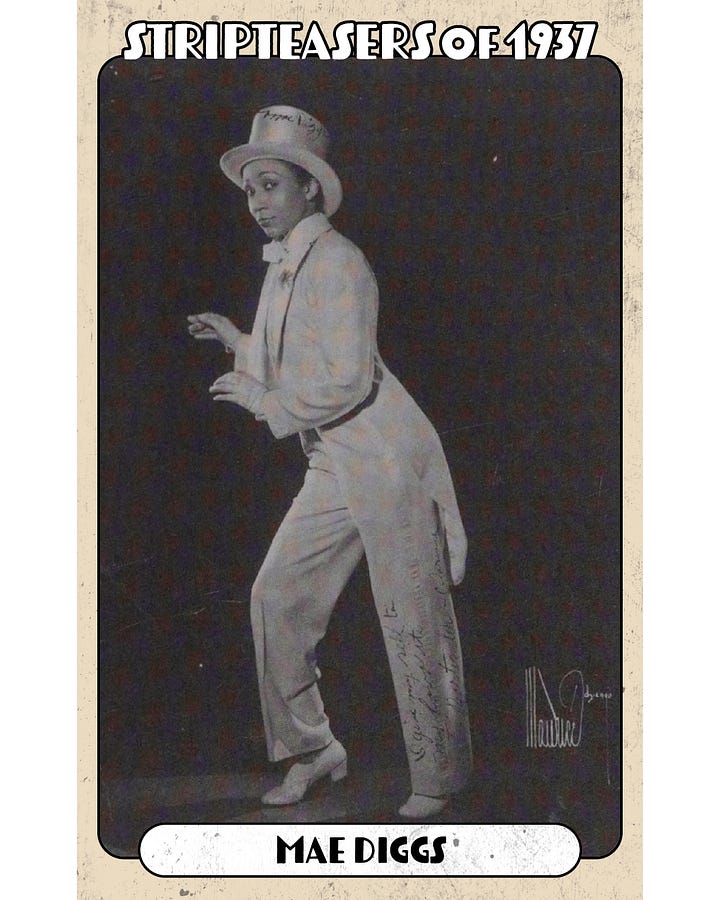
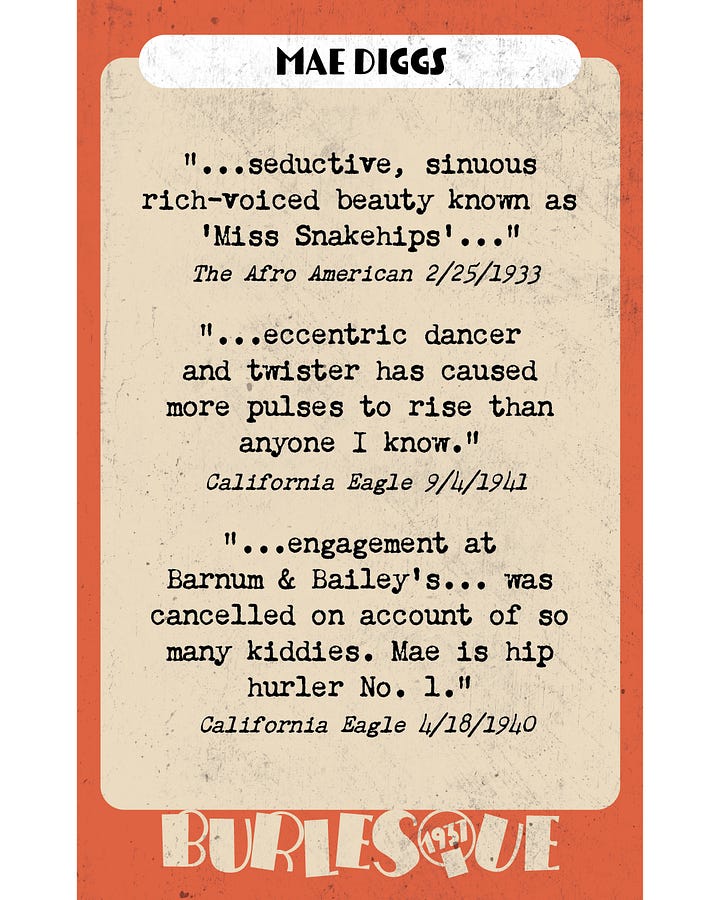
This extensive biography of Diggs at the Hi De Ho Blog talks about just about everything but the outfit she’s wearing in that photo, probably indicating that she didn’t regularly perform in drag. But the photo is so dapper, it would have been a shame not to include it.
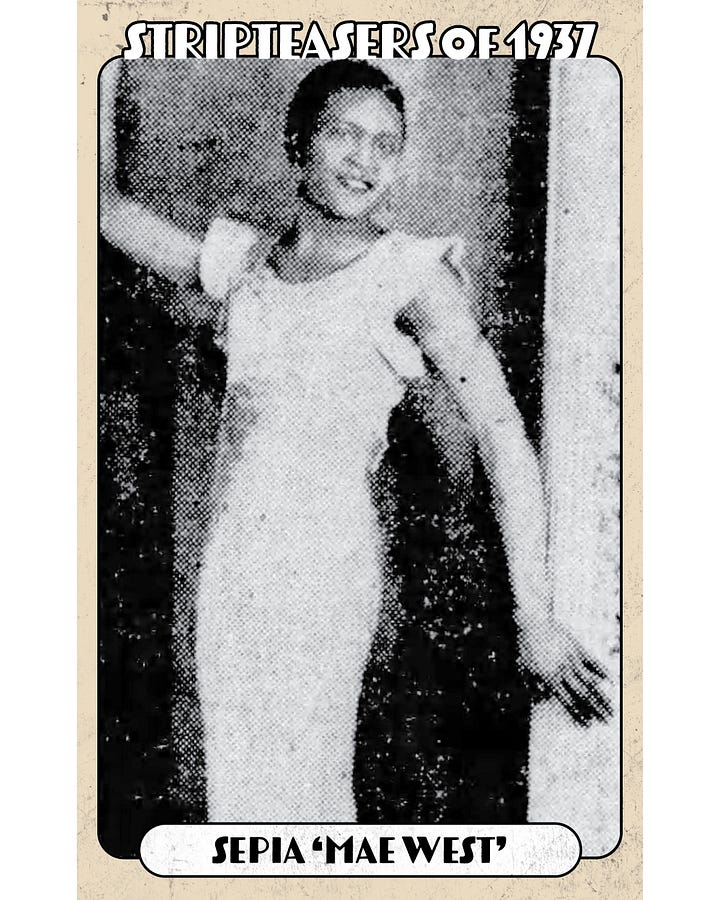
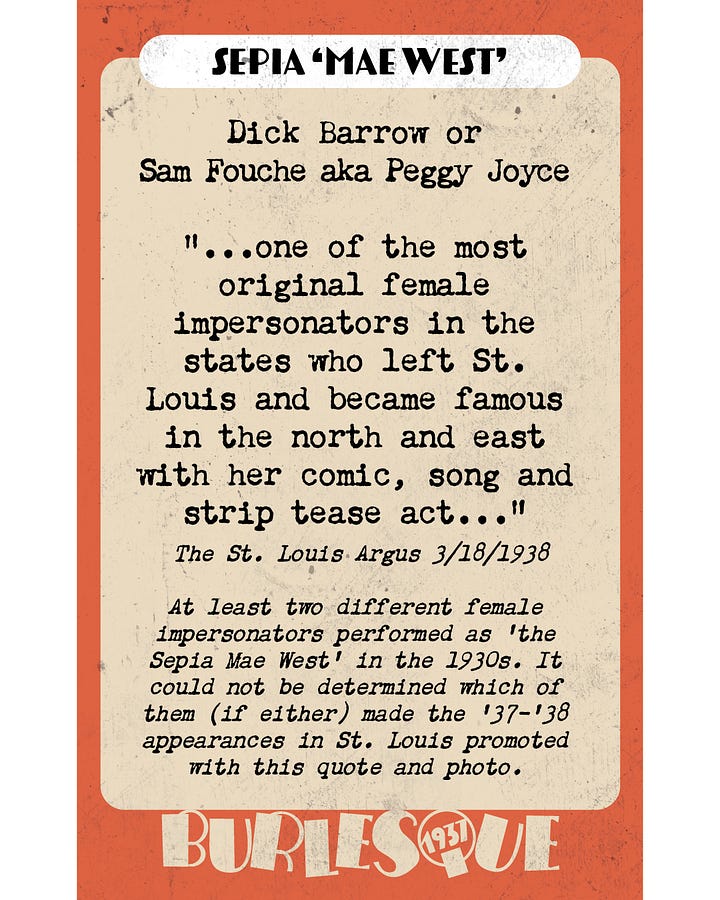
“In early 1934, again coinciding with the Mae West’s rise to national fame, Small’s Paradise in New York presented a performer billed simply as “Sepia Mae West.” Several quixotic advertisements and reviews announced the Small’s Paradise appearances with the simple question “Female?” By April of 1934 Chicago’s Dick Barrows was already threatening to sue the perpetrator of this claim to his livelihood for $25,000 in damages. The upstart “Sepia Mae West” was named Samuel Fouche, soon to be touted as the darling of female impersonators in New York. By November of the same year, this new “Sepia Mae West” had appeared at the Apollo Theater and at the Harlem Opera House… It should be noted that during the prohibition era and jazz age, Harlem was very tolerant, and absorbed, albeit briefly, some of the gay sub-culture of the early 1930s. Since there were no exclusively African American burlesque houses or ‘drag balls’ like the more risqué milieu found downtown that catered to the white audiences, Harlem speakeasies and small clubs took up the demand for more titillating, off-center and mixed-race entertainment.” -The Hi De Ho Blog talking about the many “Sepia Mae Wests”.
(Barrow’s last name varies from article to article, but is spelled without an “s” in the credits for the 1949 Film “Burlesque in Harlem and on both of his records.)
More clippings at Queer Music Heritage.
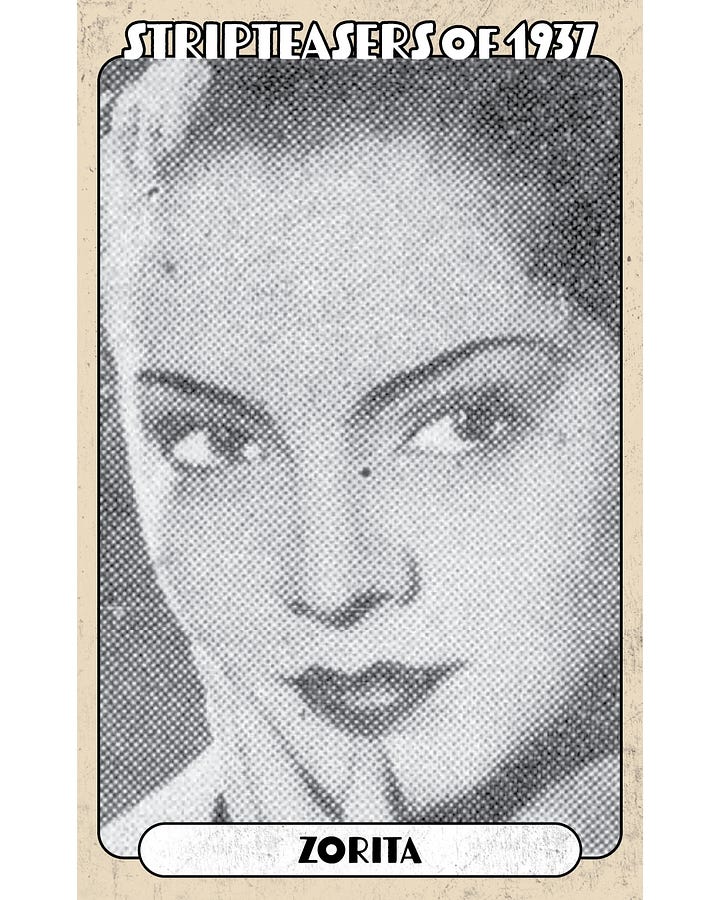
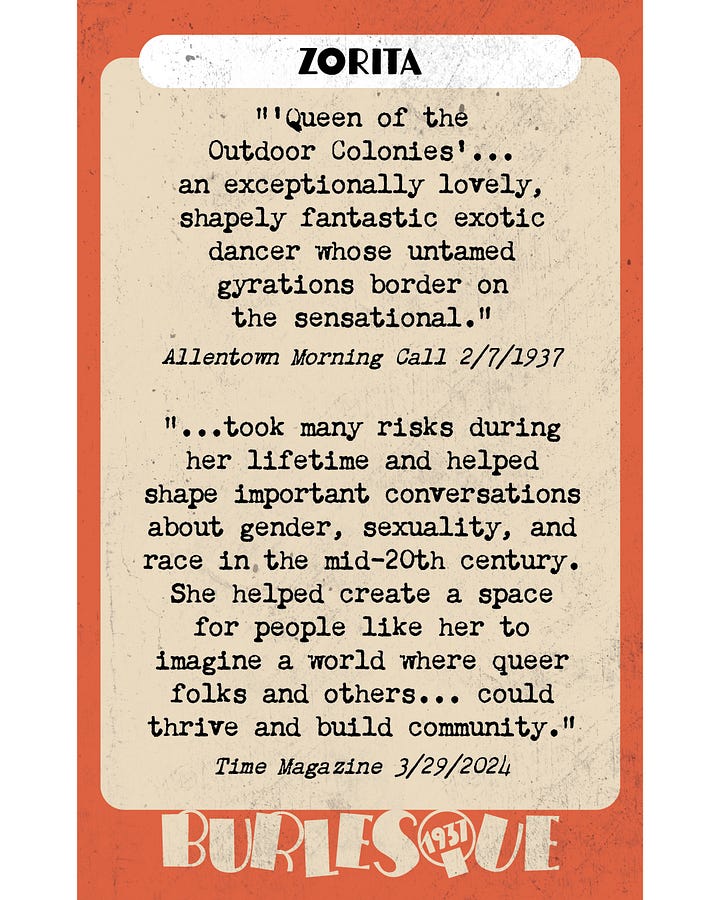
“Zorita became a household name by engaging, and often challenging, the very social, political, cultural, and economic forces that pulsed through the headlines splashed across the city newspaper. Although she came to know Miami law enforcement and courts quite well over the years, Zorita—a white, non-Hispanic woman—sustained a long and successful career in burlesque and entertainment. And although her audiences consisted primarily of men, Zorita preferred the company and intimacy of women in her personal life, and today she would likely identify as a lesbian or queer woman.” -From Zorita in Miami: A Queer Southern History by Julio Capó Jr. at SouthernCultures.org. Full Time article.
Gay Boy and Playboy Reviews: Constructing U.S. Queer Collectivities in Networks of Peripatetic Burlesque and Nightclub Drag Performers, 1933-1939 by Kalle Westerling
Research Methods in Early 20th-Century LGBTQIA+ History: Clubs & Nightlife at the NYPL
An article on “The Pansy Craze” by Darryl W Bullock in The Guardian
Drag Kings of Village Nightlife: Before and Way Before Stonewall by Lisa Davis
In the Early 20th Century, America Was Awash in Incredible Queer Nightlife Then Prohibition ended, and the closet was born by Natalie Zarrelli on Atlas Obscura
Obscure Queer Blues at Queer Music Heritage Part 1 2 3 including Barrow’s song “Down at the Cabin Inn” (Part 1, 0:46:26) about a “a high profile venue for female impersonators” - Even with the early 2010s design, Queer Music Heritage is an incredible resource
These and over 140 other stripteasers can be found in the upcoming STRIPTEASERS of 1937 COLLECTOR CARD DECK. Preorder now!
Comments
Nothing yet. Say the first thing.
Sign in to join the conversation.