
Text within this block will maintain its original spacing when published
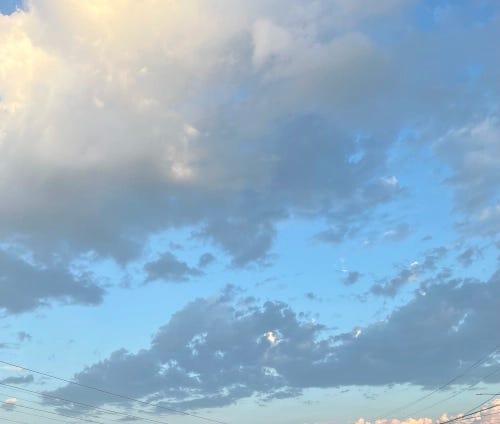
Between bouts at the keyboard, I stand up, stretch and pace, taking time
to enjoy the weather.
Text within this block will maintain its original spacing when published
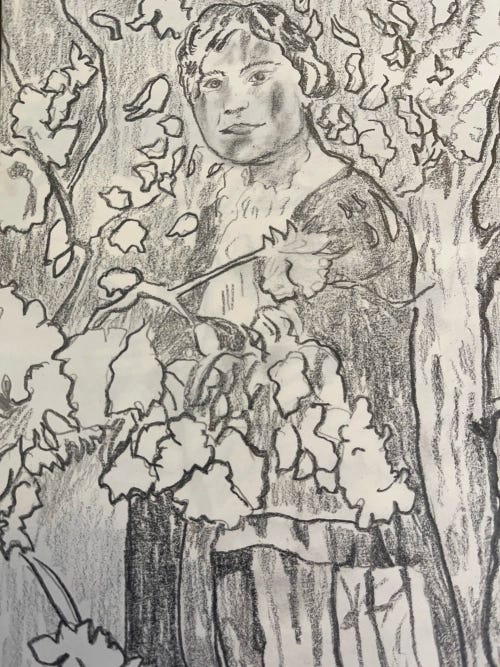
Previously, I wrote about the collected details and visual input that
can contribute to the world-building of a story. I think every story involves
world-building, whether its a cluttered kitchen in 1964 or a
dwelling in a distant future. These places require detail and depth, even
if those details are not explicitly stated.
Text within this block will maintain its original spacing when published
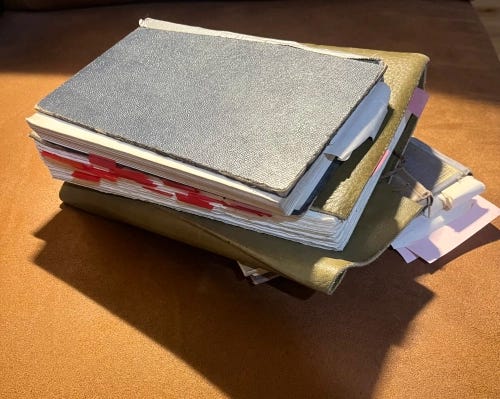
A short list of some of my favorite resources: maps and atlas collections,
postcards, ads, newspapers, timelines, and books: books with flowers
pressed between their pages and marginalia scribbled here and there –
often over the years. Perhaps most useful are journals that span decades
and contain odd overheard conversations, or brief glimpses into
someone else's life.
Using different elements and tactile approaches combines in
interesting ways. I doodle on a chalkboard, sketch on paper,
tape record dialogues, make playlists that serve as a kind of
soundtrack. Many of these bits and pieces are added in when I
story board a scene. Pre-printed story board pages and
comic-strip workbooks are a handy way to record and catalogue
many of these ideas.
When I've written myself into a corner, it is time to read: poetry, fiction,
non-fiction. Or, just as useful,  time to take a walk outside.
Sometimes I am carrying my handheld mini-cassette recorder while I ramble,
helping me to refine the world of my tale. This translates to mixing and matching story
swatches, to try them out and then keep or discard them, allowing me to
discover elements of the world I am attempting to create, often revealing
entire passageways that I never knew were there.
No posts
Comments
Nothing yet. Say the first thing.
Sign in to join the conversation.