
I had the great privilege of attending a GoBundance event in Detroit, Michigan.
For those who don’t know, GoBundance is a men’s networking group for net-worth millionaires (their book, The Tribe of Millionaires, is a great intro) — and there’s a GoBundance Women’s Tribe too.
I left humbled. A number of people came to me at the event to say I should be sharing more often, and that this content actually means something to you. I didn’t realize how closely you were reading. I’d slowed down on posting because I wasn’t getting much feedback -- and I only want to spend time on things that make an impact. So consider this me getting back to it. Thank you for the nudge.
A quick reminder of why I do this: my goal is to help create 10 millionaires through real estate over the next five years. My passion is helping other people reach their own version of financial freedom.
Below are my favorite notes and takeaways from the event, grouped loosely by theme. They’re raw — straight from my notebook — and in no particular order. Enjoy.
One disclaimer before we start: none of this constitutes financial or health advice. These are simply notes from things speakers said at a conference. Do your own research and talk to your own professionals.
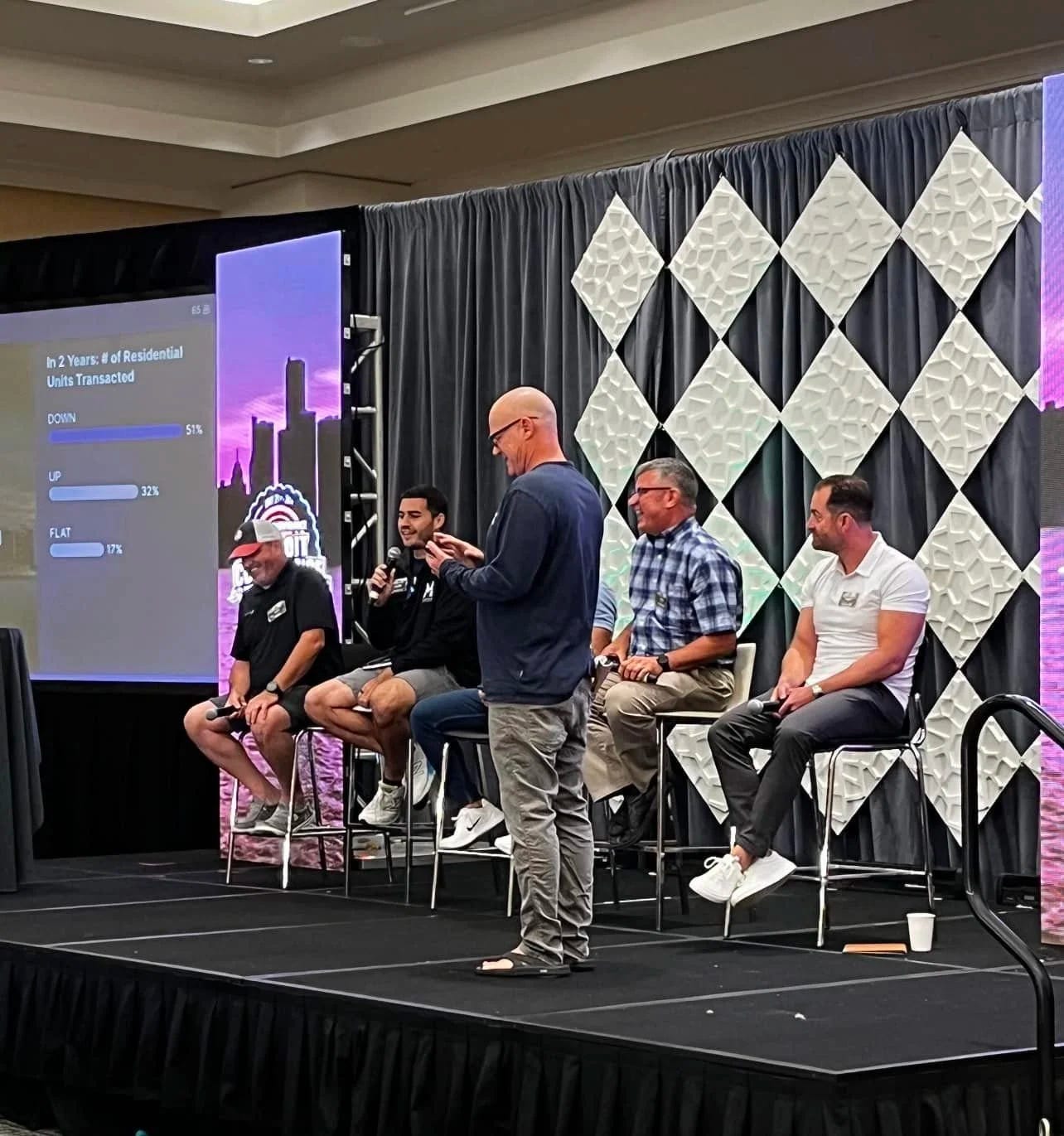
It’s our job, as the patriarchs and matriarchs of our families, to teach our family and our community how to work and how to live. That’s the real legacy. Everyone is watching everything you do -- you lead by example. The goal is to give the people around us the tools they need to live the best life they can.
A clear picture of leadership came up that stuck with me. The traits that matter most:
A clear vision and purpose — and the discipline to actually communicate it.
Cash and financial management. Everyone in the executive suite must know their numbers.
The right people in the right seats.
Key relationships.
A commitment to constantly learning.
And maybe my favorite reframe of the whole event: the most dangerous people are the kindest people -- because they’re the ones with the courage to go solve big problems when no one else steps up. Be dangerous. Dangerous people do the hard things and make the biggest difference.
If you show up to anything and put zero in, you’ll get zero out. It all depends on you.
This one was personal. I went into the a GoBundance event with a bad attitude, and I got out of it exactly what I put in. So I’ve made a decision: going forward, I’m going all-in on every event I attend. The value of an event is whatever I decide to make it.
A few related notes on getting things done:
We invent long-term timeframes to avoid doing what needs to get done now. Shorten your deadlines.
The more high-performing you are, the more likely you are to hit a wall. Prepare for it in advance so you know how to get around it.
You know it’s time to move on from a role when you start feeling sleepy about things that used to excite you. When it stops being fun -- and your finances are in order -- move on.
Having your finances in order is what lets you stop trading time for money.
A hard question many entrepreneurs wrestle with: How do I stop feeling like I need to be productive in order to have worth?
Tony Robbins is famous for asking, “What would you do if you couldn’t fail?” Someone flipped it: What would you do if you knew you would fail? Different, better question.
On writing: just keep writing daily and something will show up in it. Reflect.
This was the richest theme of the event for me. Discipline and playing long-term are the qualities of winners. Too many people are inconsistent and undisciplined - which is exactly why they never see the hockey-stick effect.
A deca-millionaire poker player framed it better than I ever could:
Go where there’s less competition.
Don’t go play the hard game. Find the right table to sit down at.
Game selection matters more than trying to become the best player at the hardest table. Table selection is everything. Chase deals, and protect your downside.
“Give me time and I’ll win any game.”
More on the long game:
Constantly reinvest in yourself. Invest for the infinite game. Outlast everyone else by being patient and disciplined.
Plant seeds everywhere. Over time, it hits. Just keep planting.
Short-term results don’t mean much. It’s all about the long term.
Always keep a good reputation and be a person of high character. That’s how deals and people keep coming to you first. Lose your reputation and you have nothing -- it’s very hard to get back, and word travels fast.
You also have to be present to win. You can’t extract value from a room you’re not actually participating in.
And the single best investment anyone talked about: RoR — return on relationship. Actively invest in your family, in yourself, and in your relationships. The people who don’t either go backward or stand still.
If your financial house isn’t in order, it only gets worse. That’s true in every market.
The two questions to keep asking: Do we have enough cash and liquidity? And how do we scale with the resources we already have?
Keep a “stay rich” stack and a “play rich” stack for investing — separate the money that keeps you safe from the money you take swings with.
The biohacking conversations were a big part of this event — Dave Asprey, often called the father of biohacking, was a major presence. These notes are the most opinionated of the bunch, so I’ll say it again: this is me writing down what speakers said, not medical advice. Talk to your own doctor before changing anything.
If you aren’t investing your money, at least invest in yourself. The most valuable asset we have isn’t time -- it’s energy. Money is really just a way to buy other people’s energy. So the frame shifts from return on investment to return on energy. Stop wasting energy, and get better at producing it. The simple loop a few speakers used: Assess, Monitor, Upgrade, Repeat.
Aim for a floor of 6.5 hours and a ceiling of 8. Interestingly, the claim was that healthier people need less sleep.
Sleep quality is one of the first things to go when you’re doing something wrong.
Blue light is a big lever. “True Dark” glasses block 40–70% of blue light and reportedly help with eye strain and your sleep cycle. Wear blue blockers at night.
For sleep protocols, a few people pointed to SleepWithDave.com (Dave Asprey’s recommendations).
A surprising amount of how you feel traces back to blood sugar:
Waking up between 1–4 PM-style energy crashes (or middle-of-the-night wake-ups) are often a blood sugar issue — caused by over-fasting or simply not eating enough. Suggested fixes: a tablespoon of raw honey before bed, collagen, and MCT oil (which doesn’t break a fast).
Low blood sugar can trigger migraines. Caffeine is one of the better treatments — Excedrin is basically just caffeine.
MSG came up as a hidden culprit. The claim: some restaurants use it knowingly, it makes you crave sugar and drinks, and it can push the average bill up ~30%. Essentially unregulated.
A rough hierarchy that was shared: sleep is about a third of the equation, timing of eating is about a quarter, and avoiding foods you’re personally sensitive to is another big chunk. A blood sugar / glucose monitor helps you find your own triggers.
Dairy proteins and wheat proteins were named as the most common problem foods.
Intermittent fasting (when actually done) was described as doing something similar to Metformin.
On diets: the claim was that going vegan feels great for about six weeks, and after that some people get tired or start losing hair.
A lot of coffee reportedly contains mold (little US regulation here), which can make people sick. Bulletproof or “Danger Coffee” were offered as the workaround.
The cynical-but-memorable line on supplements: big pharma will always say vitamins don’t work — until they can make money on them, at which point they’ll say they do.
Stem cell therapy was described as working very well.
Red light therapy got strong endorsements. “TrueLight” was mentioned as a roughly $350 portable unit.
An NAD drip once per quarter came up as a regular protocol.
“75 Hard” got a thumbs-down — described as just overtraining, with no time built in for recovery.
The counter-advice: train to the rep that builds muscle, then stop and return to baseline, and repeat. Don’t grind past the point of return.
Resistance bands were called more effective than weights.
Eat protein within 30 minutes of working out.
And the through-line of the whole health section: constantly measure. Continuous glucose monitoring, sleep tracking — figure out what your body responds to.
A running list of what people recommended throughout the event:
Books
The Platinum Rule
Your Next Five Moves
Exactly What to Say
The Algebra of Happiness
Die With Zero
Entrusted
The Power of One More
Headstrong and Superhuman (Dave Asprey)
Podcasts
The All-In Podcast
The Prof G Podcast
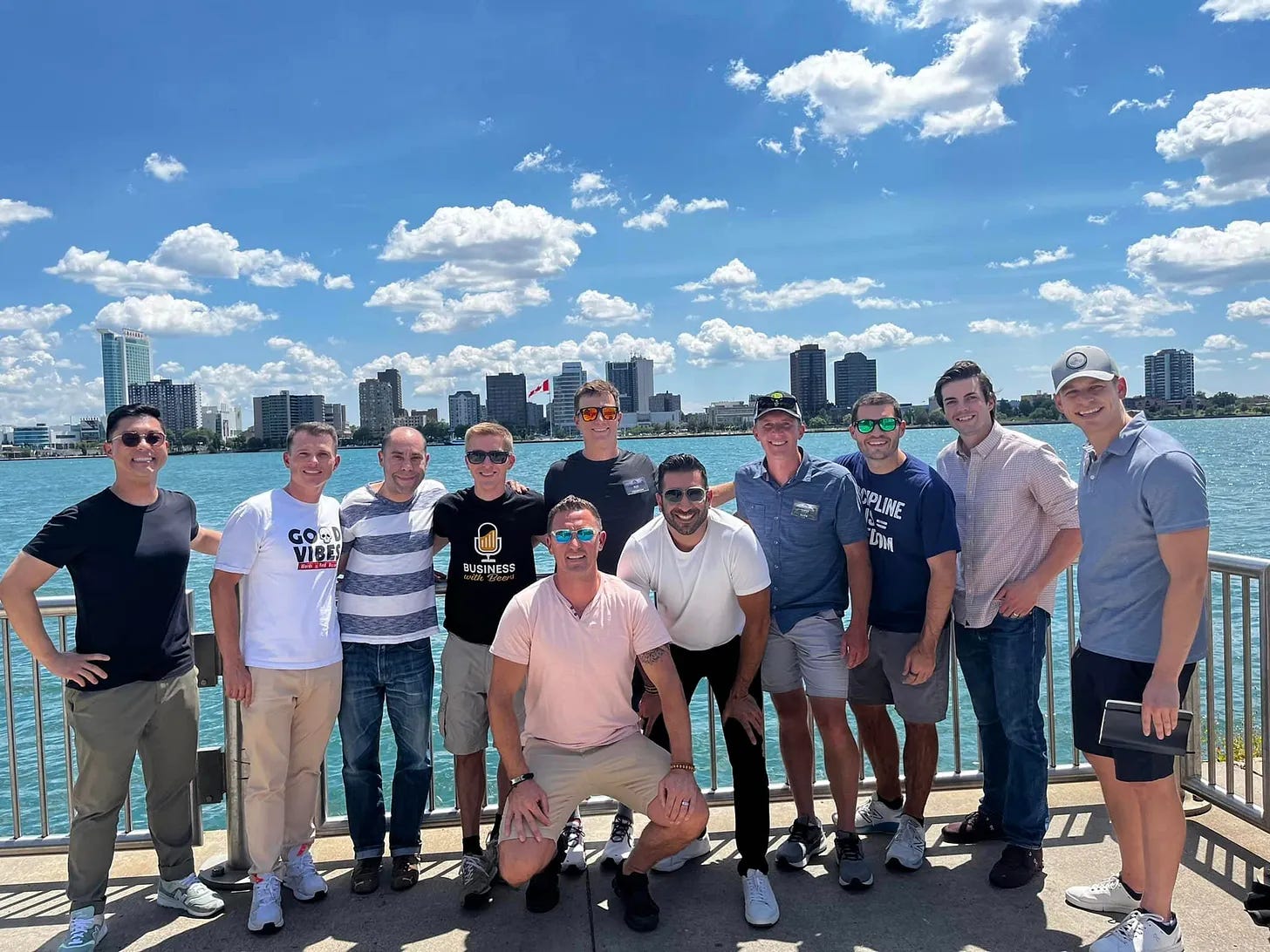
Keep planting seeds. Stay disciplined, play the long game, and pick the right table.
If one of these notes hit home, reply and tell me - that feedback is the only reason I keep writing. And if you’re serious about building real wealth through real estate, that’s exactly what I’m here for.
Onward, Jon Brooks Co-Founder, Momentum Realty 📧 jon@movewithmomentum.com
No posts
Comments
Nothing yet. Say the first thing.
Sign in to join the conversation.