
“Life is hard,” Yahya, a leader in Iran’s Christian house church movement, told David Yeghnazar of Elam Ministries recently. Yahya (not his real name) was sending voice messages due to Iran’s wartime internet blackout, which makes it nearly impossible for Christian leaders like the Iranian-born Yeghnazar outside the country to reach their contacts in Iran. “But we are continuing. And the Lord is showing his glory.”
Despite having no church buildings, Iran’s evangelical population is the fastest growing in the world—some have called it a full-scale underground Christian revival. There are now over one million Christians in Iran. Mosques are closing down, with some saying that the “Jesus revolution” in Iran is partly to blame; Reza Pahlavi, the erstwhile crown prince of Iran and son of the former Shah, noted in 2024 that, “Iran has probably right now the fastest-growing faith in Christianity than any other faith that the country has had. We have hundreds of underground churches.”
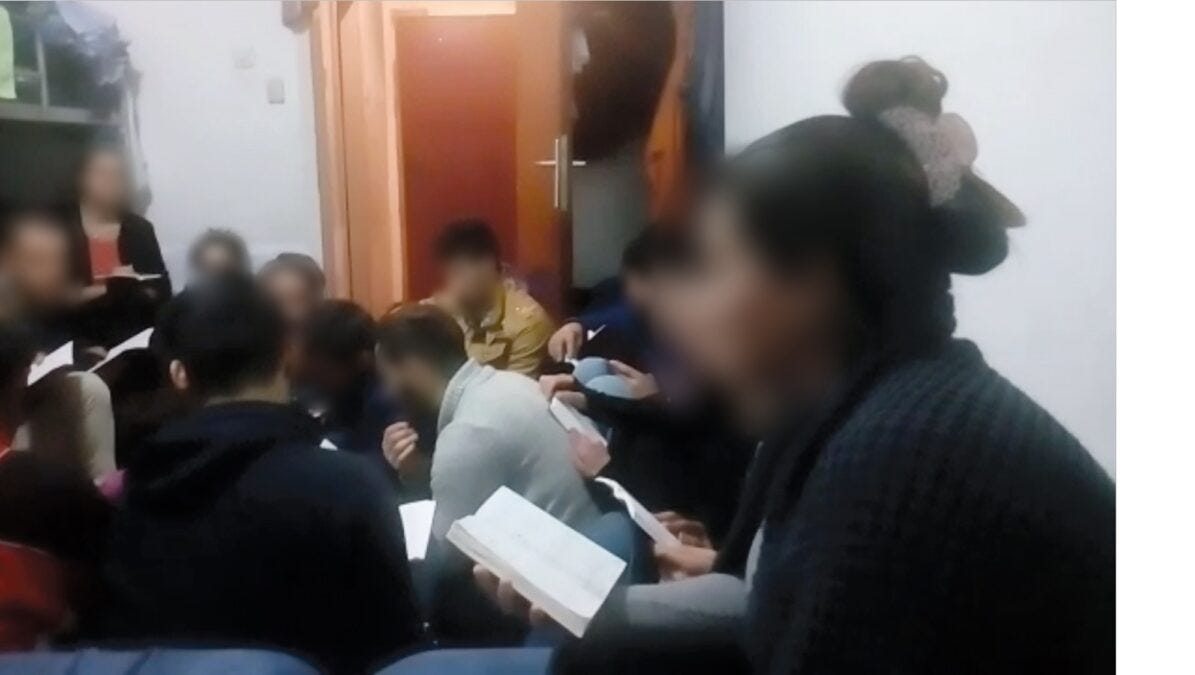
The regime views this revival as an enormous threat to their repressive and theocratic Islamist vision for the ancient nation. It is illegal for Muslims to convert and for Christians to evangelize to them. Pastors—including Yahya—have suffered harassment, imprisonment, and torture for their faith. Since February 28, they are also enduring wartime conditions, and many fear that a regime crackdown is coming.
The first Persian worshippers of Christ may have predated Pentecost—some scholars believe that the magi who followed the star to Bethlehem in search of “the King of the Jews” were Zoroastrian priests. The Acts of the Apostles records that on Pentecost, Parthians, Medes, and Elamites heard the Apostle Peter preach the gospel in their own language, and church tradition says that Matthew, Jude, Simon the Zealot, Bartholomew, and Thomas reached the region on their missionary journeys.
Christianity has been a continuous presence in what is now Iran for nearly 2,000 years, predating Islam by centuries. In addition to ancient Christian communities (Armenians, Assyrians, and Chaldean Catholics), Protestant missionaries arrived in Iran in the 1800s, and their commitment to literacy and medical aid gained them the affection of many. Under the rule of Mohammed Reza Shah, Christian evangelistic work was permitted. That ended after the 1979 Islamic Revolution.
Although Christianity is technically protected under Article 23 of the Iranian constitution, the mullahs evicted most missionaries and forbade evangelism. “Christians in Iran are heavily and systemically repressed, as the authorities seek to root out what they see as a threat from the West to undermine their Islamic rule,” states Open Doors. “Converts are most in the firing line. House churches are commonly raided, often followed by arrests, interrogations, pressure to inform on other believers and long-term imprisonment. This is typically under charges of breaching ‘national security’. The conditions in prison are dire and bail sums can be extortionately high, financially paralysing families.”
After the 2025 Twelve Day War, Iran’s Parliament passed the “Law on Intensification of Punishment for Espionage and Cooperation with the Zionist Regime and Hostile States Against National Security and Interests.” The regime accuses converts of “Zionist Christianity,” and crackdowns have intensified; arrests of Christians doubled in 2025. After the 2025 ceasefire, 54 Christians in 21 cities were arrested on charges of “espionage,” and state media has “suggested links between Evangelical Christians and foreign intelligence services, a narrative that paints an entire faith community as a security threat.”
READ THE REST OF THIS COLUMN AT THE EUROPEAN CONSERVATIVE
A few other columns:
Very good news that will save countless lives: “Kenya court overturns ‘constitutional right’ to abortion in pro-life victory.”
Many Christians have discovered, in the last decade, that most people in their own countries simply do not understand them. I explain why in the latest newsletter for The Acacia Group, Canada’s only Christian law firm: “Why does the culture not understand Christian communities?”
The trend of politicians condemning parental rights as an excuse used by abusers is very concerning, and must be watched carefully: “Nova Scotia Education Minister condemns parental rights.”
This should be headline news, but it isn’t—a Canadian gender doctor has now stated that a national review of transgender “treatments” is necessary—because of the irreversible damage these drugs can cause. People have been censored, fired, and condemned for saying this for years—but now, perhaps, the medical establishment is beginning to have second thoughts:
As always, follow the podcast wherever you get your content: Apple Podcasts, Spotify, Rumble, or YouTube. You can get a copy of my book How We Got Here: A Guide to Our Anti-Christian Culture at Amazon.com, Amazon.ca, or at The Bridgehead, where you can also find other columns (and books!) if you’re interested.

No posts
Comments
Nothing yet. Say the first thing.
Sign in to join the conversation.