
Tonight we gonna have a ball
down to the old Bulldaggers’ Hall
You tell old Razor-cuttin’ Annie to tell her fast-fuckin’ mammy,
that all three can come in for a quarter
What we gonna do romp and tromp till midnight
fuck and fight till daylight
‘The Bulldaggers’ Ball’ in B. Jackson Get Your Ass in the Water (1974)
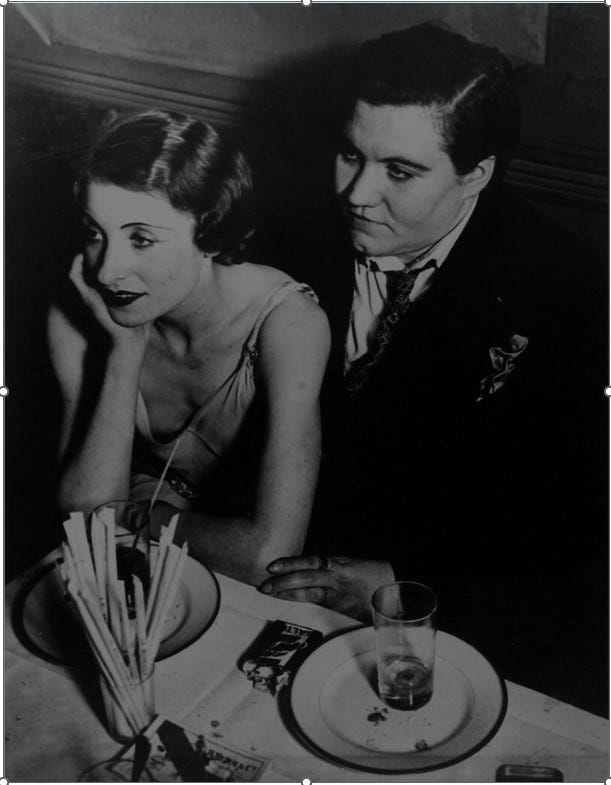
This is almost a straight steal from the chapter on lesbian language included in my attempt to look at women and slang, originally Bitching, and retitled Sounds and Furies. It appeared in 2019, just in time for Covid. Who knows, someone might read a reprint.
The chapter ran to well over 7,500 words. I have cut it in two here. I cannot pretend that I achieved my aim, to provide a lesbian lexis as used both past and present. I conclude part 2 with a melange of terms culled from six contemporary sources, mainly online. To what extent they are in common or frequent use, I do not know. A lucky-dip of searches found few supportive examples of the terms I selected.
Nor do lesbians find a major role in my current researches, in the late Gary Simes’ unpublished Dictionary of the Language of Sex and Sexuality. With the predictable exception of L, which offers 364 uses of ‘lesbian’ and thus 153% more than those of ‘gay’ the remaining letters of the alphabet are skewed firmly towards the chaps. Among them D (dyke etc) offers 100 ‘lesbian’ to 299 ‘gay’, a solid 33%. Elsewhere the discrepancy is irrefutable. P has 509 ‘gay’ to 92 ‘lesbian’ (a mere 18% Sapphics), S 892 to 151, some 17% and R 234 to 19, a shaming 7%. The stats are inescapable.
Yet I am loathe to acknowledge what seems to be the lesson: that just as heterosexual sex consistently foregrounds men, and women are generally seen as objects rather than subjects, if one enters the homosexual world, then while men-loving men, both tops and bottoms, have evolved and listed a substantial number of terms for who they are and what they do, lesbians, whether butch or femme, have been left in a distant second place. Not just women, but women who can’t, literally or figuratively, be fucked with men. Slang started off as a secret language. Sometimes, perhaps, it’s stayed that way.
____________
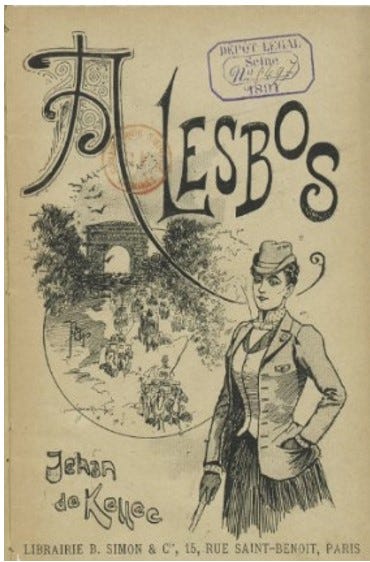
It is surely not unreasonable, given the tropes that underpin slang’s use and creation – marginality and secrecy, inward observation of the group, the need for an intra-group code that denotes membership at the same time as it sets up barriers for the uninitiated – to hope, even assume that if there was anywhere that would encourage woman-generated slang it would be the lesbian community.
Lesbians, runs the celebrated tale, were not included in Victorian anti-homosexual legislation because Queen Victoria refused to acknowledge the possibility of their existence. A separate lesbian slang, it is generally pronounced, is equally implausible: while gay men have a wide vocabulary, recorded since the 1910s, lesbian speech generally defeats the researchers.
As is slang’s way, its vocabulary treats lesbians, as well as bisexuals and others who stand outside heterosexuality as objects. There are over 200 slang terms meaning ‘lesbian’ but virtually all come through male eyes. Yet there is a lesbian lexis, albeit largely resistant to discovery. It is to be found in closed institutions, e.g. prisons where terms include ‘gay for the stay’: taking on a woman-to-woman relationship to palliate one’s sentence and a female equivalent of the male prison’s jailhouse turnout; ‘purple whale’, a home-made dildo using maxi-pads wrapped round a toothbrush and covered in a purple medical glove, and ‘ag’, short for aggressive and thus one who takes a ‘masculine’ role.
As it is necessary to do when considering the relationship of slang to gay men, it is worth a slight pause to ascertain how slang treats their female equivalents. The answer brings no surprises. If women as a group – even those who are supposedly the objects of male devotion – get rough treatment from the counter-language, then so too does the lesbian, she who in male prescription ‘just needs a good seeing to’ to bring her to her heterosexual senses (unless or should that be especially if she has togged up in pornography’s predictable lingerie so as to indulge in a bit of ‘hot all-girl-action’ for the cameras; but such girls, ordered up for male delight, may be more professional - and less exclusively homosexual – than the dreamer wants to believe.)
Like the earliest terms for gay men, the first point of call was the classics, most obviously the use of Sappho, adopted directly from the name Sappho (c.600 BCE), the poetess of the island of Lesbos (although it would take slang-coiners several centuries to pick up on the potential of the latter). There is the she-centaur, a development of the mythical creature ‘with the head, trunk, and arms of a man, joined to the body and legs of a horse’ (OED). In this context it is a pun, spelt out by Charles Cotton in Erotopolis (1684) who talks of ‘She-Centaurs shall they be [...] for in these places it is, the young Shepherdesses first learn the Art of Horsemanship and Horse-play, first riding one another.’ Logically the only other recorded term reverses male practice where gay men get female names (nancy, molly) and adopts a male name, Tommy, for all-girl use, and circuitously suggests in ‘A Sapphic Epistle’ (1773) that ‘Miss Sappho [...] was the first Tommy the world has upon record.’1
There follows a gap, at least as recorded, not until bull-dyke is recorded in 1892 does slang pick up the thread once more. Maybe Victoria’s blind eye extended to cover her subjects too. But Her Majesty notwithstanding there were lesbians and they used language and some was probably not standard and it is possible that such 19th century slang that did exist remained very much on the level of personal coinage. For instance the diaries of Anne Lister (1789-1840), some 23 coded volumes over 34 years, reveal that her term for sex was kisses or grubbling, and that for her partner’s vagina queer.2 The first pair are euphemisms, with grubbling coming from grabbling, feeling with the hands, searching about. Queer, while unused in this sense by slang, seems, whether Ms Lister appreciated it or not, to fit easily into those qu— terms (quim, queynte, etc) that themselves euphemise cunt.
When things do recommence, as is slang’s way the bulk of the terminology reflects its stereotypes of lesbian sexuality. That and a couple of words – lesbian and dyke – and their variations. Thus lesbian gives les/lez, liz, lezzie, lezzer/lesser, lesbo/lezbo and the slightly more creative les-be-friends, les girls and leslie-anne. Slang’s primary term remains dike/dyke, even if its etymology is still unresolved. There is a possible link to US slang dyked down, used of a man and meaning dressed up, which at least covers those women who have dressed as men. Another theory opts for a gradual corruption of the standard English hermaphrodite to morphodike and beyond that to morphodyke and thereafter dyke/dike, and after that coupling with the masculine generic bull to give bull-dyke and the variations offered below. The problem with this, as noted at length by the slang collector Richard Spears in 19853 is 1. that we have no records of hermaphrodite or its variations as meaning lesbian and 2. that the first recorded use of bull-dyke (1892) substantially predates that of simple dyke (1930), which makes the latter an abbreviation, rather than the basis of a compound. There are more outlandish theories, e.g. linking the SE dyke, a channel, to the vulva and moving from there to theories about ‘male cunts’. These are better dismissed.
Using the bull-dyke pattern slang has come up with bodaggle, boydyke, bull, bull-dagger, and B.D., bull-bitch, boldyke, bulldicker, bulldyker and a variety of specifics such as baby dyke, diesel dyke, dinky-dyke, drag dyke, granola dyke, leather dyke, and van dyke. The sole spark of wit is reserved for Dutch girl.4 Dyke is seen as linked to masculinity (the equivalent of butch) and that generates a number of terms that echo traditional male imagery: top sergeant, battle cruiser, diesel, enforcer, gal officer, hard daddy, he-bitch and he-she, jasper, poppa and truck driver. Amazon, and perhaps apache, promotes the ‘woman warrior’ image.
But just as many male gay terms focus on what slang sees as the quotidian imperatives of male-to-male sex, i.e. fellatio and sodomy, so are lesbians almost invariably associated with all-girl cunnilingus. Whatever other pleasures two women can offer each other in the absence of men it is this that jerks slang’s chain. Perhaps the fact that many of the terms also apply to heterosexual men make them more acceptable. They include bush-licker, box-biter, slot-licker, carpet-chewer, carpet muncher, rug-muncher, cat-lapper, chuff-muncher, clam-diver, clam-smacker, clit-hopper, cunt-eater, cunt-lapper, cunt-sucker, cunt-muncher, crack snacker, fanny nosher, gap-lapper, lover under the lap, muffer, muff-muncher and muff-diver. Despite this fixation one of the first ever terms for lesbian intercourse, the game of flats, from flatcock, a woman (i.e the ‘flat’ vagina vs the ‘bumpy’ male genitalia) suggested face-to-face genital rubbing rather than face-to-groin consumption.
Of the rest, and slang has amassed getting on for 250 terms in all, one may assess a few of the less obvious. Rhyming slang (on dyke) gives Raleigh bike, three-wheel trike and thus three-wheeler. The theatrical-cum-gay jargon Polari reverses its usual omee-palone, a ‘man-woman’ and used for a a gay man, to give polone-omee/polone-homi, a ‘woman man’. A chemise-lifter plays on the mainstream slang shirt-lifter, a male homosexual. The tennis fan is a euphemism that is presumably meaningless outside those who already appreciate the ‘translation’. Finally a term that stands as antithesis of the glamorous lipstick lesbian of fantasy: a woman in comfortable shoes.
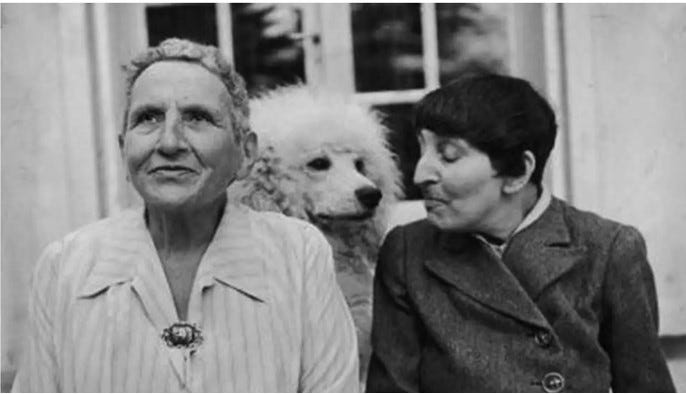
Yet slang created and spoken by lesbians is far more problematic. In purely lexicographical terms it is a frustrating search. Mainstream slang dictionaries draw on what little they can find and the same small lexis is repeated. Even-purpose-built dictionaries have little to offer. Gershon Legman’s appendix (‘The Language of Homosexuality: An American Glossary’) to G.W. Henry’s Sex Variants (1941) has 14 ‘lesbian’ terms out of 1000; the great ‘gay slang’ lexicon, Bruce Rodgers’ Queen’s Vernacular (1971) attributes barely 4% of its terms (69/1939) to lesbian usage. A search through a ‘lesbian classic’ such as Radclyffe Hall’s Well of Loneliness (1928) may turn up 20 slang terms, but none relate to sexuality, even if there is the possible conscious double-nudge of labelling a female character ‘a queer fish’ (though that term – devoid of sexual implication – had been recorded since 1772). In The Scarlet Pansy (1932) by the pseudonymous ‘Robert Scully’ (i.e. the ex-pat gay writer Robert McAlmon who ran with the American branch of the Parisian avant-garde), the reader follows Fay Étrange (from Kunstville ‘in the lower Pennsylvania hills’), Henry Voyeur and Percy Chichi as they make their way around gay America. As well as auntie, fairy, fruit, gay, go down (fellate), Miss (used in combination as a nickname for a gay man), queen, queer, sissy and tearoom (a public lavatory popular for casual sex and assignations, the US equivalent of the UK cottage), we also encounter butch, bull and bull-dyker, femme and mantee. In what the cognoscenti were fully aware was a roman à clef, taking in most of McAlmon’s friends, we also meet ‘Marjorie Bull-Dike’, ‘“Clittie” Thorndike’, and a number of other lesbians (including portraits of Alice B. Toklas and Gertrude Stein) with such surnames as Fuchs, Godown and Kuntz. Not to mention ‘Bobby Dike’ a ‘collar and tie woman’, and the high-living family of Beach-Bütsches. Hemingway is allegedly in there somewhere, but these were apparently a nod to Sylvia Beach, publisher of Ulysses and owner of the progressive bookshop Shakespeare and Co., and her companion Adrienne Monnier.
Still, for all his flamboyance and a plot that brought in every variety of homosexual life and placed them on the most fluid of sexual roundabouts, Scully/McAlmon remained a man. He may well have picked up valid contemporary ‘lesbian’ language from those he knew, and put it between hard covers, but even he must join the ventriloquists. Finally, however unimpeachable his gay credentials, is most of this still not the language used of lesbians rather than by them?
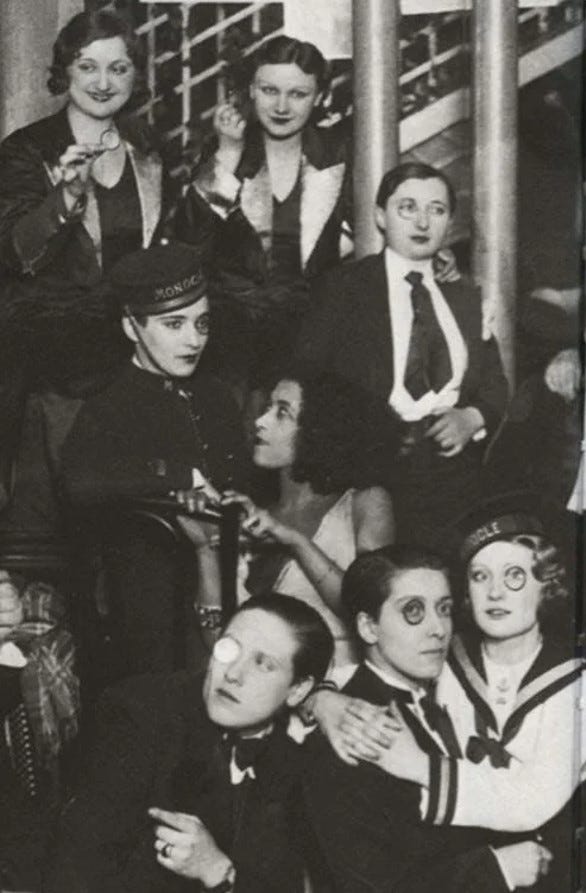
Finding sources has remained a challenge. Greg Jacobs, in an assessment of the literature of gay and lesbian language5, was unimpressed: ‘Not one single study focuses primarily on lesbian words. Most of the studies completely ignore lesbians. Some early studies even use the term homosexual to refer exclusively to men as if it were an entirely male phenomenon. Those studies that did address lesbian issues did so sparingly, almost as an aside. Can this apparent lack of lesbian words be interpreted to indicate that lesbians share more in common with heterosexuals than with gay men? Or is it an unfortunate commentary on the status of lesbians in general, or within academia in particular?’
We are forced once more to address the basic questions: where is lesbian slang, and if not, why not? The first person to opine seems to have been cultural critic and folklorist, Gershon Legman. Writing in 1941 he offered a two-pronged answer: a ‘tradition of gentlemanly restraint among lesbians stifles the flamboyance and conversational cynicism in sexual matters that slang coinage requires’ and suggested that ‘[l]esbian attachments are sufficiently feminine to be more often emotional than simply sexual’6 In this case there would be no need for a wide-ranging sexual vocabulary. Quite how that jibed with the emotional excesses (however artificial) of ‘queen culture’ among some gay men, was not addressed.
A more modern analyst, the feminist linguist Julia Penelope has seen the answer in more political terms. Lesbians don’t favour slang because slang doesn’t favour lesbians. Taking on board the belief that slang is a male construct, and that all males – gay or straight – are de facto misogynists, why should a woman wish to borrow their lexis, however rebellious and counter-cultural. The idea that lesbians might wish to develop a slang that reflected their own position did not enter the picture.
In 1970 she circulated a questionnaire as part of a piece (written as Julia P. Stanley) aimed at categorizing ‘Homosexual Slang’.7 What she saw were two slang vocabularies; the core (which might be shared in part by heterosexuals) and the fringe (which existed for communication within the homosexual group). As regarded lesbian ‘fringe’ slang, the results were nugatory: just five words: two were the very well known dyke and bulldike, two, fluff and twist, were for ‘feminine’ lesbians, the equivalent of a straight boy’s girlfriend, and one was a supposedly humorous male put-down: dump truck: a car full of lesbians. Lesbian-to-lesbian use of such terms was far more nuanced than that of the wider world, but that did not ultimately influence the big picture. Given that she believed that it was the fringe vocabulary, which reflected ‘the most innovation and the greatest restriction [i.e. defining boundary] to homosexual activities’ that was the true ‘homosexual slang’, the absence of a lesbian version was problematic. ‘To [accept that theory] however, would make it necessary either to say that lesbians do not belong to the homosexual subculture or to define two separate groups. Neither alternative is attractive.’ She advocated ‘further research with these problems in mind.’
As an example of that research came in her suggestion, writing in 1979 in tandem with Susan J. Wolfe, that lesbians ‘have been socially and historically invisible...and isolated from each other as a consequence, and have never had a cohesive community in which a Lesbian aesthetic [and presumably lexis] could have developed.’8 The authors have also suggested that what is known as ‘gay slang’ (using Rodgers as her source-book) is little more than slang’s usually anti-woman putdowns. They, among other feminists, also criticize such habits as using ‘she’ for another gay male, labelling or addressing such men as ‘Miss’, the camp, self-referential use of ‘Your Mother’ and the adoption of women’s given names as generics for gay men, e.g. molly, perhaps the first such and noted in 1693, nancy, mary-ann and so on. This may be qualified as reading the past through the eyes of the present, but such were the foothills of what would become identity politics.
Boots of Leather, Slippers of Gold, by Elizabeth Lapovsky Kennedy and Madeleine D. Davis, an oral history of working-class lesbian life in Buffalo, NY from the 1930s to 1960s, and based on interviews with some 45 women (‘narrators’), was first published in 1993. The second biggest city in the state, still dominated by heavy industry (shipbuilding and steel) in the era of which these interviewees spoke, Buffalo was as far as one could get from what little else we know of lesbian life in the mid-20th century. The patrons of its lesbian bars lived lives that were the antithesis of, say, the Nathalie Barney circle’s chic get-togethers in some recherché boîte on the Left Bank, or the isolated pair of ladies – one somewhat tweedy, occasionally be-suited, the other opting for floaty, flower-printed tea-gowns – living quietly together in some Agatha Christie village. This is not the world of Parisian bohemia, louche London parties or Miss Marple’s neighbours, but of tough bars, physical fights and bowling leagues.
The interviewees, all working-class women, and both black and white (though not Hispanic) speak in the language that would be expected. There is a good deal of slang – no-no (impossibility), necking and petting, crush (amatory obsession), fuck up (to blunder), rough up (to assault), boobs (breasts), box (the vagina), balls (as courage), hang-up (neurosis), shit (to fool), trip (an eccentric), hit on (to approach sexually), have it (to have sex), go off (to reach orgasm), smooch (a kiss), doll (a pretty girl), broad (a woman), squeal (to betray), carry a torch (mourn a lost relationship), shithouse and a good deal more. This is all mainstream. If these examples seem to focus on sex/relationships, then that was the framework in which many of the interviews were carried out. None are especially ‘lesbian’ and none are attributed to a single gender.
There are also a number of terms that are usually found in a gay or heterosexual context but are here repurposed for lesbian use: bull session (usually involving a group of males, but here an all-female discussion), funny (sexually ‘deviant’, usually aimed at gay men); drag (usually men dressed as women but here reversed, although a reference to drag queens presumably does refer to male impersonators in female dress), sixty-nine (simultaneous mouth-genital sex; mainly found in heterosexual use, but here of lesbian lovers); daisy chain/threesome (again repurposing what is usually associated with heterosexual sex: ‘[A friend] wanted me to go to this daisy chain gang [...] I was not interested. I have never been at all intrigued by multiple sex or sex orgies or groups’). The closet and the phrases coming out and out (of the closet) also seem to have been borrowed from male homosexual use (although, despite lack of recorded instances, they may have always been used by both men and women.9 Finally the self-description of lesbians as homo or queer : the authors suggest that in both cases what is being borrowed is not so much two of the best-known (and at that period derogatory rather than re-appropriated) terms for gay men, but the image of social stigma that accompanies them: we too, says the lesbian users, occupy exactly the same position in the eyes of ‘straight’ society. Bull-dagger is also noted, ‘used by hostile straights as an insult’.
The remaining terms can be seen as coming from a genuine lesbian lexis.
The general self-description was gay/gay girl/gay kid, though the sense is that this would not have been used outside the lesbian world. (‘[There] was plenty of gay people at that time, but [...] they kept it in the closet’; some people, not all, would use the term ‘gay girls,’ or ‘gay kids’ to refer to either butch or fem, or both). Gay, in any homosexual sense, is first recorded in 1922, though it does not really enter mass use until the late 1960s (propelled beyond homosexual life by the counter-culture).
As explained by many interviewees, lesbians of the time had a strict division: one was either butch (masculine) or fem(me) (feminine). Butch, which enjoyed such synonyms as diesel (dyke) and truck driver, offered the adjective butchy (‘tattoos on her arms, she really looked rugged...rough’) and several sub-groups. The lavender butch (‘butch but femmy’) suggested that her masculinity was tinged with a degree of femininity; femmy is explained by an an interviewee who recalls: ‘I wanted a girlfriend, a girlfriend that was more, like, femmy [...] That was what really turned me on was bleached blondes, and of course makeup and real femmy clothes, y’know, dresses and high heels.’
There was also the stone butch. As explained in 1998 in the online Rebecca’s Dictionary of Queer Slang ‘The term comes from African American slang, in which “stone” means “very.” It has come to have other meanings as well. A butch can be sexually stone, as in, not being able to permit herself to be touched on the genitals for sex; emotionally stone, meaning that she has locked away her emotions and has trouble acknowledging or expressing them; or physically stone, having trouble being touched at all. A stone butch is usually some combination of all of these.’ Kennedy and Davies explain that ‘We confronted Stormy, who referred to herself as an “untouchable,” with the opinion of another narrator, who maintained that stone butches has never really existed, she replied, “No, that’s not true I’m an untouchable. I’ve tried to have my lover make love to me, but I just couldn’t stand it.”) Meanwhile in the African-American community stud broad and ‘stud and her lady’ were common terms.10
If one fell betwixt and between, there was the term ki-ki (perhaps from chichi), which played the same part for gay men: one was homosexual but undecided as to whether one wished to be overtly ‘masculine’ or ‘feminine.’ As one interviewee put it, ‘Yeah, they called them neither-nor, ki-ki...double role playing’ and suggested that the pose was not so much the result of indecision, but rather of leaving oneself open to which ever sexual experience one might choose from a given encounter. Not everyone was so fluid. Faced with a femme partner who suggested that they might take the sexual initiative, and spend time pleasuring their butch companion, the stone butch used the dismissive phrase ‘I don’t take the sheet’. In other words, I’m the only sexual aggressor in this relationship. The idea of ‘taking the sheet’ presumably suggesting that the partner who is being pleasured is the one lying underneath and thus directly on the bedsheets. As a butch put it, ‘You know what I mean “don’t take the sheet,” don’t you? That mean a stud make up to a fem all the time, a fem did not make up with a stud.’ Make up being another version of come on.
Although heterosexual (and male) generated slang almost invariably equates lesbians with cunnilingus, the interviews suggest that the primary interactions were face-to-face frottage, the rubbing together of the partners’ genitals, mimicking heterosexual ‘missionary position’ intercourse. The 17th century’s game of flats had things right. This was known variously as banging, friction and dyking. It was, as one woman put it, ‘just like a man would do to a woman, except for there’s no intercourse [...] you don’t feel the penis inside you.’
Unlike male homosexuals, whose sexual vocabulary runs to thousands of terms, the lesbians of the pre-gay liberation era seem to have had very few. Soixante-neuf was as much a matter of embarrassed giggling as it was of ‘girl-on-girl action.’ One interviewee recalls actually getting a picture drawn to help explain what she would be supposed to do. Kennedy and Davies suggest that the lack of terminology came from a wider reticence; women simply didn’t wish to discuss sexual intimacies, or not outside the bedroom. And add that the whole butch pose consciously precluded much talk. Short hair, leather jacket, T-shirt, boots...one was already coming on like the monosyllabic hard man of stereotype, and he had little to say.
They also note that the era’s lesbians were as lacking in sexual sophistication as many others of their time, straight or gay. A bottle of mouthwash in a friend’s bathroom ‘meant’ that she must practice cunnilingus and as such that in turn ‘meant’ that she was ‘dirty’. Men, being penis-centred and refusing to believe that women could do without the male organ, even (or perhaps especially) in the physical absence of its owner, burdened all lesbian intercourse with dildos and other phallic ‘toys’. The truth would have disappointed them. As one woman put it: if women wanted a fake penis she might as well get the real thing. And if so, so much for lesbianism.
[part 2 to follow]
other than its adoption of a common male name, there is no proven etymology for this sense of the word
K. Lister ‘The woman who had a lesbian church wedding in 1834...’ in inews.uk 12 Feb. 2019; Anne Lister ‘dressed entirely in black, ‘enjoyed firing pistols at supper, and was known as “Gentleman Jack” by the tenants she ruled over with an iron fist.’
R. Spears ‘On the Etymology of Dike’ American Speech 60:4 (Winter 1985) pp. 318-27
if this defeats any readers, remember the old story of the heroic Dutch boy (thus the tale, but no matter) with their ‘finger in the dyke’.
Greg Jacobs ‘Lesbian & Gay Male Language Use: A Critical Review of the Literature’ American Speech, 71:1 (Spring, 1996), p.57
q. in D. Kulick ‘Gay and Lesbian Slang’ in Annual Review of Anthropology Vol. 29 (2000) p.249
J.P. Stanley ‘Homosexual Slang’ American Speech, 45: 1/2 (Spring-Summer, 1970) p. 47
J. Penelope & S.J. Wolfe ‘Sexist slang and the gay community: Are you one, too?’(Women’s Studies program, U. Michigan 1979) p. 12
Slang’s first examples appear in 1961 and these interviews deal with earlier decades, though they were actually recorded in 1980s, thus the possibility of using modern slang to describe older events
in Colin MacInnes’ Absolute Beginners (1959) the lesbian Big Jill addresses the anonymous narrator as ‘stud’, presumably transferring her own slang to a flesh-and-blood (and heterosexual) male
No posts
Comments
Nothing yet. Say the first thing.
Sign in to join the conversation.