
I host a couple of podcasts, including one aimed squarely at Generation X: Over Fifty & Unfiltered. We briefly thought about calling it Over Fifty & Fucked, which felt more accurate, but we suspected the algorithm might clutch its digital pearls and quietly escort us from the premises.
On the podcast, we talk about the glorious intergenerational mess we’ve inherited. Generation X has spent much of its life sitting quietly in the background, mostly because nobody remembered we were there. We were the latchkey generation: raised on Findus Crispy Pancakes, mild neglect and the firm instruction to come home when the streetlights came on.
Meanwhile, the Boomers sailed off with the final-salary pensions, affordable houses, and retirement plans that actually involved retiring. Then, rather inconsiderately, they began living much longer than expected. The response was not to celebrate this miracle of modern medicine but to quietly remove most of those benefits for everyone coming behind them.
“Sorry,” the economy said. “We appear to have run out of security. Would you like a zero-hours contract instead?”
For both Boomers and Gen X, having a family was generally presented as a natural stage of adulthood. You grew up, found a partner, bought a house, had children and eventually watched those children leave home.
Except the last part has stopped happening.
Many Gen X parents are discovering that their thirty-year-old children remain firmly installed in the spare bedroom. They have a master’s degree, three jobs, a sourdough starter, and absolutely no prospect of buying a one-bedroom flat without arranging the convenient disappearance of a wealthy relative.
Thank goodness I’m gay and child-free. I already devote enough emotional energy to caring for a cantankerous tabby cat who believes she is royalty. At the age of fourteen, or possibly fifteen (she refuses to release her birth certificate), she has discovered her voice. She now uses it mostly at stupid o’clock in the morning, usually to announce that the kitchen still exists.
She doesn’t want food. She wants staff!
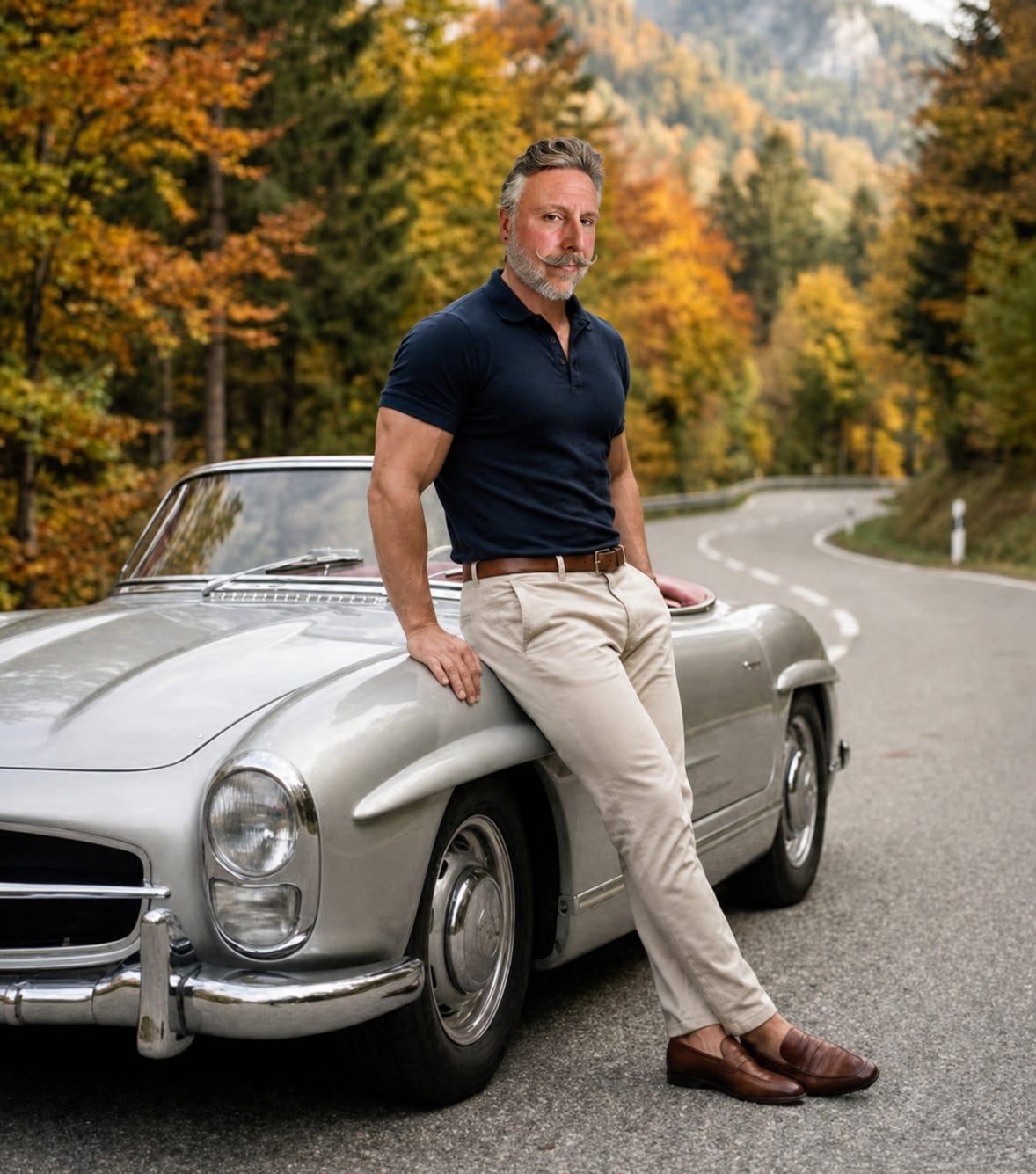
One recent podcast discussion turned to artificial intelligence in dating profiles. More specifically, we talked about the growing habit of using AI to tune, polish and renovate one’s face and body until the finished image bears only a passing resemblance to the person who owns it.
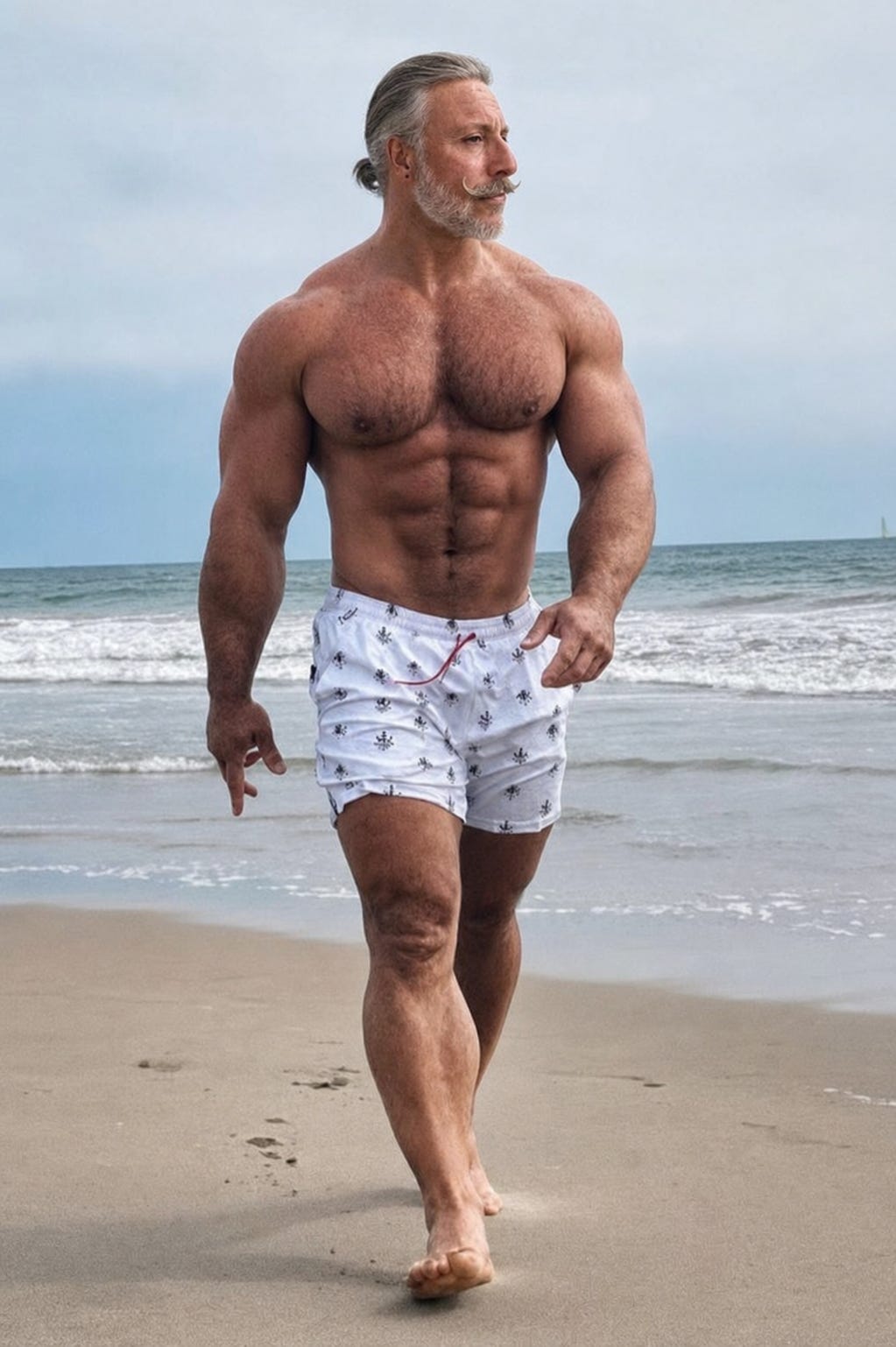
People who are single and ready to mingle can now make themselves look younger, thinner and smoother at the tap of a screen. Lips become fuller. Hair becomes thicker. Jawlines acquire an architectural sharpness not seen since the Shard was opened. Eye bags vanish, cheekbones rise and skin develops the luminous finish of a freshly glazed doughnut.
A few minor adjustments can quickly become a complete digital refurbishment.
There is, however, a fairly obvious flaw in this plan. If every photograph on your dating profile and social media accounts shows you looking beach-body beautiful, what happens when you meet someone in real life?
Are they expected to wear Google glasses with a permanent beauty filter built in? Do you meet in a dimly lit restaurant and insist they remain at least twelve feet away? Do you send a digital avatar to dinner while you stay at home eating crisps?
At some point, your date is going to notice that the twenty-eight-year-old Mediterranean fitness model from the photographs has arrived looking like a tired 54-year-old accountant from Milton Keynes.
There is nothing wrong with looking like a tired 54-year-old accountant from Milton Keynes. There are websites devoted to precisely that sort of thing. The problem is the gap between the advert and the product.
I recently had a conversation with a BookTuber whose photographs I had noticed were being filtered, a lot. He has a beard in real life, but it is slightly wispy around the cheeks and moustache. This is perfectly normal for many. Beards, like careers and family WhatsApp groups, are rarely as full and well-organised as we would like.
Online, however, his current social media beard has become magnificent.
It is dense, glossy and luxuriant. It sweeps across his face with the confidence of a Hollywood star. It could win one of those much-lauded beard competitions in which solemn-looking men gather to judge facial hair as though assessing prize cattle.
The trouble is that it doesn’t correlate with the person’s actual facial configuration.
He is a lovely man in real life, and his identity is strongly connected to being a bearded chap. I understand that. Facial hair can become part of how a man sees himself, particularly when it also signals membership of a particular tribe. But his social media is gradually presenting a completely different person.
It is beginning to feel less like retouching a photograph and more like using an avatar as a profile picture, except everyone is expected to pretend the cartoon is him.
There is a serious and understandable reason for his decision. He is currently undergoing surgery and, for the time being, does not feel comfortable using recent, unaltered photographs of himself. That deserves sympathy rather than judgement. We all have periods when the face in the mirror doesn’t feel like the face we recognise, and illness or surgery can magnify that discomfort enormously.
Yet even with the best of reasons, it feels like a slippery slope, and AI has thoughtfully applied oil and a marvellous facial hair enhancement to it.
Once the surgery is over, unless a beard transplant is added to the list, his real beard and moustache will presumably remain much as they were. In the meantime, beard enthusiasts are fawning over his images of facial hair that does not technically exist.
And let’s be honest: in the gay world, a hairy chest and a decent beard can do a great deal for the algorithm and even more for the likes. Add a moody black-and-white filter, stand near a brick wall and look as though you have just remembered a disappointing childhood, and you are practically an influencer.
But how far do you take it?
Photography has never been completely honest. Long before AI, there were airbrushes, flattering lenses, clever lighting and photographers who knew that turning your body three degrees to the left could remove half a stone.
Magazine covers have been smoothing skin, lengthening legs, enlarging breasts and reducing waists for decades. Hollywood used soft-focus lenses to make ageing stars appear permanently misted by divine light. Even painted portraits were a form of early face-tuning. A wealthy aristocrat did not pay an artist to preserve his acne and weak chin for posterity.
The difference is speed, availability and scale.
What once required a professional photographer, an art department and several hours of patient deception can now be achieved while sitting on the toilet scrolling on an app. Anyone can generate a more conventionally attractive version of themselves in seconds, and then generate another one, and another, until their real face begins to seem like the least convincing option.
That is where harmless enhancement can become something stranger.
A filter might begin by softening a wrinkle. Then it improves the lighting. Then it strengthens the jawline, thickens the beard, brightens the eyes and gives you the hairline of a much younger cousin. Each alteration seems tiny when considered on its own. Together, they create someone who shares your name, clothes and general postcode but not necessarily your appearance.
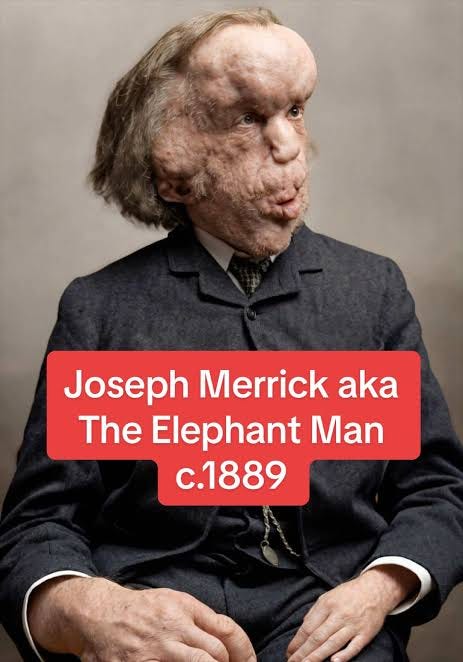
Eventually, the edited face becomes the public face. It gets the likes, the compliments and the flirtatious messages. Your real face, meanwhile, is treated like the Elephant Man, an embarrassing understudy who must never be allowed out of the house.
And if people prefer the invented version, what does that do to the person being concealed?
Social media platforms encourage this behaviour because attractive faces generate attention, and attention generates profit. The algorithm does not care whether the person in the photograph exists. It cares whether people stop scrolling.
That creates a peculiar feedback loop. An enhanced image receives more likes, so the user posts more enhanced images. Those images establish a new standard for how the user is expected to look, making unfiltered photographs feel riskier. Eventually, appearing online with your own face can feel like turning up at a black-tie event in your pyjamas.
It is easy to blame vanity, but this is not simply about narcissism. It is also about fear: fear of ageing, rejection, illness, loneliness and becoming invisible.
For older people, particularly older gay men, that fear can be acute. We inhabit a culture that claims to celebrate individuality while rewarding a remarkably narrow definition of attractiveness. Be youthful, but not immature. Masculine, but perfectly groomed. Rugged, but with flawless skin. Authentic, but only after editing.
AI merely offers to help us meet these contradictory demands. Its sales pitch is seductive: You can still be yourself, only better.
But if “better” always means younger, thinner, hairier and smoother, perhaps we should ask whose idea of better we are using.
AI is frequently said to be coming for our jobs. Depending on the headline, it will either liberate humanity from drudgery or replace us all by Thursday.
But could it also begin to remove people from communities?
If we become accustomed to presenting idealised versions of ourselves, will real-world encounters start to feel unbearably untidy? In person, faces move. Bodies have texture. Hair behaves unpredictably. People sweat, blink at the wrong moment and possess more than one chin when photographed from below.
Reality has very poor quality control.
Perhaps dating will increasingly take place online, between curated identities that communicate through images of the people they would like to be. We may build entire digital communities populated by beautiful avatars whose owners barely resemble them. Everyone will be younger, taller and better rested. Nobody will have pores. The beards will be magnificent.
And yet nobody will actually be there.
That is the part that worries me. A slightly flattering photograph is not a moral crisis. Most of us choose pictures in which we look reasonably alive. There is no obligation to upload the one taken under supermarket lighting while sneezing.
The danger comes when enhancement turns into replacement, when the altered image is no longer a polished version of you, but a fictional person you must continue impersonating.
Dating already requires a leap of faith. You are trusting that the person you have been messaging is broadly who they claim to be: single, emotionally available and not currently living with a spouse who believes they are working late.
Now we must also establish whether they have their advertised face.
There is something wonderfully human about an imperfect face. It records time, illness, laughter, grief and the consequences of staying up too late with a couple of bottles of wine and an ill-advised Netflix series.
Wrinkles are not system errors. A patchy beard is not a software bug. Looking your age is not a failure of personal branding.
By all means, choose good lighting. Stand at your preferred angle. Crop out the laundry basket. If a filter makes you feel more confident during a difficult period, use it with a little kindness toward yourself.
But leave enough truth in the photograph for someone to recognise you at the bar.
Because the point of a dating profile should not be to attract the greatest possible number of strangers. It should be to attract people who might actually like the person who turns up.
AI can create a flawless complexion, a heroic jawline and a beard capable of winning international awards. What it cannot do is sit opposite someone at dinner, make them laugh, ask a thoughtful question or create that sudden spark of recognition when two real people realise they enjoy each other.
At least, not yet.
And when it can, I hope it is also willing to take care of my cat at four in the morning!
No posts
Comments
Nothing yet. Say the first thing.
Sign in to join the conversation.