
Here’s the thing about martinis. Everyone has an opinion, most people can’t actually explain the difference between “dirty” and “wet,” and half the fun of ordering one is that you get to pretend you’re on Sex and the City. Shaken or stirred? Gin or vodka? Olives or a twist? There’s no wrong answer, but there IS a right way to ask for what you want so you actually get it.
Here’s what you can expect in this guide…
what actually makes a martini a martini
the terms you need in your back pocket
every major variation decoded (martinis for dumbies)
the ingredient breakdown
and arguably most important: how to build one at home
Let’s get shaking!

Looking for the BEST Martini Glasses? I’ve started a collection of some of my favorites!

At its core, a martini is just a spirit and a little vermouth, stirred or shaken with ice, then strained into a glass with no ice in it. That’s the whole skeleton. Everything else you’ve heard of (dirty, wet, Gibson, Vesper…) is a variation built on top of that same frame, not a different drink entirely.
Beyond that, the gin-versus-vodka debate isn’t really a debate at all. A gin martini is the classic version, and a vodka martini is a completely valid, completely different drink that just happens to be served the same way. Order whichever one you actually like, but know that a classic martini = a gin martini.

A lot of martini ordering comes down to a handful of fancy words. “Up” means it’s served in a stemmed glass with no ice in the glass itself, which is the default serve, while “on the rocks” means it’s poured over ice instead. Colder for longer, but it’ll water down faster.
“Dry” means less vermouth, and “extra dry” can mean almost none at all, sometimes just a rinse of the glass. “Wet” is the opposite, meaning more vermouth than standard, closer to equal parts gin and vermouth. “Perfect” is its own thing… equal parts dry and sweet vermouth, instead of just dry.
“Dirty” means a splash of olive brine gets stirred in, and “filthy” means a lot of it. This is a go-to for anyone who wants their martini to taste like it was shaken in an olive jar.
“Naked” means spirit only - no vermouth whatsoever. But, if you ever hear a bartender mention “in and out,” that means the vermouth gets swirled into the mixing glass and dumped before the gin goes in. That’s about as dry as it gets while still technically touching vermouth.
We can’t forget our garnish terms! A “twist” is a lemon peel, twisted over the drink to release its oils, and “bruised” is what purists call a shaken martini, since shaking can chip tiny bits of ice into the drink and cloud it slightly. James Bond famously didn’t care. You don’t have to either!
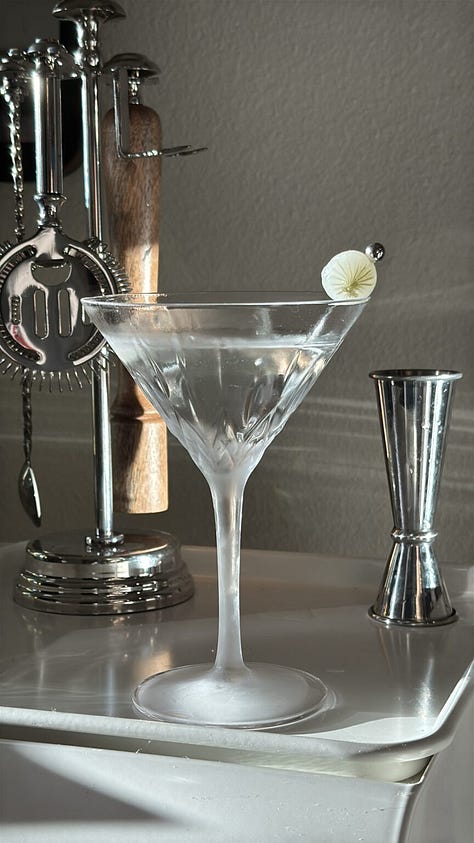
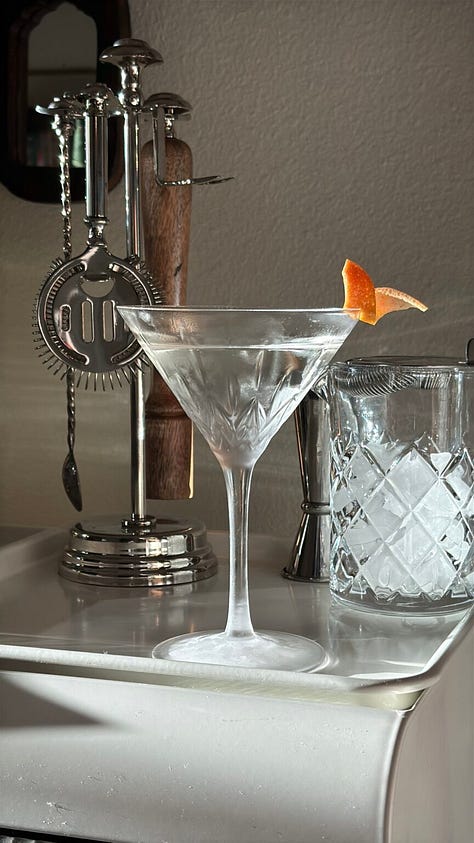
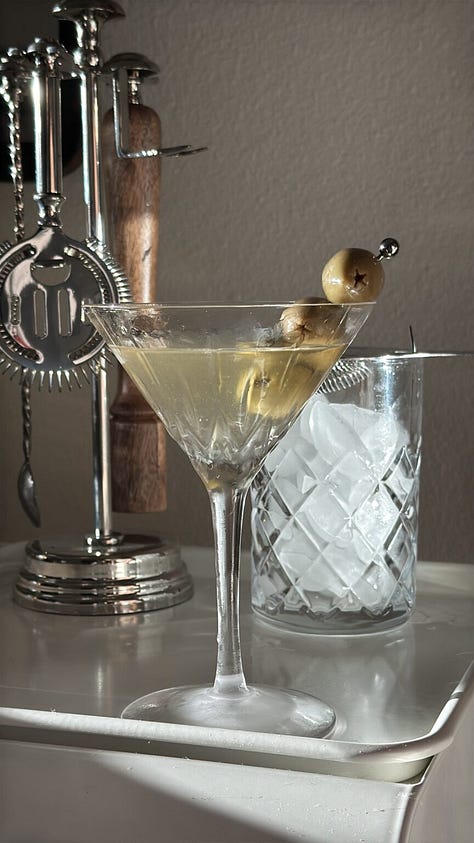
The martini is a base recipe that everyone bends to their own taste, which is exactly why “just a martini” is never a safe order. Your bartender or waiter will have follow-up questions. Once you know the handful of variations that actually have names, ordering gets a lot less intimidating, I promise.
Comments
Nothing yet. Say the first thing.
Sign in to join the conversation.