
Common Ground is Ground’s newsletter highlighting the most important consumer news, tech trends, artificial intelligence, in-depth analysis, along with a few extra thoughts from our team. Subscribe today to get the latest issue delivered to your inbox.
This issue comes from Sheida Mirjahani, Growth Lead at Ground.

If I were running an ecommerce brand today, I would have asked myself:
Which first purchase creates my highest-value customers?
Which product opens the door to the most cross-sells?
Do customers who came in on a big discount actually stick around?
Which one-time buyers are most likely to become subscribers?
Which products bring people back again and again?
Simple questions that every founder has asked them but almost nobody can answer them.
And there’s a new way to reach to these answers: Deploy custom revenue agents (yes, they exist, and yes, leading consumer brands are already generating extra revenue with them! - more on that below) that both generate you revenue and capture you the customer data you need.
Most people hear AI agents for b2c and immediately think chatbots. A widget in the corner of your website answering "where's my order?"
I get it. That's what the market has been trained to expect.
But there’s another category of agents called revenue agents that are quietly getting more and more popular. Read how VIOLETTE_FR or RoC Skincare generated at least extra 10% DTC revenue with Ground’s revenue agents.
But what are revenue agents exactly?
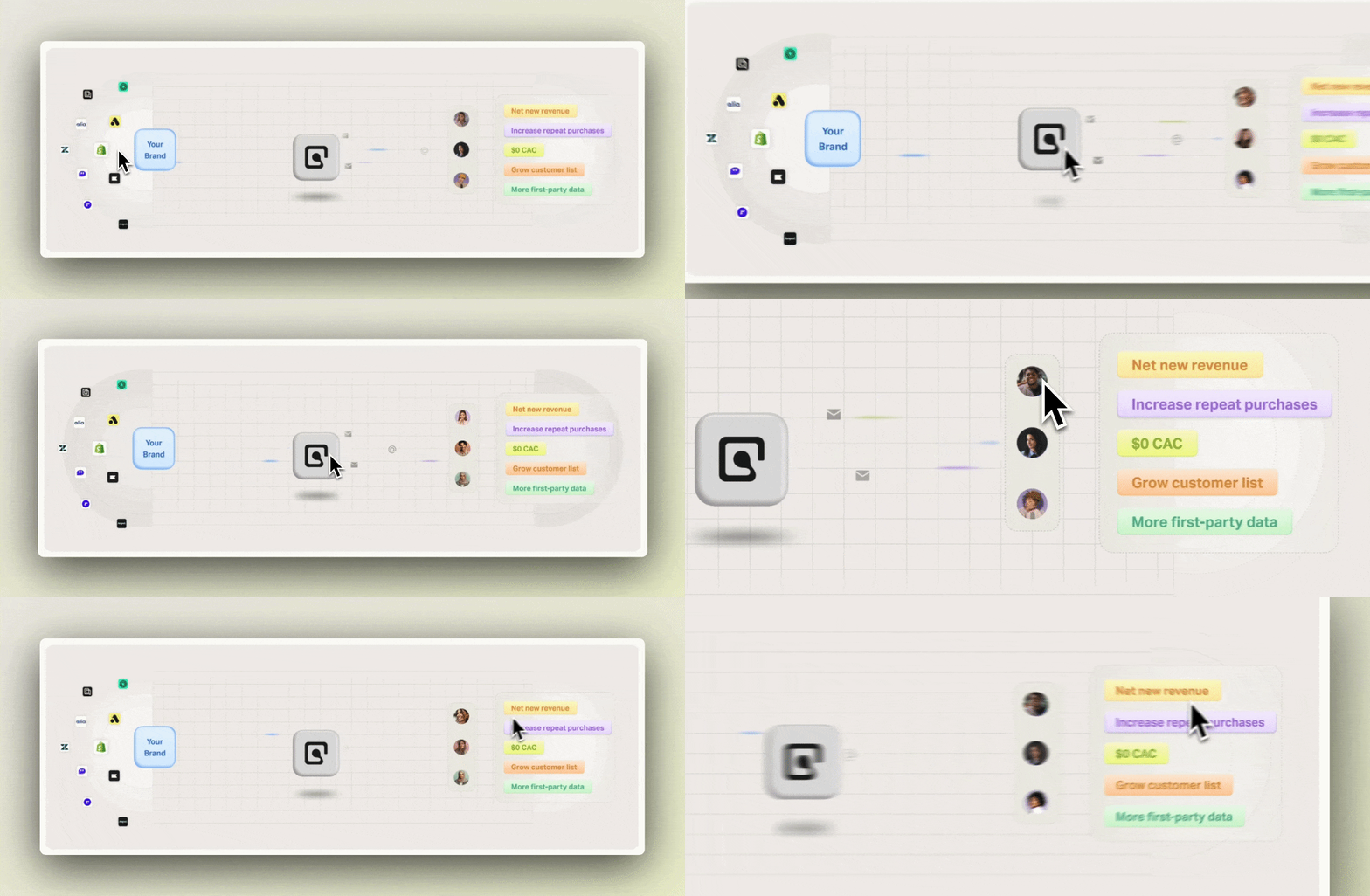
A revenue agent is an AI with one job: make you more money. It sits inside the channels you already run - your site, your email, your SMS - and makes small decisions all day long. Who should see a welcome offer, and when. Who’s about to leave. Who’s ready to buy again. Which message to send, and which to hold.
Think about what a great growth team does all week. They look at what’s converting and adjust. They change email triggers based on how customers behave. They time offers so margins don’t bleed. Now imagine that rhythm running every hour of every day, without waiting for Monday’s standup to decide what changes. Those are revenue agents jobs.
They also bring 3 core value to your business, beside generating additional revenue:
We at Ground have built a suite of AI agents that are running inside leading consumer brands and are generating them revenue.
Take ReBeat, our retention agent. It watches every customer after the first purchase - what they bought, how they browse when they come back, and what customers like them usually want next. Then it sends the right message at the right moment, instead of a “we miss you” email on day 45 because day 45 is what someone set in 2023.
The difference sounds small. It isn’t. Calendar-based winbacks talk to everyone the same way. Prediction-based winbacks talk to each customer when that customer is ready. Brands using Ground see 2–4x more repeat purchase revenue -not because the emails got prettier, but because the timing finally matched the person.
More second purchases, faster. More subscribers from one-time buyers. That’s LTV going up.
Here’s the thing about acquisition costs: you don’t have to lower your ad prices to lower your CAC. You just have to waste fewer of the visitors you already paid for.
Most brands convert 1–2% of their traffic. The other 98% leaves - and most leave without ever telling you who they are. You paid for every one of them.
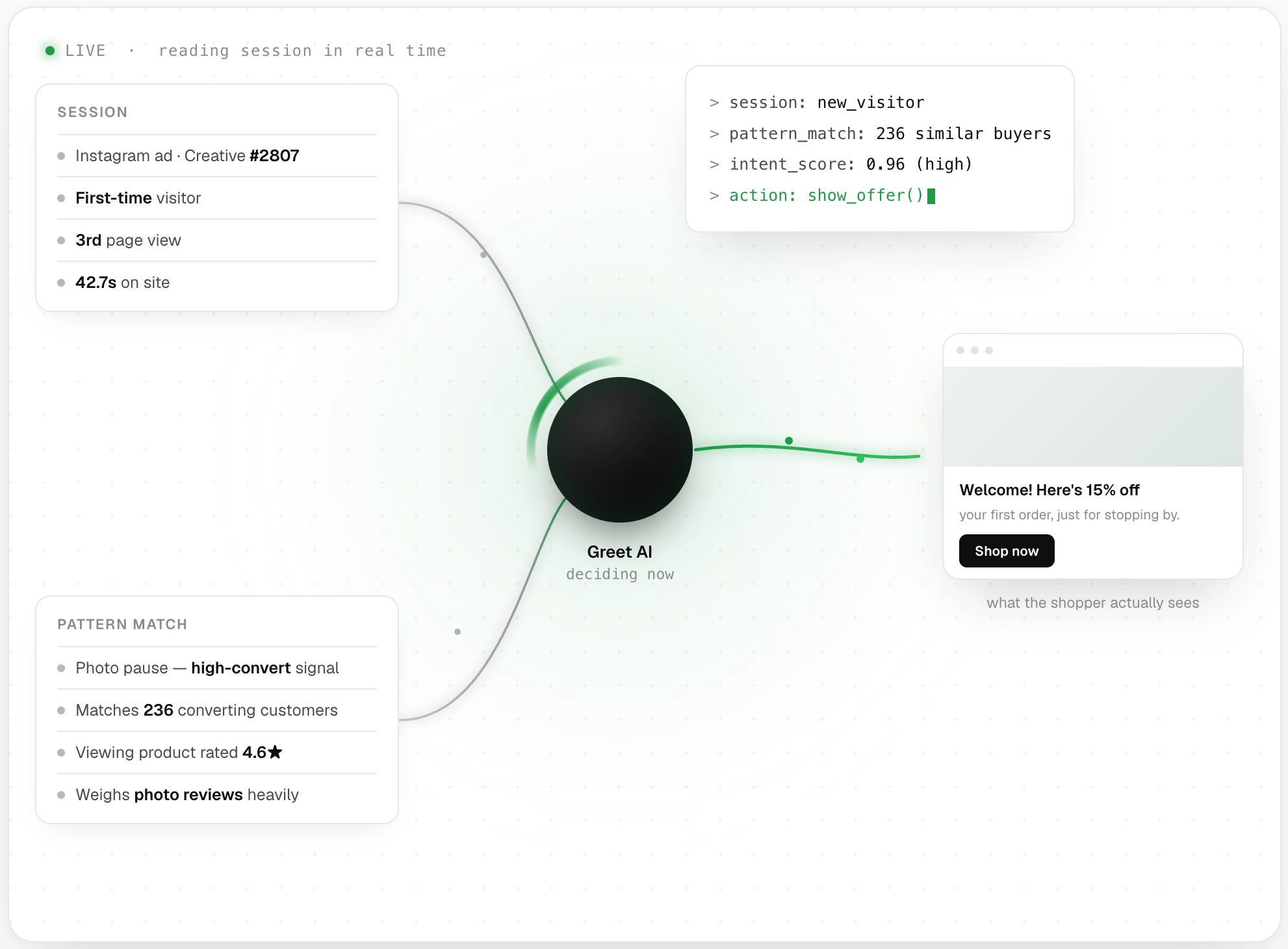
Our other revenue agent, Greet AI, works that problem. It reads how each visitor behaves - what they look at, where they hesitate, which ad brought them in - and shows the right welcome offer at the exact moment that visitor is deciding. It even mirrors the ad they clicked, so the site picks up the conversation the ad started instead of restarting it.
Same traffic. Same ad spend. More customers out the other end. When more of your paid clicks turn into buyers, the math is simple: your cost per customer drops without touching your ad account.
If you want to see what that looks like on your own traffic, book a demo - we’ll show you the visitors your current setup is missing.
Every decision an agent makes creates a data point you didn’t have. Every visitor Greet identifies is a name, an email, and a story - which ad they came from, what they browsed, what finally convinced them. Every prediction ReBeat makes - right or wrong - teaches you something about how your customers actually behave.
Go back to those five questions at the top. Which first purchase creates your best customers? After a few months of agents running, you can just look. The answer is sitting in your own CRM, attached to real people, because the agents were collecting it while they were converting.
That’s the flywheel, and it only spins one direction:
More conversions → more revenue → more data on what works → smarter agents → more conversions.
Your ads can’t compound like that. Your discounts definitely can’t. A discount you ran last summer taught you nothing. An agent that ran last summer made you money and left you smarter.

Ground’s agents plug into the Shopify, Klaviyo, ad accounts, sms platforms, etc. Greet AI converts first-time visitors. ReCartify recognizes the shoppers your stack forgot. ReBeat brings customers back before they drift. They run as clearly labeled flows inside your own account - your data, your relationship, your customer. Setup takes about 15 minutes, and brands typically see 30–50% more first-time revenue without having to manage another tool.
Book a demo - see the flywheel running on brands like yours
Want a head start on those five questions with the data you already have? Export your last 12 months of orders and paste this into Claude:
“Group my customers by their first product purchased. For each group, show me: average number of repeat orders, average total spend, and the % who bought a second time within 90 days. Rank the groups. Which first purchase creates my most valuable customers?”
If this changed how you think about what your tools should be doing for you, share it with a founder who’s still buying traffic to make up for the customers they can’t see.
No posts
Comments
Nothing yet. Say the first thing.
Sign in to join the conversation.