
By John W. Fountain
FROM THE DEPTHS OF the souls of Black folk, this timeless indispensable documentary emerges like the sweet scent of Mother Africa on a Ghanaian shore as the ancestors whisper softly on a gentle, ocean-salted morning breeze: “Remember…”
It is a compelling true story. One that begins in America, in Great Barrington, Massachusetts, with the birth of a Black boy, five years after the Emancipation Proclamation, three years after the 13th Amendment abolishing slavery. An American story that snakes across the U.S., even to the Deep South amid two World Wars and eventually crosses the Atlantic Ocean to West Africa.
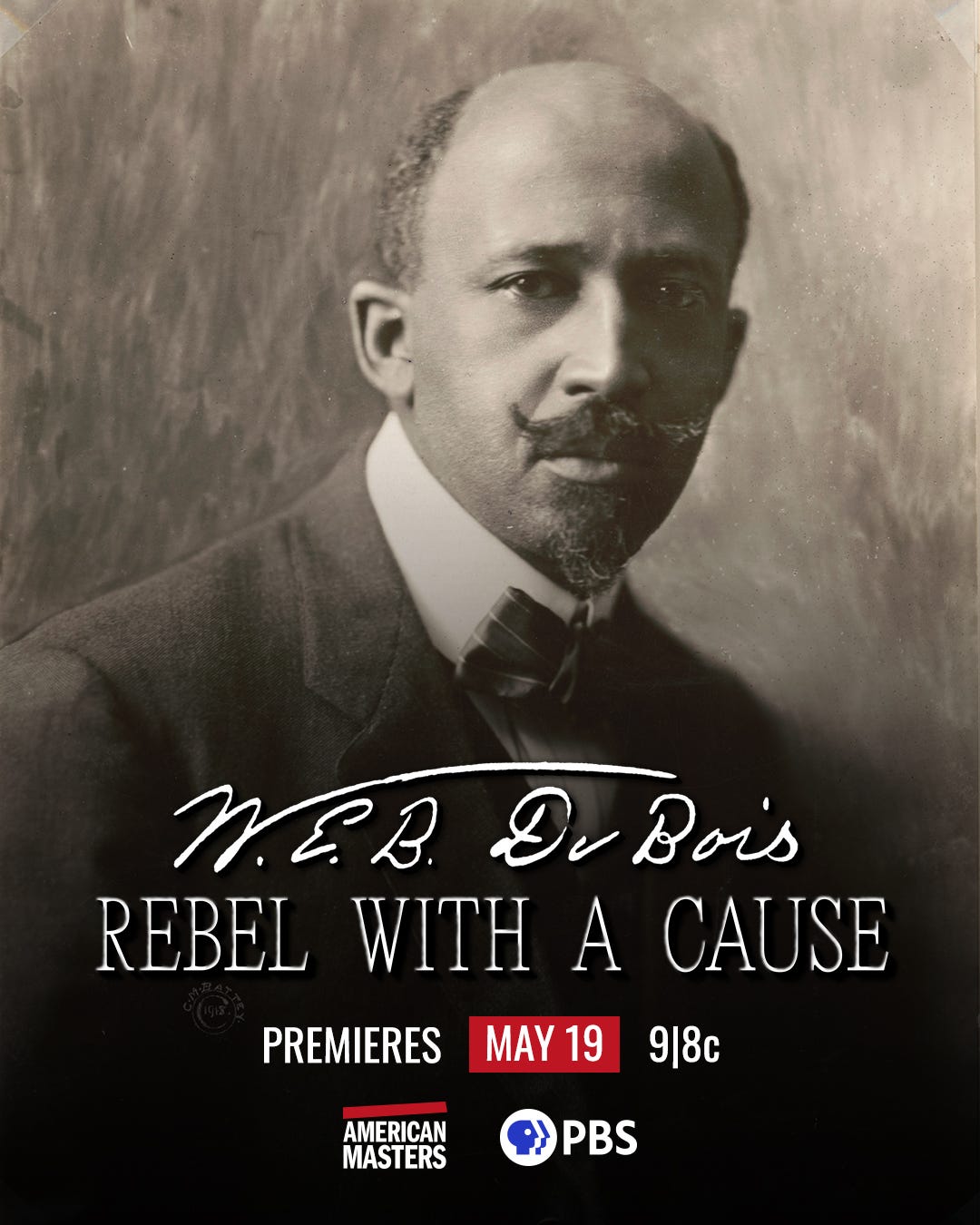
Indeed it is a historic documentary narrative told with painstaking accuracy, sensitivity and purpose by its director. The story chronicles the life and times of William Edward Burghardt Du Bois—a consummate visionary and one of the most profound academic minds in U.S. history whose voice, thoughts and contribution to the discussion of race in America and the entire African diaspora still hold resonant truths and shed luminous light on our past and for our future.
This documentary comes amid a quantifiable national assault against DEI, Black history education and civil rights, and a palpable shift in the social and political winds currently blowing cold across the American landscape and intent on taking us back to America’s dark past under the guise of “making America great again.” Enter “W.E.B. Du Bois: Rebel With a Cause.”
“Bringing our culture to life fulfills a childhood dream of mine, to see my people in various hues of living.” -Rita Coburn, Director
A two-hour documentary by Peabody Award-winning producer, writer and director Rita Coburn premieres nationwide at 9 p.m. (ET) Tuesday, May 19 on PBS (check local listings)/American Masters and the PBS App. Du Bois’s words—extracted from his wide body of literary and scholarly works—are brought to life by an all-star cast that includes Jeffrey Wright, Common and Courtney B. Vance, with narration by Viola Davis. The documentary is “enriched by commentary from leading scholars, historians, artists, and biographers including Raymond Arsenault, Karida Brown, Eric Foner, Henry Louis Gates Jr., Eddie Glaude Jr., Nikole Hannah-Jones, David Levering Lewis, Imani Perry, and more.”
“W.E.B. Du Bois: Rebel With a Cause” follows the story of the civil rights pioneer, scholar, activist and journalist who was the first Black person to earn a doctorate degree at Harvard University and whose work laid the foundation for the work of civil rights leaders to come.
This documentary is a jewel. It is a lamp unto our American past, a light unto our path. A must-see at a time when truth and facts are obfuscated by lies and deception and our hope for our future depends on our accessibility to unadulterated stories of the way we were and of our journey to overcome so that we may see more clearly who we might become as members of the only race that matters: the human race.
“More than 120 years after the publication of his seminal work, ‘The Souls of Black Folk,’ W.E.B. Du Bois’ writing and ideology still resonate globally,” according to a press release by PBS. “His commentary on systemic racial discrimination against Black Americans and the concept of “double consciousness” identity made him an influential voice of the Harlem Renaissance and inspired trailblazers like Dr. Martin Luther King Jr.”
The film explores “Du Bois’ remarkable journey, through education and personal growth, examining how he transcended the social constraints of the early 20th century and worked to elevate the lives of Black people worldwide.”
It chronicles in intimate detail the intersection of Du Bois’ life from Reconstruction through Jim Crow and Civil Rights; his struggles, losses, gains and his loves, none greater than his love for his people and for humanity; of his tireless wrestling with and determination to unveil the wiles of American systemic racism; and of coming face to face with the cruelties of the racially segregated South and lynchings.
If there are those who wish that Du Bois and his invaluable contributions—including his seminal work, “The Souls of Black Folk” (1903) in which he declared, “the problem of the twentieth century is the problem of the color line”—would rather be forgotten, “W.E.B. Du Bois: Rebel With a Cause” makes the case for all of America—and the world beyond her shores—to vow to remember and never forget.
“There were times in this country when our day to days lives were discounted or ignored and yet we were making history and forming this country as well as lives of spirit, truth and story,” Coburn told me of the inspiration for her work. “Bringing our culture to life fulfills a childhood dream of mine, to see my people in various hues of living.”
For this valiant and monumental effort, Coburn has earned, in my humble opinion, a debt of gratitude from all truth seekers committed to telling and preserving those precious stories that might otherwise be lost and that shine like the North Star, still pointing the way toward freedom. Among Black folk in particular, she has earned and deserves our support for this labor of love and all of her works past and present. I urge you to embrace this documentary.
What’s Coburn’s wider hope for and lessons to be drawn from the Du Bois documentary?
“I would like Black people to see their full potential and other cultures to see their need to be fairer human beings, not a cursory fashion but sincerely inclusive,” Coburn told me. “And because that has not happened and racism is changed one heart at a time, we need to have laws that support equality,” from voting rights to human rights. “We are still dealing with these issues in this country.”
Coburn told me that she is already preparing for her next project—a narrative “love story” rooted in black culture, although for the rest of the year she’ll be focusing on her Du Bois documentary, speaking nationwide at colleges and universities, churches and community events.
It is a compelling narrative, one that ought to be required viewing by every serious schoolteacher in America white and Black; by Black churches, community groups and youth programs with a follow-up lesson plan incorporating writing and self-reflection.
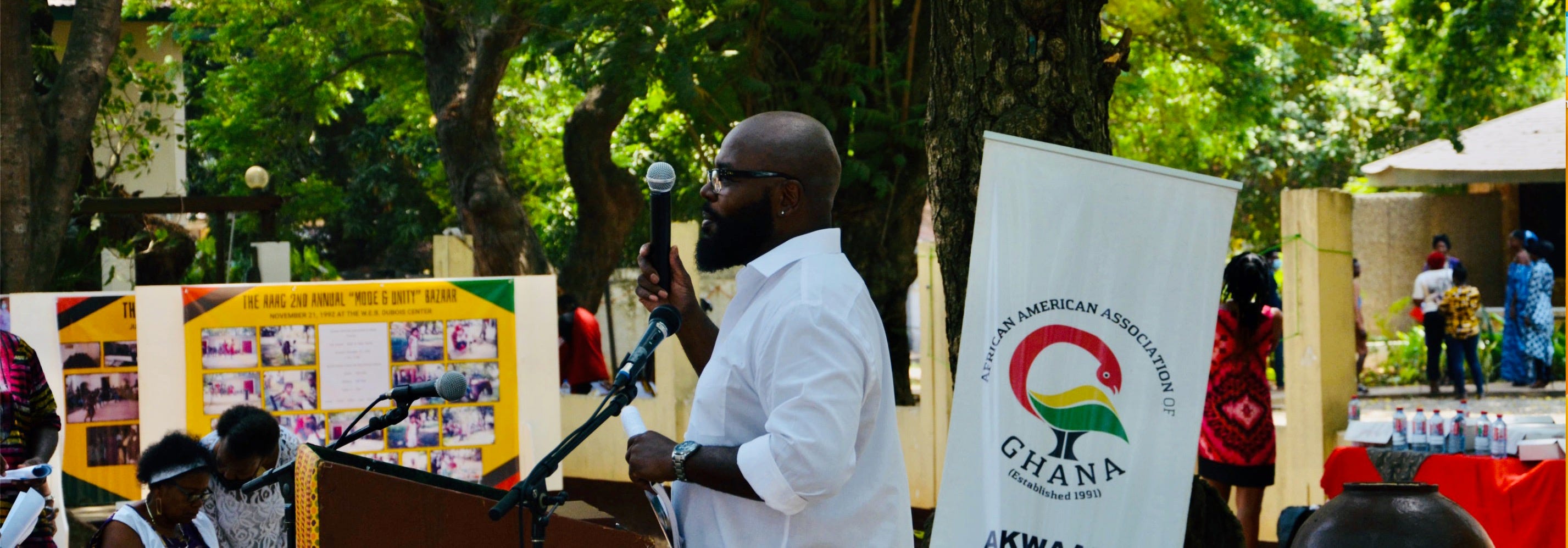
As a journalist, I found myself during and after the documentary reflecting on my own calling as a writer, on the journey and cost of freedom—moved by Du Bois steadfastness and by the story, which presents him as a man, and less an icon. I found “W.E.B. Du Bois: Rebel With a Cause” intriguing, inspiring and educational even as a fan of Du Bois who thought I knew his story. Even as a fellow Black who spent time during my Fulbright scholarship year (2021-22) to Ghana at the W.E.B. Du Bois Center in Accra, where my dear brother is buried.
And where I as a fellow American-born Black man and writer—nearly 60 years after his death in 1963—found respite and solace in Mother Africa on a Ghanaian shore as the ancestors whispered softly on a gentle, ocean-salted morning breeze: “Remember…”
Email: Author@johnwfountain.com


No posts
Comments
Nothing yet. Say the first thing.
Sign in to join the conversation.