
Walk down the left-hand exit out of Westminster station, step past a rough sleeper or two and then go left again along Westminster Pier. Pleasure boat kiosks line a pontoon on your right-hand side. The Thames slurps intermittently below. Up a gentle slope, Victoria Embankment lies ahead.
Thoughts soon turn to sewage. There’s no piss-pong or turd-honk to foul bright morning air, but the (mostly) pleasant vista before you owes its presence to urgent action against The Great Stink of 1858, when even Parliament, a five-minute walk back the way you came, acknowledged that the river could not sustain being an open cesspit and latrine.
Sir Joseph Bazalgette engineered a solution, including the Embankment’s creation. Completed in 1870, it has a wide pavement that runs between the river and a wide road. On the other side of the motor highway, the linear Victoria Embankment Gardens form a secluded refuge. The lower ends of the Savoy and Somerset House seem to spill patrons into its fountains and flowerbeds.
Beneath the Embankment, though, Bazalgette’s Northern Outflow still does its dirty work, conveying number ones and two all the way from Hammersmith to Abbey Mills Pumping Station, beyond Bow.
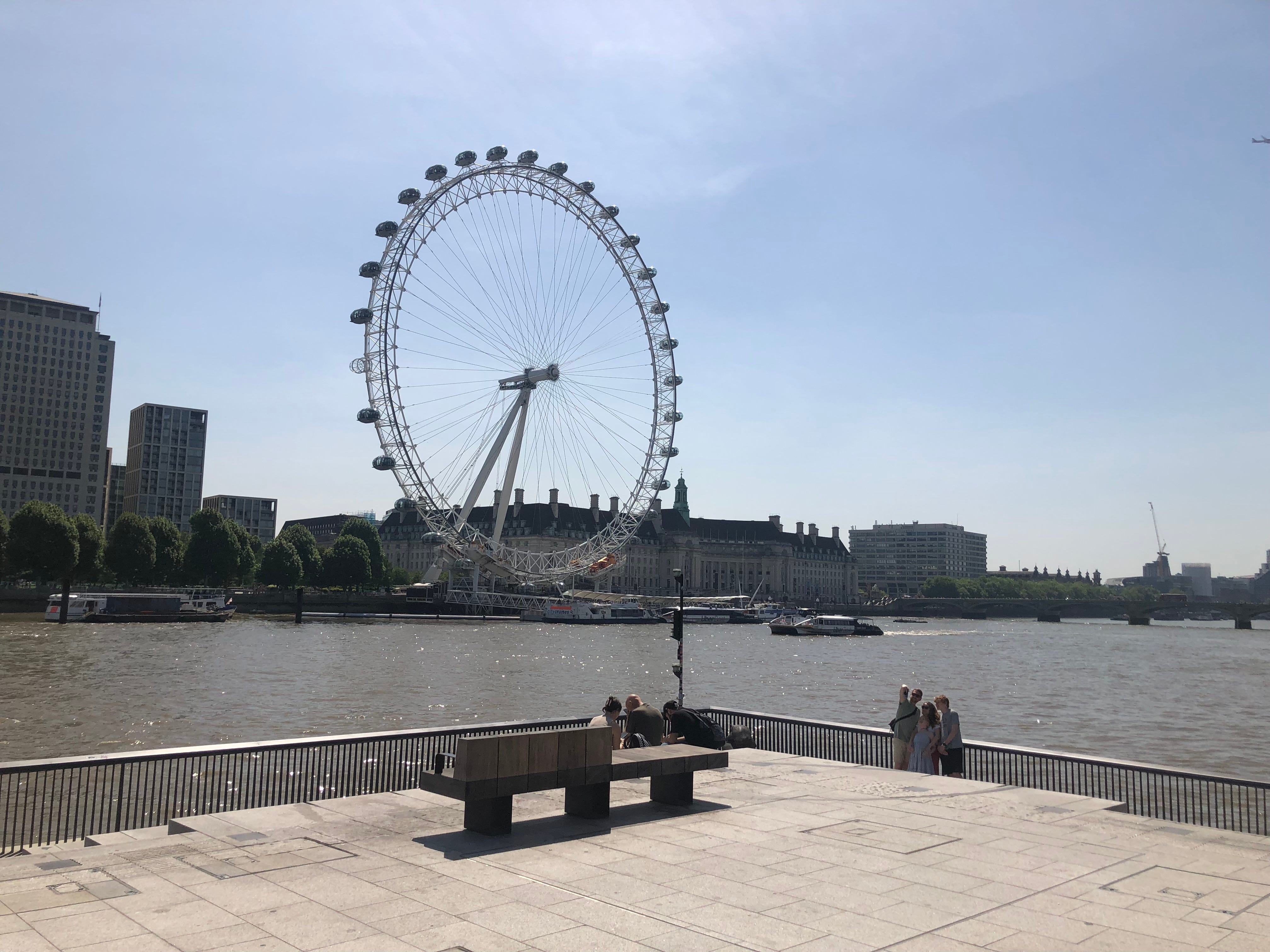
The system has since been augmented by the Thames Tideway tunnel, one of whose bonus gifts was the creation of a platform from which to gaze out across the water and contemplate the Shell Centre and London Eye on the other side.
That place is called Tyburn Quay. It is a stepped, sparingly-seated viewing space that houses a brace of ventilation columns, some poems, some art and two brown buildings linked by a canopy, one of which contains a toilet that, yesterday, when I was in the neighbourhood, wasn’t working.
Yes, that was an irony to be savoured. But it didn’t spoil the pleasures of Tyburn Quay, an ingenious addition to a stretch of the north bank that cannot hope to compete with the populous boulevards and waterfront attractions of its Southbank counterpart.
It is named in honour of the slender River Tyburn, which provided Londoners with clean drinking water until they opted to pollute it. Bazalgette buried and co-opted the abused stream.
Although a fitting tribute, the name Tyburn has other associations, not least the “tree” of that name where, for centuries, crowds gathered to enjoy watching people being hanged. For a place that aspires to providing relaxation, the Victoria Embankment contains some stark reminders of terror and death.
Back towards the pontoon, there’s the Battle of Britain Monument. Continue east, pass beneath the Hungerford railway and Golden Jubilee footbridges, and learn that bomb damage done to Cleopatra’s Needle and a guarding sphinx - not during the Blitz but World War I - has been deliberately left.
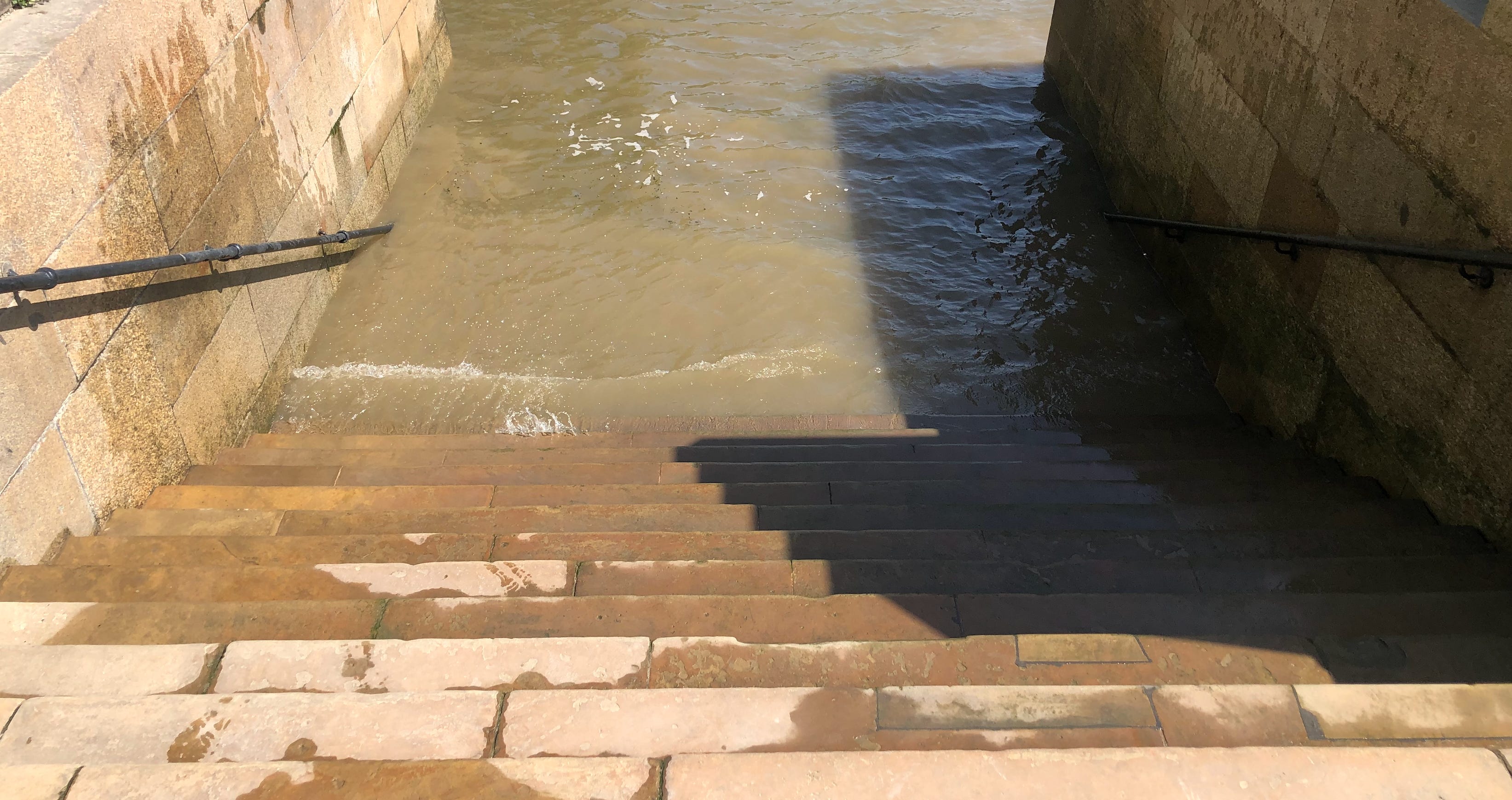
Still, the Needle, which was positioned on the Embankment a few years after its completion, also provides solace and delight. The viewing space there is much smaller than Tyburn Quay but it has steps on either side that go right down to the water.
There, the tidal Thames laps restfully and timelessly, a reminder of how the city came to be.
London Museum: How Bazalgette Built London’s First Super-Sewer.
Wikipedia: Cleopatra’s Needle.
Imperial War Museum: Cleopatras Needles and Sphinxes.
John Vane’s London novel, a political satire called Frightgeist, can be purchased here.
No posts
Comments
Nothing yet. Say the first thing.
Sign in to join the conversation.