
Thank you for your paid support. No, really, thank you so much.
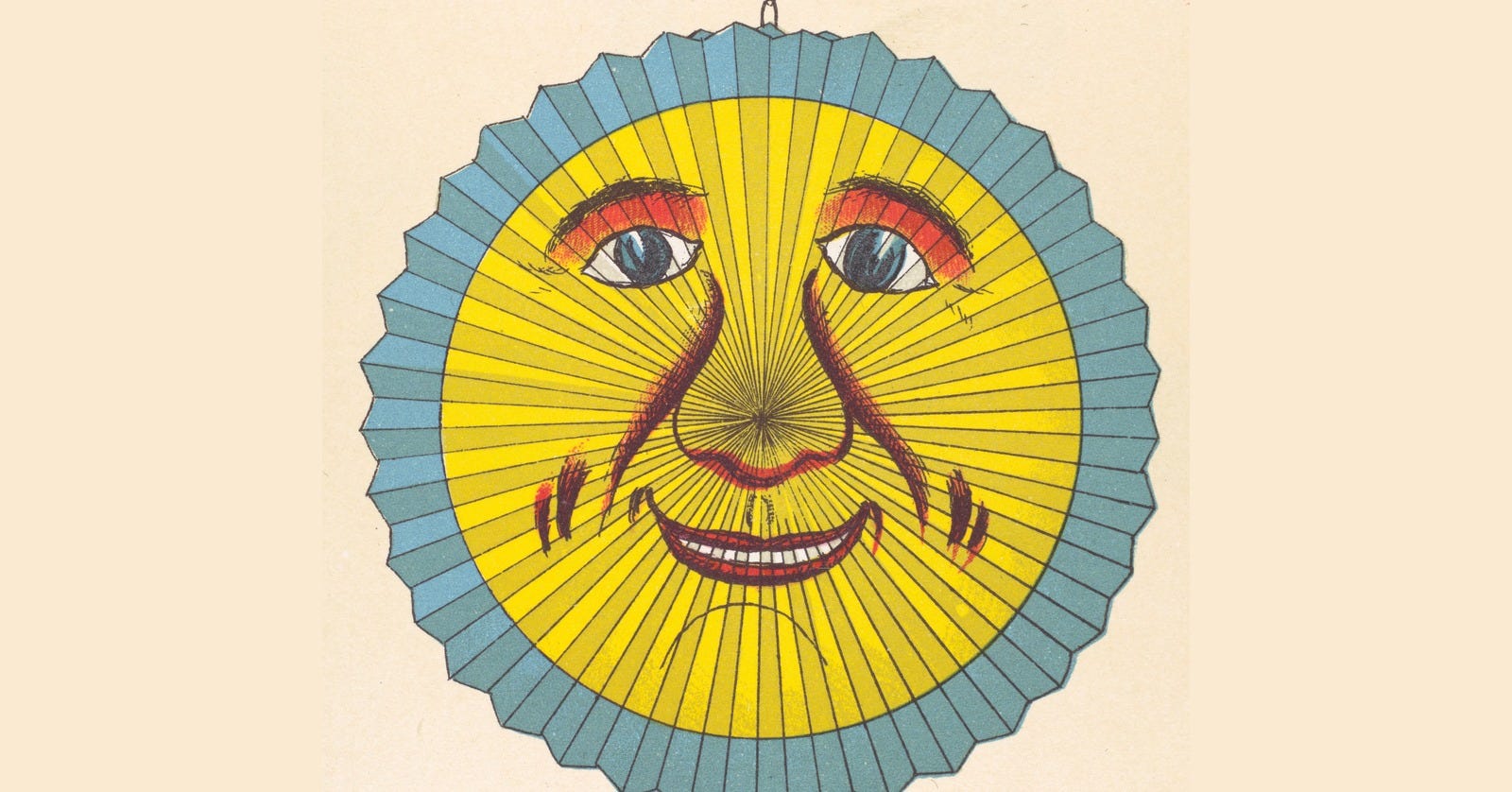
I listened to myself on a podcast today. The episode was recorded over a year ago. Culture, politics, the usual. I don’t typically listen to my podcast appearances. I avoid myself when possible. But there comes a time when it stops making sense to ignore certain things, when you dare to lock eyes with yourself and ask, “What do you want?” I sat, listened, and found what I was afraid to find. Mmhmm. Haha. Yes! Hehe. Gooey pleasantness. An eagerness to fill silences. Soft-bellied diffidence. Hehe. I wanted to leap into the episode and ask this giggling idiot what exactly was so funny.
It’s not uncommon to hate hearing your own voice. I don’t think any of us are meant to see or hear ourselves this much. This was something other than that: a formal diagnosis.
For most of my life, I’ve been a people-pleaser. I eschew conflict. I struggle to be difficult. Gratitude gathers like mucus in my throat, and I have to clear it. Thank you. Thank you so much! I appreciate it. Thank you. Wet coughs. I don’t know anyone more vocally grateful than me. Like a person who coughs all the time, I’m sick. People-pleasing is an illness. At root, it’s an infected relationship to gratitude. To grace. Gratia. An abscess on its walls.
Grace is indispensable. Infected grace is like an infected lung. It should be taken seriously, as a matter of life and death. Chronic people-pleasers don’t need to be convinced of this. They know the condition makes the ordinaries of life painful. Speaking. Seeing. Being seen. Grace is the good faith to move naturally through the world. Corrupted grace, bad faith, touches on every aspect of being. It strains every step and breath; produces sounds of discomfort.
Hehe.
You see why my little podcast giggle alarmed me, why it sounded to me like a gay character in a melodrama who coughs into his sleeve and is marked for a slow, agonizing death. People-pleasing is a kind of death. An inability to demand. A denial of the possibility to do harm. A refusal of the will. What’s a human without these things? A corpse. Or a new category of life form altogether, one that rejects the guiding valence of life itself, which is to live: to ask, to push, to resist if need be. Its opposite is Not-Life. Super-Natural. A saint, in a twisted way. The way an ingrown hair is a hair.
But, no. This view elides that people-pleasers, like anyone, are self-motivated. It’s only that their goal is counterintuitive. They want to be invisible. More accurately, they want to remain unseen. What you have to understand is that the people-pleaser has a fragile image of themselves. This self-image is their petty tyrant. They confuse this image for themselves because it’s on the inside, where we intuit the true self to be. But it’s not. It’s the abscess. Sensitive to the touch. Swollen. Growing larger by the day. Unsightly.
Human eyes are dangerous. They pierce. The abscess fears the scalpel. It’s impolite to see another person’s ugliness. It’s unmooring when your own ugliness is seen. The people-pleaser’s worst nightmare is to have their ugly, uncharitable view of themselves confirmed. That’s why silences, pauses, lulls in conversation are intolerable to them. Attention gathers in those clearings. Given enough time, enough quiet, attention might land on me. I scare it off with noise. Haha. Yes. Right. Mmm!
Grace, good faith, trusts that we can see and be seen without incurring permanent damage. Bad faith tells us that in every conflict, no matter how small, is the potential to be seen. The potential for Ragnarök. This is the philosophy a bubble would develop in a pointy world.
People-pleasers are generally thought of as weak. Cowardly. But consider the feats people-pleasers are capable of to remain occluded. Maybe you recognize such feats in your life, or have suffered on the baffling other side of them. There are times when a minor confrontation would make life easier for every party involved, and still the people-pleaser refuses, electing instead to make things many times more difficult. Most of all, they make things more difficult for themselves.
Caught between opposing wills, the people-pleaser knows he has to mollify them both. Mollification is the dire priority. To disappoint either side would be to allow the birth of an ugly image in another person’s mind. This image, like their own self-image, would be true and hideous. The infection spreads. Quarantine is the only answer. All sorts of complications and unpleasantness can happen under this logic. The benefit of conflict could be obvious and overwhelming, and even so, the people-pleaser would reject it. When you consider how thoroughly one must abdicate their best interests in pursuit of such a small theoretical gain, it beggars a sort of admiration.
All people have a reserve of aggression. All people have the capacity for cruelty. This is what makes the people-pleaser disingenuous, and not a saint. He can’t truly be harmless, so he denies nature. He ignores it. Avoids it. Intentionally mistakes not looking at it for it not being there. But the capacity for cruelty demands expression. The people-pleaser, thoroughly convinced of his badness, of his unique harmfulness, tries to abstain. To withhold. In withholding, he chooses guilt. Guilt is cruelty turned inward. If he calls this kindness, he’s lying to himself. This isn’t altruism, but retreat. In withholding himself, he obscures himself. Commits himself to a fog. Safe.
Can I confess some things to you? I build elaborate mazes with trick walls. Behind them are false treasures. I’ve impressed myself with my own strategies. In pseudo-vulnerability I’ve disclosed minor things and played them as major things so that I could scamper away, like a gecko surrendering its tail to preserve its head. Anything to trouble the march of conflict to my center, toward my beleaguered tenderness. I smother with honey anything that makes it too far. Even here, thank God, I have metaphor, analogy, language. I love writing. Writing’s tricks. I’m not here.
There are people who take the opposite tack. They pride themselves on being difficult, on being arrogant, on terrorizing others. They’re as weak and as small as you’d expect. They suffer the same fragile self-image. The abscess. Too much self. Self, withheld and gathered and swollen. Misery finds both kinds of person. They live with infected grace. Who can enjoy life while clinging so dearly to an abusive lump?
“People-pleasing” has nothing to do with pleasure at all. It makes the question of pleasure (friction) impossible. What I want isn’t to succeed in being seen as a kind, polite person, but to induce a failure to be seen. I obscure myself with gratitude like a fig leaf because I consider myself indecent. Sickly. Infected. My shame protects us both from my misanthropy, my cruelty, my ugly. You should thank me.
This arrangement only intensifies misanthropy. The people-pleaser thinks if he shows his belly, performs the trick, some bargain will be upheld. I preempt my agency. I play dead. The predator is obliged to politely look elsewhere. The people-pleaser will be permitted, with gratitude, to keep his self-image unmolested. It’s bad enough when this doesn’t work, when the people-pleaser feels stiffed, and he wonders why he bothered to diminish himself only to be found out anyway. It’s worse when this method succeeds. He enters the relationship between a master and his dog.
No human can tolerate being another human’s plaything. Even the masochist who salivates at the prospect is really working toward personal gratification. So the people-pleaser is prone to resentment, to bitterness, to angst. The people-pleaser can become the thing he fears being exposed as: nasty, small, spiteful. He might lash out. Attack. Become violent. The desperate last resort of the oppressed. He’s either unaware of, or frustrated by, the fact that he’s his own oppressor.
The question of where this behavior comes from is owed attention. Many answers. Wounds in childhood; open doors for bacteria. A strategy learned in the face of danger. People-pleasing only needs to work once as a deterrent from harm for the mind to settle into its logic. There are cultural influences. Congenital factors. Gender. Sex. So on. My money’s on a mix of these things meeting a surplus of awareness. Awareness complicates the animal motion of living. My people-pleasing, it seems to me, bears a relationship to my obsessiveness, my fixations, my overthinking; anxiety.
There’s a popular prejudice toward determining the cause. I want to deemphasize the romantic search for the source. It becomes narrative, and narrative becomes yet another alibi for the people-pleaser, who anyway feels most at home, most comfortable, in the interior. The people-pleaser would be all too happy to hear that spending even more time in self-contemplation might constitute progress of some kind. He suffers already from too much narrative; the yellow pus to be drained.
My answer is violence. A person who can’t violate his conditions, who politely refuses to disturb the universe, is inert. Impotent. Usable. So he’ll be used, either by others, or by the lesion. Himself. His false self. I say vandalize the self-image. Take the blade to the abscess. Empty it. Look into the raw, popped hollow. You might be unsurprised to discover: You are not there.
Hehe.
No posts
Comments
Nothing yet. Say the first thing.
Sign in to join the conversation.