
In the 90s, a weird thing happened with DC Comics.
But of course, I’m not going to jump right into that, I’m going to test your patience with backstory.
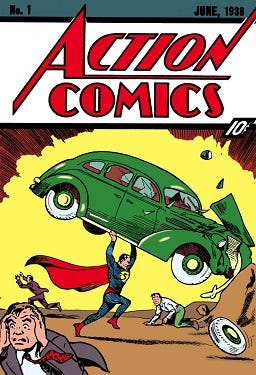
Many know, but in case you don’t: DC comics, waaaay back in the 30s & 40s, created the original versions of their characters. Superman, Batman, Wonder Woman, Green Lantern, the Flash, et al.
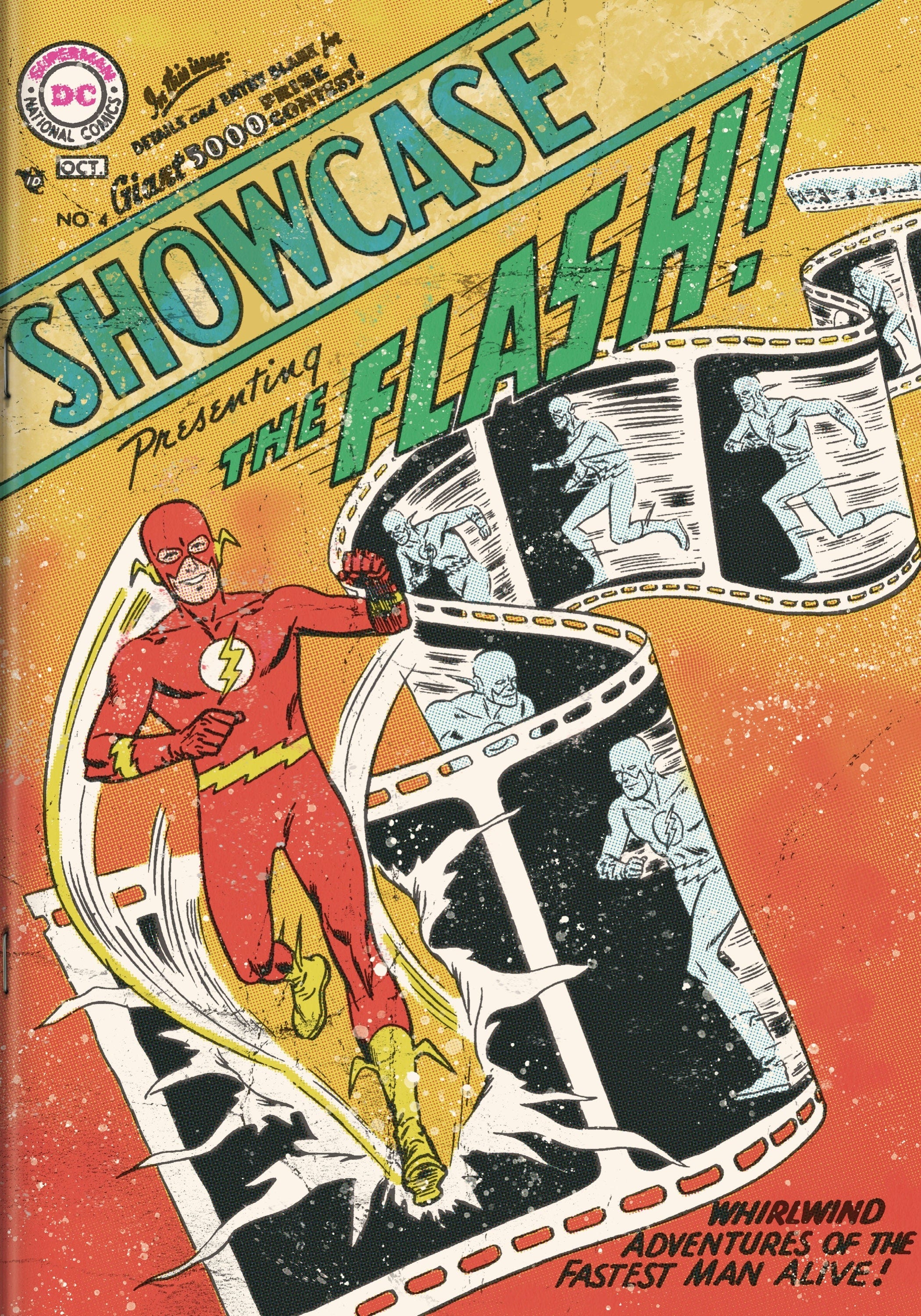
In the 60s, they sorta “rebooted,” by introducing new versions of some of those characters. New Green Lantern, new Green Arrow, new Atom, new Flash, and many more.
(The big three were more or less untouched, character-wise: Supes, Bats and WW were much the same as they’d always been. Batman got a yellow circle around his torso bat icon, but that was pretty much that.)
The new versions took over. And that was fine for twenty years.
Then things got a little confusing, having 50-odd years of stories and weirdo continuity, so DC produced Crisis on Infinite Earths.
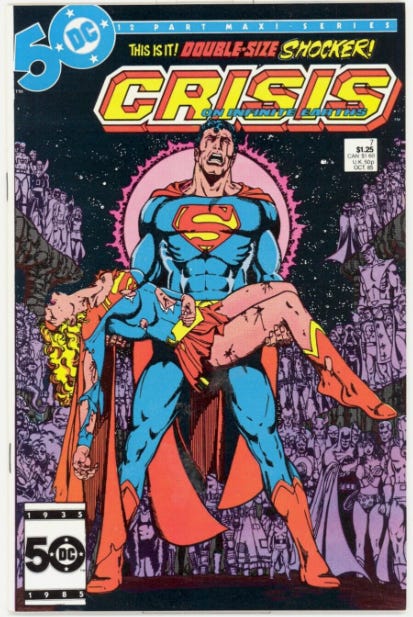
In Crisis, DC culled down their inventory. Inspired by Marvel’s tighter continuity, the powers that be decided that DC needed to be more… user-friendly? Hip?
Profitable?
Whatever the case, DC made some pretty bold choices, essentially rebooting the entire universe.
(They didn’t do it all at once, like they probably should have, and the way they did it was messy and really only caused more problems, but that’s another story.)
One big choice they made was killing off many, many characters, including a pretty prominent pair… Supergirl and the “new” Flash.

The Flash, in the character of Barry Allen (who I, as a kid, initially misread as “Barry ALIEN,” which seemed a weird but cool name, and now I can’t think of anything but), was one’a them prototypical superheroes, white, blond, blue eyes, good teeth…
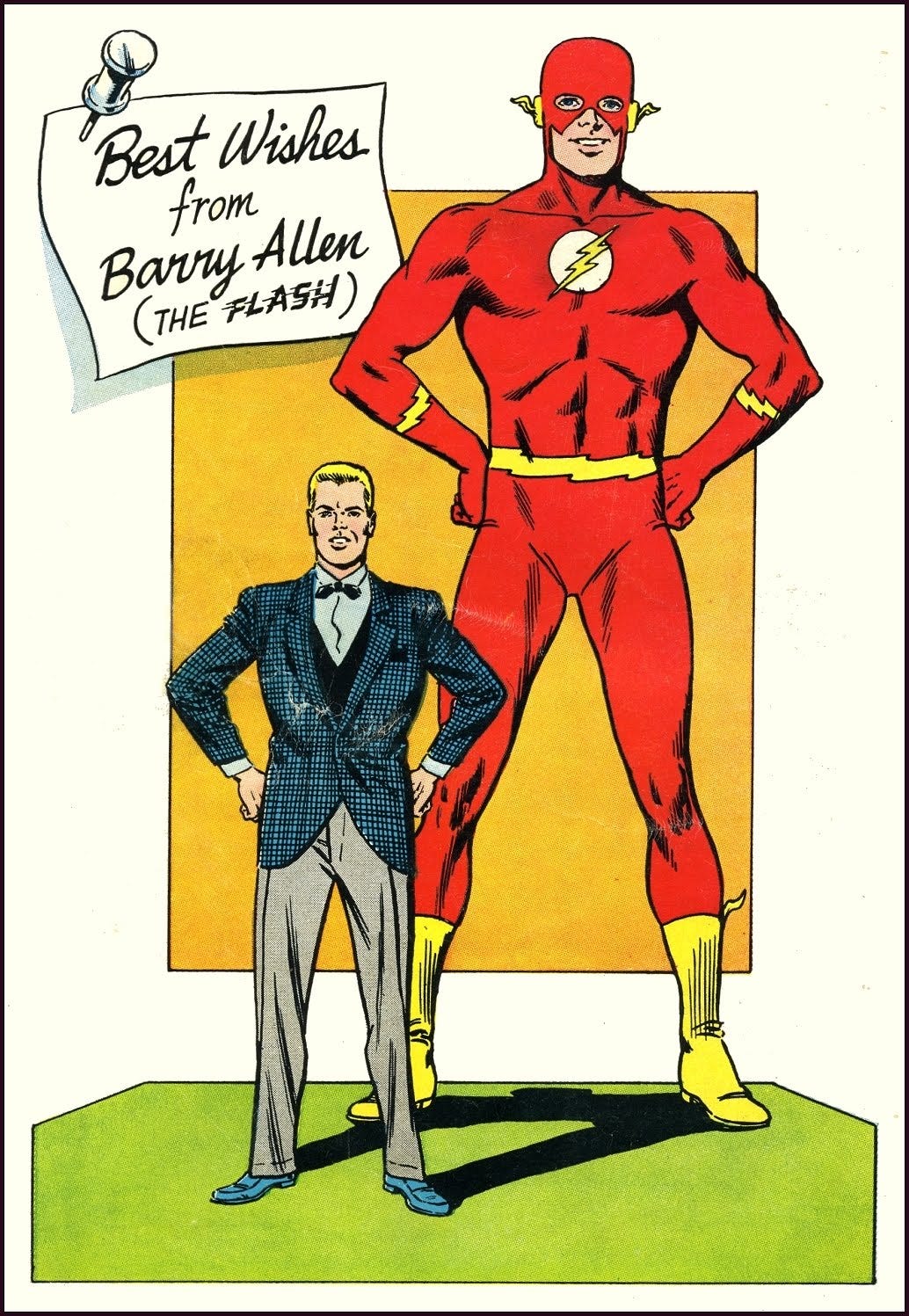
…and essentially… not very interesting.
Sure, it was fun to read about a guy who was basically invincible, but Barry Allen was kind of a cypher. He wanted to help people, he was an “aw, shucks,” kinda hero, just like Superman, and a thousand others.
Well, we already had Superman, we didn’t need another overpowered boy scout.
Fer giggles, they killed off Barry Allen, so his sidekick, Wally West, the similarly-powered hero named “Kid Flash,” stepped into the big man’s running shoes, becoming The Flash.
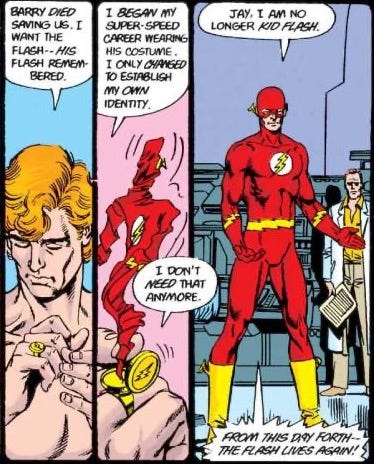
And something interesting emerged.
Whereas Barry Allen basically just did his best and was sorta automatically a hero, Wally West had the crushing anxiety of having to live up to Barry’s example. Everything he did, he wondered, “What would Barry do?” Putting him on a pedestal, making a saint out of him.
It made Wally much more interesting.
It didn’t hurt that Wally was already a more rounded character, thanks to his time in Marv Wolfman and George Perez’s “New Teen Titans.” He was younger, so he made more mistakes than Barry. He was a womanizer, was kind of a screw-up, and was somewhat selfish.
As a teenager/young adult would realistically be.
All of that was great fodder for a guy trying to be something better.
So when he took over as Flash, he was constantly comparing himself to “Uncle Barry.”
“Uncle Barry” was a saint.
“Uncle Barry” never did anything wrong.
It was an impossible image to live up to. And most of his initial years as the Flash were spent trying to live up to an image he could, ultimately, never live up to.
It was a smart bit of character development.
Eventually, over the course of years, he proved his worth to himself, becoming the Flash, not just the kid who took over for him.
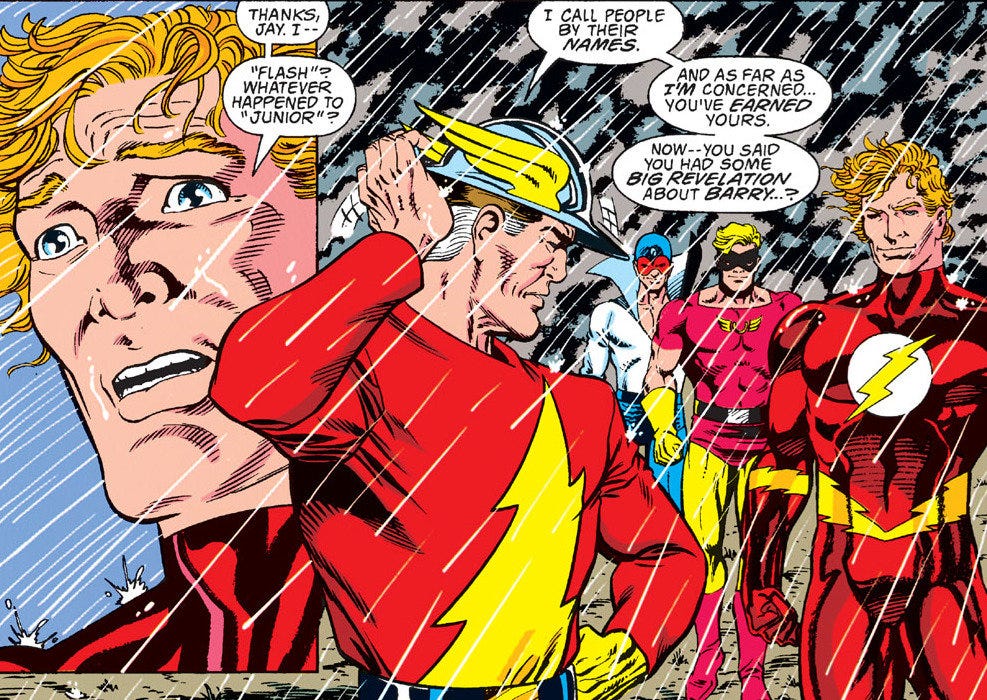
Wally was allowed, in other words, to have a character arc.
(And, not for nothing, it’s been said many times before - Barry Allen was waaaay more interesting a character in death than he ever was in life.)
Similar story with Green Lantern. At some point, the “original” GL, Hal Jordon, was wiped off the board, and replaced by the younger Kyle Rayner. Hal was a 60s hero, a test pilot, a Jack Kennedy, “nothing to fear” type.
Basically perfect, as the Boomers saw themselves.
Kyle was a sensitive artist and a slacker, who had more faults than seemed appropriate for a hero.

Rayner got a character arc, too - not only did he have to fill the shoes of an established hero, he didn’t necessarily want to be a hero, only doing it out of a sense of responsibility.
And, as he tried, he got slowly better at the gig. And had more fun with it. To enjoy being a hero.
For a minute in the 90s, many of the established heroes were replaced with alternates. Batman, Green Arrow, Wonder Woman, all got newer, or different, models.
And for heroes like Aquaman and the Martian Manhunter, while they stayed the originals, they got more character development and room to change and grow. Kids today see the Jason Momoa version of Aquaman as the definitive version, but twas not always so, for those of us who remember him as wearing an orange shirt and riding a giant seahorse.
Plus, Momoa never had a hook instead of a hand. That shit was gnarly.
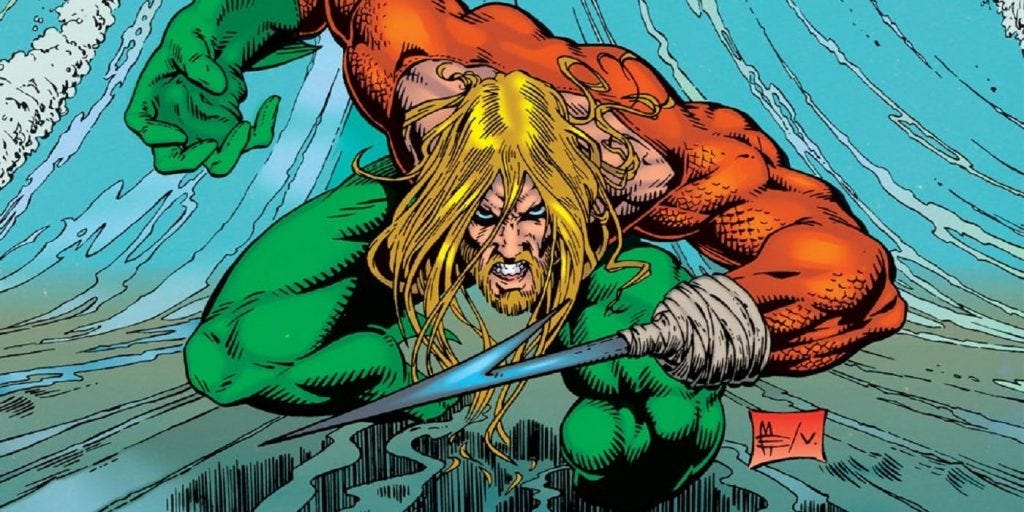
Even Superman got changed around, first with a gotdamn mullet, and when that wasn’t enough, transformed into “Superman Blue,” a creature of pure energy.
(They weren’t all great ideas.)
But ultimately, the heroes of the 60s had been replaced by the heroes of the 90s.
Look at Grant Morrison’s “JLA” comics. Most of the heroes are replacements, and he does a great job of playing off them as the new kids. It was a delight to read and anticipate the future.
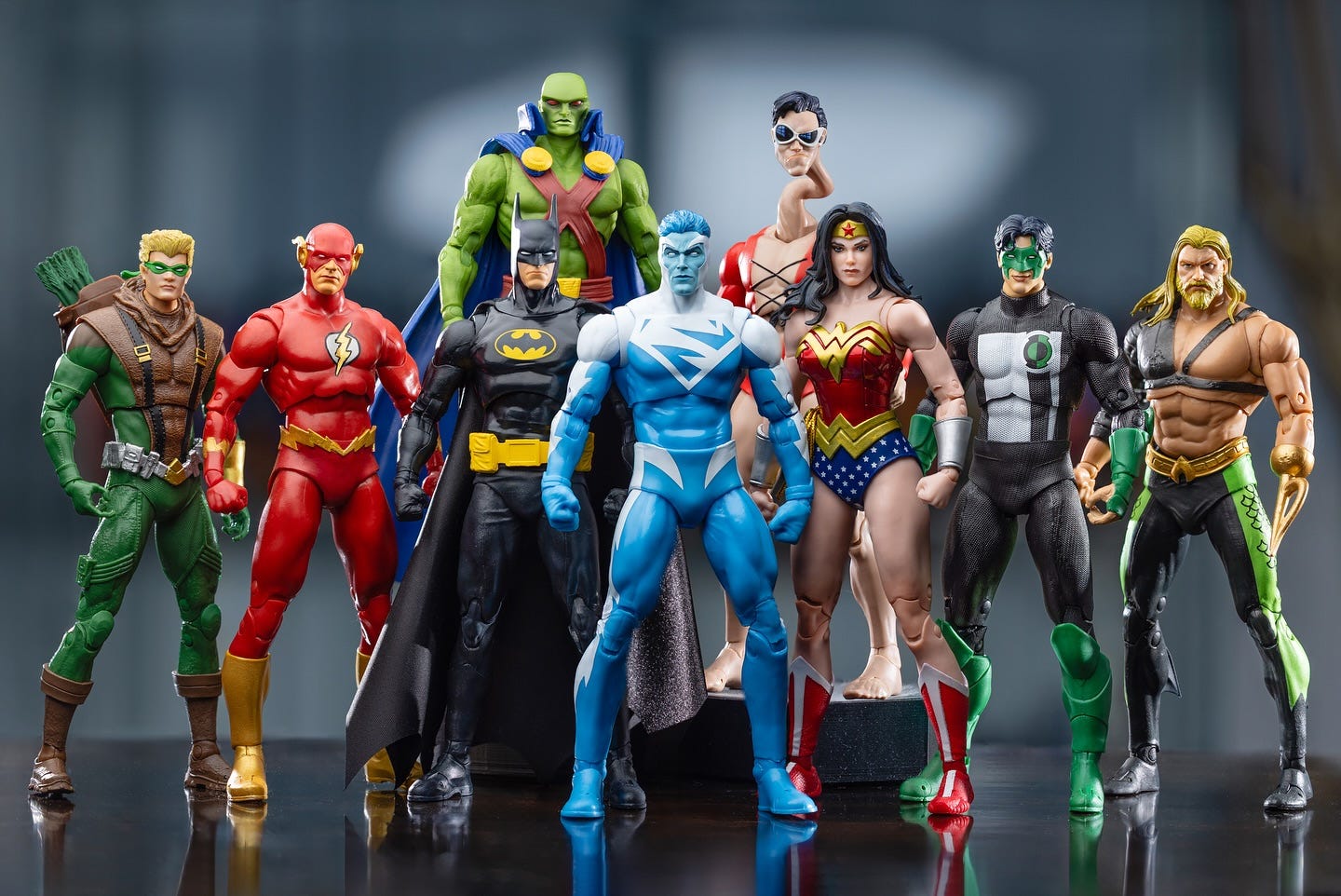
And then, for no reason I can ascertain except nostalgia, in short order, DC methodically replaced all the new kids with the old, 60s heroes.
Barry Allen came back to life, so did Hal Jordon and Oliver Queen. Their kiddie versions hung around, but now are once again outshone by the 60s versions.
(Much like the Boomers shoved Gen Xers aside to stay in power.)
Batman, eh, it made sense, his replacement was just to show that only Bruce Wayne has the right temperament for psychotic vigilantism.
Superman, he needs to be the OG version. He’s an icon, the red and blue and the cape, and revamping him usually means removing what makes him iconic.
But everybody else, they shoulda left alone.
Let them be the new stars. Let the dead stay dead.
It wasn’t like the movies wouldn’t eventually tell their stories. Not like you wouldn’t get the “Absolute” reboots and every other thing, so those old characters would have a spot to shine again.
What DC had, was a chance to replace, and thus build, the myths. And by showing that the myths could be replaced, as they’d been in the 60s, showed that the stories could have beginnings, middles, and endings.
What it ended up showing… I don’t know. That nostalgia trumps innovation? That we can’t let old moneymakers go?
All it really did in the DC universe was show that nothing progresses, that we were perpetually stuck in the 60s-80s.
Much like the real world, I suppose.
Also, that death doesn’t really mean much.
Which ain’t that much of a story.
Click the titles to read muh stories:
© MMXXVI
No posts
Comments
Nothing yet. Say the first thing.
Sign in to join the conversation.