
Yeah, sorry for the click bait headline but that’s on the podcast this week. Everywhere in the world, people in middle age, defined as age 40-65, do NOT suffer a worsening in depression, loneliness, and memory loss. In fact, in some countries in northern Europe, those things actually improve because retirement and healthcare is automatically paid for. There’s only one place in all of the world where things get WORSE. And that place?

U-S-A! U-S-A!

This week we welcome Frank Infurna, professor of psychology at Arizona State University who has been researching middle age since before he was himself middle aged. He says it’s getting worse in America, bucking the worldwide trend and providing a grim example of American exceptionalism.

And I am fighting the urge to yell here that IT’S JUST WHAT I’VE BEEN TELLING YOU. Guess I just did. The reasons are about what you’d expect and they’re largely economic. The job market is unstable and frequently jettisons people over 50 precisely because they’re old and employers do so despite laws against it because it’s easy to simply invent another reason. Healthcare, which you need more of as you age, is tied to your employer that just laid you off. And childcare costs a goddamn fortune.
Frank talks about all that as well as his fond memories of briefly living in Germany where a friend bemoaned having to pay as much as $300 a month for childcare. That might get you an afternoon here, I said. And of course, retirement. In a country that doesn’t care for its people and threatens to take away even the social security money we’ve been putting away our whole lives. On top of all this, middle age is a sandwich generation, caring for our parents while also raising our kids. And that’s stressful.
Other countries? They take care of their people instead of crushing them under the booted heel of capitalism. God damn, you guys, I get more Marxist with each passing year.

When I interviewed former and, I guess, current Soul Coughing frontman Mike Doughty a while back, he was fresh out of in-patient psychiatric care and about to go on tour with his band that broke up acrimoniously in 2000. So how is he holding up? Turns out, great. Mike says the tour helped him make amends with an audience he had been sneering at for years.
Mike also talks about the idea of an icon of your worst depression becoming a trophy later on. Here’s a picture of an unplugged satellite dish outside his living room window.
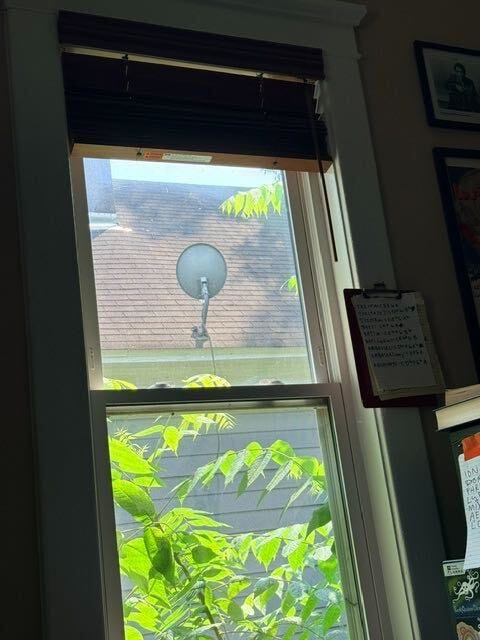
During the worst of his very long depression, Mike used to sit on his couch all day and just stare at this thing. All day. Now that he’s better (got good therapy, meds, trains at the boxing gym) he loves that satellite dish. Doesn’t want it removed. Sees it as a reminder of where he was and how he’s not there anymore.
That’s the conclusion of Erin Clabough, professor of psychology at the University of Virginia.
I teach biology and neuroscience to undergraduates, and I believe that the way we educate our children – prioritizing performance and grades over curiosity and well-being – is producing a society full of anxiety-ridden adults.
A recent survey of over 84,000 college students found that one-third of them self-reported moderate or severe anxiety, and roughly the same share self-reported depression.
I’ve seen this unfold in ways I am only just starting to understand. A few years ago, one of my neuroscience students, whom I will call Hannah to protect her privacy, described how she experienced high school only as a way to get a scholarship to attend college. She became, in her words, a “complete robot.”
“I developed extreme anxiety; it like completely took over my life,” she said. “There was no excitement to learn.”
For me, the most indelible performance in the Christopher Nolan film of The Odyssey is Samantha Morton as Circe. She’s the one who turns the soldiers into pigs and then reluctantly returns them to their “disguises” as men. It just seemed to come from such a deep and honest place.
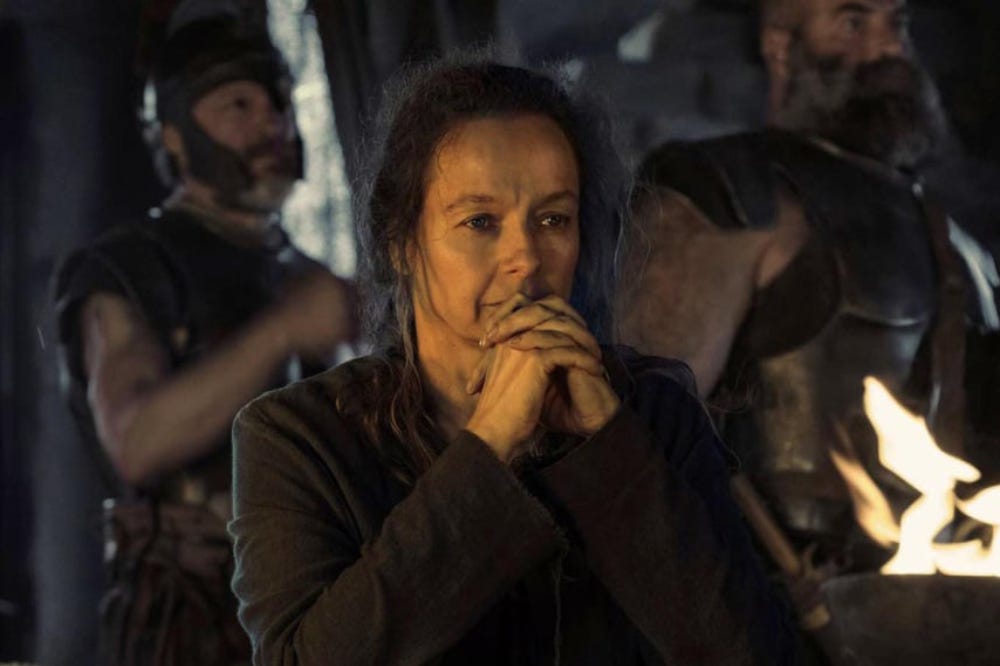
Turns out there was a lot of pain she was carrying with her. She lost her sister and her father within 18 months of each other. There were also memories of a childhood spent barely surviving.
“I went pillar to post with foster families, homeless hostels, sleeping by the bins at the back of the Co-op, because it was too dangerous to go back to the children’s home because of the abuse.”
This experience, she said, might have helped to influence her portrayal of Circe.
She shared: “When I opened my mouth, I was every woman. I was speaking for my mother, who suffered all sorts at the hands of men. And my sister, friends, grandmother.
“It was all the wrongs and ways that women have been depicted or treated forever.”
I don’t get to talk NBA at work very much and I don’t think I’ve ever talked Wizards NBA.
Jamel Johnson is a DC native and has been following the Wizards his whole life. He’s seen the rise and fall of Gilbert Arenas, the arrival and departure of John Wall, and everything from Gheorge Muresan to Muggsy Bogues, all without an NBA title in Jamel’s lifetime. Mid-Range is both the title of his new comedy album and the name of type of jump shot he hopes the team can nail as it heads into a new season with number one overall pick, AJ Dybantsa.
Look, sports can be exciting and excitement doesn’t lend itself well to falling asleep. But again, we’re talking about the Washington Wizards, so you should be fine. Will you go on to have dreams of Elvin Hayes and Wes Unseld? Well, look, we can’t be responsible for that.

No posts
Comments
Nothing yet. Say the first thing.
Sign in to join the conversation.