
John A. Catanzaro, CEO of Neo7Bioscience
In Collaboration With Dr. Peter A. McCullough, Nicolas Hulscher, and The McCullough Foundation
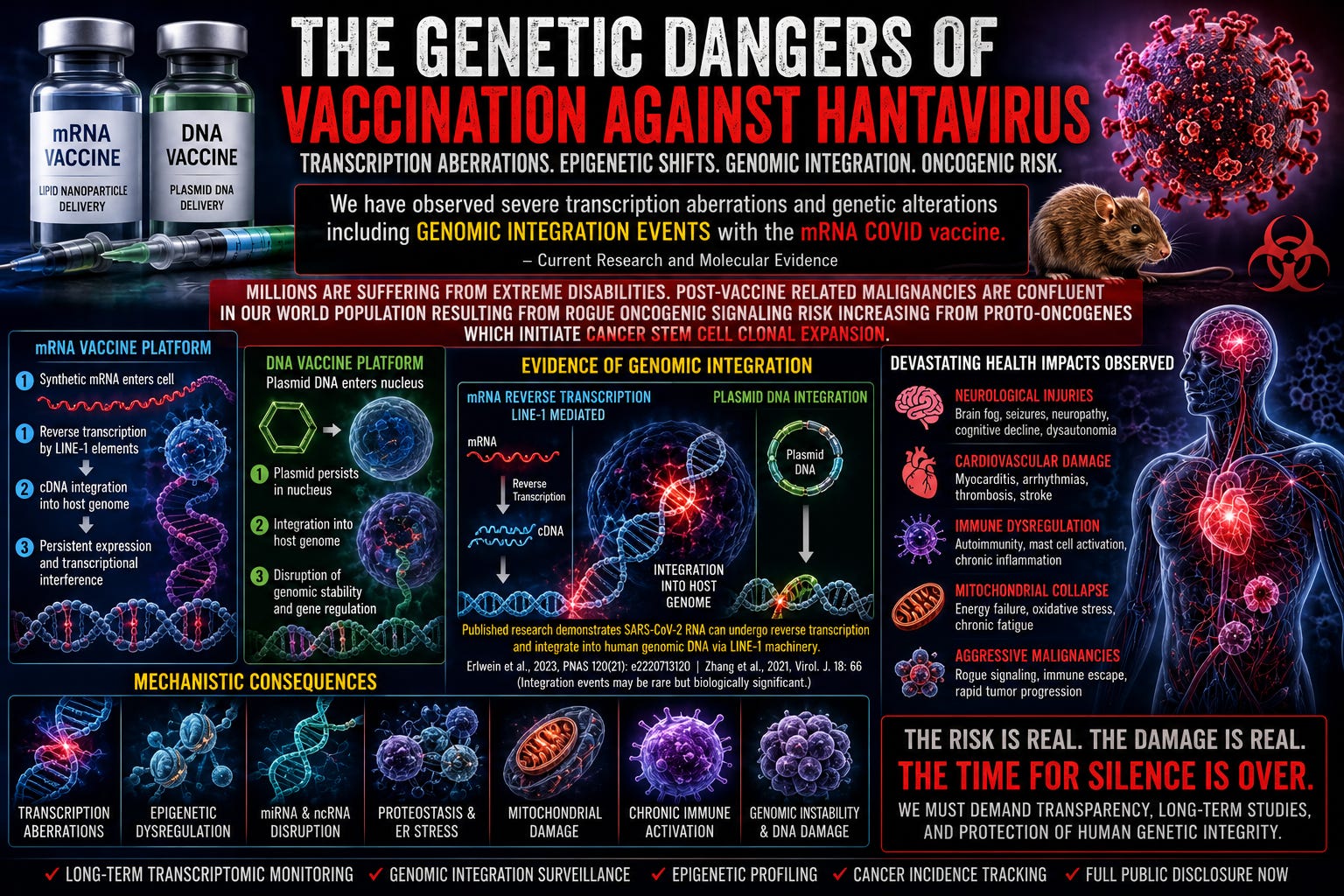
The emergence of advanced genetic vaccine technologies has introduced a new era of molecular intervention in human biology. While vaccine science has historically focused on antibody generation and acute immune activation, far less attention has been directed toward the deeper transcriptional and epigenetic consequences that may arise when synthetic genetic constructs interface directly with human cellular machinery.
In the context of Hantavirus vaccine development—particularly those involving mRNA, self-amplifying RNA (saRNA), viral vectors, or DNA platforms—the potential risks extend beyond traditional toxicology. The concern is no longer simply whether an immune response is generated, but whether chronic transcriptional disruption, epigenetic instability, mitochondrial stress, and regulatory RNA interference may emerge as downstream biological consequences.
Hantavirus and the Expansion of Genetic Vaccine Platforms
Hantaviruses are zoonotic RNA viruses associated with hemorrhagic fever and pulmonary syndromes. Due to their lethality and biodefense relevance, they have become attractive targets for rapid-response genetic vaccine development. Several experimental approaches now involve synthetic RNA constructs, codon optimization, lipid nanoparticle delivery systems, and prolonged intracellular antigen expression.
These alarming technologies fundamentally convert human cells into transient bioreactors for foreign protein production. The implications of this shift are profound!
The central biological question becomes:
What happens when synthetic genetic instructions are repeatedly introduced into already stressed or genetically variable human systems?
The human cell is governed by exquisitely regulated transcriptional architecture. Messenger RNA signaling, ribosomal fidelity, splice regulation, mitochondrial translation, and non-coding RNA networks operate in synchronized equilibrium.
Synthetic RNA constructs may interfere with this balance through several mechanisms:
1. Ribosomal Competition and Translational Stress
Artificially optimized RNA sequences can monopolize ribosomal machinery, diverting translational resources away from endogenous cellular repair pathways. This may produce:
• Misfolded proteins
• Proteostasis disruption
• Heat shock activation
• Endoplasmic reticulum stress
• Aberrant peptide fragments
Cells under persistent translational stress often enter maladaptive survival states associated with inflammation, senescence, and oncogenic signaling.
2. Epigenetic Drift and Regulatory Reprogramming
Repeated exposure to inflammatory genetic constructs may alter:
• Histone acetylation
• DNA methylation
• microRNA regulation
• Chromatin accessibility
• Transcription factor binding dynamics
These changes can create long-term shifts in gene expression patterns even after the original antigen signal has disappeared.
Epigenetic drift is particularly concerning because it may not manifest immediately. Instead, it can evolve silently over months or years, gradually reshaping immune surveillance, mitochondrial resilience, and cellular differentiation pathways.
3. Mitochondrial Destabilization
Mitochondria possess bacterial ancestry and highly sensitive transcriptional systems. Synthetic RNA fragments and inflammatory signaling cascades may contribute to:
• Oxidative stress
• Reactive oxygen species accumulation
• ATP depletion
• Mitochondrial ribosomal interference
• Mitophagy dysregulation
The result may be chronic fatigue syndromes, neuroinflammatory symptoms, impaired tissue repair, and accelerated biological aging.
4. Persistent Innate Immune Activation
Some genetic vaccine platforms are intentionally engineered to resist rapid degradation. While this prolongs antigen expression, it may also create persistent innate immune activation through:
• Toll-like receptor stimulation
• Interferon pathway amplification
• NF-κB signaling
• Inflammasome activation
Chronic activation of these pathways is strongly associated with tissue fibrosis, endothelial dysfunction, autoimmunity, and carcinogenic microenvironments.
One emerging concern involves the incorporation of human-like regulatory elements into synthetic constructs, including optimized untranslated regions (UTRs), polyadenylation structures, and stabilizing motifs designed to mimic endogenous RNA behavior.
This creates what may be described as a “Same-vs-Same” phenomenon:
The immune system and transcriptional machinery may struggle to distinguish between synthetic and native regulatory patterns, increasing the risk of collateral disruption to host cellular signaling.
Potential consequences include:
• Autoimmune priming
• Aberrant RNA interference
• Misguided immune tolerance
• Cellular identity confusion
• Dysregulated repair signaling
In susceptible individuals, this may contribute to chronic inflammatory and proliferative disorders.
A major concern surrounding prolonged inflammatory transcriptional activation is the creation of a permissive oncogenic environment.
Cancer does not emerge solely from mutations. It also arises from sustained disruptions in:
• Cellular communication
• DNA repair
• Apoptotic signaling
• Mitochondrial integrity
• Immune surveillance
Persistent transcriptional instability may theoretically promote:
• Clonal escape
• Senescence-associated secretory phenotypes
• Fibrotic remodeling
• Angiogenic signaling
• Epigenetic silencing of tumor suppressor pathways
While definitive long-term studies on Hantavirus genetic vaccines remain limited, the absence of evidence cannot be mistaken for evidence of absence.
Traditional vaccine safety monitoring focuses largely on acute adverse events. However, transcriptional and epigenetic consequences require entirely different forms of surveillance.
Future safety systems may need to incorporate:
• RNA sequencing
• Transcriptomic profiling
• Mitochondrial integrity analysis
• Epigenetic mapping
• Non-coding RNA surveillance
• Proteomic stress signatures
Without molecular surveillance, delayed biological disruption may remain invisible until clinical disease manifests.
The future of medicine cannot rely solely upon symptom-based observation. As genetic technologies increasingly interact with the human transcriptional ecosystem, safety evaluation must evolve from simplistic immunogenicity models toward systems-level molecular analysis.
The critical issue is not merely whether a Hantavirus vaccine generates antibodies.
The deeper question is whether synthetic genetic intervention can alter the long-term regulatory architecture of human biology itself.
Mounting molecular evidence and clinical observation suggest that the mRNA COVID vaccine platform is associated with severe transcriptional aberrations, epigenetic disruption, and serious genomic integration events in susceptible individuals. Across the world, millions are reporting debilitating chronic conditions following vaccination, including neurological injury, immune dysregulation, cardiovascular complications, aggressive inflammatory syndromes, and rapidly progressive disabling disease states.
Of alarming rising concern is the emergence of post-vaccination malignancy patterns characterized by abnormal proliferative signaling, immune escape dynamics, and proto-oncogenic activation pathways. Persistent aberrant cellular signaling create conditions favorable for cancer stem cell initiation, clonal expansion, and accelerated tumor progression. These findings raise urgent questions regarding long-term genomic stability, transcriptional fidelity, mitochondrial resilience, and the potential for chronic molecular dysregulation induced by synthetic genetic platforms.
Transcriptional aberrations, mitochondrial destabilization, and epigenetic drift represent a frontier of significant risk that modern medicine has only begun to acknowledge.
The next era of biomedical science will belong not merely to genetic engineering—but to the ability to understand, monitor, and regulate its downstream molecular consequences. Thus, the need to for accurate precision targeting.
Vaccine technologies are principally and dynamically flawed. We strongly advise against the vaccine cartel’s push for individual and global vaccination! The same pharmaceutical companies working in collaboration with new startups and elite financiers are seriously and continuously engaged to build upon their existing destructive platforms!
Comments
Nothing yet. Say the first thing.
Sign in to join the conversation.