
False teaching is dangerous not merely because it gives people incorrect information. It gives them confidence based on something God has not said. It can make people feel safe while they are still under judgment. It can promise a hopeful future while leading them away from the only One who can give them one.
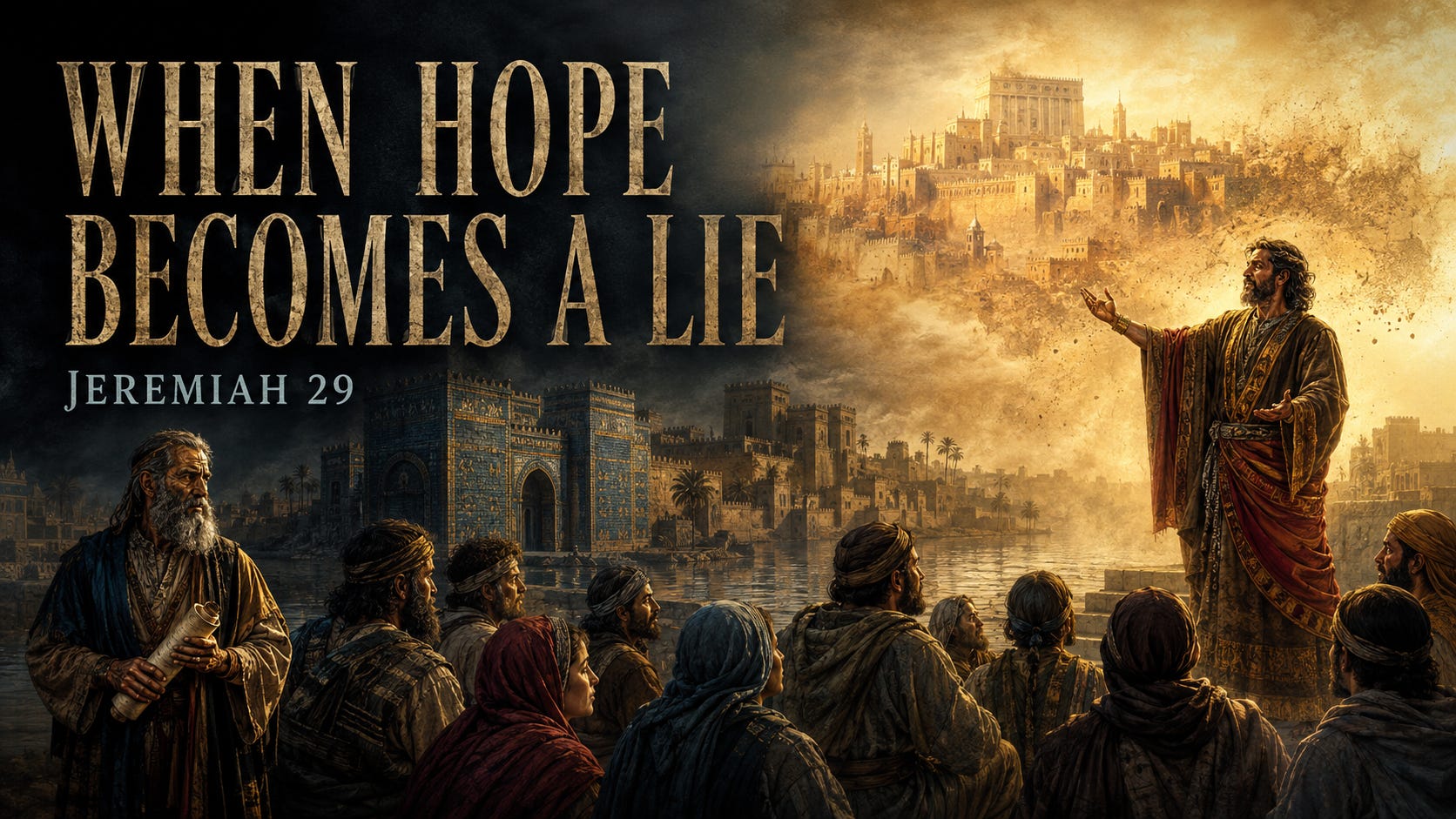
That is what happens in Jeremiah 29. The people of Judah had been taken into exile in Babylon. They were tempted by two different accounts of the future. One said that their best days were behind them. They might as well give up, become like the pagans around them, and disappear into Babylon. The other promised a quick and easy restoration. The exile would soon end. They would be home before they knew it.
Jeremiah rejected both despair and false hope.
God told the exiles that they would remain in Babylon for seventy years—a whole lifetime. They must build houses, plant gardens, marry, have children, and seek the welfare of the city where God had sent them. They must accept God’s discipline while continuing to trust His promises.
The false prophets offered something easier. They promised restoration without waiting, prosperity without obedience, and deliverance without discipline. They told the people what they immediately wanted to hear, like false teachers do today who promise salvation without a cross, a Savior without a Lord, deliverance from God’s wrath without repentance. They tell people that repeating a prayer, accepting a doctrine, undergoing baptism, or joining the right church will keep them safe from judgment even if their lives never change. They offer Jesus as Savior but not as Lord. They offer faith without repentance and assurance without perseverance.
A false promise about the future changes how people live in the present. Because the exiles were told that they would soon return home, they were tempted not to build, plant, marry, or seek Babylon’s welfare. Their false hope gave them an excuse to disregard God’s commands.
True hope produces obedience; false hope excuses disobedience.
When Jeremiah exposed their fantasy, the false prophets did not repent. Shemaiah sent a counter-letter to the priest Zephaniah. He complained that Jeremiah had told the exiles to settle in Babylon because the exile would be long. Shemaiah called Jeremiah a madman and demanded that he be put in the stocks and neck irons.
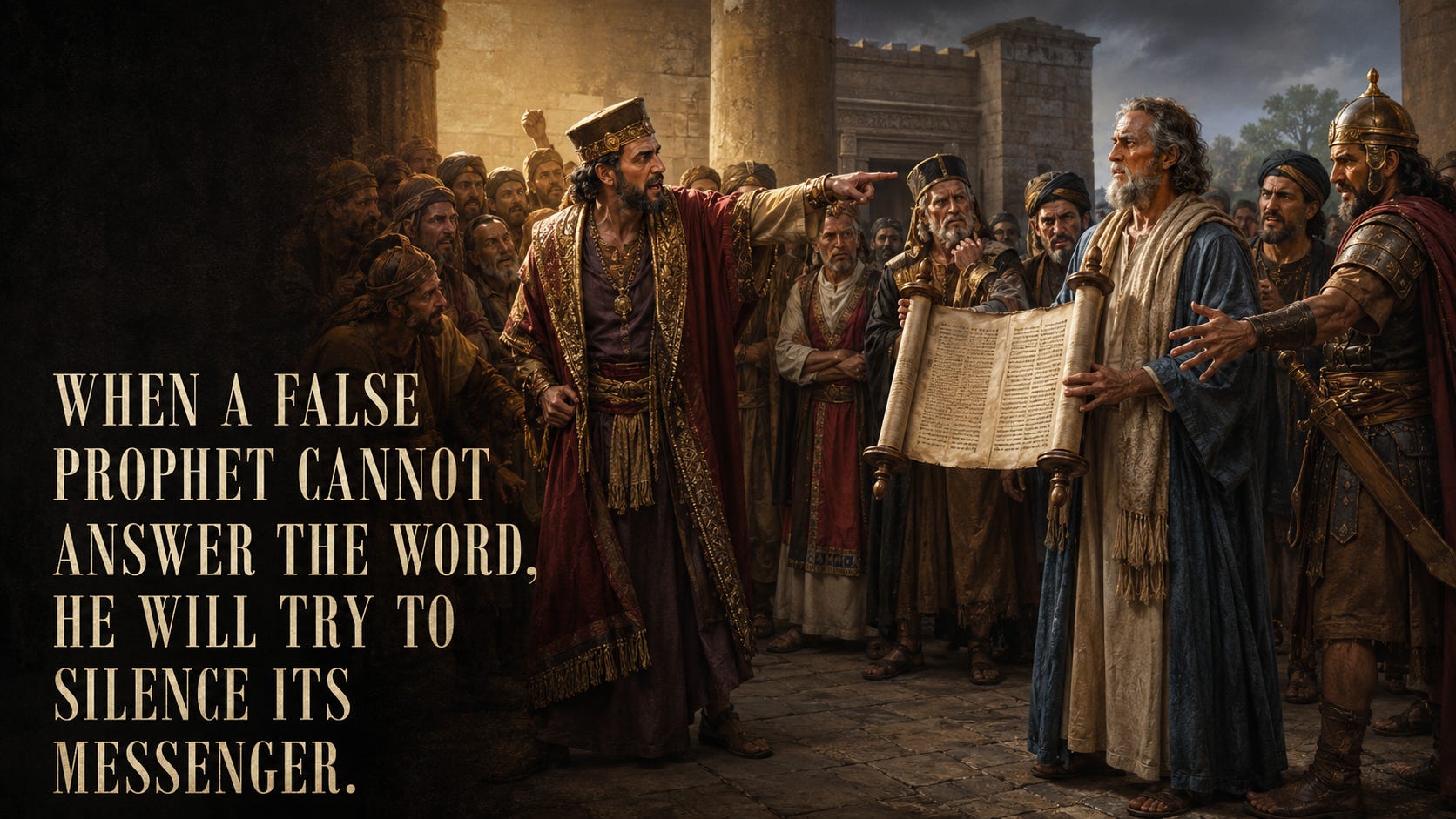
False teaching often moves from promises to coercion. First, it tells people what they want to hear. Then, when God’s Word exposes the fantasy, it labels the truth-teller dangerous, divisive, uncaring, or insane. The man who claimed revelation without being sent called the prophet whom God had sent a madman.
The same pattern continues today. A teacher offers easy salvation, guaranteed prosperity, or unquestionable institutional security. People gladly receive the promise. But when someone applies Scripture to it, the teacher rarely answers the biblical argument. Instead, he attacks the critic’s motives, tone, character, or mental stability.
The soothing promise becomes an attempt to silence anyone who exposes it.
When a false prophet cannot answer the Word, he will try to silence its messenger.
God identified the heart of Shemaiah’s offense: “He has made you trust in a lie.” Shemaiah had not merely made a factual mistake about the length of the exile. He had manufactured confidence. He had induced people to stake their future on something God had never promised.
That is the most dangerous effect of false teaching. It does not only give people bad ideas. It produces misplaced assurance. A person who knows that he is lost may still seek rescue. A person who has been persuaded that he is safe will see no reason to flee.
False assurance can be more dangerous than open unbelief. It uses Christian words, religious experiences, church membership, baptism, or a past decision to persuade people that there will be no judgment for their lawlessness. It tells them that because they once prayed a prayer, confessed a doctrine, or underwent a ceremony, their future is secure even if they do not follow Jesus.
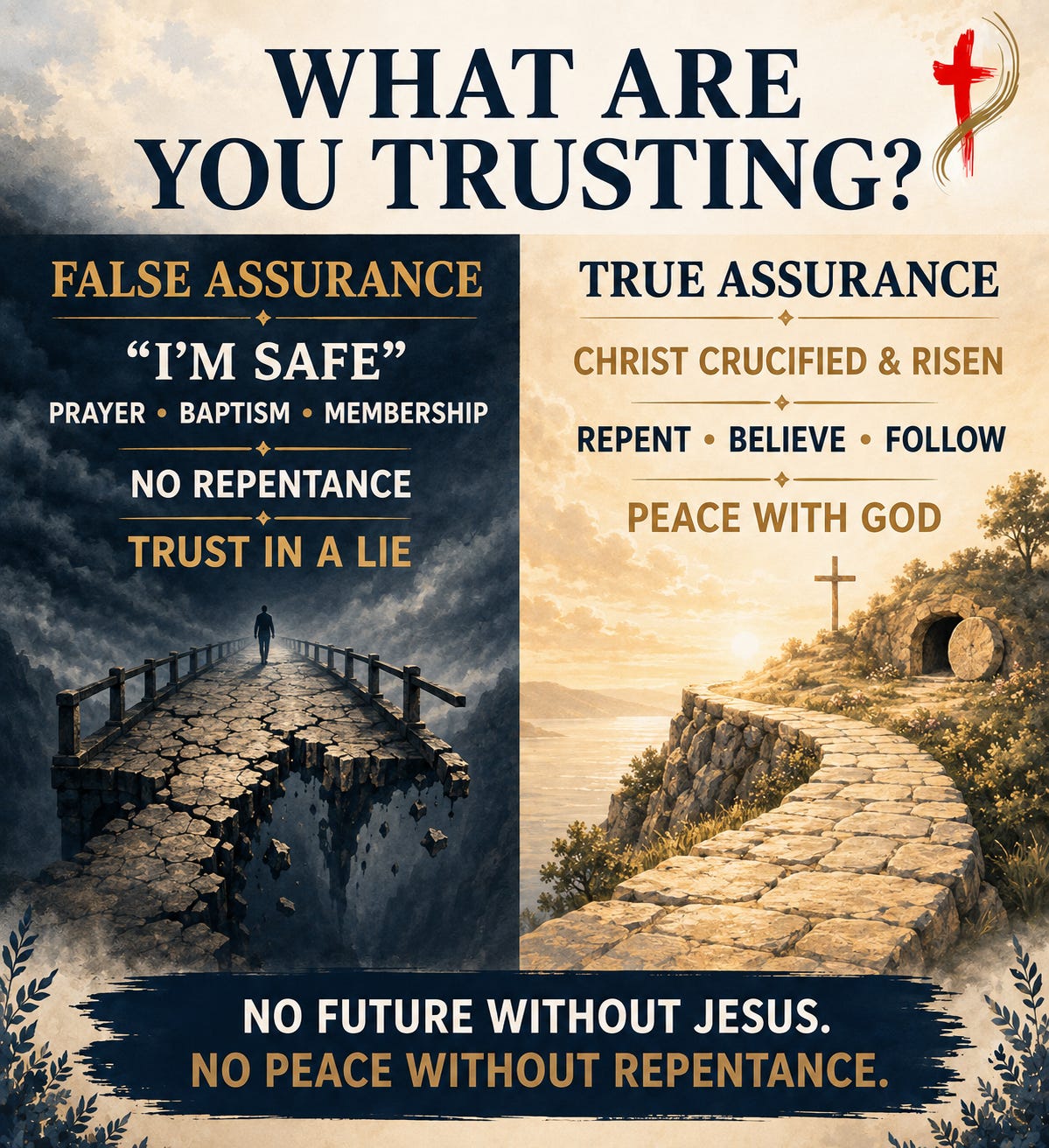
The true gospel also gives assurance, but its assurance rests on what God has actually done and promised. God’s judgment is real. Our guilt is real. Jesus Christ bore the judgment of everyone who trusts in Him. He was crucified for sinners and raised from the dead. Everyone who repents and believes in Him will be saved.
Any teacher who promises peace with God while removing repentance, holiness, perseverance, or the necessity of Christ’s atonement makes people trust in a lie. Do not accept a future without Jesus or peace without repentance.
The issue is not whether you will hope, but whether your hope rests on God’s Word or on a lie.
Covenant Reformed Baptist Church is Danville, VA’s Reformed church.
No posts
Comments
Nothing yet. Say the first thing.
Sign in to join the conversation.