
Modern society tells us that freedom means never submitting. Expressive individualism commands us to “follow your heart,” pursue your passion, and refuse anything that frustrates your desires. The self becomes sovereign. No authority, tradition, economic reality, or moral law may tell us what to do.
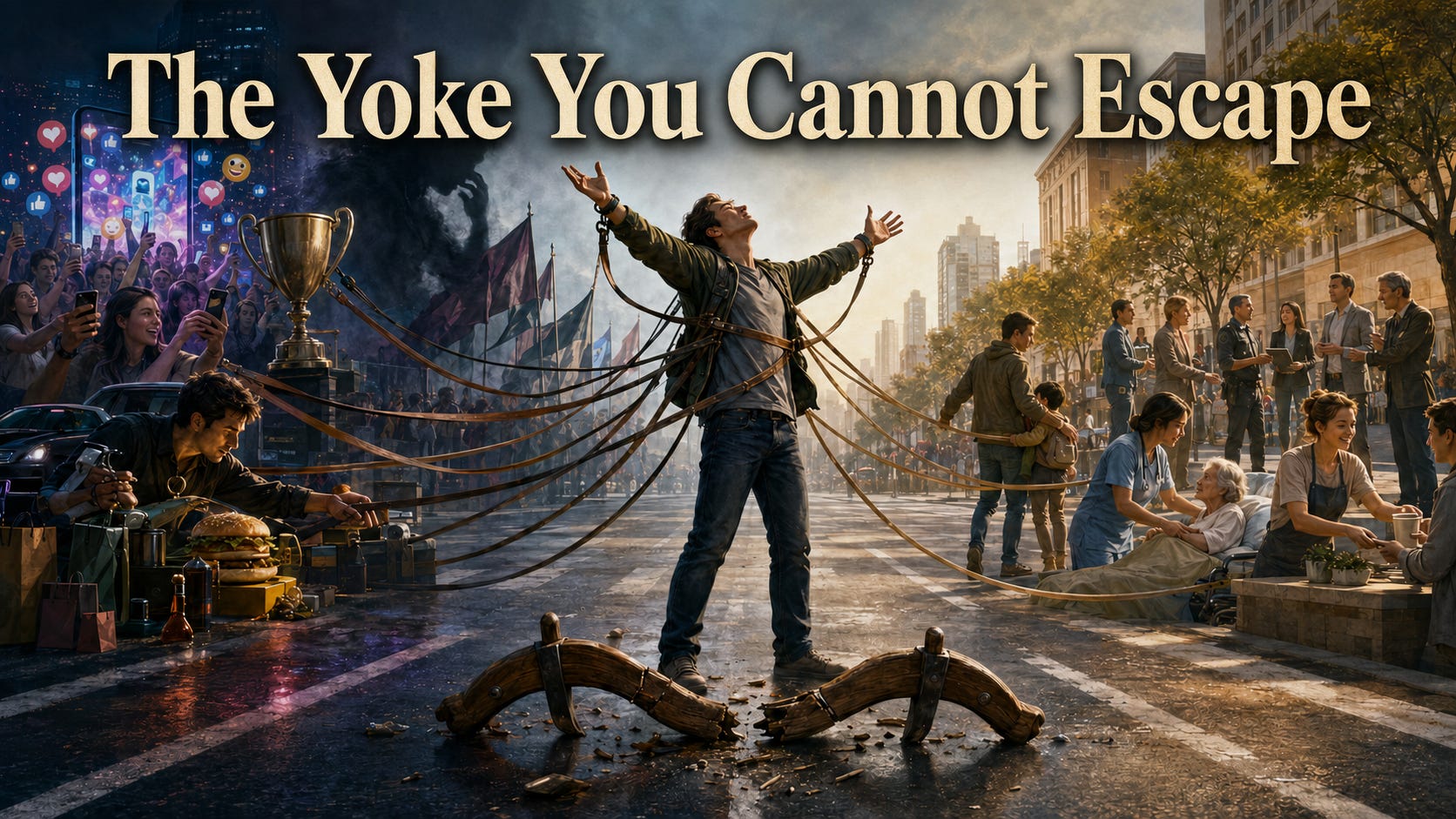
But the truth is that you must submit to live. We submit to the needs of others when we work. We submit to economic realities when we pay our bills. We submit to laws because human beings are not angels and society requires order. Even those who boast that they are free are governed by their appetites, ambitions, fears, or ideologies.
The choice is not between having a yoke and having no yoke. It is between rival yokes.
In Jeremiah 27, King Zedekiah did not want to submit to Babylon. He was looking for an opportunity to rebel. Ambassadors from several neighboring kingdoms gathered in Jerusalem to plot an alliance against Nebuchadnezzar.
Imagine the scene: international representatives meeting in a world capital, surrounded by pomp, honor guards, and national banners. They discuss their new military alliance against the Babylonian aggressor. Then Jeremiah walks in wearing an ox’s yoke around his neck.
His message is simple: God has decreed that you submit.
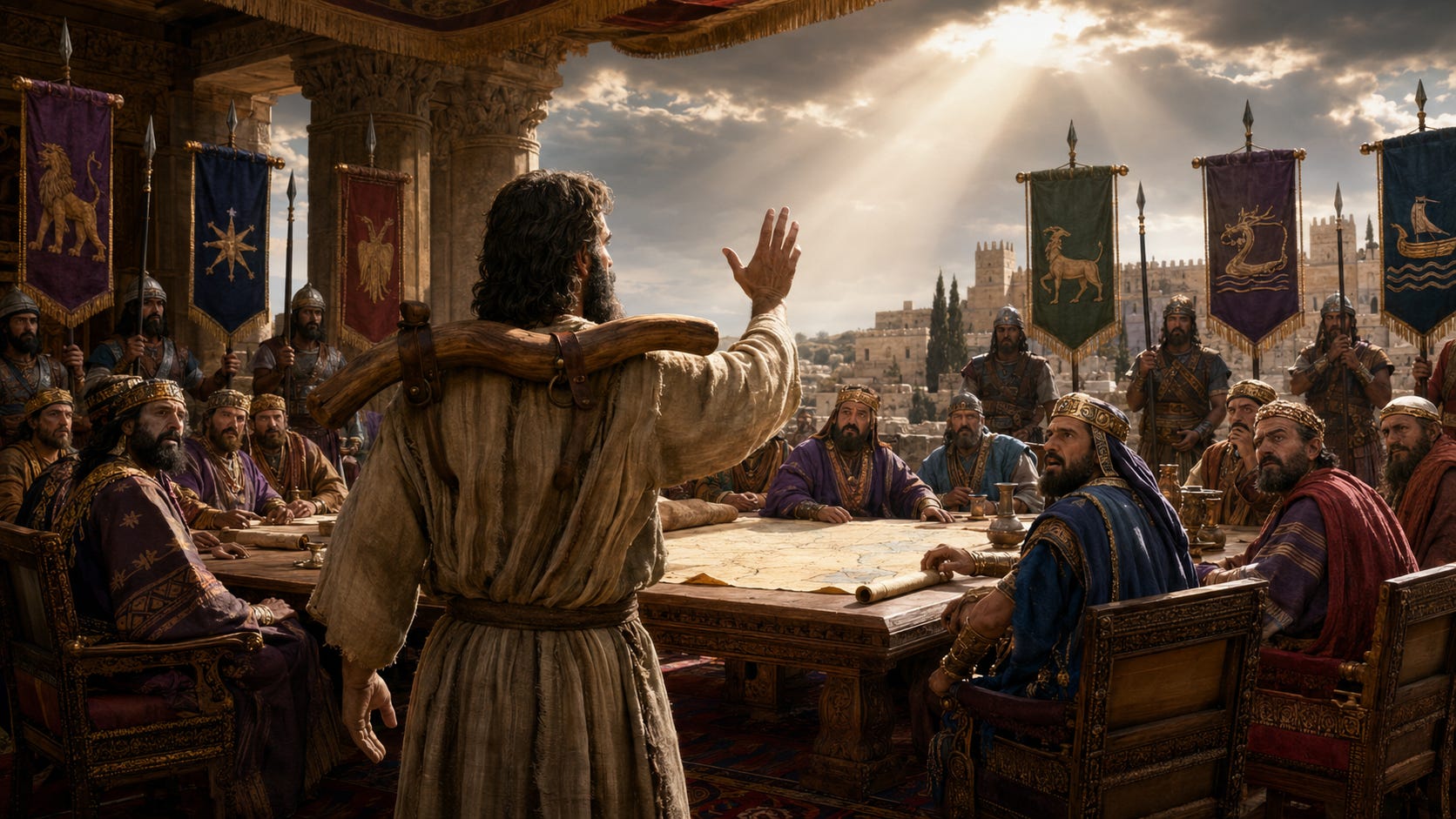
The Lord declares, “It is I who by my great power and my outstretched arm have made the earth.” He made the world, its people, and its animals. Therefore, he may give authority “to whomever it seems right” to him. For that time, God had given the nations into the hand of Nebuchadnezzar, whom he astonishingly called “my servant.”
Nebuchadnezzar did not know that he was serving God. He was not righteous. Yet he was not an out-of-control force that God was helpless to restrain. God had appointed him as an instrument of judgment. To resist Babylon at that moment was to resist what God had ordained.
This did not make human authority absolute. Daniel and his friends submitted to Babylonian rulers, but they refused to bow to an idol or stop praying. They resisted lesser authorities precisely because they submitted to the highest authority.
Biblical submission is neither servility nor expressive individualism. It obeys rulers under God and disobeys them when they command rebellion against God.
Zedekiah had plenty of prophets telling him that he did not have to submit. They promised that Babylon’s power was fading and that the vessels taken from the temple would return shortly.
People who refuse God’s yoke will always find someone who tells them they can escape the consequences. False prophets promise smooth things. They offer restoration without repentance, comfort without correction, and salvation without lordship.
A prophet who always tells you what you want to hear is not telling you what you need to hear.
Their optimistic messages are destructive because they encourage people to resist the very correction that could save them. Jeremiah therefore says, “Do not listen to them.” Submit to the king of Babylon and live. Refuse, and sword, famine, and pestilence will follow.
The false prophets spoke only about good news. They ignored Judah’s rebellion. They did not call the people to mend their ways, execute justice, or submit to God. They promised the people what they wanted while saying nothing about what God required.
The same temptation remains. Religious teachers assure people that Jesus will be their Savior even if they refuse to have him as their Lord. They present God as a cosmic therapist whose purpose is to affirm us. But assurance without repentance does not produce peace. It produces resistance to conviction. A prophet who always tells you what you want to hear is not telling you what you need to hear.
Babylon’s yoke was real, but it was limited. Babylon’s own day of judgment would come. The temple vessels would eventually return, and Jerusalem would be restored. But restoration would come after and through submission to God’s discipline, not by escaping it.
As sinners, we resist God’s yoke. We complain that his demands are hard and his burden heavy. Yet rebellion never removes the yoke. It only makes the yoke heavier.
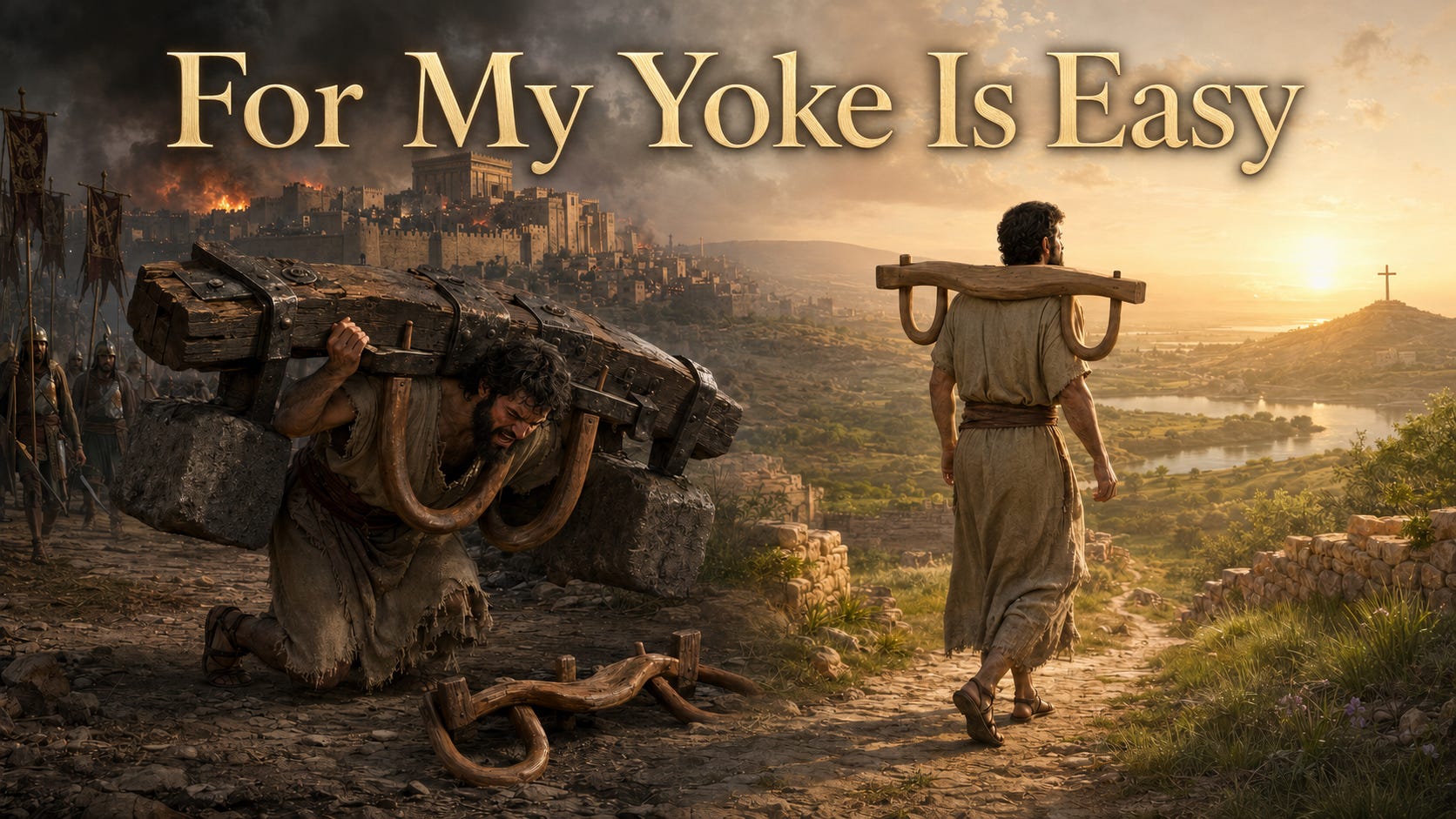
Jesus did what we refused to do. He submitted to the Father, praying, “Not my will, but yours, be done.” He placed his neck beneath the yoke of death, even death on a cross, so that rebels could live.
Now he invites us: “Take my yoke upon you, and learn from me, for I am gentle and lowly in heart, and you will find rest for your souls.”
There is no yoke-free life. There is only the crushing yoke of rebellion or the gracious yoke of Christ.
Take his yoke. Submit and live.
Covenant Reformed Baptist Church is Danville’s & Caswell County’s Reformed church.
No posts
Comments
Nothing yet. Say the first thing.
Sign in to join the conversation.