
About the time people learned that the universe does not revolve around us, they began to think that God does. It does not make much sense, but that is what happened. We learned that we live in a sun-centered solar system, and then later that the rest of the universe does not even revolve around our sun. Yet spiritually, people began to assume that God was not really the center. He might be a comforter, a motivator, or a helper through hard times, but He was not the One governing those hard times. The spiritual universe, with God like the sun, began to revolve around our will, our works, our suffering, our religion, and our family.
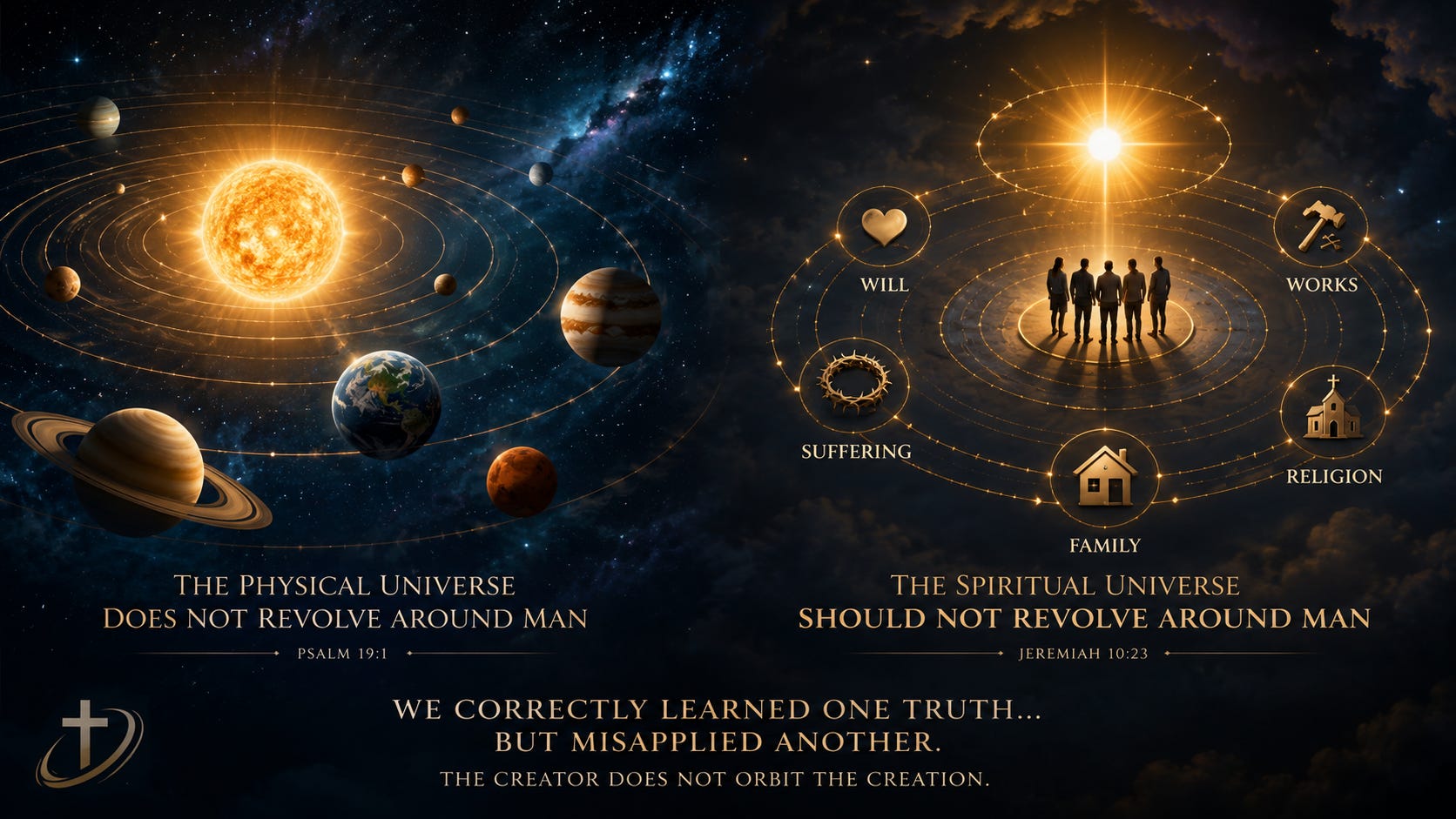
So when people ask how to be right with God, the common answer becomes: it is up to us. Salvation becomes like milk on a store shelf. God stocks it, but you decide whether to take it. If you do not have milk, it is because you did not get it. If you do not have God, it is because you did not go get Him. Who does the work of making you right with God? We assume the answer is: I do. I say the right prayer, receive the right baptism, perform the right rituals, or make the right decision. Then I move God. That is the myth of self-salvation.
Jeremiah 24 destroys that myth. The Lord shows Jeremiah two baskets of figs. One basket has good figs, like first-ripe figs. The other basket has figs so bad they cannot be eaten. These figs picture two groups in Judah after Nebuchadnezzar carried Jehoiachin, the officials, craftsmen, metalworkers, and leading citizens into exile in Babylon. The people left behind in Jerusalem probably thought they were the fortunate ones. They had the land, the city, the temple, and their homes. The exiles looked cursed. But God reverses their assumption. The exiles are the good figs. The people left in Jerusalem are the rotten figs.
The surprise is where being right with God comes from. The Lord does not say the exiles are good because they made themselves good. Jehoiachin himself had done evil. They were sinners like anyone else. God says, “I will regard as good the exiles from Judah.” That is justification. Justification means that God declares sinners righteous. He regards them as good, not because they earned that verdict, but because He chooses to show mercy. How do you get God to do that for you? You cannot. God has to do it.
Then God says, “I will set my eyes on them for good.” That is election. Election means God’s sovereign, uncaused choice of His people. He determines to be good to them, not because of anything in them, but because of His own mercy. Some people try to make election into an empty basket. God chooses to have a people, they say, but whether you get into the basket is up to you. But Jeremiah 24 will not allow that. The exiles did not choose whether to go to Babylon or stay in Jerusalem. It was chosen for them. So it is with salvation: it does not depend on man’s desire or effort, but on God’s mercy.
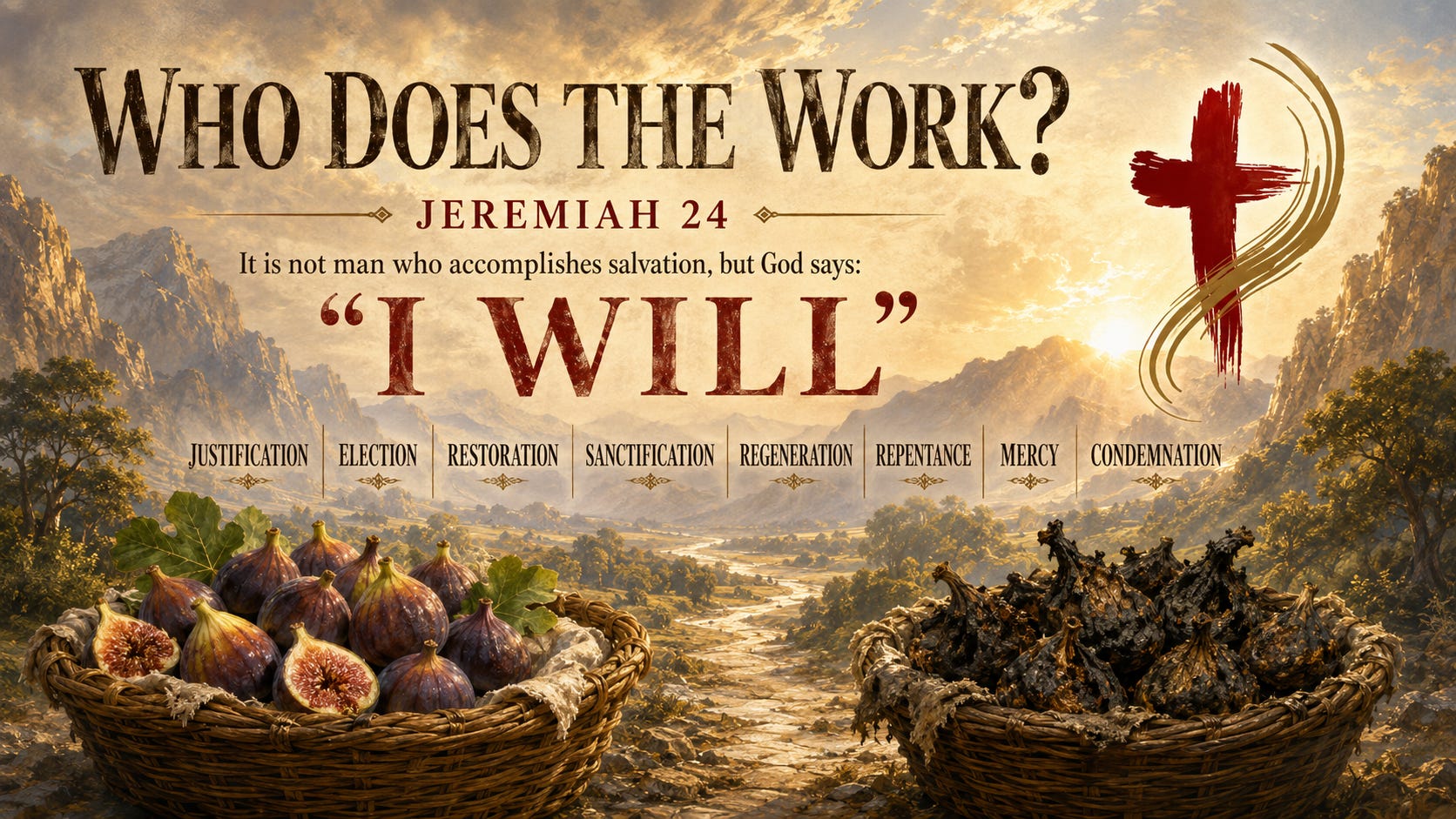
God continues: “I will bring them back to this land.” That is restoration. Literally, God brought the exiles back under Ezra and Nehemiah. But that return also pictures the greater restoration of God’s people in the new creation. God brings His people home to Himself. He does not wait for dead sinners to restore themselves. He makes them new, and then they believe.
Then He says, “I will build them up,” and “I will plant them.” That is sanctification and cultivation. Sanctification means God makes His people holy. He does not merely spare them; He reconstructs them. Cultivation means He roots them deeply, like planted trees, so they are not blown around by temptation or false doctrine. Believing that God does it all does not mean that we do nothing. God created us in Christ Jesus for good works, but even those good works were prepared by Him.
Repentance is real human turning from sin to God, but even this is produced by grace.
The greatest promise is this: “I will give them a heart to know Me.” That is regeneration, being born again. In the Bible, the heart includes the mind, the will, and the affections—what we think, choose, and love. If you are a sinner, you need a new heart. How do you get one? God gives it to you. Education can inform the mind. Discipline can train habits. Parents and pastors can teach the truth. A church can administer sacraments. But only God can give the heart to know Him.
Then they return to Him. That is repentance. Repentance is real human turning from sin to God, but even this is produced by grace. God gives the heart, and therefore they return. Their turning to God is the result of God turning them. Man-made conversions may produce half-hearted converts, but what God does produces whole-hearted sincerity.
The bad figs warn us that outward privilege cannot save. Religion, ancestry, temple, land, ritual, morality, and identity cannot make rotten figs good. The difference between the baskets is not ethnicity or inheritance. Both baskets are Jewish. The difference is God’s mercy.
Our turning to God comes from God turning us.
So do not ask first, “How can I get God to revolve around me?” Ask, “Has God given me a heart to know Him?” Come to Christ. Ask Him to do what only He can do: regard you in mercy, set His eye on you for good, restore you, rebuild you, replant you, renew your heart, and be your God forever.
Covenant Reformed Baptist Church is Danville’s & Caswell County’s Reformed church.
No posts
Comments
Nothing yet. Say the first thing.
Sign in to join the conversation.