

In 2000, while I was working toward a master’s in journalism at New York University, I found myself in a strange position. I was one of the few students there who cared about technology and also knew how to use it. I could host a site, write basic code, and think about publishing as something more than ink on paper. Most of the other students had come up through an older system. They were used to notebooks, typewriters, early terminals. To them, technology sat off to the side. It felt like a distraction from the work, not part of it.
I remember talking with Mark Dery about the idea of teaching HTML as part of the curriculum. Dery wrote about culture and media, about the edges of things, and he was curious about technology in an abstract way. But when I suggested that journalists should learn how to build for the web, he pushed back. He said news anchors do not need to know how to set up a camera. The point was clear. The message mattered, not the medium.
At that moment, his view made sense. Early web tools were simple enough that someone could publish without thinking much about the machinery underneath. You could open a blog, type, hit publish, and the system would take care of the rest. For someone like Dery, the craft was in the writing. The page was just a container.
That logic did not hold for long. Within a few years, the structure of journalism started to shift. Small teams replaced large ones. In some cases, a single person reported, wrote, edited, and published. At the same time, “community content” began to fill the web. The old gatekeepers lost their grip, and many of them lost their jobs. The kind of writing Dery practiced, a guided tour of technology for readers who stood at a distance from it, had less room to exist.
Now the center has moved again. Creators have taken on the role that journalists once held, but they operate under a different set of incentives. The old markers were stability and status, a contract, a desk, a place inside an institution. The new markers are reach and attention, measured in views, shares, and subscriptions. Those metrics are as important to new writers as a publishing contract.
I am not sure this is an improvement, but it is the direction things have taken. Tools driven by AI can reshape rough drafts into something that reads clean and finished. Distribution is no longer passive. It has to be engineered, in much the same way publishers once paid for placement in stores like Barnes & Noble. The mechanics have changed, but the pressure to be seen has not.
Looking back, the gap between the early days of dial-up and the year 2000 felt large at the time. The gap between then and now is larger still. What comes next will likely move just as fast, and the people who treat the medium as secondary will find themselves outpaced again.

First, I’m pleased to say that my book, Shroomies, is now available for pre-order. This was a big surprise
I’ve been writing this book for the past year, and it’s taken a lot out of me. I spoke to people who went through absolute hell, who lost jobs and found peace, and who were all changed by psychedelics. While I agree that psychedelics are not for everyone, they are definitely something we should all be exploring as we enter whatever dystopian age we’re living in right now, and I hope this book will be helpful.
David Pogue
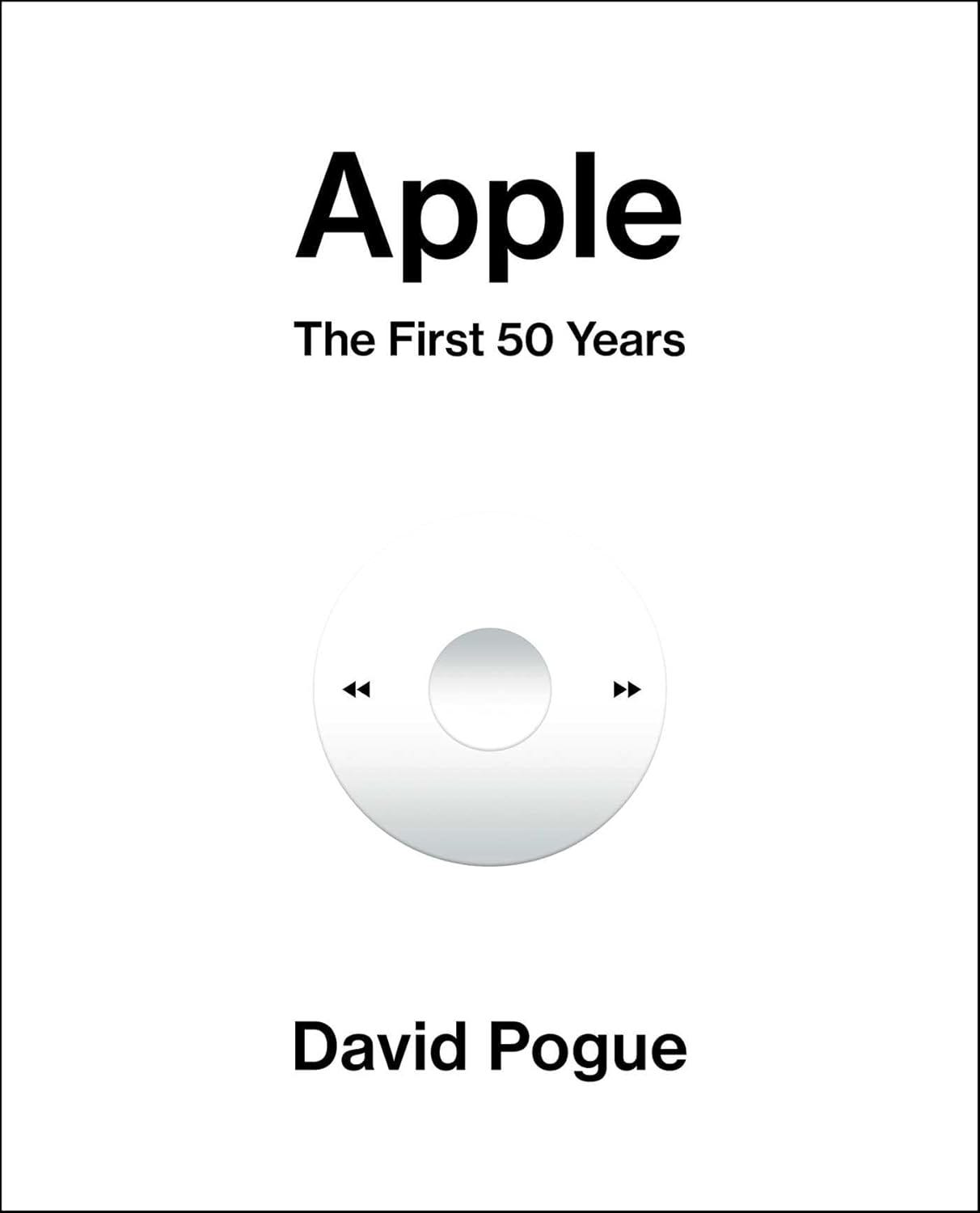
David Pogue was a fixture in the tech world for decades until he kind of fell off the radar. He wrote for years at the New York Times and has written countless books, mostly about Apple. It made perfect sense for him to write this exhausting tome, and I’m here to report that if you really, really, really, really like Apple (like a lot), you will enjoy the first three quarters of this book about the history of the company, the story of Woz and Jobs, and the little asides about how your favorite tech was built. The end of the book devolves into what amounts to a laundry list of hardware and a few taciturn Tim Cook stories, but you’ll definitely enjoy that first chunk.

Lee and Andrew Child
Comments
Nothing yet. Say the first thing.
Sign in to join the conversation.