
Welcome to the second social science roundup!
This week’s roundup features research on the surprisingly small effects of cash transfers, the non-effects of marijuana legalization on tobacco use, the power of soccer to bring people together, and more.
Subscribe if you’re new here! And share with your friends.
If you have a study you think I should feature, feel free to email me: holbein@virginia.edu.
If you had to hazard a guess, would you say that giving cash to people in developing countries makes a substantial number of them happier?
I would have guessed so!
However, after I read the study below, I’ve updated my beliefs!
The results of this study just out at Nature Human Behaviour may surprise you. This meta-analysis of 45 studies and 117k individuals shows that cash transfers have very modest effects on mental health and subjective well-being. The Cohen’s d for mental health is a paltry 0.07 (i.e. 7% of a standard deviation in mental health). Most effect size scales of which I am aware put this type of an effect in the small category.
Fascinating! Surprising! Makes me wonder whether goods/services may have larger impacts on subjective well-being.

Many public health experts have worried that the legalization of recreational marijuana may normalize smoking and, as a result, undermine the decades-long achievements of tobacco control policy.
However, this new working paper says that idea is wrong!
“In the short-run, recreational marijuana laws have no effect on tobacco use. In the medium-run, we find some evidence of a reduction in tobacco use on the order of approximately 0.5 to 2 percentage points.”
Marijuana legalization FTW!


Soccer/fútbol has shown promise as a powerful technique to reduce conflict between groups that don’t get a long.
See, for example this study that showed that organizing co-religious soccer leagues in Iraq increased social cohesion between Christians and Muslims…

John B. Holbein@JohnHolbein1
Want to know how to help christians and muslims get along? Have them play soccer together. science.sciencemag.org/content/369/65…
9:33 PM · Aug 13, 2020
38 Reposts · 151 Likes
Or this study, which shows that after a national team’s victory, ethnic conflict declines.
John B. Holbein@JohnHolbein1
New @nberpubs: ⚽⚽⚽ ⬇️ ethnic conflict. After the national team wins, people "are less likely to identify with their ethnic group than with the country as a whole." + Countries that (barely) qualify for a regional tournament experience less conflict. #SocSciResearch
1:26 PM · Jun 4, 2018
48 Reposts · 78 Likes
Or this study, which showed that when Mo Salah joined Liverpool, anti-Muslim prejudice declined noticeably.
John B. Holbein@JohnHolbein1
What happened when @MoSalah joined @LFC? Hate crimes in the surrounding area declined by 19%. The # of anti-Muslim tweets sent by Liverpool fans was cut in half. Evidence (by: @wpmarble @a_alrababah @salma_mousa_ @aasiegel ): "Can Exposure to Celebrities Reduce Prejudice?"
11:58 PM · Jun 1, 2019
10.5K Reposts · 18.8K Likes
Despite the promise of soccer to bring groups together, this new working paper pumps a breaks somewhat on that narrative. It shows that out-group members may face discrimination in their attempts to join recreational soccer leagues.
To do so, the authors sent applications from either a native or a non-native applicant to join a recreational soccer league in Norway.
Here’s what they find…
“We find that applications from people with a native-sounding name receive significantly more positive responses than applications from people with a foreign-sounding name.”
Le sigh.

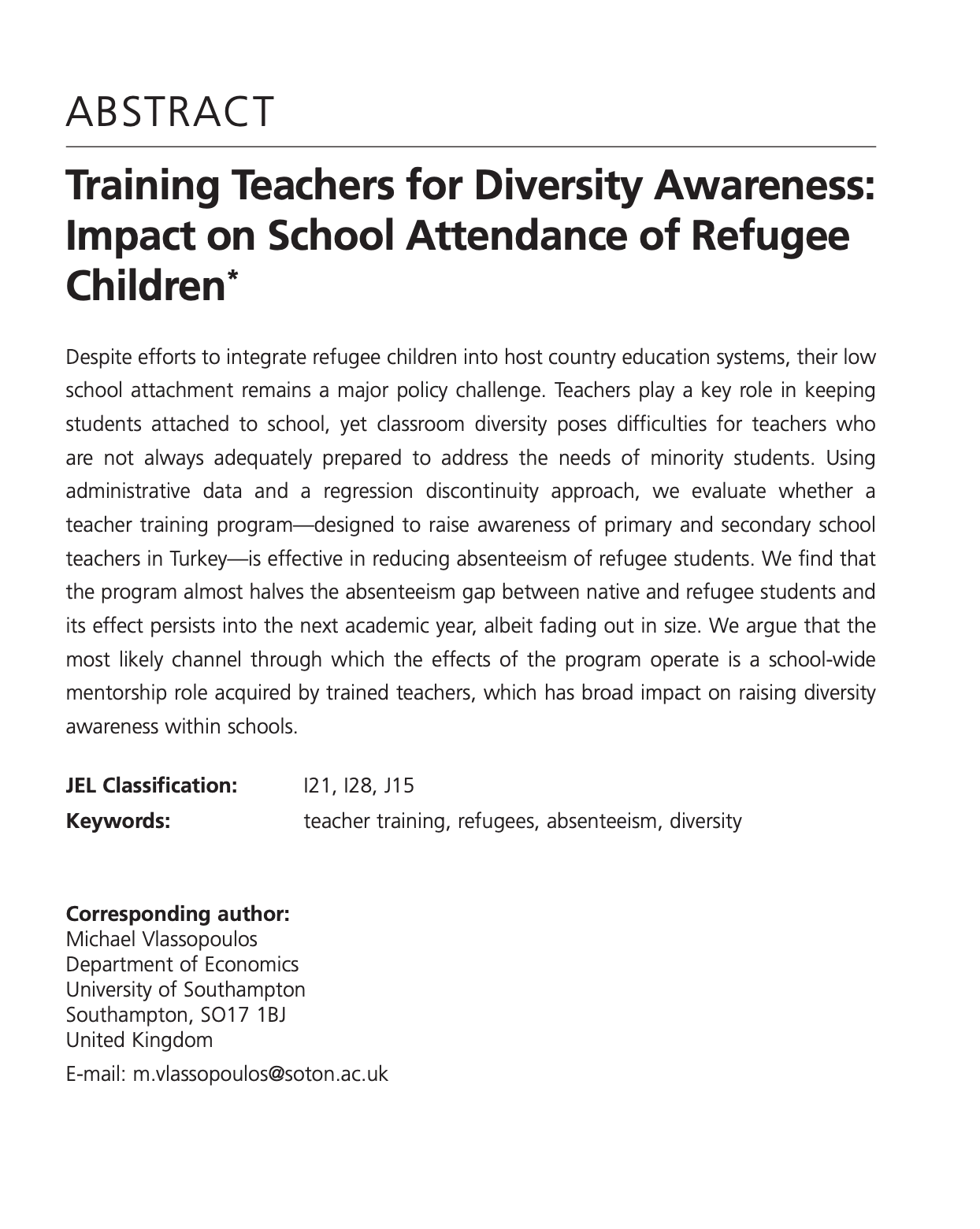
And, finally, providing teachers in Turkey with diversity training that focused on the challenges that refugees face “halved the absenteeism gap between native and refugee students and its effect persisted into the next academic year.”
See you next week!
Thank you for reading Holbein's Social Science Roundup. This post is public so feel free to share it.
No posts
Comments
Nothing yet. Say the first thing.
Sign in to join the conversation.