

The weight of leadership is not found only in the size of the decision. It is found in the number of lives that may be changed by it.
Leadership is often described using the language of strength. We speak about courage, resilience, decisiveness, stamina, and the ability to perform under pressure.
All of that matters.
But there is another truth about leadership that we do not name often enough.
Leadership is heavy because people matter.
The spreadsheet may contain numbers, but behind those numbers are salaries, families, ambitions, mortgages, school fees, medical needs, and private hopes. The restructuring may appear as boxes on an organisation chart, but every box contains a person who will carry the meaning of that decision home.
A missed target is not only a performance gap. It may become pressure on a team already trying to do more with less. A customer complaint is not only a service failure. It may be a moment when someone feels unseen by an institution they trusted.
This is what makes leadership more than problem solving.
The problems have faces.
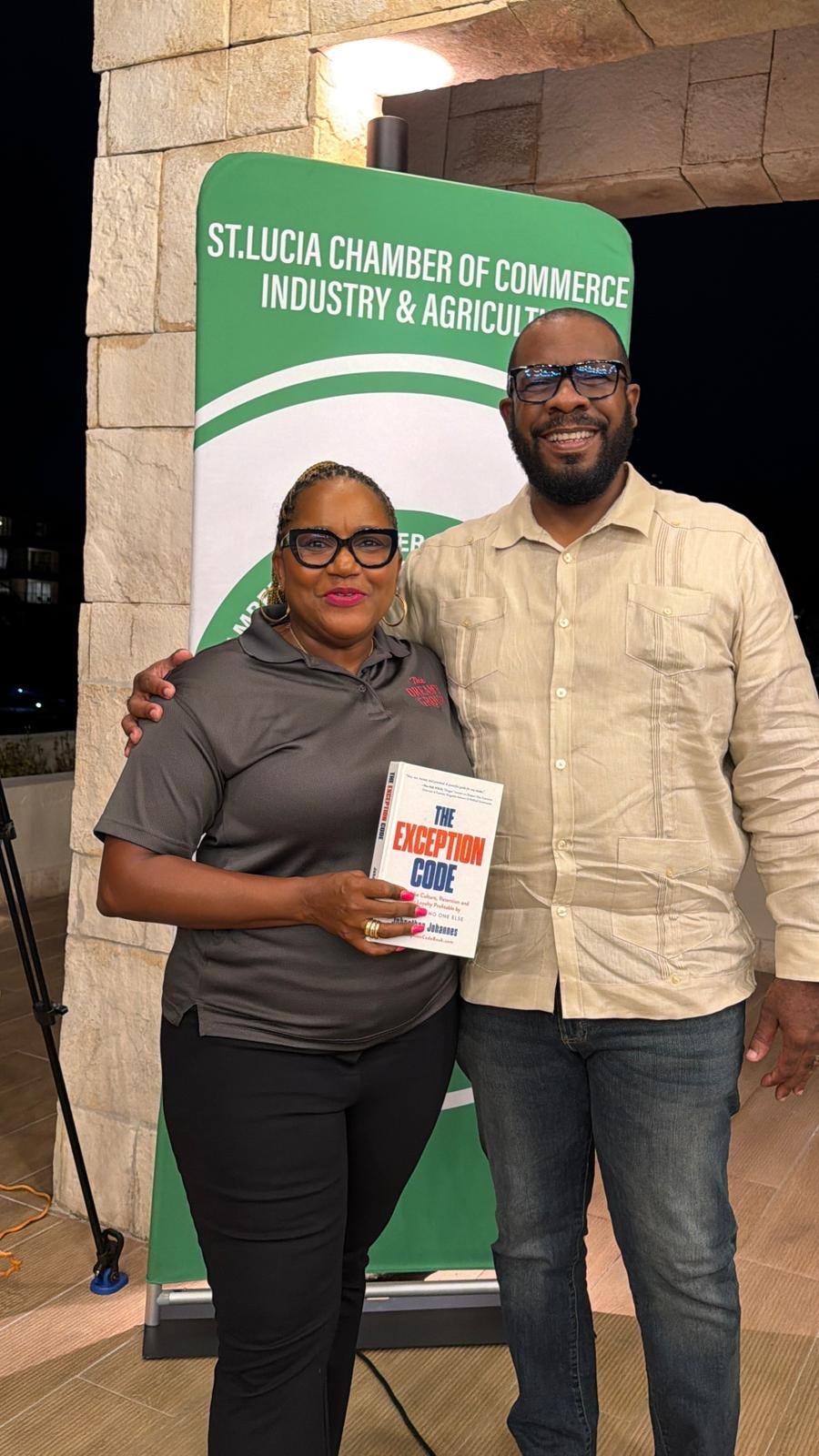
During CEO Ka Palé 2, our conversation moved into burnout, responsibility, resilience, and the private weight behind public leadership. One idea stayed with me after the event:
The leaders most vulnerable to burnout are not always the ones who care too little. Sometimes they are the ones who care so deeply that they no longer know what belongs to them to carry.
That distinction matters.
Care becomes dangerous when it convinces a leader that carrying everything alone is the highest form of service.
People often see the decision after it has been made. They rarely see what the leader carried before making it.
The alternatives considered. The consequences imagined. The names behind the numbers. The conversation with the board. The concern for the team. The possibility that every available option may hurt someone.
Some decisions do not offer a clean choice between right and wrong. They offer several imperfect choices, each carrying a different cost.
That is where leadership becomes lonely. Not because no one is around, but because responsibility cannot be distributed as easily as advice.
There is a version of caring that strengthens leadership. It keeps leaders close to people, attentive to consequences, and unwilling to treat human beings as collateral damage.
But there is also a version of caring that slowly distorts responsibility.
The leader begins absorbing every emotion in the room. Every disappointment feels personal. Every failure becomes evidence that they should have done more. Every problem enters their body as though it belongs there permanently.
They become the final approver, the emergency contact, the fixer, the translator, the source of calm, and the person expected to carry what everyone else cannot.
At first, this can look like commitment.
Over time, it becomes a system built around one person’s capacity to suffer.
That is not sustainable leadership. It is organisational dependence disguised as dedication.
Good leaders care about what happens to people. Wise leaders also understand that caring does not require them to personally absorb every consequence, solve every problem, or protect everyone from every discomfort.
The work of leadership is not to carry everyone.
It is to build enough clarity, trust, capability, and support that people can carry responsibility together.
One of the most important distinctions in The Exception Code is the difference between resilience and endurance.
Endurance helps you remain in motion. It can also keep you inside an unhealthy pattern long after wisdom has asked you to change it.
A leader can keep arriving early, staying late, answering every message, making every decision, and appearing remarkably strong.
But functioning is not the same as being well.
Endurance asks, “How much more can I take?”
Resilience asks, “What must I learn, change, share, release, or rebuild so that I can return stronger without returning unchanged?”
The first question can turn pain tolerance into identity.
The second creates the possibility of renewal.
Burnout is not always the collapse of commitment. Sometimes it is commitment that was never given a healthier structure.
Burnout is often imagined as a dramatic breakdown. In reality, it can arrive quietly.
It begins when the leader stops recovering between demands.
When every break becomes preparation for the next crisis. When conversations with family are interrupted by work that always seems urgent. When rest produces guilt. When patience shortens. When the leader is physically present but emotionally rationing the little they have left.
The work may still be getting done.
The reports may still be submitted. The meetings may still be chaired. The team may still describe the leader as dependable.
But something has changed.
Curiosity becomes irritation. Compassion becomes efficiency. Reflection becomes a luxury. The leader begins making decisions from depletion while calling it discipline.
This is why burnout is not only a personal wellness issue. It is a leadership risk.
Exhaustion narrows judgment. It changes tone. It reduces the leader’s ability to listen, imagine alternatives, tolerate uncertainty, and remain emotionally steady when others need clarity.
A depleted leader may still have authority.
What begins to disappear is capacity.
Leadership asks us to care deeply without pretending we are limitless.
That is not easy.
Many leaders have been rewarded for being available, dependable, and willing to carry more. They have built reputations around being the person who never drops the ball.
But there comes a point when strength must mature.
The question is no longer, “Can I carry this?”
The better question is, “Should I be carrying it this way, and what is my way of carrying it teaching the organisation?”
If every difficult decision returns to one person, the organisation is not becoming stronger. If the leader cannot rest without the system slowing down, the system is not resilient. If asking for help is treated as weakness, burnout has already been designed into the culture.
Leaders have a responsibility to their people.
They also have a responsibility to remain human enough to lead them well.
Carrying leadership well requires more than endurance. It requires a different architecture of responsibility.
1. Name the weight.
Unspoken pressure grows in private. Leaders need at least one trusted space where they can speak without performing strength.
2. Separate care from control.
You can care deeply about an outcome without controlling every action that produces it. Ownership must be distributed if capability is to grow.
3. Build recovery into the work.
Recovery is not the reward for finishing everything. Leadership work is never completely finished. Renewal must therefore become part of the operating rhythm.
4. Let people carry their part.
Rescuing capable people from every consequence may feel compassionate, but it can quietly prevent accountability and growth.
5. Notice what the weight is changing in you.
Pay attention when pressure changes your patience, presence, relationships, judgment, or sense of self. Those signals are information, not inconvenience.
At CEO Ka Palé 2, the conversation also reminded me that no public leadership journey is carried by one person alone.
Behind the leader are people who absorb disruption, offer perspective, restore proportion, challenge self-deception, and remind the leader that identity is larger than the role.
Some support comes from family. Some from colleagues, mentors, friends, faith, professional help, or the rare person who can listen without immediately trying to manage the answer.
These relationships are not accessories to leadership. They are part of its infrastructure.
Yet leaders often invest more intentionally in operational backup than emotional backup. They develop contingency plans for technology, finance, succession, and supply chains, while leaving their own renewal to chance.
That is a risk no serious leader should ignore.
The strongest leaders are not those who need no one.
They are those who know who helps them remain whole, and who are humble enough to receive that help.
I have had seasons when leadership felt especially heavy, not simply because the workload was large, but because the people affected by the work mattered to me.
There is no spreadsheet that can fully carry the human meaning of a difficult decision. No policy can remove the feeling of knowing that someone may leave a conversation disappointed, afraid, or uncertain because of a direction you had to choose.
I used to think carrying that weight quietly was part of being strong.
Now I understand that strength also includes naming the pressure, seeking perspective, resting before judgment becomes distorted, and allowing other capable people to carry responsibility with you.
The aim is not to become detached.
Detachment may make decisions easier, but it can also make leadership colder.
The aim is to remain close enough to care and grounded enough not to disappear inside what you care about.
That balance is difficult. It is also necessary.
People deserve leaders who feel the weight of their decisions.
They also deserve leaders who know how to carry that weight without becoming less present, less patient, less wise, or less human.
Leadership is heavy because people matter.
That weight is not evidence that something has gone wrong. Often, it is evidence that the work has meaning.
But meaningful weight still needs wise handling.
It needs support. Recovery. Boundaries. Shared ownership. Honest reflection. The courage to continue, and sometimes the courage to change how you continue.
Endurance may help a leader survive the season.
Wisdom helps the leader remain someone worth following when the season is over.
The goal is not to feel nothing.
It is to care deeply without carrying so much alone that care itself becomes impossible.
Until next time,
Johnathan Johannes
Behind The Exception Code
P.S. What part of leadership have you been carrying alone because you believed strength required silence? The next responsible step may not be to push harder. It may be to name the weight, share it wisely, and protect the part of you that must remain present enough to lead.

No posts
Comments
Nothing yet. Say the first thing.
Sign in to join the conversation.