

The days that define your leadership are rarely the days you felt most motivated.
They are the days you showed up because your purpose was bigger than your mood.
Motivation can start the work. Purpose is what carries it through the days when the feeling disappears.
I am often asked what keeps me motivated.
The honest answer is that I do not try to stay motivated.
I value motivation. I welcome it when it arrives. It can create energy, sharpen focus, and make difficult work feel possible. But I have led long enough to know that motivation is not a reliable leadership strategy.
It changes with sleep, success, criticism, recognition, pressure, and the condition of the day. It can be strong on Monday and absent by Thursday. It can fill a room after a good result and disappear after one difficult conversation.
The work that matters most cannot depend on a feeling that comes and goes.
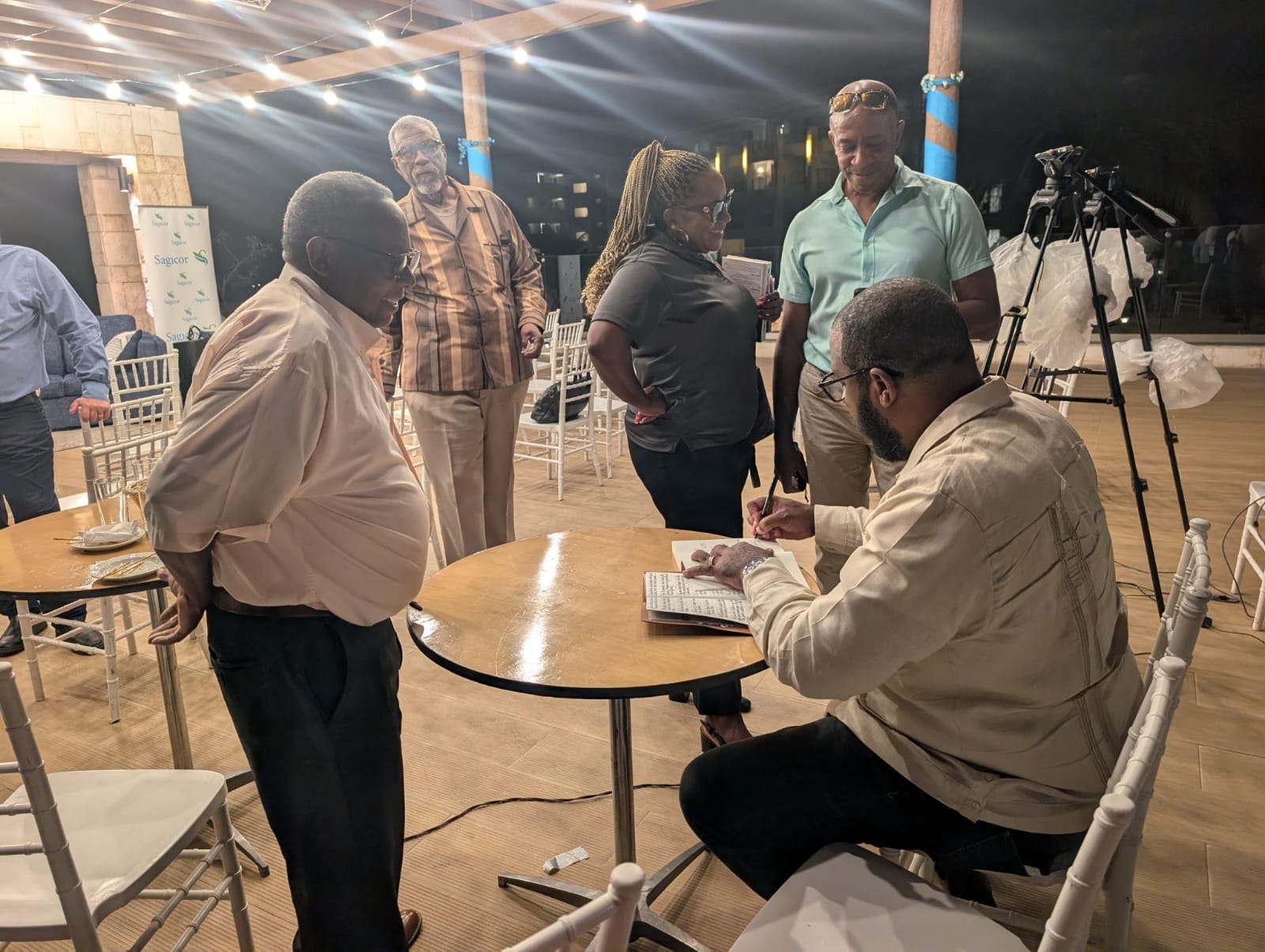
That was one of the ideas that stayed with me after CEO Ka Palé 2. We spoke about leadership, burnout, resilience, support, purpose, and the private weight behind public responsibility. The conversation moved across many subjects, but underneath them was one persistent question:
What carries a leader when the visible sources of energy are no longer enough?
My answer is purpose.
Not purpose as a slogan. Not a polished statement on a wall. Not a sentence that sounds impressive when repeated on a stage.
Purpose as an anchor. Purpose as identity. Purpose as the reason you return when motivation has already left the room.
Motivation is a feeling.
Purpose is a commitment.
Motivation is wonderful company, but it does not always stay.
It visits when the idea is new, when the audience is responsive, when the numbers are moving, when someone notices the effort, or when the future feels close enough to touch.
Then the work becomes repetitive. Progress slows. A decision is misunderstood. A launch disappoints. The applause ends. The calendar fills with tasks that are necessary but not exciting.
This is where many ambitions quietly weaken. Not because the goal stopped mattering, but because the emotional reward disappeared.
We often speak about motivation as though strong people can summon it on command. But leaders are human. There are days when the energy is low, the problem is familiar, and the responsibility feels heavier than the recognition it receives.
If your leadership depends on always feeling ready, inspired, confident, or appreciated, circumstances will eventually take control of your consistency.
That is the hidden weakness of motivation. It makes an excellent spark, but a poor foundation.
Thanks for reading The Exception Code! This post is public so feel free to share it.
Purpose behaves differently.
Motivation asks, “Do I feel like doing this today?” Purpose asks, “Does this still matter?”
Motivation looks for energy. Purpose looks for meaning.
Motivation often needs a visible reward. Purpose can work quietly for a long time before anyone notices.
This does not mean purpose removes fatigue. It does not make disappointment painless or pressure light. Purpose is not emotional anesthesia.
What it does is give difficulty a reason. It helps leaders distinguish between pain that signals misalignment and discomfort that accompanies meaningful work. It gives clarity to what deserves another effort and courage to what must be released.
Purpose does not guarantee that you will enjoy every part of the journey. It reminds you why the journey is still worthy of your integrity.
Motivation asks how you feel.
Purpose asks who you have chosen to become.
Looking back, I do not remember every day I felt motivated.
I remember the days I kept going anyway.
The days when the answer was not obvious, but the decision still had to be made. The days when people needed steadiness from me while I was still searching for it within myself. The days when the result was delayed, the criticism was immediate, and the responsibility remained mine.
Those days did not always feel significant while I was living them. Often, they looked ordinary from the outside. A conversation handled carefully. A promise kept. A difficult email rewritten. A team member given more patience than the moment seemed to permit. A decision made according to principle when the easier option was available.
This is where purpose proves itself.
Not in the launch. In the return.
Not in the public declaration. In the private discipline.
Not in the days when the work rewards you. In the days when the work asks whether you still believe what you said mattered.
Starting is visible. Returning is often invisible.
People see the first announcement, the new role, the launch, the strategy, the book, the initiative, or the commitment. They rarely see the ordinary repetitions that make it real.
Purpose is built through return.
You return to the customer promise after a service failure.
You return to the culture you said you wanted after pressure tempts the team back into old habits.
You return to the difficult conversation after postponing it would be easier.
You return to the manuscript after doubting whether the words are good enough.
You return to yourself after success, stress, or disappointment pulls you away from who you intended to be.
The exceptional leader is not someone who never loses energy. It is someone who has built a reason to return.
That distinction matters because leadership is not one act of conviction. It is conviction repeated until it becomes a standard others can trust.
At first, purpose may feel like something you pursue.
Over time, if you live it consistently, it becomes part of your identity.
You stop asking whether a decision will make you look successful and begin asking whether it is consistent with the leader you have chosen to be.
This is why purpose can outlast motivation. Motivation is connected to a moment. Purpose becomes connected to the self.
When purpose becomes identity, discipline changes. You do not keep a promise only because the outcome is attractive. You keep it because breaking it would move you farther away from yourself.
You do not invest in people only when engagement scores are low. You do it because building people is part of what leadership means to you.
You do not protect culture only when there is time. You protect it because culture is how your values become visible to others.
That kind of purpose is not loud. It is recognisable. People begin to know what your leadership will protect, what it will challenge, and what it will refuse to trade for convenience.
Eventually, purpose stops being something you pursue.
It becomes the standard by which you recognise yourself.
This tension between what leaders say matters and what their lives repeatedly prove is one reason the Purpose Alignment Map became important in The Exception Code.
I had seen too many capable leaders who knew their purpose but had built a rhythm that contradicted it. Their role looked impressive, their results looked strong, and their calendars looked full. Yet something inside the work felt increasingly disconnected.
That is why purpose needs more than discovery. It needs alignment.
A leader may have a clear purpose and still occupy a role that slowly suffocates it. They may speak about people while protecting no time to develop them. They may value family and health while treating both as permanently negotiable. They may pursue results that impress the market but leave the team depleted.
The Purpose Alignment Map is not simply a way to ask, “What is my purpose?” It asks whether your role, rhythm, results, and relationships are helping that purpose breathe.
This is the deeper lesson. Purpose does not sustain us merely because we can name it. Purpose sustains us when we organise our lives and leadership around it.
Motivation can survive for a while inside contradiction. Purpose eventually demands integrity.
There is an important caution here.
Purpose should not be used to romanticise exhaustion, excuse harmful environments, or convince leaders that every sacrifice is noble.
Sometimes the most purposeful decision is to stop.
To change the rhythm. To leave the role. To ask for help. To admit that what once carried meaning has become unhealthy, unsustainable, or misaligned.
Purpose is not the same as stubbornness. It does not ask you to remain unchanged while the work consumes you.
Real purpose is honest enough to ask whether continuing in the same way is still serving the mission, the people, and the person you are becoming.
This is where purpose and resilience meet. Resilience is not simply returning to the same place with a higher tolerance for pain. It is learning, adapting, recovering, and returning with greater wisdom.
Purpose tells you why the work matters. Wisdom tells you how the work must change so that what matters can endure.
The conversation at CEO Ka Palé 2 gave me limited time to express an idea that has taken years to understand.
Motivation is useful, but it cannot carry the full weight of leadership.
Leadership includes repetition, misunderstanding, delayed results, private doubt, and responsibility that does not disappear because your energy is low. The strongest leaders are not permanently inspired. They are anchored deeply enough to keep making responsible choices when inspiration is absent.
That does not mean they never rest, question, or change direction. In fact, purpose gives them the clarity to do all three without interpreting them as failure.
The question is not, “How do I stay motivated all the time?”
The better question is, “What matters enough for me to return to it honestly, and what must change so I can keep returning without losing myself?”
That is a more difficult question.
It is also a more useful one.
Writing The Exception Code required motivation at the beginning. There was excitement in discovering the argument, shaping the framework, and imagining the finished book.
But excitement could not write every page.
There were days when the words came slowly, when the stories felt too personal, when revision exposed weaknesses I would have preferred not to see, and when the distance between the manuscript I had and the book I wanted felt uncomfortably large.
Purpose brought me back.
Not because every day felt inspiring. Because I believed the work could help leaders make better decisions, build healthier cultures, retain good people, serve customers more faithfully, and lead without losing themselves.
Looking back, I do not think purpose made the journey easier. It made the difficulty worth examining instead of escaping.
That may be what purpose does best. It does not remove the weight. It reminds you why the weight deserves to be carried, changed, shared, or sometimes put down.
Motivation helps us begin.
Purpose helps us return.
And the work that shapes a life, a team, an organisation, or a legacy is rarely built in one inspired moment.
It is built through return after return.
After the excitement fades.
After the applause ends.
After the plan changes.
After we are forced to ask whether the work still matters and whether we are still willing to become the person it requires.
Motivation asks, “Do I feel like doing this?”
Purpose asks, “Is this still who I choose to be?”
The second question has carried every meaningful thing I have ever built.
Until next time,
Johnathan Johannes
Behind The Exception Code
P.S. What are you still trying to sustain through motivation alone? The answer may not be to push harder. It may be to reconnect the work to a purpose strong enough to guide your rhythm, your choices, and your return.

No posts
Comments
Nothing yet. Say the first thing.
Sign in to join the conversation.