
Hello and welcome to my weekly newsletter about how football explains global politics, money and power.
I’ve gained a lot of new followers in recent weeks, so I’ve written something at the bottom of this email reintroducing myself and this newsletter. But first let’s talk about the World Cup (again).
It was the first tournament with 48 teams, and it is an open secret that FIFA would like to expand it even further to 64 teams.
I am instinctively very cynical about this. The sport’s organising body has an obvious financial motivation here, as part of world football’s relentless march to put on more and more games, showing more and more advertising.
But I actually think a 64-team World Cup would be good, and certainly better than the 48-team version we’ve just had.
Amid all the cynicism, bringing football to new countries is intrinsically valuable, and World Cup qualification will help with that.
I often think about a conversation I had in 2023 in Mumbai with some bigwigs of Indian football who were putting money into the academy system there, with the eventual goal of making the national team competitive — which it is far from right now.
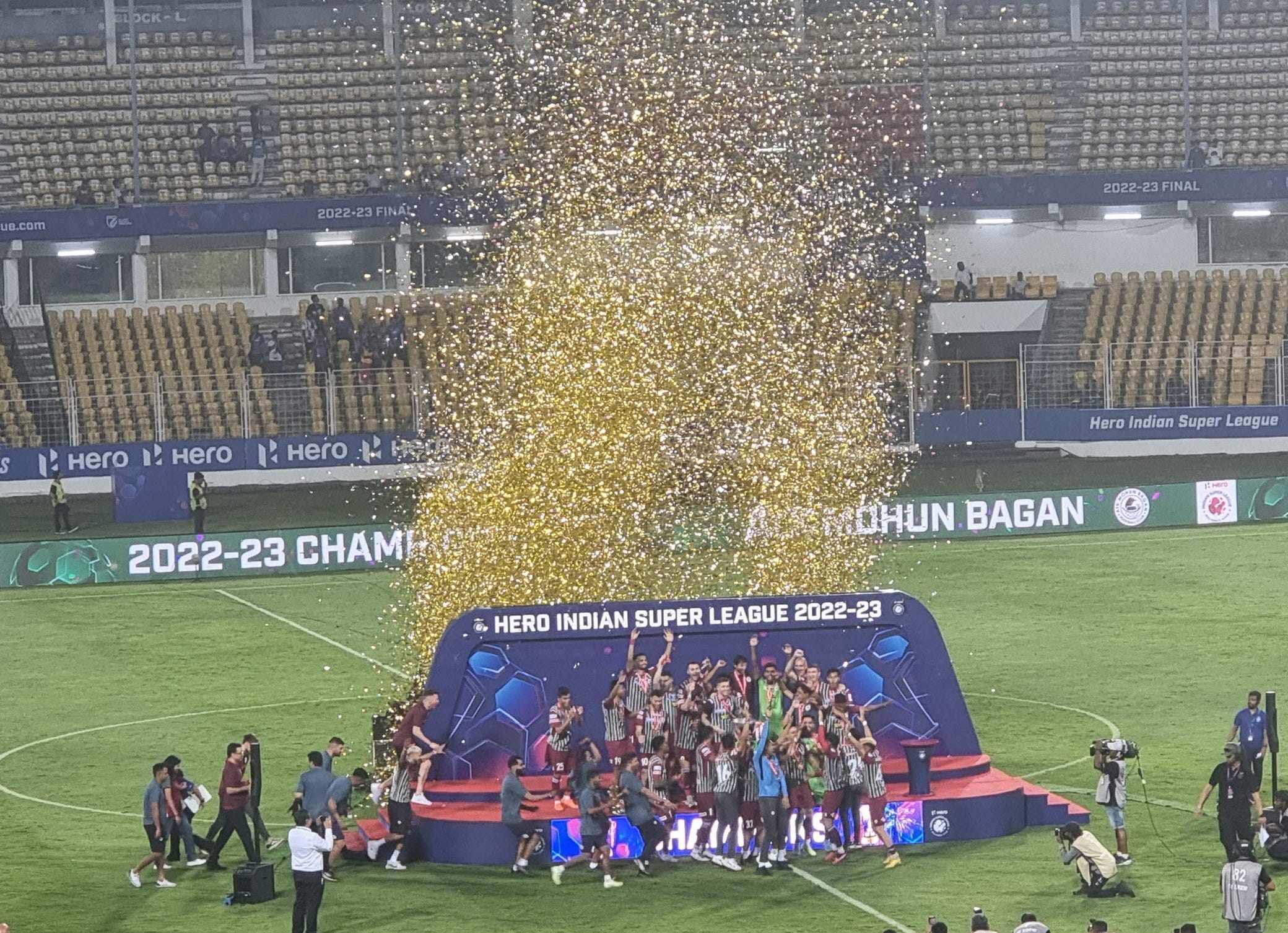
I was told that expansion was a huge thing for football in India, not because the country had any hope of qualifying in 2026 — the country is ranked 138th in the world, below Guinea-Bissau and Nicaragua — but the prospect of qualifying, at some undefined point in the future, feels much more likely with a bigger tournament.
There is more chance that a couple of decent qualifying results mean Indian football fans dare to dream at some point, even if they fall short. That can be true in countless other countries.
I think that’s genuinely valuable. For all that FIFA’s rhetoric about “growing the game” might be a thinly-veiled excuse for funnelling cash to allies, it is no bad thing for football’s appeal to grow beyond its European and South American heartlands.
The expansion from 32 teams to 48 worked pretty well. The worries about a big drop-off in quality were not founded.
No team was humiliated. There were a couple of wins by six goals, and a couple by five, but in 104 games that is not particularly surprising.
Another 16 teams would not mean a huge drop-off — Italy, Denmark and Nigeria failed to qualify for this tournament.
Similar conversations were had when the women’s World Cup expanded from 24 to 32 teams. It was fine, and there were some exciting upsets.
In men’s football, the real cliff edge in quality is not between the 32nd-best team in the world and the 48th-best team in the world, it is between the 8th-best team in the world and the 18th-best team in the world.
The four semi-finalists were the top four ranked teams in the world. The expanded tournament added an extra knockout round, which reduces the role of luck and makes it even less likely that an underdog can win the whole thing. But that is a different issue.
I think there’s something to be said for a tournament that is essentially split in two. The group stages are a massive carnival of football in which a large chunk of the world’s population can cheer on their team. World football’s minnows get some time in the limelight.

Later come the knockout stages which determine the best team in the world.
Both are great for different reasons.
You sometimes hear the argument that World Cup qualification is “devalued” by expansion. It certainly didn’t look like anyone playing in the tournament, or watching on, felt that way at all.
While having these positives, the 48-team format introduced a negative, in a confusing system where eight out of 12 third-placed teams went through.
This was unsatisfying – Scotland were left hanging around for days waiting on other teams.
Expanding to 64 teams fixes all this. It sorts the third-place mess. Also, and perhaps counter-intuitively, it means more jeopardy, because half of the teams escape the group stage rather than two-thirds. This does not mean any additional games for individual teams or players — it is still eight to win, the same as with 48 teams.
Of course the infrastructure requirements would be massive, but tournaments shared between countries are becoming more and more common, in the World Cup as well as European Championships. The World Cup is hot property and lots of countries want a piece of it.
The tournament wouldn’t even need to last any longer. Organisers could just stuff six games into each day in the group stage rather than four.
Perhaps I’m already missing the 39 days of football we have just had, but sign me up for an even bigger tournament next time around…
Sometimes the wrong people want the right thing for the wrong reasons. FIFA’s desire for a 64-team World Cup is just that.
Reintroducing myself…
My name is Joey D’Urso, and I’m a journalist and author from the UK. I spent ten years working as a journalist for BBC News, the Athletic and the Times before choosing to go freelance a few months ago.
My first book, More Than A Shirt: How Football Shirts Explain Global Politics, Money and Power, is out now in paperback.
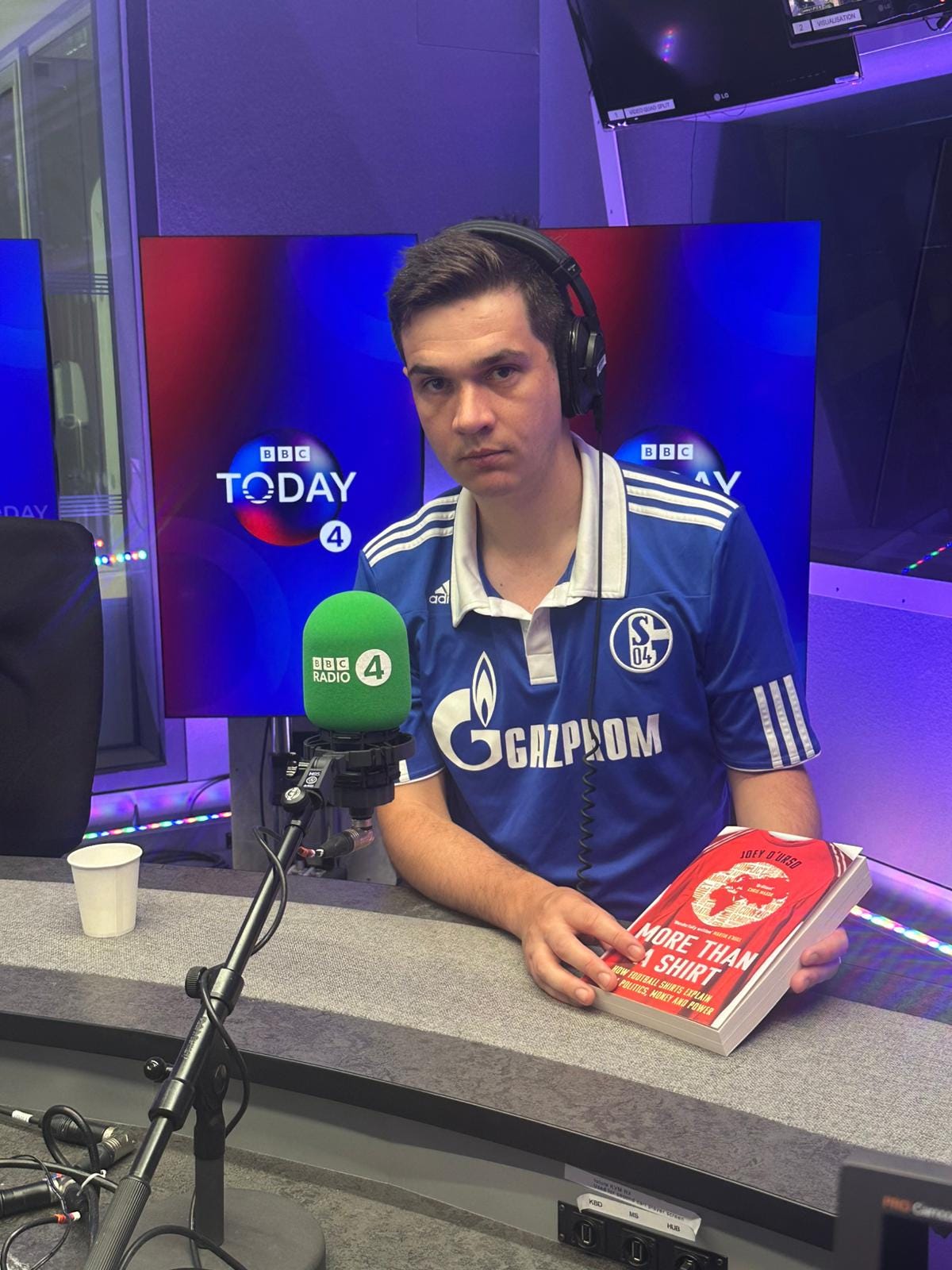
I’m spending the rest of my summer working on a new book, which newsletter subscribers will be first to hear more about!
I also write for the likes of the New Statesman and the Economist, and post videos on Instagram and YouTube. It’s a nice feeling to have more followers who are interested in my lifelong obsession: where politics meets football.
This newsletter goes out every Friday morning. You’ll get these weekly emails for free for now, but I recently enabled a paid tier, and continuing this project in the long run will require more paid subscribers.
Each edition is an original thought or idea about the world of football and the deeper currents behind it, often based on my travels around the world. Here are some recent examples:
Thanks very much for following along, and feel free to hit reply, I always like hearing from readers!
No posts
Comments
Nothing yet. Say the first thing.
Sign in to join the conversation.