

There is a moment in the first series of Top of the Lake that works almost as a thesis statement for the whole enterprise. Detective Robin Griffin, played by Elisabeth Moss with her characteristic mixture of tautness and barely suppressed devastation, stands before Paradise -- the camp of women on the lakeshore, as the bulldozers move in. She has done everything she can. She has worked the system, around the system, and even against the system. But the twelve-year-old girl at the center of her investigation is still missing. GJ, played by the nearly silent Holly Hunter, is the spiritual leader of the women at Paradise, a lakeshore camp of women who have given up on the world she says. It is being destroyed by the man to whom the land belongs. The lake looks on, unmoved and beautiful.
This image -- the activist witness, the structure being destroyed anyway -- is Jane Campion’s great subject in Top of the Lake and its second series, China Girl. It is not really a procedural. It is an exercise in the futility and necessity of trying to push against the immovable, and the futility and necessity of trying anyway.
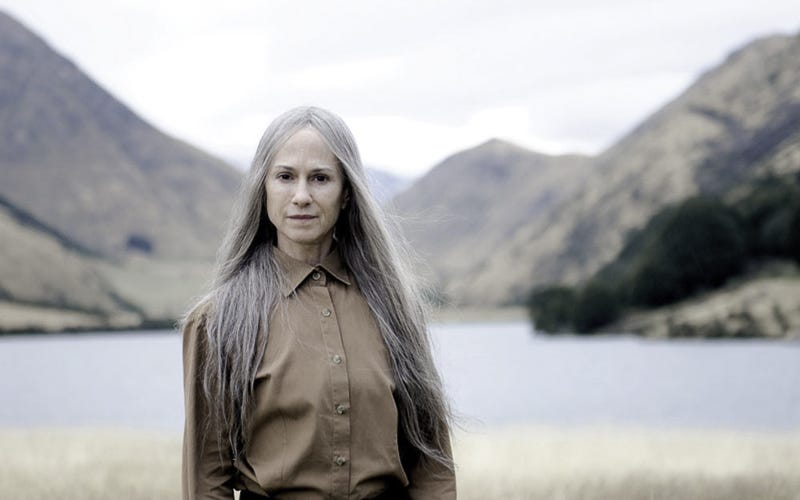
Holly Hunter as GJ
The Architecture of the Immovable
To understand what Top of the Lake is doing, it helps to understand the New Zealand landscape as Campion frames it: not picturesque but crushing. Laketop is a town governed by unspoken masculine law, where the vanishing of women is part of the folklore rather than the subject of an investigation, where the local police sergeant (Matt Mitcham, played by the wonderful Peter Mullan as the terrifyingly normal man) is at once the pillar and the poison of the community. The landscape is the way in which what cannot be said is said; the way in which the unspoken reality is made palpable.
This is the first and most important thing Top of the Lake asks the viewer to consider: the distinction between a condition and a problem. Robin is from Sydney, with her credentials as a professional still shiny and new, with the tools of the liberal interventionist still bright in her mind: the interview, the evidence warrant, the protective order. These tools are not useless. The difficulty is that they are designed to address problems rather than conditions. Problems are what we think of as evil acts with identifiable perpetrators and victims who can be rescued. The condition Robin finds in Laketop is one in which every locus of power within the community -- family, church, police, community at large -- participates in, and hence protects, the subjugation of women and girls.
GJ barely speaks in the first series. When she does, she refuses consolation. “What did you expect?” is her reply to nearly everything. It is not nihilism; it is a kind of structural realism that the rest of the show tests, but does not entirely refute.

Jacqueline Joe as Tui Mitcham
Tui Mitcham, pregnant, twelve years old, unwilling to reveal the name of her baby’s father, and ultimately disappearing into the wilderness, is the series’ symbol for the situation that cannot be rescued. Robin wants to rescue Tui. The requirements of the procedural genre demand that she rescue Tui. But the fact is, when she finally comes back into the world in the series’ closing scenes, she has rescued herself, in her own way, on her own terms. What Robin has done is change the circumstances slightly to make it possible for Tui to survive. It is an important distinction.
The show’s honesty lies in refusing to let Robin’s engagement redeem the situation. The situation remains unredeemed. And yet engagement was still necessary.
Robin as Activist Figure
Robin Griffin is not really an activist. She is a police detective. But she is an activist in the larger sense. She is because she is aware of the situation and is incapable of adjusting to it. She is because she keeps trying to change the system even as the system responds with greater force.
What makes her interesting, and what makes the show so uncomfortable to watch, is that Campion does not shield Robin from the impact of her actions. Robin does not exist outside the structure; she is embedded within it. Robin is a victim of the same structure she is trying to fight, which gives her both her ferocity and her blind spots. Robin’s past in Laketop, the gang rape she endured as a teenager, and the child she gave up for adoption, means that Robin’s investigation of Tui is not an entirely objective one. Robin is, in a sense, trying to save her own past.
This is a recurring pattern in the show: Robin’s interventions produce results, but rarely the intended ones. Robin unmasks Matt Mitcham, eventually. The machinery of justice grinds into action. Tui, however, survived because of her own wits, not because of Robin’s actions. The structure that created Tui’s world remains in place when the series ends. The lake still reflects the mountains. The next girl is already out there.
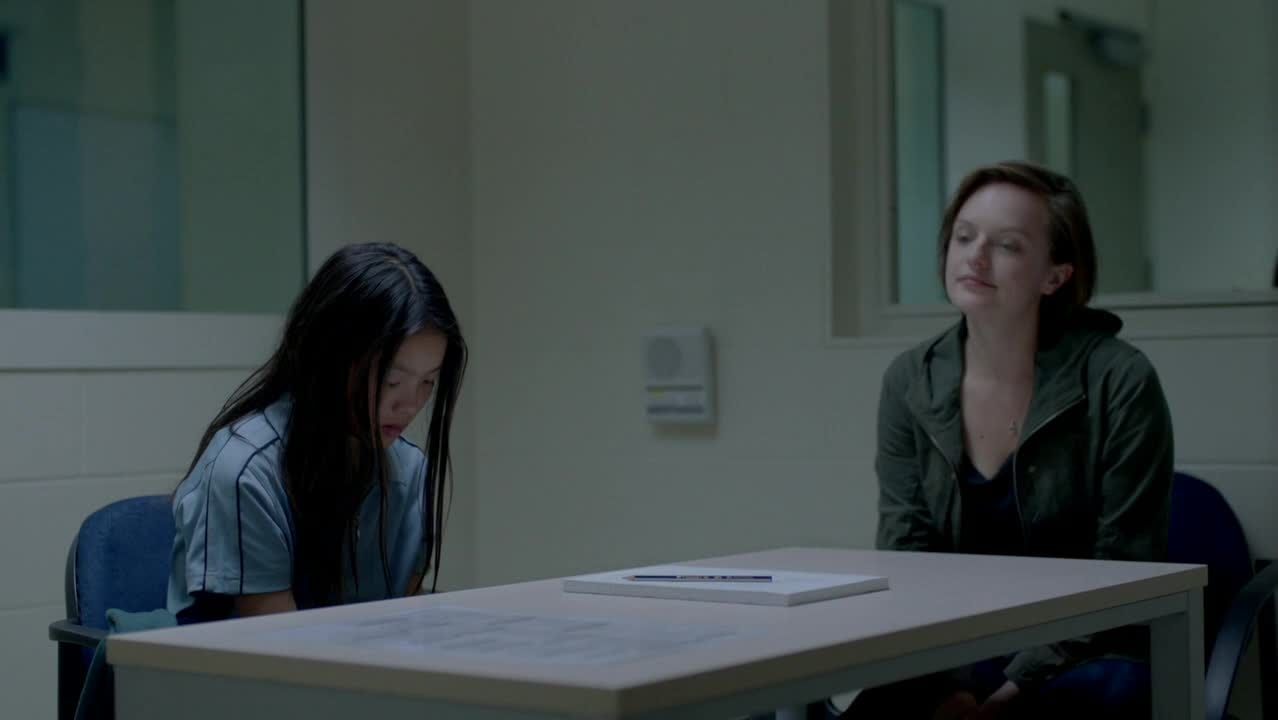
China Girl and the Expansion of the Frame
The second series, set in Sydney, expands the frame. China Girl deals with another structure, another framework, but one related to the previous one: the international sex trade. The woman who died, found in a suitcase on Bondi Beach, does not have a name in the system. She is, in fact, unregistered. Again, the investigation is an effort to apply the tools of justice to a structure that those tools were never designed to reach.
China Girl adds something the first series only implied: a reckoning within the limits of privileged good intentions. Julia -- Nicole Kidman, all warmth and unconscious certainty -- is wealthy, well-meaning, and the woman Robin’s daughter Mary has chosen over her own mother. She surrounds herself with correct opinions. She cannot, however, see the person in front of her. Campion draws the distinction carefully: wanting to do right is not the same as looking hard enough to know what right requires. Good intentions are not the same as structural analysis. Compassion, lacking power analysis, can obstruct justice.
And yet the alternative to insufficient activism is not resignation. GJ’s radical non-attachment, her refusal to intervene, her transcendence of outcome, is also insufficient. The women of Paradise needed the ground they were on. Equanimity in the face of a bulldozer is simply capitulation.

Nicole Kidman as Julia
The Necessity of the Futile Gesture
There is a long tradition in political philosophy of arguing about what to do when structural change is not available. Reformists argue for engagement with existing institutions; radicals argue that such engagement legitimizes the structure; abolitionists argue for building alternatives. Top of the Lake enacts all three of these positions and none of them are vindicated.
What the series offers instead is something less tidy and more honest: the image of a person who keeps showing up. Robin fails again and again. She is suspended, sidelined, manipulated, traumatized, and sabotaged by the very institutions she works for. In China Girl she is also estranged from her daughter, unmoored from her professional self, and operating with limited jurisdiction. And yet she continues to show up. Not because showing up will fix the structure -- the show is far too realistic for that -- but because the alternative to showing up is not showing up at all and allowing the structure to operate uncontested and unchallenged.
The series asks for engagement without the reward of efficacy. It asks for the persistence that knows it will not prevail. It asks for what the moral philosopher might call “tragic action” -- action taken in full knowledge of its likely insufficiency, because the alternative is worse.
In this, Robin Griffin embodies something the culture periodically needs to see: the person who will not be realistic about their chances of success.

Elizabeth Moss as detective Robin Griffin
Failure as Evidence of Action
The most politically conscious aspect of Top of the Lake is its refusal to let Robin’s failures function as evidence against engagement. In lesser hands, the story of a detective who cannot save the girl, who cannot defeat evil, who cannot restore her relationship with her daughter, would become a cautionary tale about naive idealism. Campion refuses this. The failures accumulate not as a case against Robin’s choices but as a map of the structure’s defenses.
Robin will not live to see a change in the conditions that produced Tui, or the dead woman in the suitcase, or her own rape at seventeen. But in refusing to see those conditions as inevitable, she changes, ever so slightly, what those conditions can still lay claim to as inevitable.
This is why Top of the Lake resonates so strongly with anyone who has ever fought a system and found the system entirely indifferent to being pushed. The show neither demands optimism nor permits despair. It demands the harder thing: continued action without certainty, engagement without the consolation of progress, presence in the face of a structure that would very much prefer your absence.
No posts
Comments
Nothing yet. Say the first thing.
Sign in to join the conversation.