
Part 4 (of 7) – 25 CE to 1580 CE-ish, including the “Columbian Exchange”
This chapter covers some well-known plant foods, including artichokes, avocados, beans (both dried and lima), chiles (both sweet and hot), lemons, peanuts, strawberries, and sweet potatoes. A few of these are new entries into this history while others are extensions of their history as given in previous chapters.
Additionally, within are the beginnings of soy processing, the origin of apple pie (nope, not “American”), mustard in the form of oil and as a beginning to “French’s,” hops as a beer flavoring, fico d’Indi (one of my favorite fruits), and CHOCOLATE and more chocolate.
There’s certainly more about tomatoes or, as the French would originally call it, “the pomme d’amour.” Some fun sub-stories here.
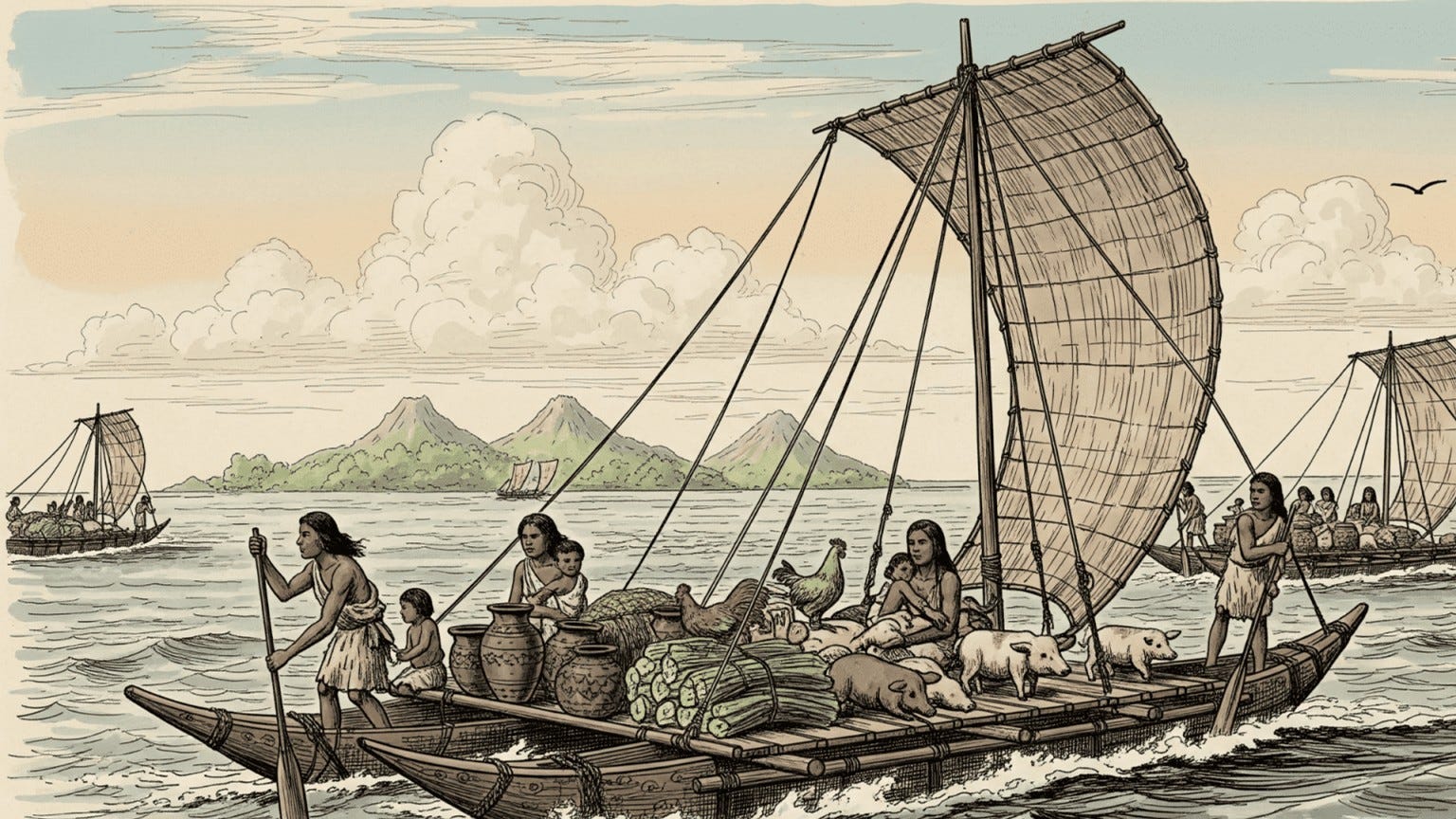
I’ve detailed the foods that made it to Hawaii in the canoes of the inadequately-credited uber-voyagers, the Polynesians.
Speaking of voyagers, there’s Marco Polo and his pasta story. With thanks to a Muslim and the Kingdom of Sicily (part of my heritage).
As with past chapters, there’s mentions of cookbooks (cooking books, recipe books, and just “lists”). The converse of that is a reference to KFC, also slipped in here.
The biggest theme included here (almost 40 percent of this chapter) is the half-century of what is called “The Columbian Exchange.” That’s a name that implies an industry of “trade.” But it doesn’t cover the mostly one-sided and often appalling implications of colonization and occupation. With that being said, I will keep to the details of food.
.
25 – 220 CE – Soy milk and tofu processing.
1000 CE — Tempeh (fermented soy) Indonesia/Java
960 – 1279 CE — Soy sauce becomes a common flavoring.
1770 CE — Ben Franklin, while visiting London, writes about tofu.
.
60s CE — Lingonberries (Vaccinium vitis-idaea). Native to boreal forest and Arctic tundra from Eurasia to North America. Wild berries (V. vitis-idaea var. vitis-idaea; “Cowberry”) have been eaten in northern, central, and eastern Europe, notably in Nordic countries and the Baltic states for centuries, probably millennia. Semi-cultivated through the Middle Ages.
Indigenous Alaskan and Canadian peoples used another subspecies (V. vitis-idaea var. minus; the “Mountain Cranberry”) as food and medicine, again for millennia.
.
Comments
Nothing yet. Say the first thing.
Sign in to join the conversation.