
For much of the period after World War II, and especially after the end of the Cold War, the world appeared to be moving toward a single organizing system. The United States sat at the center, dominant in military alliances, global finance, energy security, trade architecture, technological innovation, and diplomatic legitimacy. It was the country around which many of the world’s institutions revolved, giving it unparalleled power.
The United States still remains enormously powerful, to be sure, and any argument that it is “collapsing” has to account for the obvious persistence of American might. It has the world’s most capable military, immense financial depth, dominant technology firms, historic alliance networks, and a currency that still anchors much of global trade and reserves.
But the first lesson is clear: the old U.S. unipolar order is no longer functioning as before, and the significance of that change cannot be understated. The world is not neatly obeying a U.S.-led script as it once did. U.S. power is hegemonic, meaning it relies primarily on economic and institutional dimensions of control, and it is precisely those dimensions that are waning with increasing speed.
Economic tools such as sanctions, tariffs, currencies, shipping routes, and energy supply chains became central to geopolitical conformity, but they are no longer working as intended. Power is becoming more contested, more regionalized, and more conditional. Countries are hedging. Alliances are becoming more transactional.
Under the Trump administration, the United States has made a sharp turn toward relying on military power to bolster declining U.S. dominance. In hegemonic systems, a turn to the power of arms is often associated with decline. As such, the war involving Iran is a revealing case study. The war is not only a Middle Eastern affair; it is a stress test of a world system once governed by one superpower.
In a similar vein, Iran’s power cannot be understood by the measures of the old order, not simply by counting tanks, aircraft, missiles, or GDP. Iran’s power is truly geographic in scope.
Iran, a large, mountainous nation-state, sits at the intersection of the Middle East, Central Asia, South Asia, and the Persian Gulf. It borders or sits near major conflict zones, energy corridors, and geopolitical fault lines. Its influence reaches into Iraq, Syria, Lebanon, Yemen, the Gulf, and the Caspian region. But above all, Iran’s geography matters because of the Strait of Hormuz chokepoint.
A chokepoint is a narrow passage through which goods, energy, people, or military forces must pass. Control over chokepoints has shaped empires for centuries: Gibraltar, Suez, Malacca, Panama, the Bosporus, Bab el-Mandeb, and Hormuz. These narrow corridors compress global systems into vulnerable spaces.
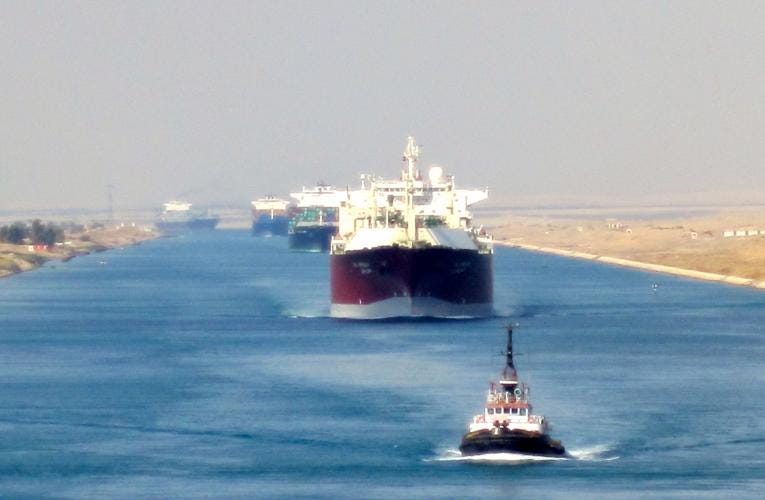
The Strait of Hormuz has always been one of the most important chokepoints on Earth, but despite all the wars and instabilities of recent decades, it remained open. U.S. hegemonic dominance once prevented those vulnerabilities from creating the kind of crisis we are now witnessing there.
Hormuz is especially important because so much oil and liquefied natural gas moves through it. Before the recent disruptions, roughly one-fifth of global petroleum liquids consumption passed through the strait. That means a conflict involving Iran always had the potential to become a global economic event — one that affects shipping insurance, oil prices, inflation expectations, energy-importing countries, and the strategic calculations of states far beyond the Middle East.1
This shift is the first lesson of the changing geopolitical order: geography was often taken for granted in the U.S.-dominated globalized world. Underneath the rule of global finance and prestige lies a biophysical world. The fantasy was one of frictionless globalization, in which market forces would always rise above other issues. But, as is now obvious, the entire system always depended on physical corridors, ports, pipelines, undersea cables, canals, satellites, and naval power.
The Iran war made the map of the real world reappear in full color.
Iran’s military does not come close to matching the United States in conventional terms, but it does not need to. Geography gives Iran asymmetric leverage. The ability to threaten shipping, complicate U.S. basing, activate regional alliances, or disrupt energy flows means Iran can impose costs far beyond its formal economic size and military budget.
In the multipolar world now coming into form, power arises not from total dominance but from the ability to deny, disrupt, delay, or raise the price of another state’s actions.
As I said, U.S. global hegemony relied primarily on economic and cultural power. Military power was tertiary and often problematic. The central problem of U.S. foreign policy has always been that military dominance does not neatly translate into political control. We can clearly see from history that the United States’ extraordinary military reach has never been its only, or even its most reliable, tool. In fact, while it can project force across oceans, strike targets at long distances, and sustain operations in multiple theaters, it often fails to achieve its strategic objectives.
There are many examples, from Vietnam to Iraq and Afghanistan. Those wars created more problems than they solved for the United States. This paradox has been exposed in recent past wars, and now more so than ever in the Iran conflict. The United States can destroy, deter, punish, and degrade, but it cannot produce durable political outcomes by force. Military superiority can win battles while failing to settle the political question underneath them, often making things worse.
In a hegemonic global order, war is minimized, and when it comes, it is not only about battlefield success. It is about legitimacy, endurance, alliances, domestic will, economic capacity, and the political settlement that follows. The European Policy Centre’s analysis of the Iran war makes the point clearly: the United States retains tremendous power, but converting that power into stable outcomes is becoming harder. The United States has been relying more and more on coercion as the economic and cultural dimensions of its power wane, and so far that strategy is failing.2
This does not mean the United States is now “weak.” It means the conditions under which American power operates have changed. Other states have learned from the past three decades. They have developed asymmetric strategies, alternative diplomatic relationships, sanctions workarounds, drone warfare, cyber capabilities, missile systems, and regional networks.
We must reimagine what it means to be weak when “weaker” states can now make intervention so expensive.
In the 1990s, American hegemony seemed almost frictionless. Today, every use of force risks triggering second- and third-order consequences: oil shocks, shipping disruptions, cyber escalation, proxy attacks, refugee flows, diplomatic backlash, domestic polarization, and accelerated efforts by other states to reduce dependence on U.S.-controlled systems.
We are witnessing the end of the illusion that power can be exercised without systemic blowback.
The expansion of BRICS is one of the clearest signs that many countries want alternatives to Western-dominated institutions. BRICS began as Brazil, Russia, India, China, and South Africa. It has since expanded to include countries such as Egypt, Ethiopia, Iran, the United Arab Emirates, Saudi Arabia, and Indonesia, according to official BRICS descriptions.3
Critics argue that BRICS is not a unified bloc — which is true — but it still matters because it reflects a widening desire for geopolitical optionality.
BRICS contains deep contradictions. India and China are rivals. Saudi Arabia and Iran have a long history of regional competition. Russia and China have different long-term interests. Brazil, South Africa, and India do not necessarily want a world dominated by Beijing any more than they want one dominated by Washington. This is what critics point to.
But BRICS should not be imagined as a new NATO or a coherent anti-Western empire. It needs to be understood as a transformational impulse.
The emerging order is not simply “the West versus BRICS.” It is messier than that. BRICS represents a world in which countries desire more room to maneuver. Many states do not want to choose permanently between Washington, Beijing, Moscow, Brussels, or regional powers. They want bargaining power. They want financing options. They want trade routes, currency alternatives, development banks, diplomatic cover, and room to act without being fully absorbed into one camp.
This is the second lesson of the changing geopolitical order: multipolarity does not necessarily mean stability. It means more actors have veto power. More countries can say no. More states can hedge. More regional powers can complicate global strategy.
For the United States, that is a profound change. During the height of the unipolar moment, many countries aligned with Washington because there was no comparable alternative. Today, even U.S. partners often seek parallel relationships with China, India, Gulf states, Russia, or BRICS institutions. They may still want American security protection, but they also want Chinese infrastructure, Gulf investment, Russian energy, or non-dollar trade mechanisms.
We should not look for a clean break from the U.S.-led order. What is revealing is the layering of alternatives that has sprung up. This is the transformation so far.
The dollar remains central to global finance. Predictions of its immediate collapse have been overstated up to this point. The dollar is supported by deep U.S. capital markets, liquidity, institutional trust, global habit, and the lack of a fully credible replacement.
But the dollar system is now politically contested in ways that suggest significant decline as a geopolitical pillar.
In the old order, sanctions became one of the most important tools of U.S. power. The United States could restrict access to banks, payment systems, reserves, trade networks, technology, insurance, and investment. This is powerful because globalization created deep interdependence. But interdependence became such a weapon in the late stages of U.S. hegemony that other states began looking for ways to reduce their vulnerability.
The IMF has warned that trade restrictions have more than tripled since 2019 and that financial sanctions have expanded. Since that time, resistance to this form of U.S. dominance has risen across the world. We can describe this as geoeconomic fragmentation: the partial reversal of globalization into blocs, corridors, preferential networks, and politically aligned trade systems.4
Tariffs are part of the same story. In an earlier era, tariffs were often discussed mainly as economic policy. Today they are also geopolitical instruments of power. Tariffs can punish rivals, protect strategic industries, pressure allies, reshape supply chains, and signal domestic political strength. The border between economics and security has blurred.
Rather than ending, globalization is being reorganized into new configurations. Nations everywhere seek independence, mostly in quiet ways — not through armies but through new forms of ties. The Iran war is an obvious exception, with profound consequences that may supercharge a global transition.
The third lesson of the new order: despite the turn toward military control, economic power is the real geopolitical power.
The global economy has never simply been a growing free market space, as advertised by neoliberal globalization. It is a terrain of struggle. Semiconductors, oil, rare earths, shipping lanes, ports, pipelines, currencies, payment systems, data centers, and agricultural supply chains are all part of geopolitical competition. As the old order wanes, states increasingly ask not only “What is efficient?” but “What is secure?” and “Who can cut us off?”
The shocks caused by the Iran conflict accelerate this logic. If Hormuz can be disrupted, energy-importing countries rethink sources of supply. If sanctions can freeze assets, states rethink the use of reserves. If tariffs can suddenly rewrite trade flows, firms rethink where to base production. If military conflict can reshape commodity prices, central banks rethink how to fight inflation.
The more the world experiences such shocks, the more countries plan for fragmentation. This is why the Iran war has quickened the pace of change toward a multipolar world.
One of the mistakes of U.S. and European analysis is assuming that the “international community” sees crises the same way. It does not.
Many countries in the Global South view the Iran conflict through a different historical lens. They see it not primarily as a question of Iranian aggression or Western security, but as part of a longer history of U.S. intervention, sanctions, unequal sovereignty, oil politics, and Western double standards. That does not mean all Global South governments support Iran. Many do not. Gulf states, India, African countries, Southeast Asian countries, and Latin American governments have their own interests and fears.
But many do share a growing distrust of a system in which the rules seem to be enforced unevenly. Iran is increasingly admired in some quarters for challenging this system with great sacrifice, and its success has further destabilized the U.S. “rules-based” order.
Iran is changing the stakes.
For U.S. allies, this order often means a system that restrains aggression and protects trade. For adversaries, it means a system in which powerful states invoke rules selectively. Iraq, Gaza, Ukraine, Iran, sanctions, coups, drone strikes, debt policy, and climate finance are interpreted differently depending on historical position.
So while the West often sees itself as defending order, a growing share of the world sees it as defending hierarchy.
This is not to overly romanticize what is happening. It is also true that China, Russia, Iran, Saudi Arabia, India, and other rising or regional powers pursue their own interests, often ruthlessly. Multipolarity is not automatically justice. A world with more power centers can still be violent, authoritarian, exploitative, and unstable.
But legitimacy is shifting. As a whole, the Global South seeks independence and security and is choosing to move away from U.S. control. Many see BRICS as a fairer and more collaborative alternative. As China establishes new ties, it does not generally impose itself through sanctions and ultimatums, nor does it militarily intervene in the affairs of other nations. This is a sharp contrast.
The United States and Europe can no longer assume that their framing of a crisis will dominate global opinion. Narratives now compete across media systems, diplomatic forums, regional blocs, and digital platforms. A conflict in the Middle East becomes simultaneously an oil crisis, a media war, a sanctions debate, a BRICS talking point, a domestic political issue, and a test of international law.
The most likely future is not a smooth transition from U.S. dominance to Chinese dominance. Nor is it a simple return to Cold War bipolarity. The emerging world is more fragmented.
The World Bank has warned that global growth is slowing under the pressure of conflict, energy shocks, policy uncertainty, debt, trade barriers, and weak investment. Its recent outlook projects slower global growth in 2026, with downside risks tied to commodity disruption and geopolitical instability.5
That matters because economic stagnation intensifies geopolitical conflict. When growth is strong, states can cooperate more easily. When growth slows, struggles sharpen. Tariffs become more tempting. Migration becomes more politicized. Energy security becomes more urgent. Military spending rises. Domestic politics become more volatile.
The global system is moving away from the optimism of hyperglobalization. In the 1990s and early 2000s, many leaders assumed that trade would produce convergence, that markets would soften authoritarianism, that institutions would manage conflict, and that economic interdependence would make war irrational.
That world is gone.
The Iran conflict matters because it is a map of the future, concentrating several trends at once.
It shows that regional wars can quickly become global economic events.
It shows that geography still structures power.
It shows that the U.S. military may remain formidable, but it is no longer seen as omnipotent.
It shows that energy chokepoints still matter even in an era of renewables.
It shows that BRICS and other non-Western groupings are gaining symbolic and diplomatic weight.
It shows that sanctions and tariffs are now central features of geopolitical competition.
It shows that the Global South increasingly interprets crises through its own historical memory rather than through Western narratives.
It also shows that the future is not simply post-American. It is post-unipolar.
That last distinction matters. The United States may not disappear as a world power; perhaps it will remain the single most powerful country for years. But it is operating in a world where power is harder to convert into obedience. Military force, financial pressure, and alliance systems still matter, but they now encounter more resistance, more alternatives, and more blowback.
The world order is not collapsing into nothing. It is being renegotiated in real time.
The central question is whether the United States can adapt to a world it no longer commands by default, or whether it will attempt to regain control through military means and coercion. As history shows, the latter strategy is doomed to failure and would cause great harm. If the Iran war shows anything, it is that the rest of the world has a say after all.
A more stable and collaborative American strategy would require accepting limits. It would mean using diplomacy earlier, sharing power within institutions, reducing the overuse of sanctions, rebuilding domestic economic capacity, investing in alliances as partnerships rather than instruments, and recognizing that legitimacy cannot be bombed into existence.
For rising powers, the challenge is different. It is easy to criticize U.S. dominance. It is harder to build a fairer system. BRICS and other non-Western institutions will eventually be judged not by their rhetoric but by whether they can offer development, stability, debt relief, climate cooperation, conflict mediation, and genuine respect for sovereignty.
For smaller powers, the new order creates both risk and opportunity. They may gain room to maneuver, but they may also be pressured by multiple larger powers at once. Fragmentation has its own risks. Let us not forget that in the pre-World War II multipolar world, small nations routinely fell prey to empires. The key question is whether this new multipolar era will be collaborative and respect sovereignty.
For ordinary people, the stakes are material in scope. Geopolitics shows up as fuel prices, food prices, inflation, jobs, migration, debt, military spending, climate policy, and public services. When the Strait of Hormuz closes, when tariffs rise, when sanctions expand, when alliances fracture, the effects reach households directly.
That is why political geography matters. It helps us see that the world is not only organized by ideals, markets, or leaders. It is organized by places, routes, borders, resources, chokepoints, institutions, and historical memory.
The Iran conflict is not the whole story of the changing world order. But it is a revealing chapter. It shows a world in which the old center still has power, but no longer has uncontested authority. It shows a world where geography has returned with force. It shows a world where economics and war are increasingly fused.
Above all, it shows that the future world, however it develops, will likely be contested and shaped by many rather than a few.
The Strait of Hormuz remains one of the world’s most important energy chokepoints. The U.S. Energy Information Administration reported that in 2024 oil flows through the strait averaged about 20 million barrels per day, roughly 20% of global petroleum liquids consumption; CFR similarly describes Hormuz as a chokepoint for nearly one-fifth of global oil and natural gas supply. Brookings’ recent piece on Hormuz is especially useful for the article’s argument about chokepoints, shipping disruption, oil markets, and the difficulty of normalizing trade after closure.
The section on the paradox of American power draws from the European Policy Centre’s argument that the Iran war exposes the gap between U.S. military power and its ability to produce stable political outcomes. The CGTN transcript you provided also develops a similar, more anti-hegemonic argument, especially around military force, U.S. decline, asymmetric warfare, and the Strait of Hormuz; I treated that as a perspective source rather than a neutral source.
For BRICS membership and expansion, I used the official BRICS description, which lists Brazil, Russia, India, China, South Africa, Saudi Arabia, Egypt, the UAE, Ethiopia, Indonesia, and Iran. Reuters’ reporting on the 2023 expansion is useful for the political meaning of the enlargement, especially the idea that BRICS members framed expansion as part of an effort to reshape an outdated world order. Carnegie’s analysis is useful for the caution that BRICS expansion increases influence but does not make the bloc unified or internally coherent.
The discussion of sanctions, tariffs, and geoeconomic fragmentation draws from IMF analysis. Gita Gopinath noted in 2024 that new trade restrictions had more than tripled since 2019 and that financial sanctions had expanded, while IMF work on geoeconomic fragmentation emphasizes the economic risks of a policy-driven reversal of global integration. The Banque de France also describes a measurable shift toward trading more within geopolitical blocs and less across opposing blocs, a trend traceable to the U.S.-China trade conflict and reinforced by the Ukraine war.
The economic risk section draws from the World Bank’s Global Economic Prospects page, which projects global growth slowing to 2.5% in 2026 amid conflict-driven energy price increases, inflation pressures, tighter monetary expectations, policy uncertainty, and downside risks from commodity disruption. Chatham House also emphasizes that the global economic effects of the Iran war would be uneven, with deeper damage from a prolonged conflict through disrupted output, postponed investment, tourism losses, and regional spillovers.
No posts
Comments
Nothing yet. Say the first thing.
Sign in to join the conversation.