
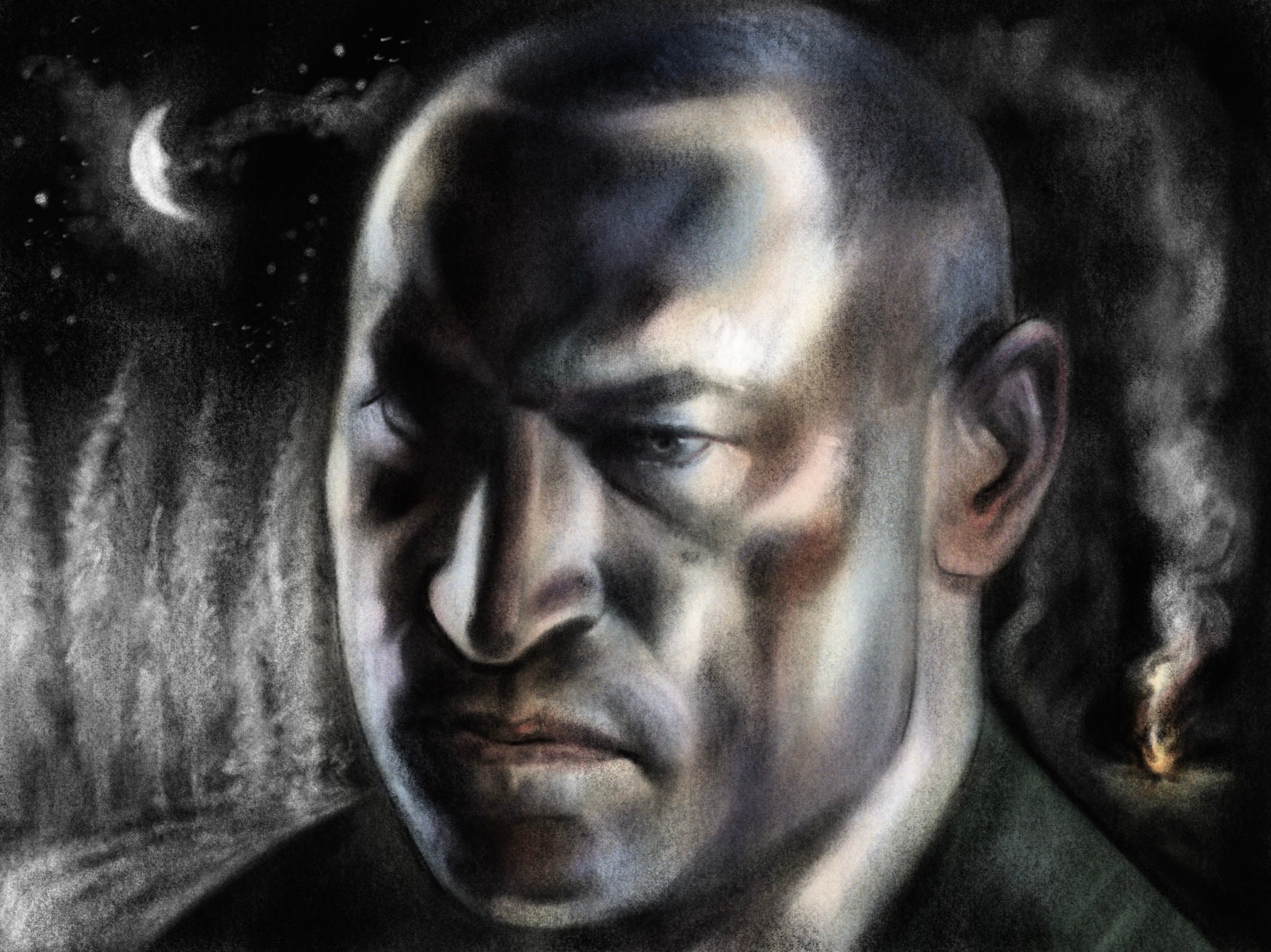
I have seen in the past few years, more of my students in wrist braces and describing repetitive strain issues in their hands. There is no mystery to the issue, it is coming from drawing on screens using a digital pen. The small form factor of the screens, especially iPads, a too consistent grip of the narrow shape of the pen, and rapid, intense movements working with digital media, are a perfect storm for straining the wrist.
Touch and tactility are central to drawing, but the anatomy of our wrist and the narrow carpal tunnel that the median nerve has to pass through is not ideal for repetitive movements. The kind of hand motion that is central to digital media, and especially the grip of the pen increases the risk of strain. The first exercise I work on in drawing class is how to draw with the shoulder instead of the wrist
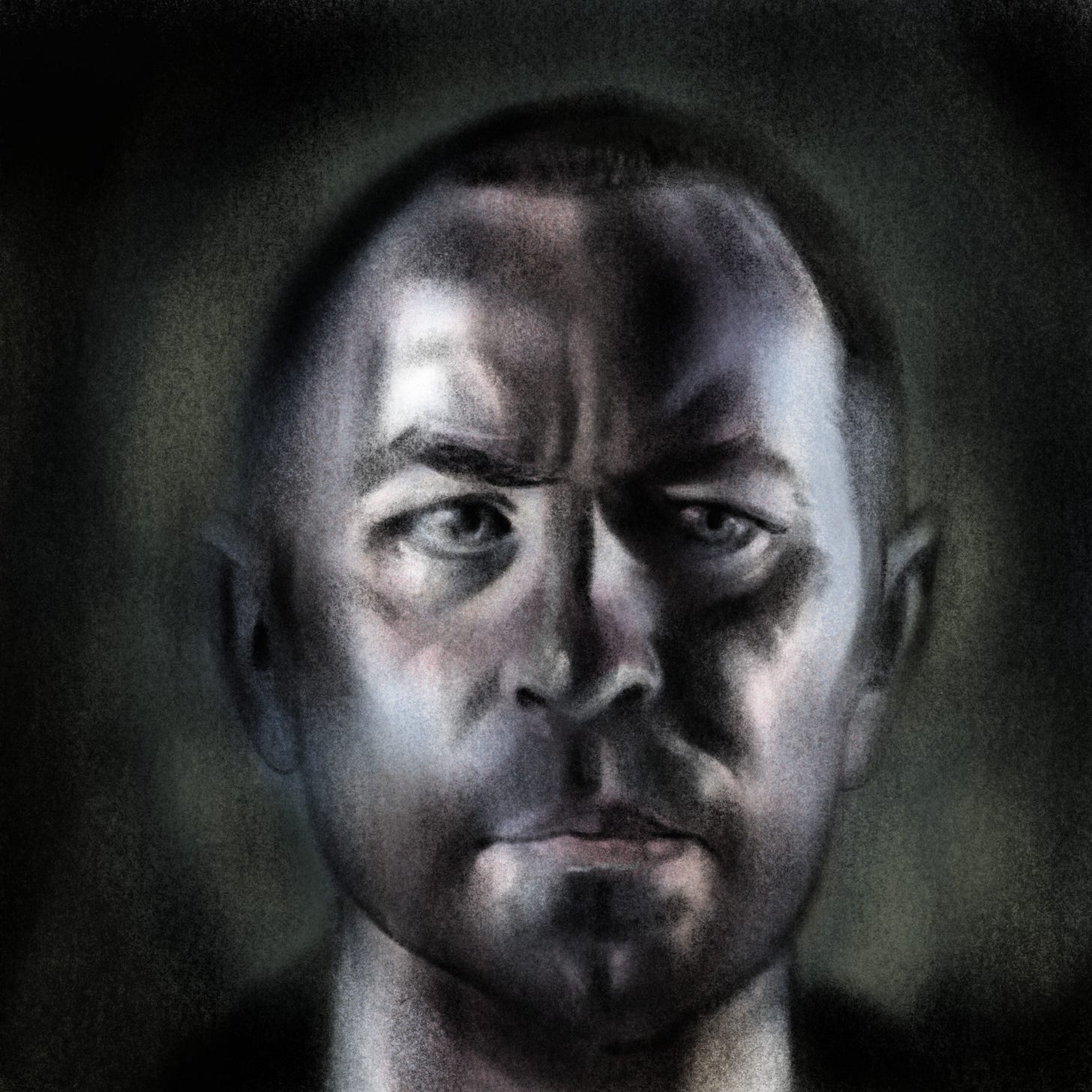
I use digital drawing for many of my illustration projects, so I am not arguing against it, I am suggesting that materials media may just save some students a lot of pain. Pressure sensitivity is built into digital drawing apps, this mimicking of expression actually has a drawback. The feedback of the pen on the glass is more visual and less tactile, or atleast offers less complexity of touch. There is a cost to this, and not just in potential physical strain, there is less sensory feedback from the body informing the visual expression, which leads to repetitive motion of the hand.
One of the features that the digital drawing app ProCreate offers is a time-lapse recording of the drawing process. The recording above is one of my first experiments I did in 2019, as I explored how to use the medium. The time-lapse demonstrates the advantage and drawback of the digital willow charcoal and Apple Pencil. The drawing has the problem of ‘finishism’. The ability to lightly erase sections or the entire image to knock back overworked areas removes the biggest question you ask in drawing—when is it done? The drawing could be endless, I can continue to tinker with it forever. An actual willow charcoal piece will exhaust the paper surface, repeated erasing will not return the paper to white, and the tooth of the paper will degrade.
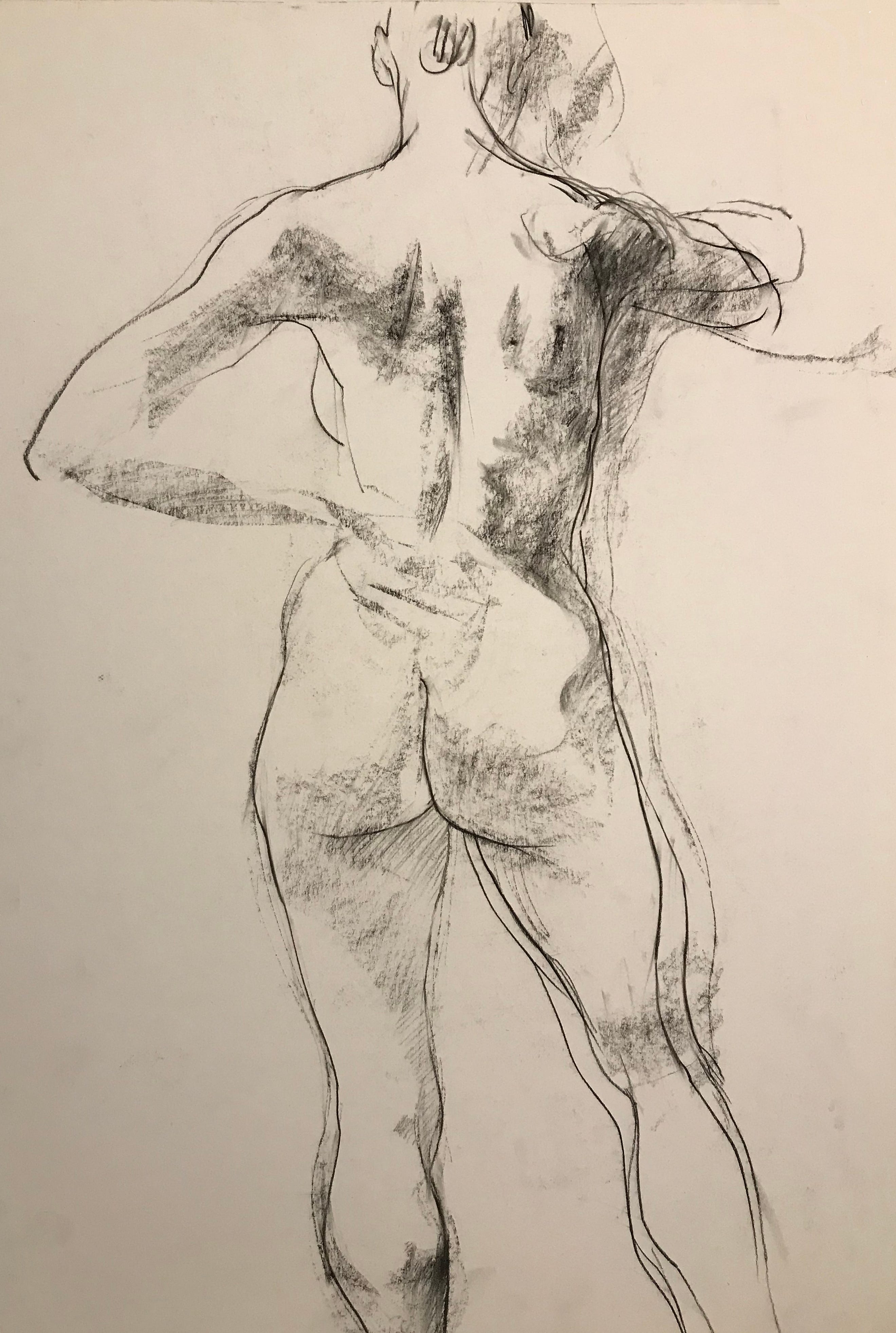
Solving Finishism is about trusting that you have said enough in a drawing. The figure drawing above is not finished, because that wasn’t the point. The tone, the lost and found edge, and the variety of marks are the essence of the meaning of the drawing, not just visual effects to represent the form. I know the choreography of this drawing, how the conté had to shift in my hand onto it’s edge to carve the upper arm and hip, then flatten to lay down tone across the surface of the paper and return to a softer searching line. Each of these moves is using my wrist in different ways—-not repetitively. I think the answer for a healthy wrist begins with conté or charcoal and a large pad of paper. Training the body to draw first and not the eye/hand.
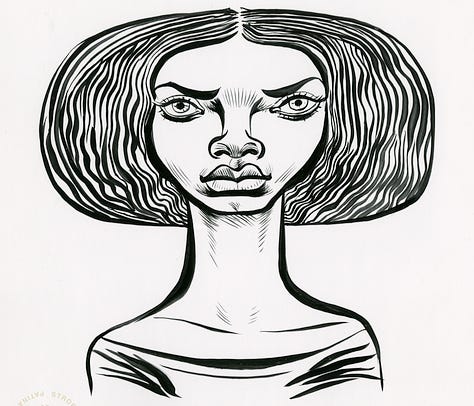
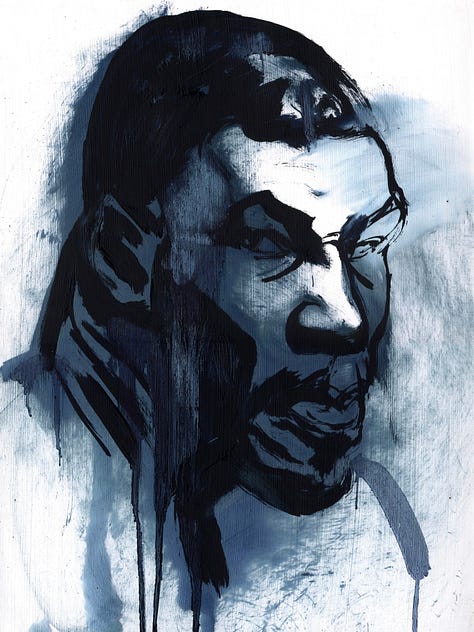
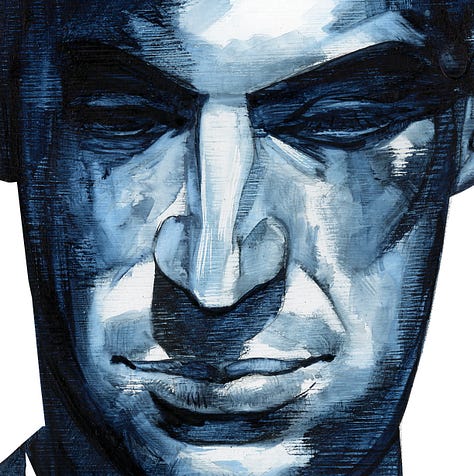
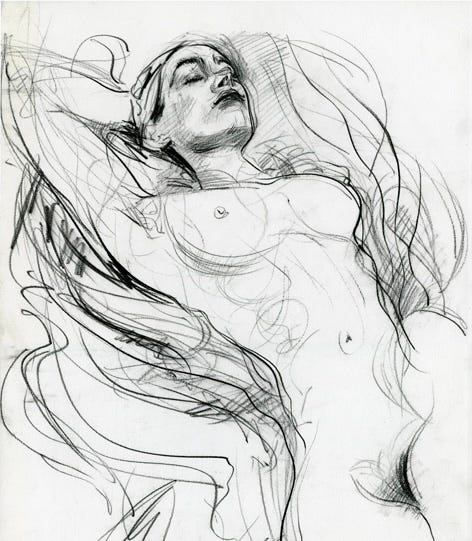
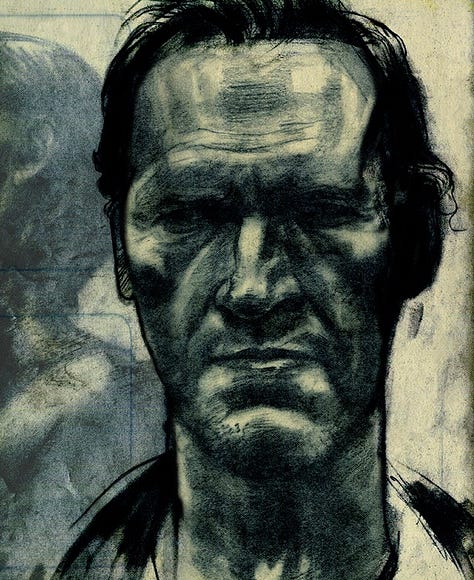
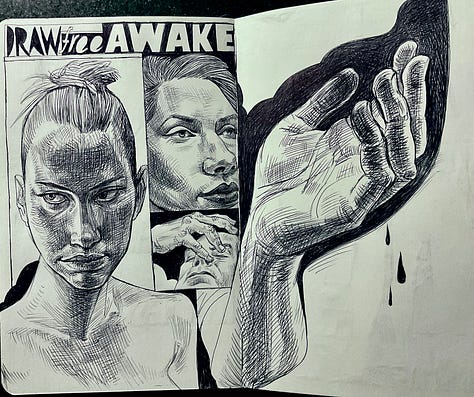
The muscle memory of working with materials media can offer a more personal approach to digital media. It can also train you to work with the feel of the pen in your hand, instead of holding on with a death grip as the pen makes its marks. We have so much of our cognition devoted to touch, it’s critical that we are engaging this part of our brain, no matter what media we have in our hands.
No posts
Comments
Nothing yet. Say the first thing.
Sign in to join the conversation.