
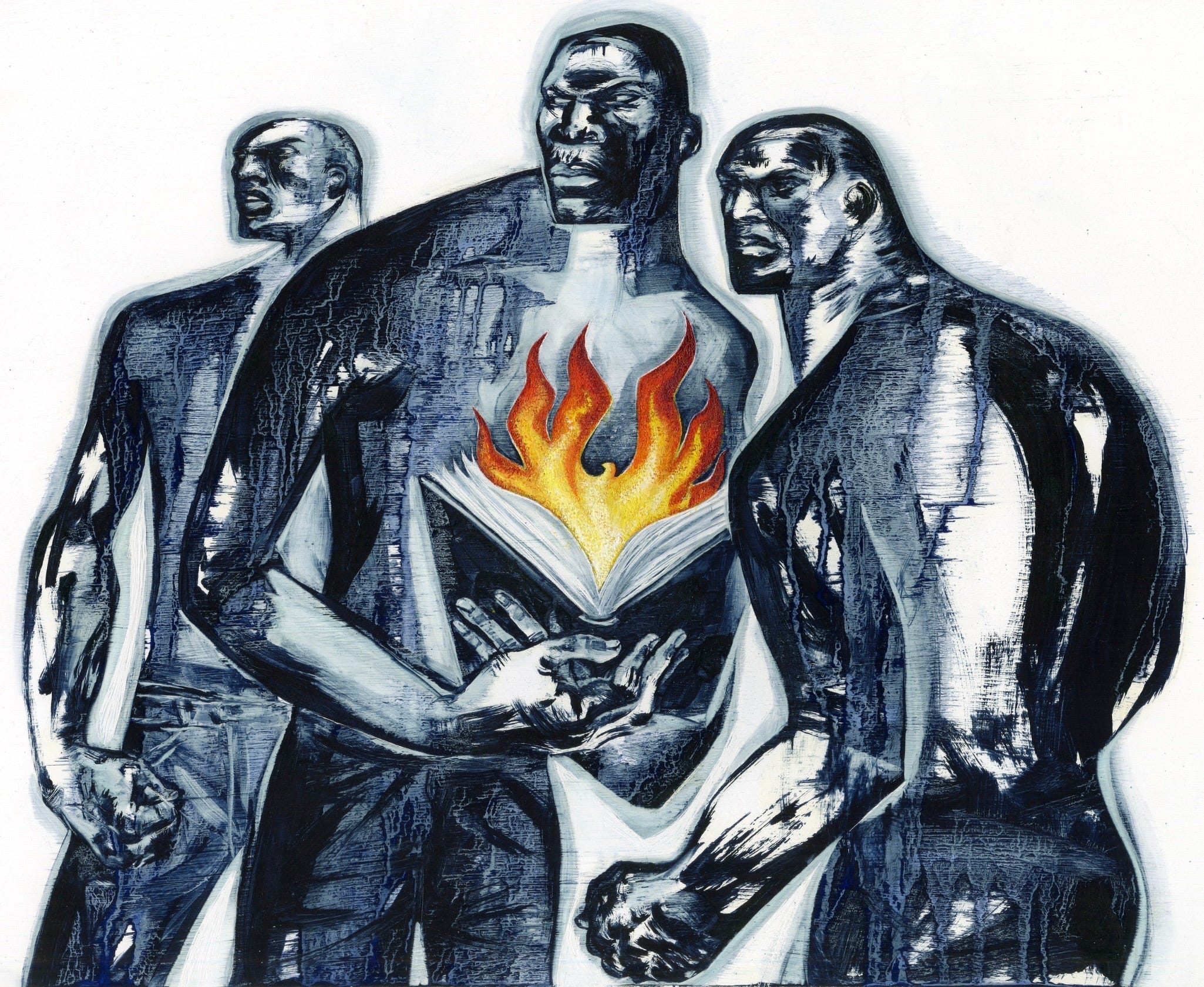
The subtitle of this post shares the subtle difference in the spelling of the word neighbours/neighbors. As a Canadian I blame Noah Webster, he removed the ‘u’ in neighbour and colour to simplify and separate the ‘American’ spelling of words from the British spelling (actually influenced by the French.) The differences across the longest undefended border between two countries, just got more serious than a few missing or added ‘u’s on Saturday morning at 12:01 am.
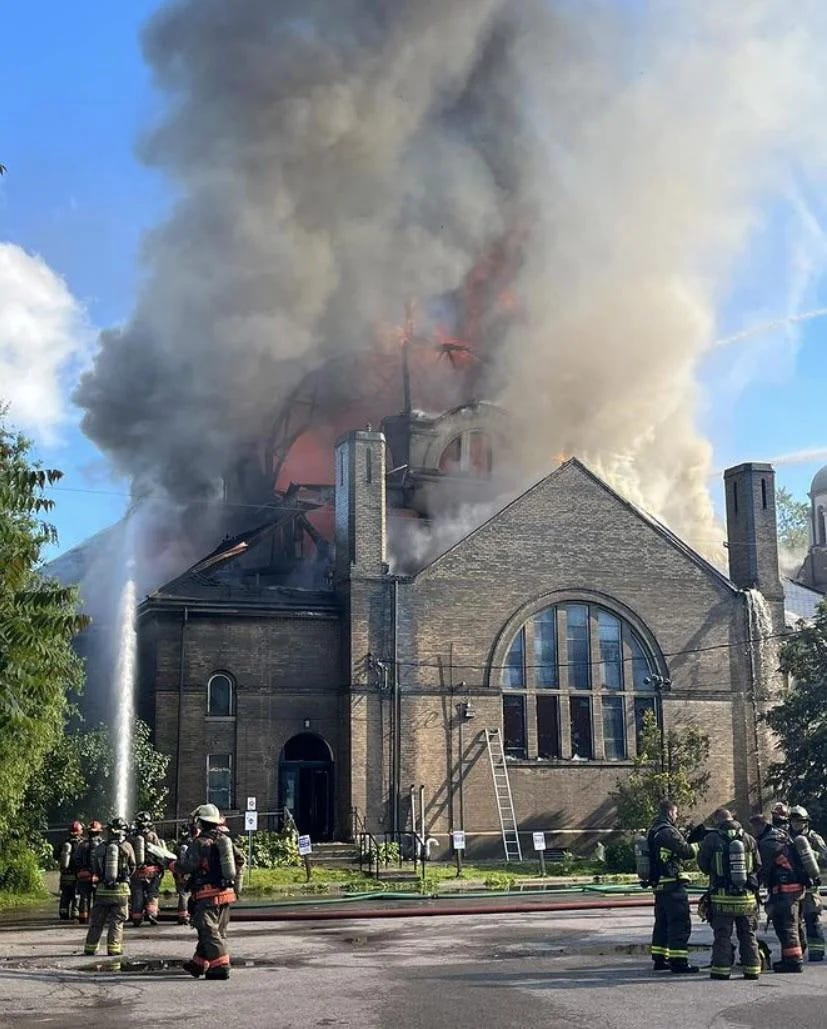
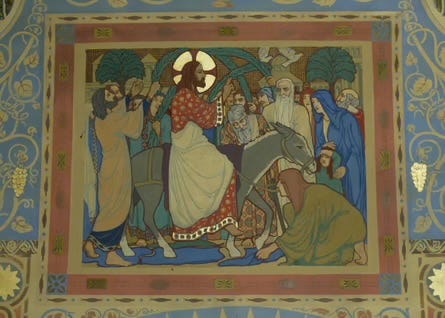
The response to the despicable act of an arsonist, and no, I don’t mean the political actors in the trade dispute that the neighbours of Canada and the U.S. are embroiled in, but an actual arsonist, provided me with some much needed perspective today. In the summer of 2024, the Anglican Church of St. Anne, built in 1907 and designated as a National Historic Site was nearly completely destroyed by fire. One of the unique aspects of the church were fresco paintings by some of the artists that would be known as the ‘Group of Seven’ in the 1920’s (artists whose landscape paintings attempted to create a distinct Canadian art).
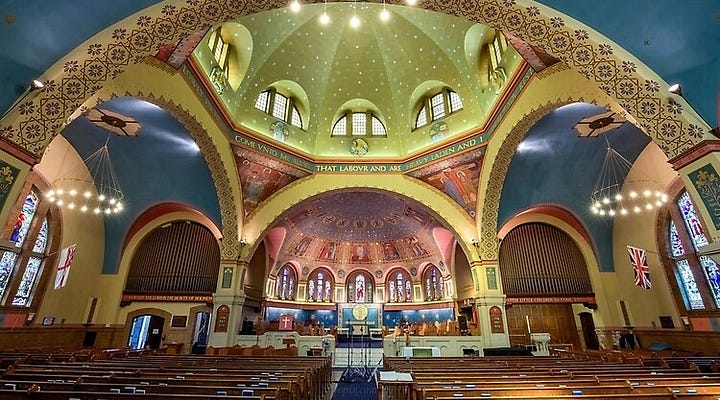
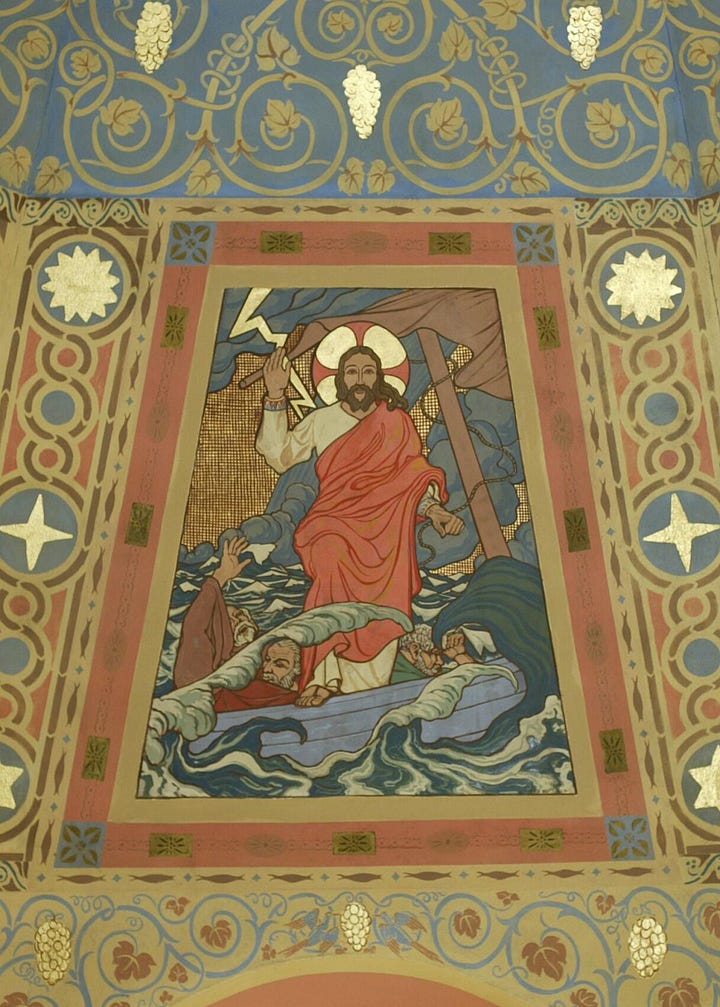
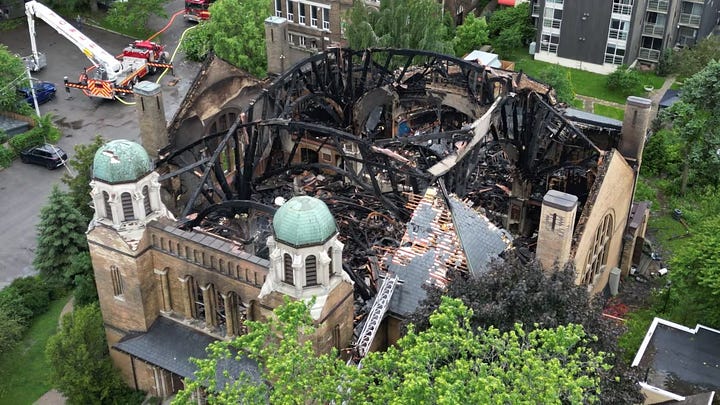
The motive for the senseless targeting of such a beautiful building, in the heart of Little Portugal in Toronto, remains a mystery. There was an incredible outpouring of support for the church and its community from across Canada. A friend invited us on Saturday to an exhibition at the church,’Where Walls Meet Sky’, a welcome distraction from the morning news of the failure of trade negotiations.
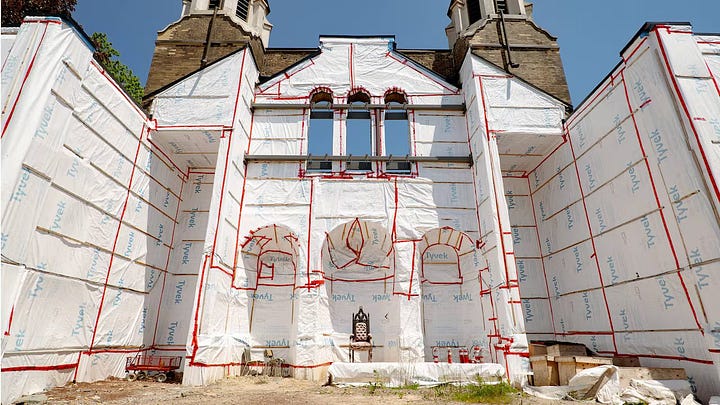
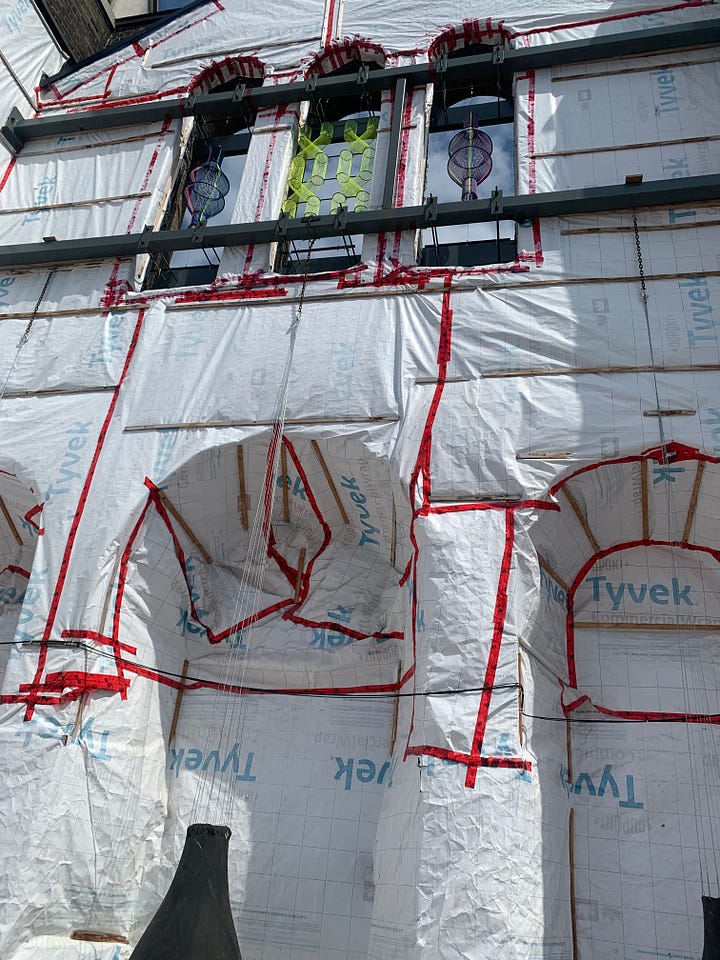
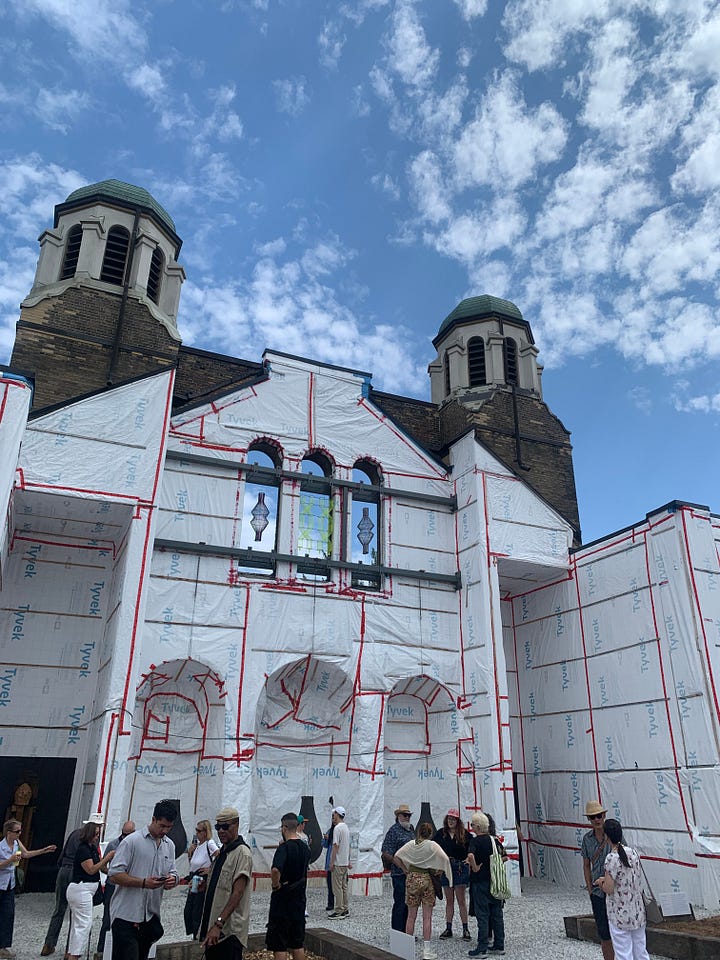
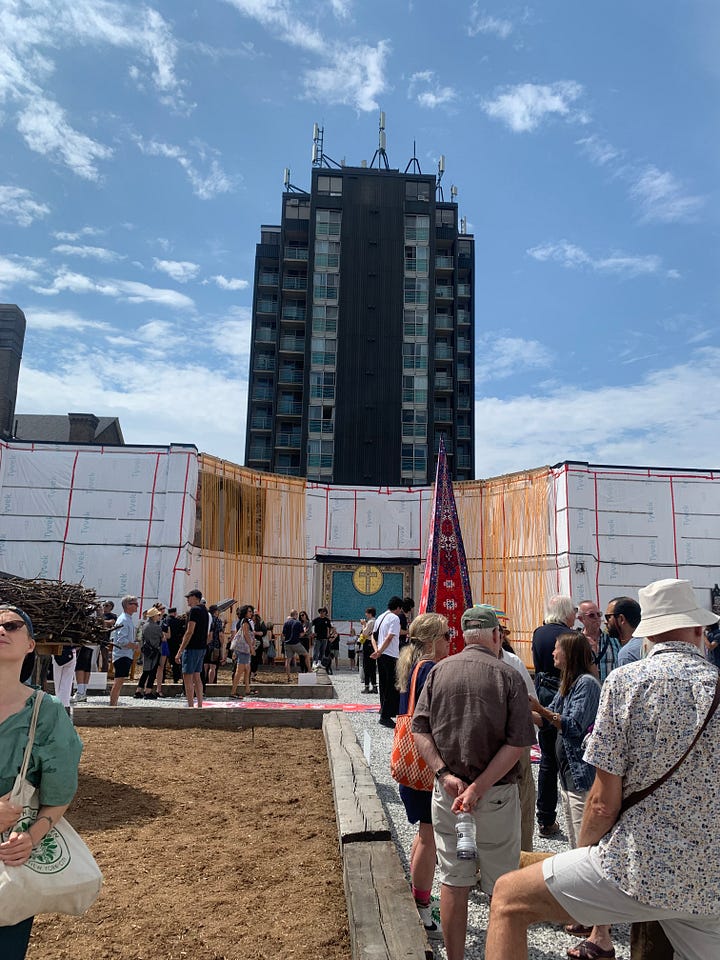
I didn’t know what to expect as I stepped through the yellow painted plywood doors at the side of the ruin of the church. The exhibition included an installation of 12 artists work inside the husk of the once beautiful church. The white Tyvek sheeting and red tape covered wounds of the burned interior like bandages used in the process of healing. The church minister welcomed the assembled audience and spoke about her grief standing across the street as this house of her God burned to the ground.
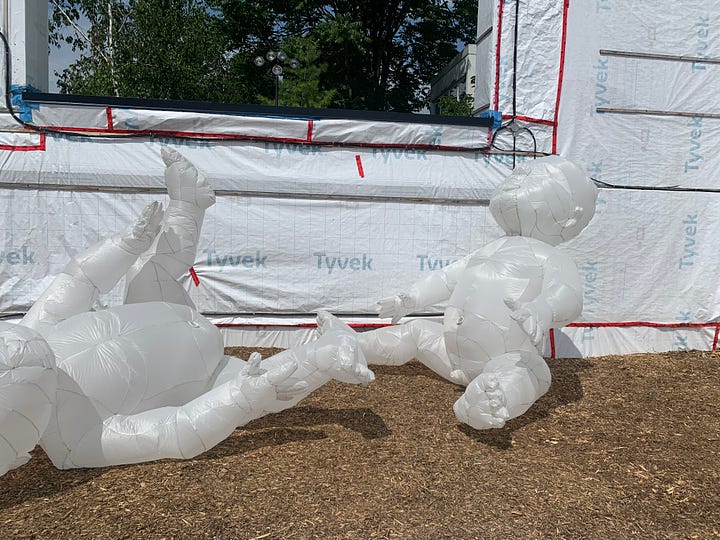
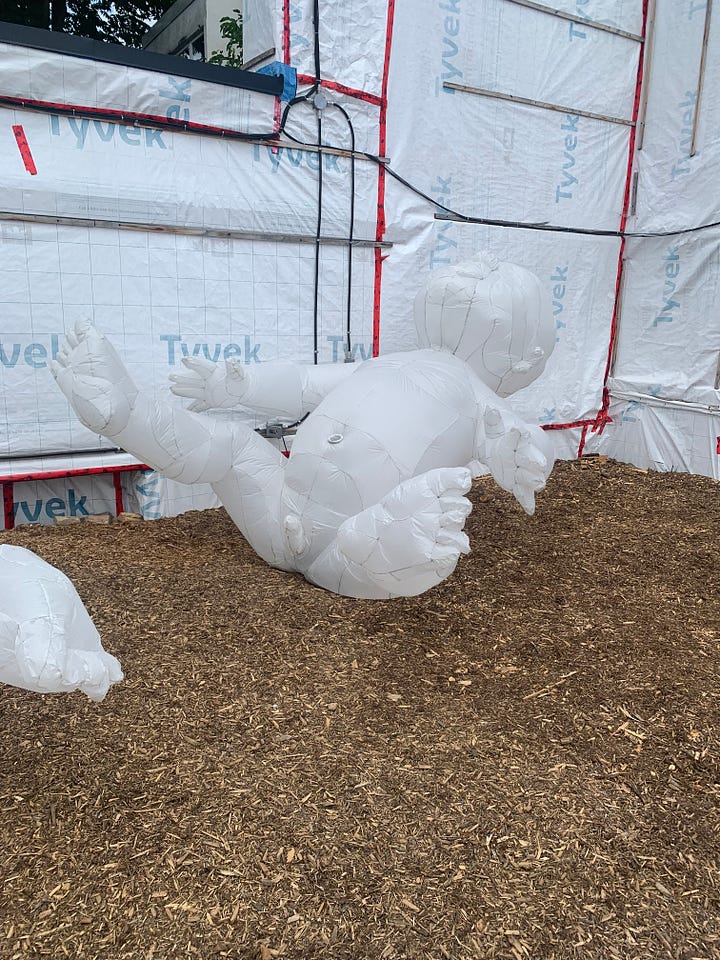
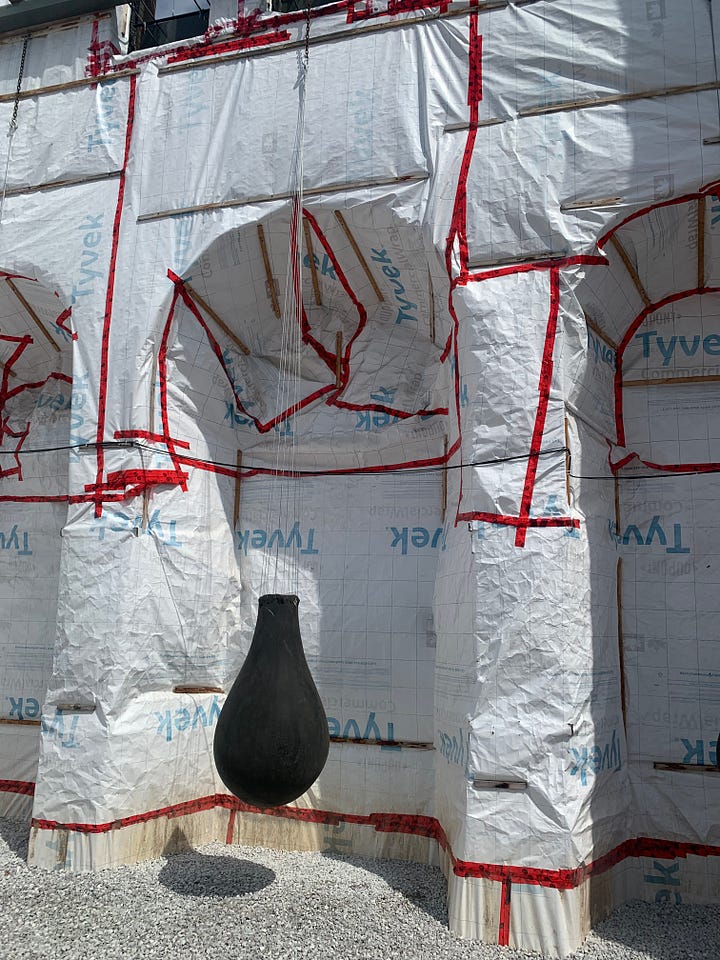
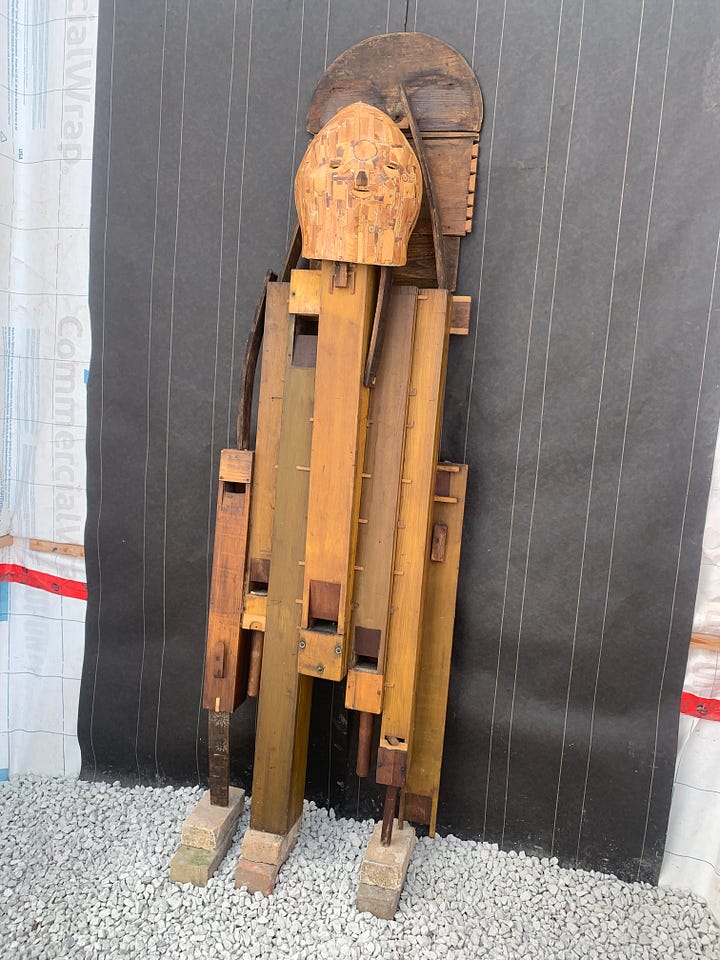
Reverend Hannah Johnston also spoke eloquently about why they had opened the site for the first time for their community and the public with an exhibition of art. The art and architecture lost to the flames didn’t extinguish the power that creativity, and our shared cultural spaces offer us, as beacons to navigate the uncertainty of the future. The curator for the exhibition Rui Pimenta…
This exhibition emerges from a moment of profound transformation. Following the fire that devastated St. Anne’s Anglican Church in 2024, the building exists in a state of suspension, neither ruin nor restoration, but somewhere in between. It inhabits a kind of limbo, marked by absence yet filled with possibility. The walls remain, but no longer enclose; instead, they frame the open sky, dissolving the boundary between inside and outside, earth and the heavens above. Once defining the limits of the sacred interior, they now mark a threshold between what remains and what lies beyond, inviting us to reconsider what a place can become when its boundaries are transformed.
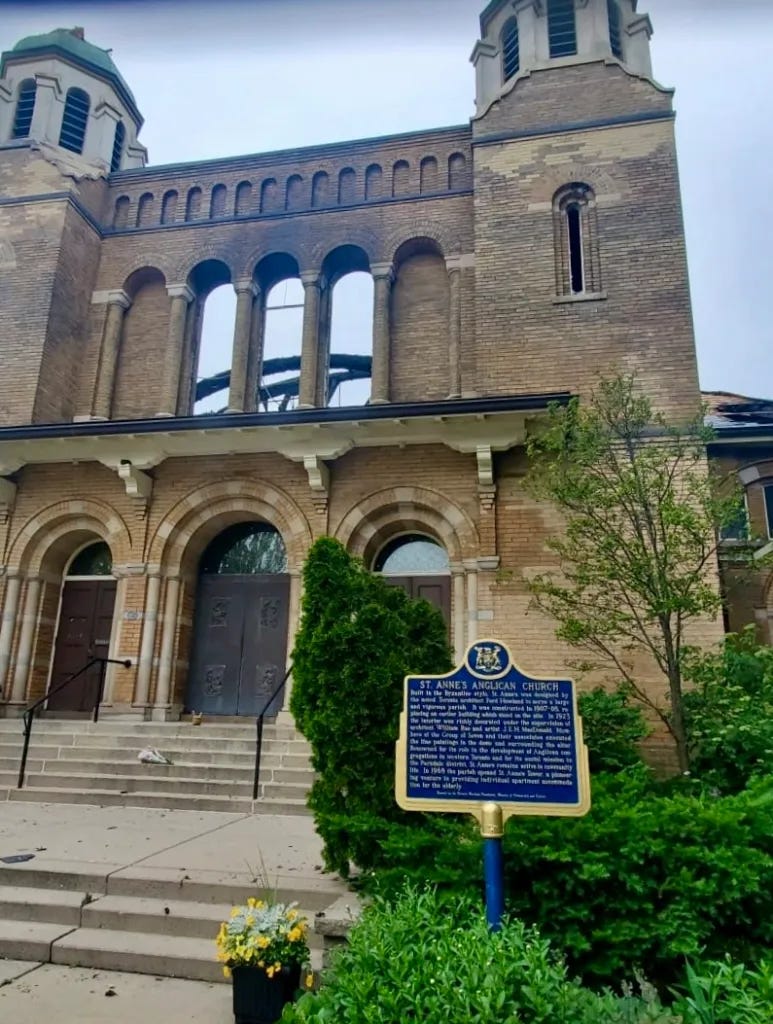
I walked the inside perimeter of what had been for nearly 120 years a place of worship and contemplation and was now white shrouded walls open to the clouds above. The church will be rebuilt, but the new church will sit inside these walls, they will remain as a reminder, a tribute to their memory and service.
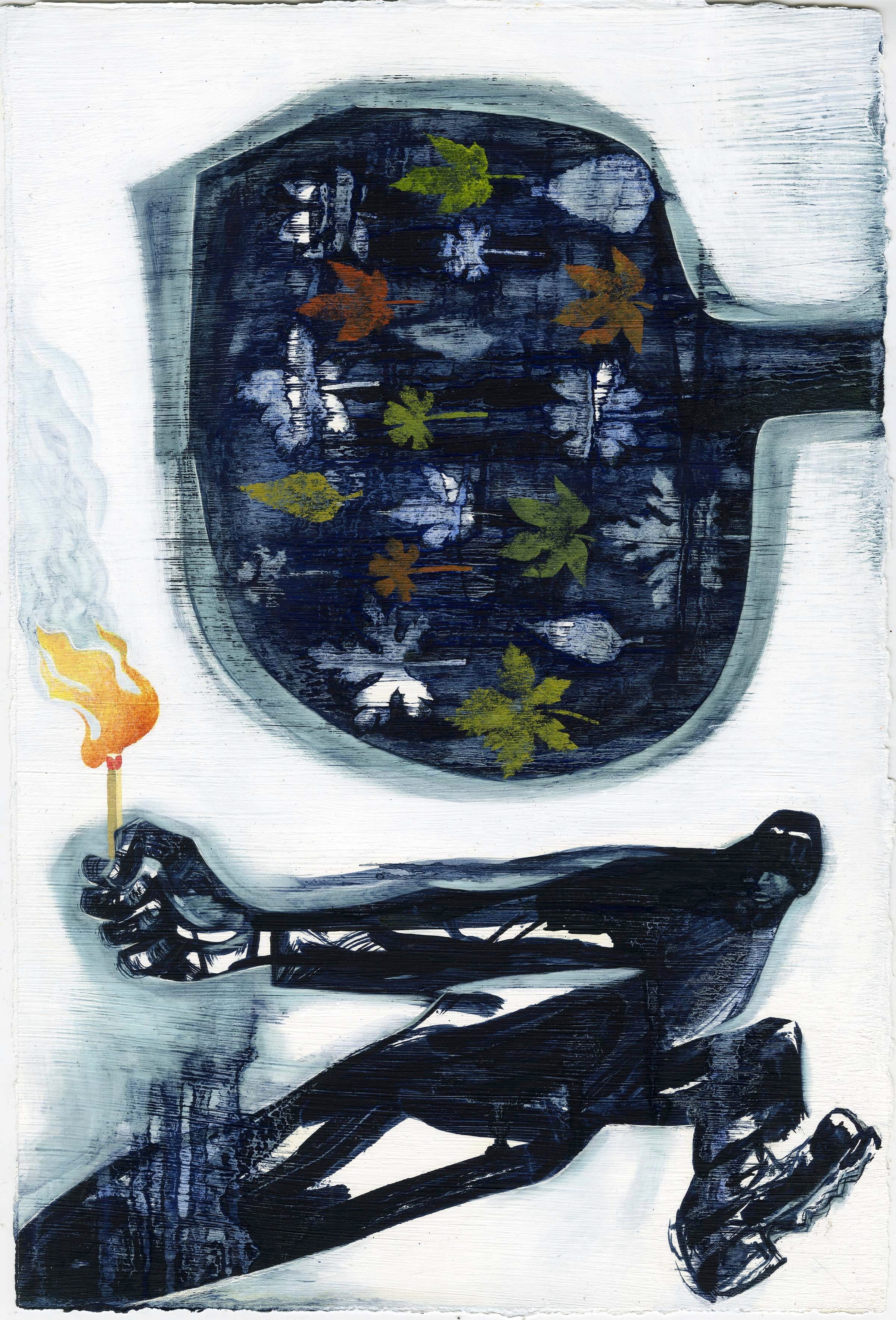
Today, I needed this place, this art, this community coming together in celebration of a profound loss that they choose to reframe and rebuild as a new path forward—to ‘transform it’s boundaries’. This is art in the act of healing and making meaning out of the senseless, and I was reminded that this is what makes us whole and where our attention is rewarded.
No posts
Comments
Nothing yet. Say the first thing.
Sign in to join the conversation.