
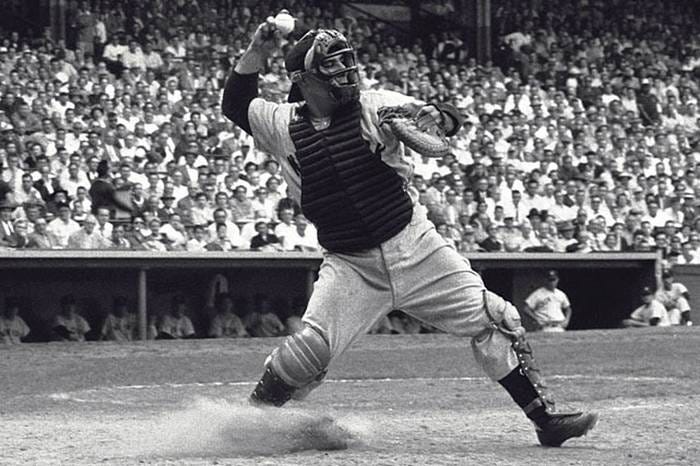
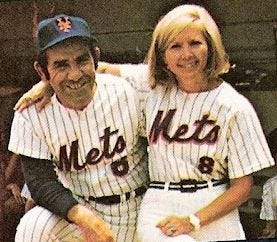
Even casual baseball fans know that New York Yankee great Yogi Berra, born Lorenzo Pietro Berra, is one of diamond history’s greatest players. A catcher, the game’s most demanding position, Berra was a 18x All Star, 13x World Series champion, and 3x American League Most Valuable Player. Berra’s World Series records are unlikely to be broken: most games played, 75; most hits, 71; and most championship rings, 10. His fielding skills are overlooked. Berra left the game with the AL records for catcher putouts, 8,723, and chances accepted, 9,520. And in a record that absolutely will never be broken, Yogi caught both ends of 117 double headers. When asked how such a feat was possible, Yogi said, “I just couldn’t say ‘no’ to Casey.” After his active playing career ended, Berra piloted both the Yankees and New York Mets to the World Series.
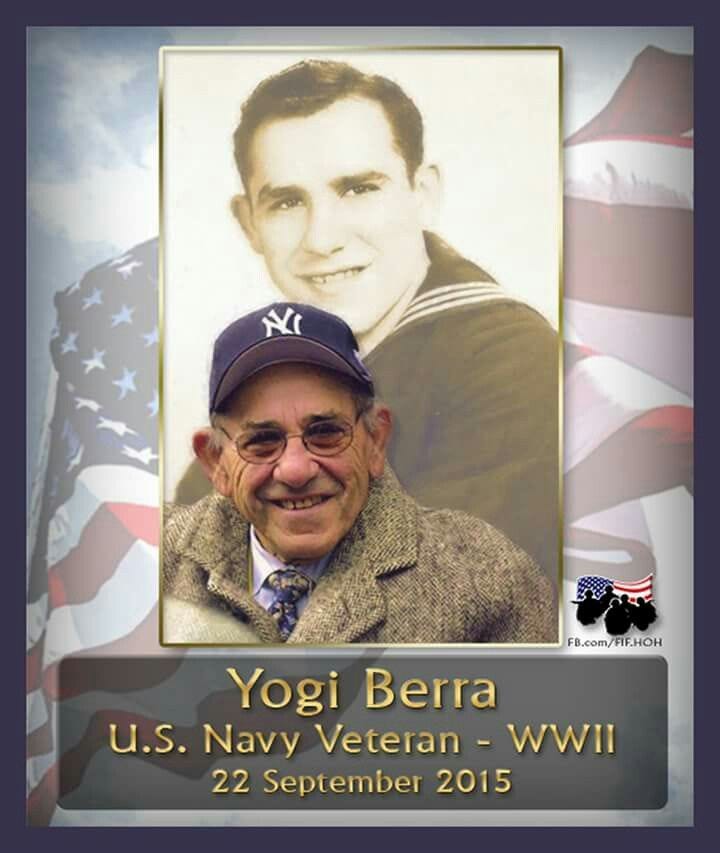
But even avid fans don’t know about what Berra considered his greatest accomplishment, his D-Day heroism in service of his country. Berra, of course, was too humble to think of himself as a hero. In fact, he declined the Purple Heart, the military award President George Washington established for killed or wounded soldiers. More on that later.
Berra enlisted in the in the U.S. Navy in 1943 and was among of the first at Normandy. After training at Bainbridge, Maryland and Little Creek, Virginia, Berra was combat-ready and prepared for amphibious operations. Berra was assigned to the USS Bayfield, a key vessel during D-Day. As a gunner’s mate, Berra was responsible for operating and maintaining the ship’s weaponry, a vital function during the Normandy invasion.
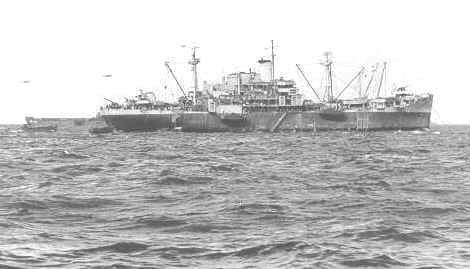
On June 6, 1944, Berra found himself at the heart of history, serving as a gunner’s mate aboard a 36-foot rocket boat during the D-Day landings. As a seaman second class, he was one of a six-man crew, firing machine guns and launching rockets at German defenses. Amidst the chaos, his boat provided vital fire support to troops landing at Omaha Beach, targeting German shore batteries. Their mission was to get 300 yards off Normandy’s shore to suppress German machine gun nests with their rockets so that landing troops would have a better chance of survival. Yogi described his intense combat gunfire as terror-filled and relentless.
When a German machine gun nest opened fire on Allied Forces during a late August landing in southern France near Marseilles, Berra was shot in the left hand. Yogi was nominated for a Purple Heart but never received the medal because he declined to fill out the paperwork — he didn’t want his mother Paolina to receive a telegram and learn that he had been hurt.
Well after the war ended, Berra retroactively applied for the Purple Heart, but his Naval records were destroyed in a fire, so the official documentation of his combat wound could not be confirmed. Recalling Yogi’s effort to have his effort to have his courage under fire acknowledged, his son Larry said, “He had the scar on his left hand. He showed us and said, ‘This is where I got hit.’ Naval officials recognized Berra’s bravery, but they never actually presented him with the Purple Heart. We have had letters from the Department of Defense saying, we wish we could, but we can’t confirm it.” Yogi’s concern for his mother likely fretting ultimately cost him a formal recognition of his bravery, and a careless fire made it impossible to correct his compassionate decision later.
Berra eventually earned a Distinguished Unit Citation, two battle stars, and a European Theater of Operations ribbon during the war. In 2009, he was granted the Navy’s Lone Sailor Award, and in 2010 he received the Audie Murphy Award for his Navy service. He also received the Presidential Medal of Freedom.
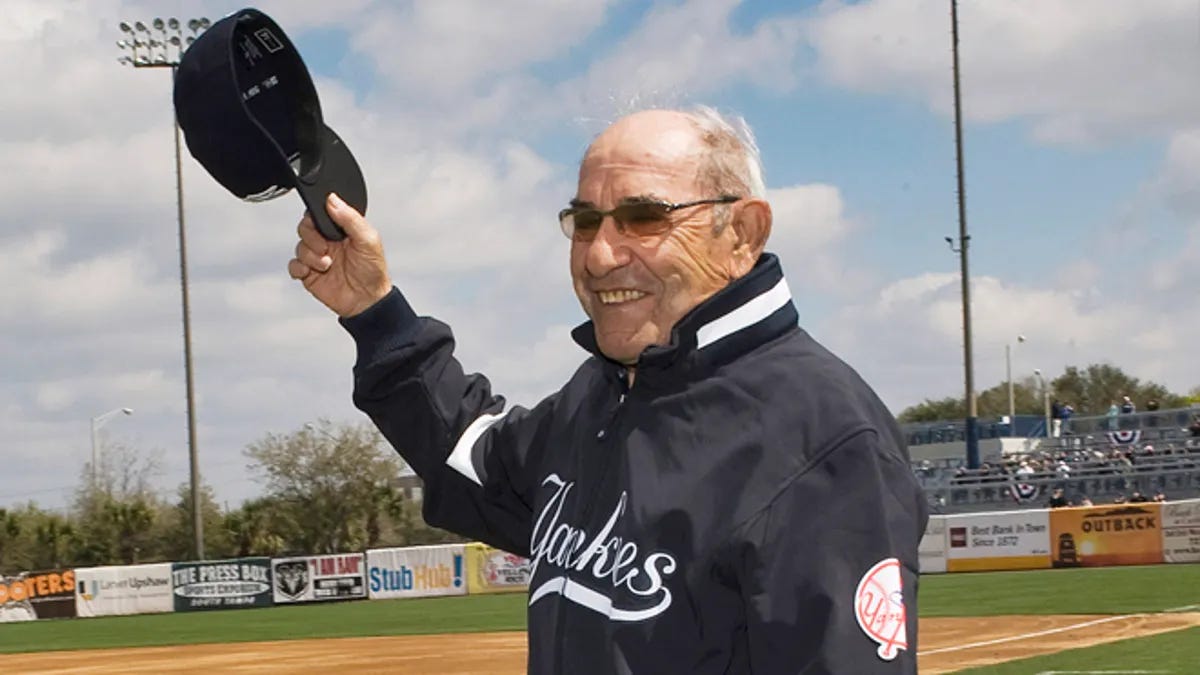
Like most World War II vets, Berra rarely talked about the horrors he endured. On one of the few occasions Berra relived his D-Day nightmares, he said that the invasion’s first day didn’t haunt him as much as the second and third when “the bodies had floated up to the surface.”
Berra died at home in 2015 of natural causes, one year after his wife of 65 years, Carmen, passed.
Joe Guzzardi is a Society for American Baseball Research historian and nationally syndicated columnist. Contact Joe at guzzjoe@yahoo.com
No posts
Comments
Nothing yet. Say the first thing.
Sign in to join the conversation.