
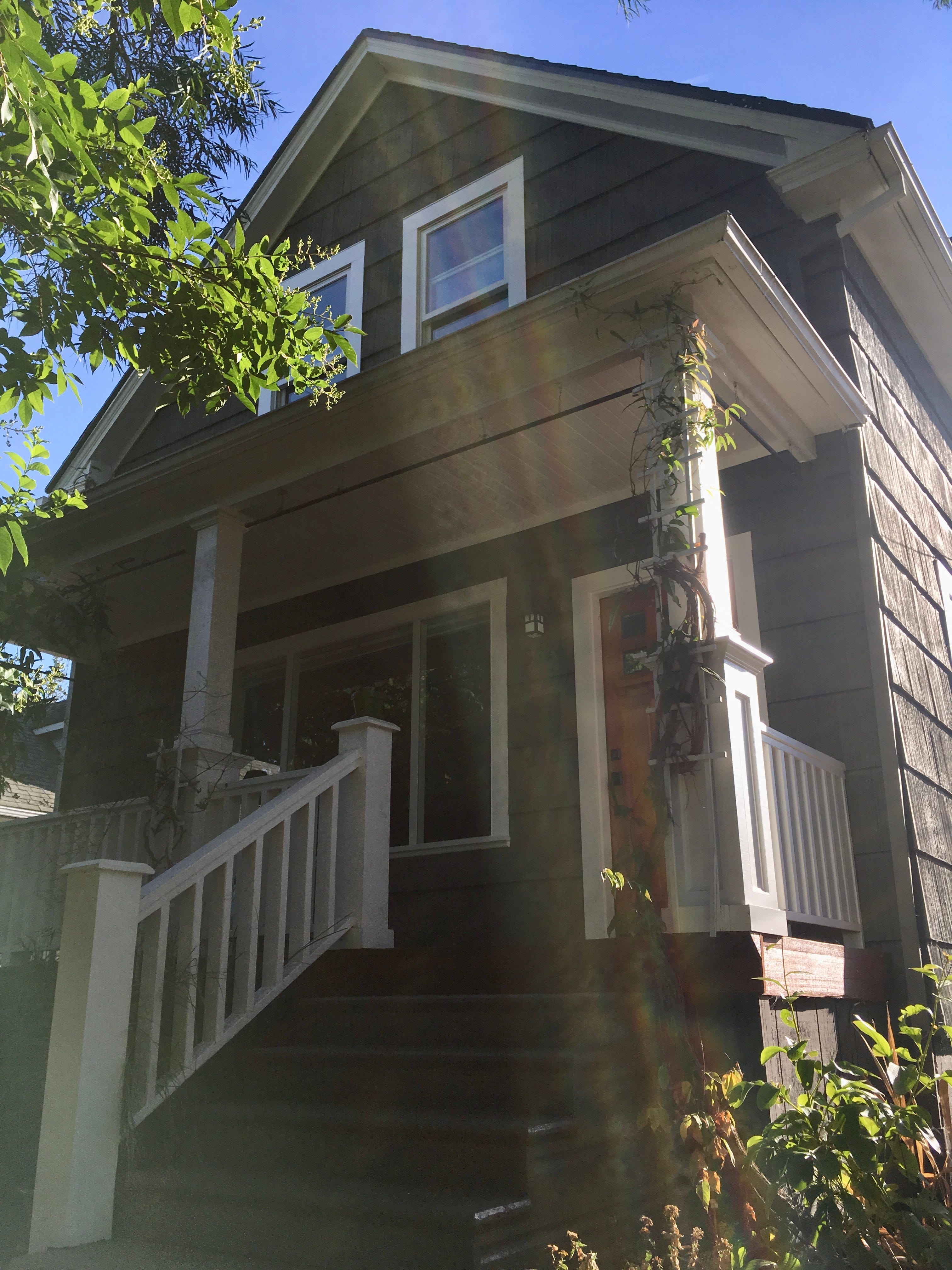
When my husband and I bought our home in 2017, we knew we wanted to make it energy efficient and power it with renewable energy. The house, built in 1900, had resistance space heaters and window AC units in the upstairs rooms, and a gas furnace in the basement. GreenSavers, a local company, performed an energy audit and checked our existing ducts and insulation, performed a blower door test, and used an infrared camera to look for air leaks.
They found that the exterior walls lacked insulation, so their team blew-in insulation through the siding. They air sealed throughout the house and in the attic and improved the attic insulation up to R50, adding insulation in the empty slope cavities. They also air sealed our crawlspace, added a new vapor barrier, and insulated the empty floor cavities. We had a heat pump installed on the second floor (disconnecting the furnace from that part of the house) which made the upstairs incredibly comfortable year-round.
Weatherization, including insulation and air sealing, is a critical part of your home’s energy efficiency. A strong thermal barrier that is air-tight, well-ventilated and has proper insulation will help keep your home at a stable temperature, reducing the need for heating in the winter and cooling in the summer. As a result, you’ll not only be more comfortable, but your energy bills will be lower and your home’s carbon footprint will shrink.
The older your home, the more likely that insulation and air sealing can save you money by preventing wasted energy. According to Energy Star, 9 out of 10 homes in the U.S. are under-insulated. If you have rooms that are often too hot or too cold, have drafts, moisture, mold or odors, then you might consider getting an energy audit to identify the underlying causes.
Your home’s building envelope (that’s the fancy name for the roof, walls, foundation, windows and doors that come together to separate the interior of your home from the outside elements) acts as a thermal barrier. A “tight” envelope prevents air leakage and heat losses/gains and keeps your home warm in the winter and cool in the summer. It also helps out with moisture and mold control.
In an un-insulated home, this where the typical heat losses and gains take place:
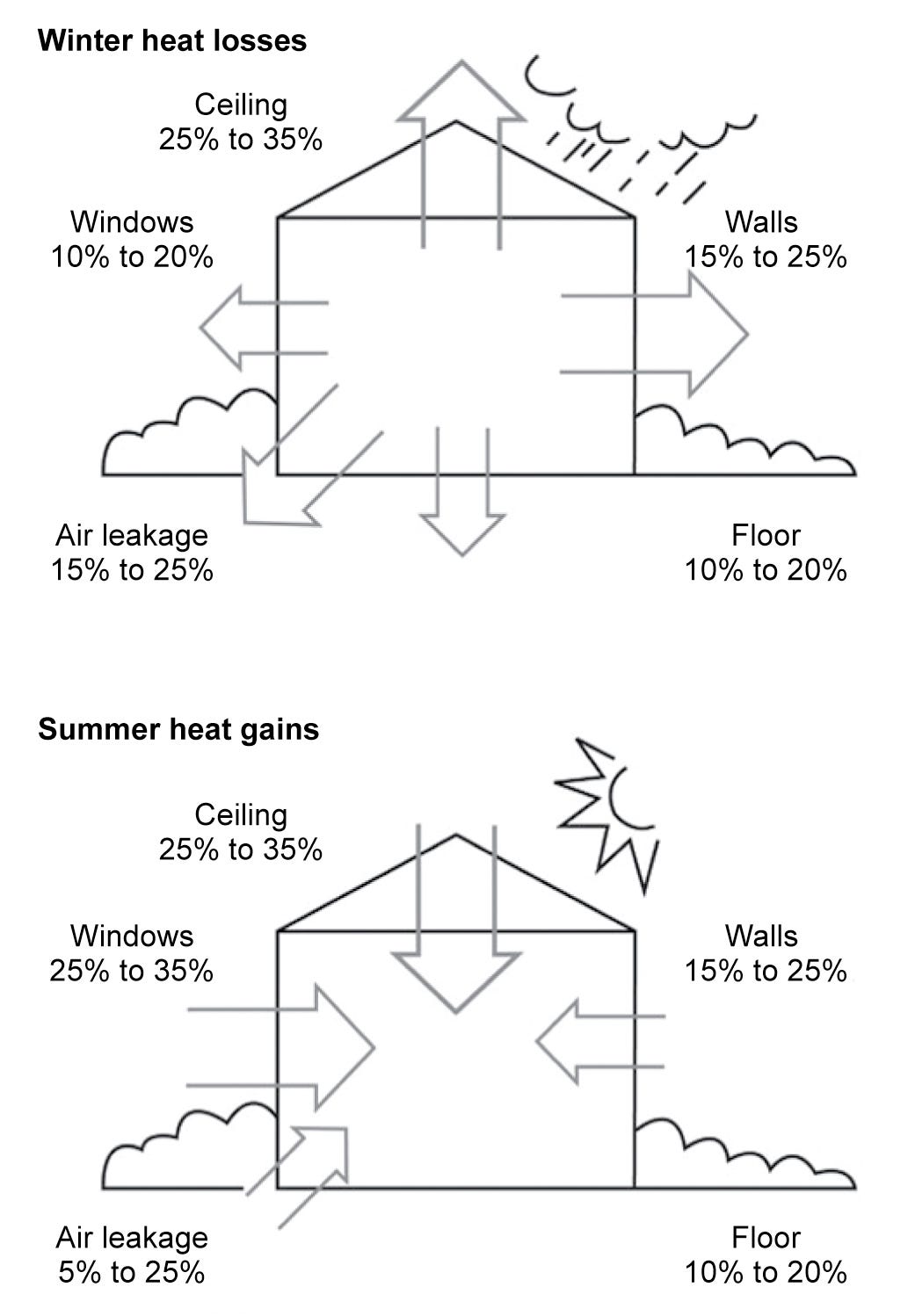
Insulation is a material that resists or blocks the flow of heat energy. The idea is to minimize winter heat loss and summer heat gains so you can enjoy year-round comfort. How well an insulation product resists heat flow is known as its R value—the higher the R value, the higher the level of insulation. When correctly installed, insulation can also reduce noise from outside, reduce allergens, and help to control humidity. And as you can guess from the diagram above, attic insulation proves to be pretty key to preventing heat gains and losses.
A healthy, energy efficient home requires a balance of reliable ventilation and good air tightness. Ventilation intentionally brings in outdoor air to maintain good air quality, while air tightness avoids the unintended introduction of outdoor air and or the loss of conditioned air to the outside. Improving air tightness through air sealing is one of the most cost-effective ways to improve your thermal comfort and reduce energy costs.
Air typically leaks through unsealed/poorly sealed doors and windows, unsealed vents and fans, gaps around ceiling insulation and ceiling penetrations (like light fixtures), gaps around wall penetrations (like outlets, switches, pipes), gaps between building envelope junctions, and poorly fitted or shrunken floor boards. All of these small leaks can add up to the equivalent of an open window—particularly on older homes. This is why air sealing can make a huge impact on heating bills even for homes that are well insulated.
Every home is different, but Energy Star recommends these six measures that are typically cost effective—meaning they will save you money in the long run and increase the comfort of your home:
Attic Insulation to R30 to R49 (depending on climate zone)
Basement/Crawlspace Insulation to R13 to R38 (depending on climate zone)
Attic Air Sealing
Basement Crawlspace Air Sealing
Whole House Air Sealing
Windows and Doors Air Sealing
Some of these measures you can do yourself, but it is a big job and one that experienced contractors can typically do better and faster. Blower door tests require specialized equipment, but they are a great way to find air leaks that are otherwise hard to locate.
Sealing air leaks and adding insulation are two of the most cost-efficient ways to improve energy efficiency and the comfort of your home. Combined, these two projects can help you save up to 10% on your annual energy bills, and even more if you live in a colder climate. And if you have an energy efficient heat pump, you can rest easy knowing that you’re making the most of the summer warmth and winter cooling it provides.
If you live in Oregon, the Energy Trust of Oregon provides significant incentives for insulating homes that can save you thousands of dollars. The Electrify Oregon Contractor finder can also help you to locate recommended weatherization specialists in your area. Outside of Oregon, check your local utilities for information about incentives you may qualify for.
We were really happy with the weatherization work we had done on our home. In conjunction with the insulation and HVAC work, we had our electrical panel upgraded, added a circuit for a Level 2 EV charger, and installed rooftop solar. It was a big project, but our home was quite comfortable and 75% powered by solar energy when all was said and done. When we sold the house four years later it got an energy score of 10, and the improvements we’d made were a big selling point. Plus we felt great knowing that we’d left an older home with a much smaller carbon footprint than it had when we’d bought it.
No posts
Comments
Nothing yet. Say the first thing.
Sign in to join the conversation.