
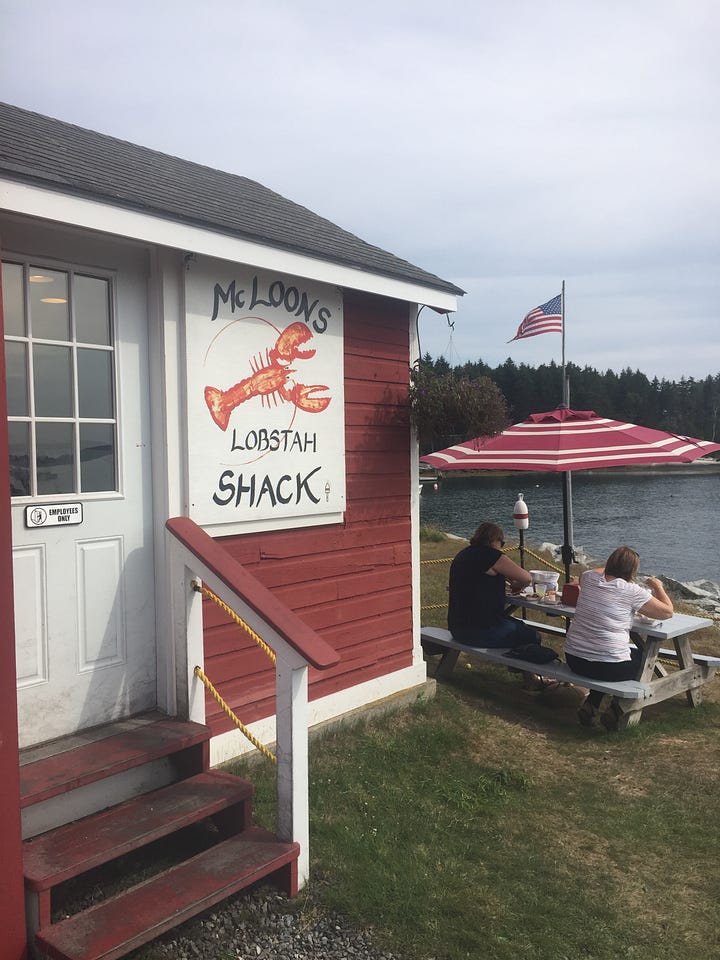
The road to McLoons runs out of road. You drive past Rockland, past the harbor, down a two-lane that narrows to one, across a spit of island where the spruce trees press in from both sides, and then you’re at the end. Spruce Head Island. A red shack on the tip of a working lobster wharf, across from one of the oldest lobster-buying stations in the area. The boats are right there. A dozen lobstermen sell their catch on the other side of the wharf, and the shack gets first pick, which means the lobster in your roll was in the ocean a few hours ago. That is not ambiance. That is a supply chain.
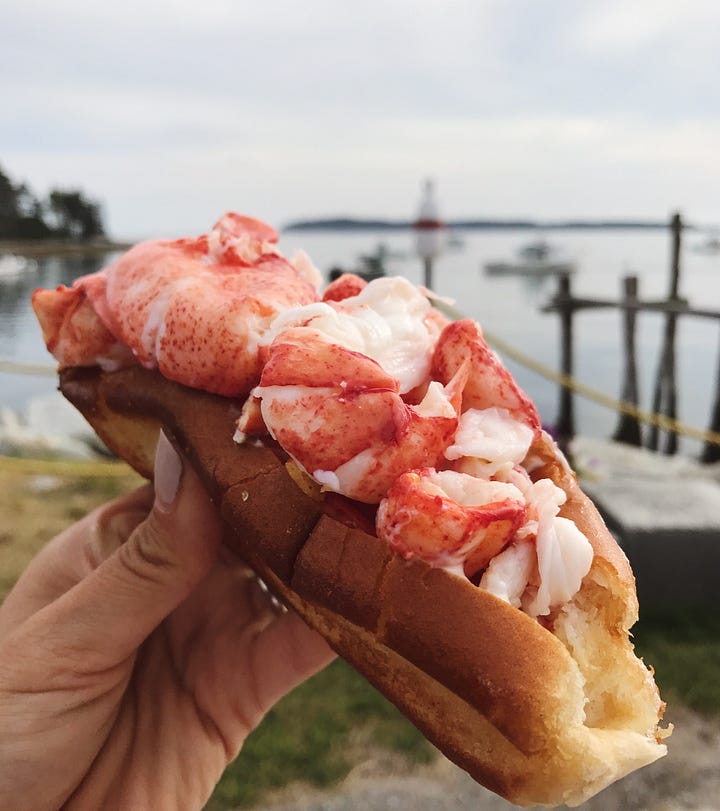
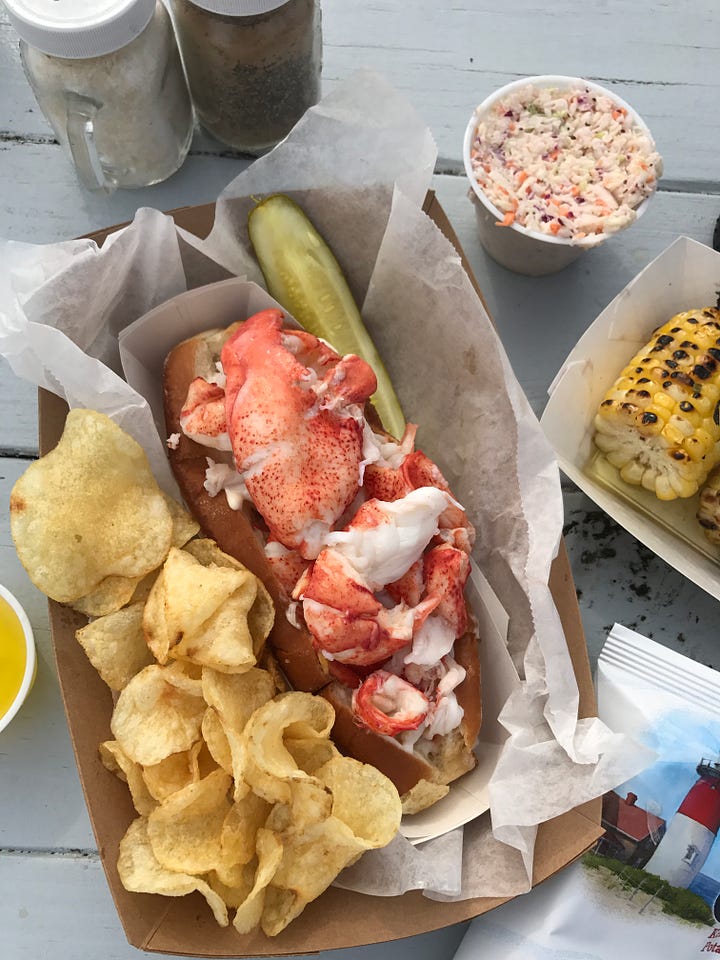
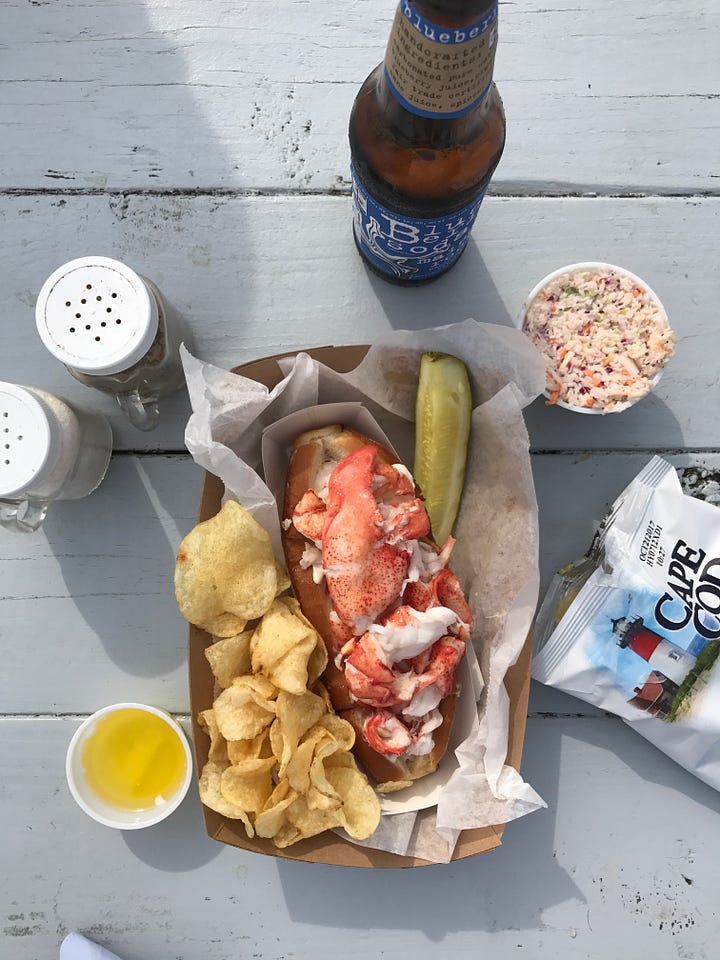
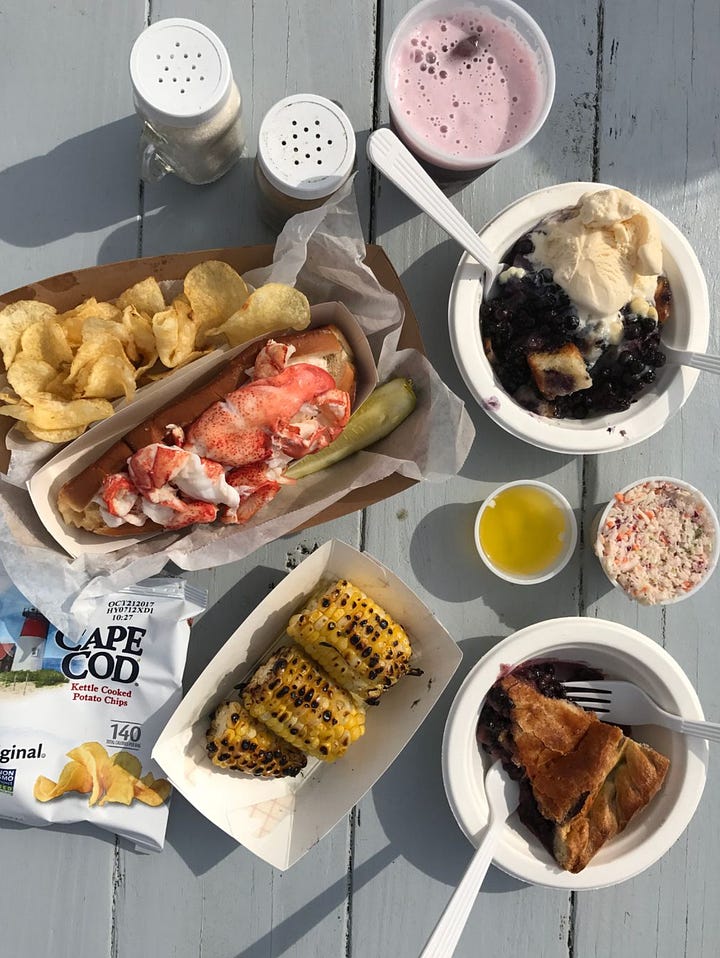
The roll arrives on a paper plate with chips and a pickle and a cup of butter on the side. Tail, knuckle, claw. The split-top bun is griddled until the flat sides go golden and the edges crack when you press them. The meat is sweet and clean and cold enough that you taste the ocean before you taste the butter, almost plain, like the ocean did all the work and the kitchen had the good sense not to get cute. Then the butter arrives and the two of them do something together that no other sandwich in America has ever done. McLoons serves it half-and-half: butter on the side, a thin line of mayo down the bun. This is either diplomacy between Connecticut and Maine or a refusal to choose that is itself a position. Since the lobster roll is the best I’ve ever eaten, I’m calling it diplomacy.
I remember looking down at the lobster roll and realizing there was almost nothing left to improve. Fresh lobster. Butter. Mayo. Bread. Cold air coming off the water. After years spent building, scaling, optimizing, refining, there was something almost unsettling about sitting in front of a thing whose greatness came entirely from what nobody had touched.
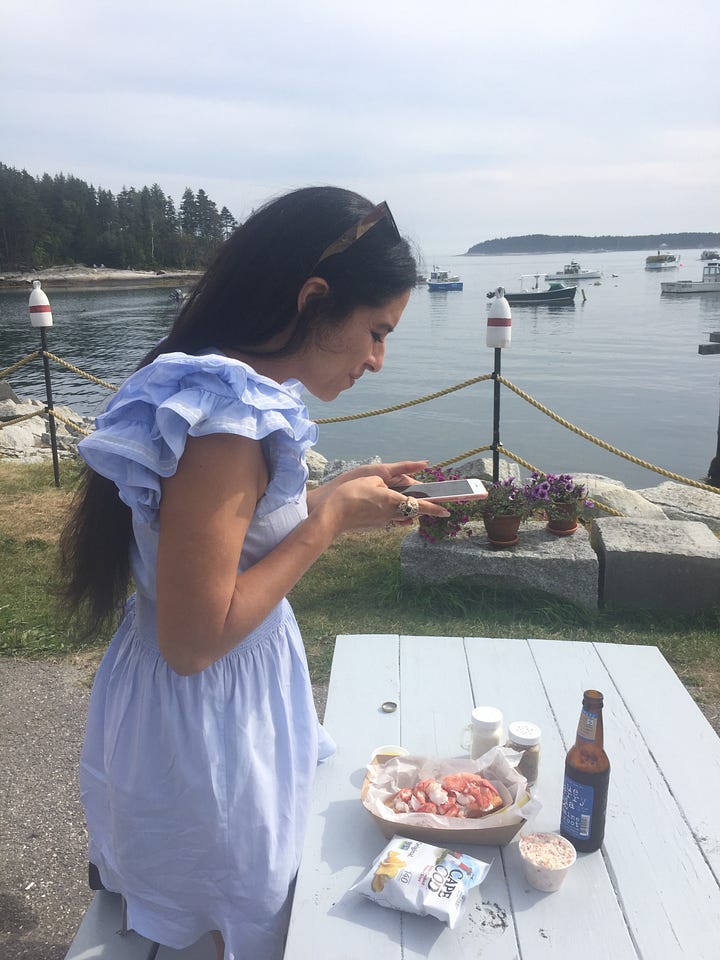
Someone told us about this place. A local, over drinks, the way you hear about places that don’t advertise. We drove ninety minutes on the recommendation, the last thirty on roads that were actively trying to talk us out of it, and ate on the dock and the blueberry bread pudding arrived and the lobster boats were unloading ten feet from the table. I did not know what a great lobster roll was before that afternoon. A few hours earlier I was eating a sandwich. Now I was eating a delicacy on a bun, and I could see the boat that caught it.
* * *
For most of American history, lobster was not food. It was the thing you ate when you had nothing else. William Bradford, the governor of Plymouth Colony, wrote a letter in 1622 apologizing that the best food they could offer newly arrived settlers was a lobster. Early accounts describe them washing ashore in piles two feet deep after storms. They were fed to prisoners. Ground into fertilizer. Used as fish bait. In 1876, John J. Rowan wrote that lobster shells outside a Nova Scotia house were a sign the people inside were poor. The story goes that servants negotiated contracts limiting lobster to three times a week because eating it daily was considered inhumane.
The reversal of lobster’s fortune began on a train. Railroads started serving canned lobster to inland passengers who had never seen the animal and had no idea it was shameful. To someone from Ohio, lobster was exotic. They did not know what people on the coast knew, which turned out to be the whole opportunity. By the 1880s, lobster was appearing on fine-dining menus in Boston and New York. During the Second World War, it was not subject to wartime rationing. The wealthy ate it freely while beef and sugar were scarce. The food that had been too shameful to serve was now too expensive for most people to afford.
Most foods become valuable because somebody knew what to do with them. A grandmother knew when to pull the pot. A butcher knew where to cut. Even after the food got famous, you could still feel the person inside it.
Lobster had nobody like that. No family recipe, no guarded technique, no cook whose name disappeared once the price went up. Prisoners and servants were not preserving a tradition. They were eating what they had no power to refuse. The people who remembered the shame got old, the people who didn’t showed up hungry, and the same animal came back expensive. The lobster never changed. America did.
The lobster roll itself was born in Connecticut. Harry Perry, the owner of Perry’s in Milford, made a hot buttered lobster sandwich in 1929. He commissioned a special roll from a local bakery to hold the meat and the butter. That split-top bun is still the one holding the lobster. The hot Connecticut version spread along the shoreline. The cold Maine version came later, dressed with mayonnaise and suited to coastal shacks without much of a kitchen. Maine and Connecticut have been arguing about it ever since.
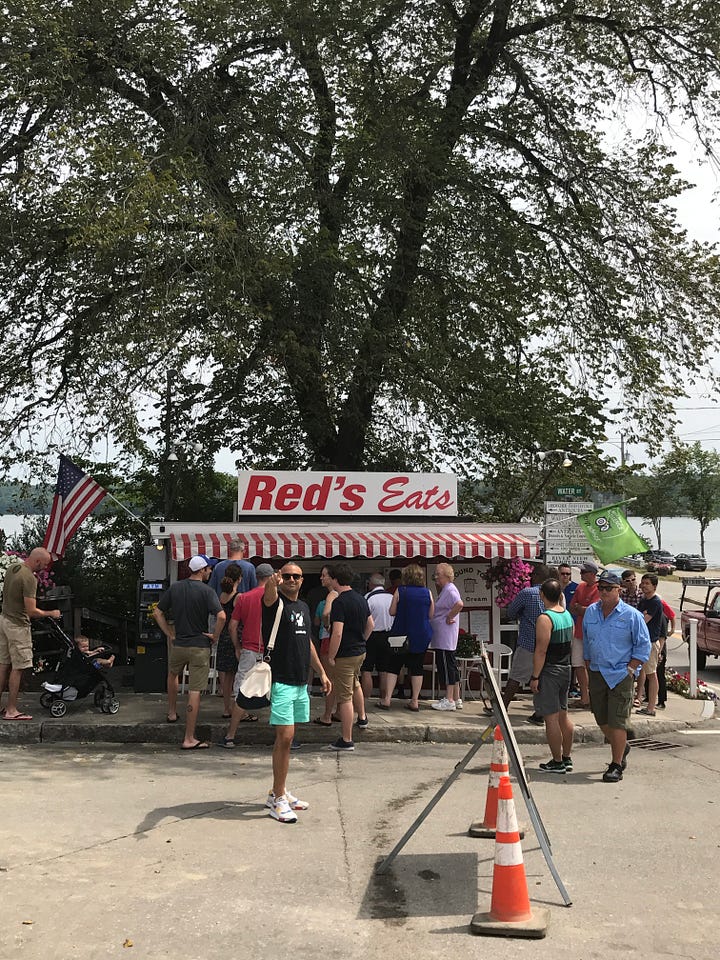
Maine also argues with itself. At Red’s Eats in Wiscasset, the shack is barely a shack at all, planted beside Route 1 with a line that waits an hour and backs up traffic through the whole town, and everybody’s okay with it. Down the coast in Kennebunkport, the Clam Shack serves its lobster roll on a round bun from Reilly’s Bakery in Biddeford. A round bun. The nerve of them. And they pull it off gloriously.
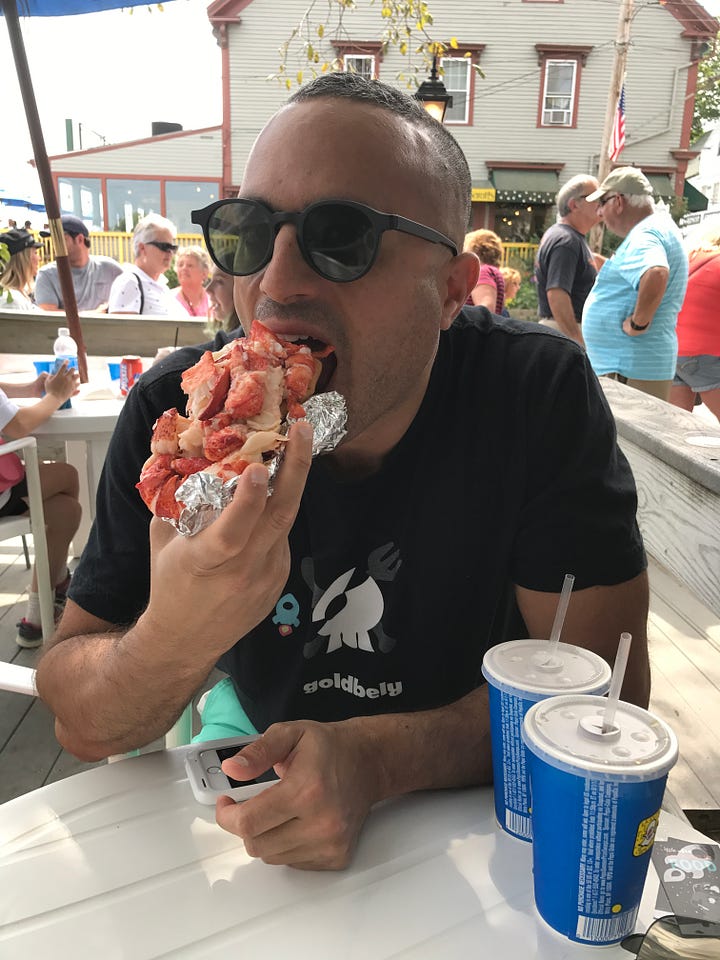
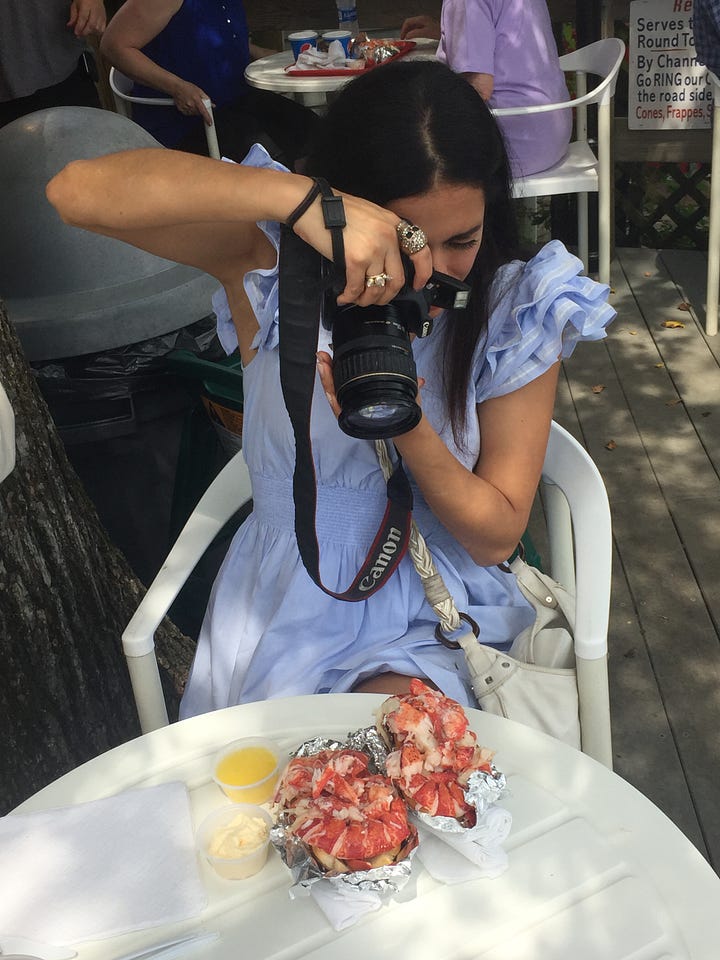
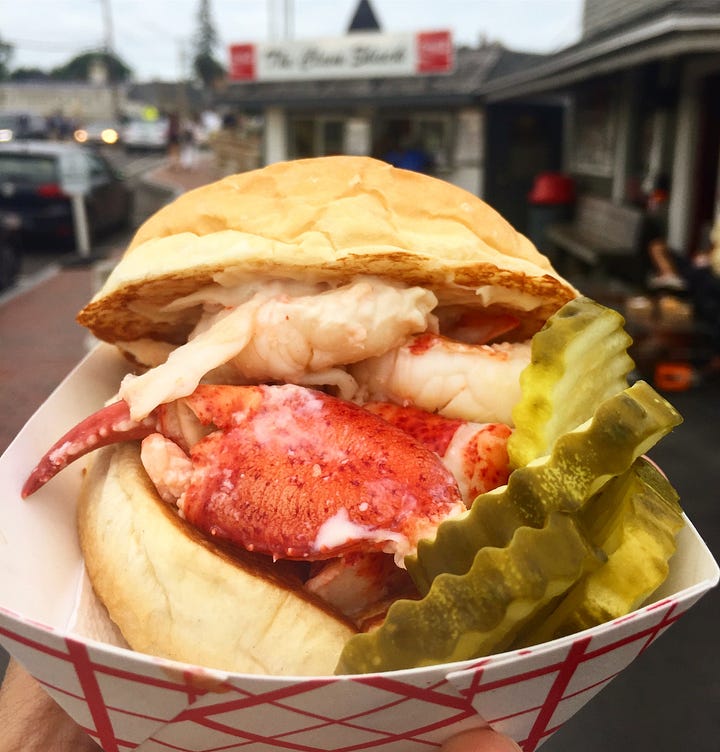
Here is the thing nobody says about the butter-versus-mayo war: nobody argues about the lobster. People fight about the parts they can control. The lobster was settled that morning, in cold water, by someone who had been up since four and does not care what you put on it. Let them argue.
Most regional foods protect a technique. The lobster roll protects a radius.
* * *
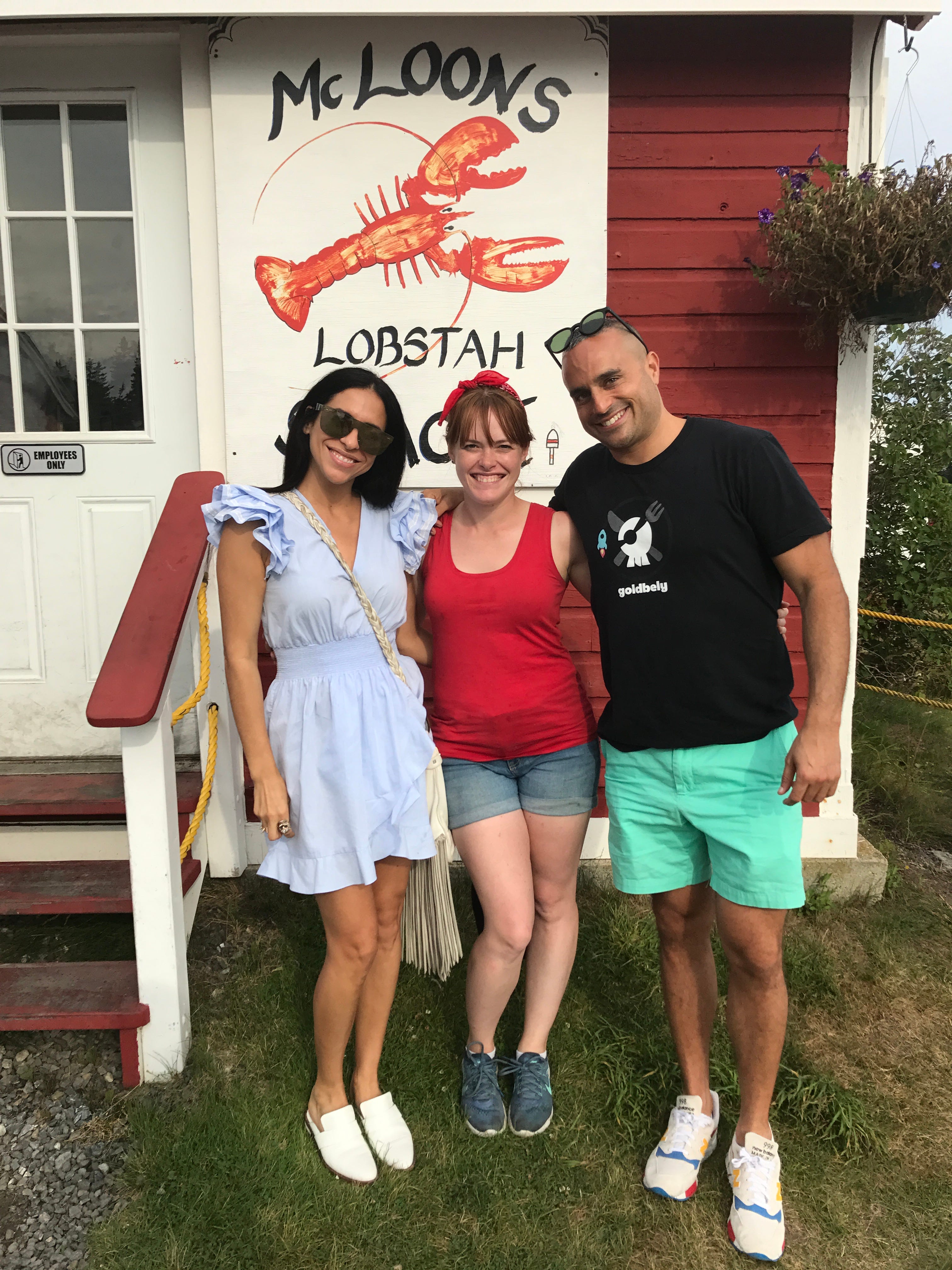
I ate the lobster roll. I ate the blueberry bread pudding. I walked up to the counter and asked for the owner. A young woman came out: early thirties, strawberry blonde, freckles, big smile. Bree Birns grew up in a seafood family in Cape Elizabeth and came home to run a lobster shack on her family’s wharf. The first summer, she sat in the empty shack waiting for one car to pull into the lot. Now people drive to the end of the road.
The bun is griddled. The butter is on the side. The lobster was in the ocean this morning. The dock smells like salt and diesel and wet rope. Late in the afternoon, the light comes through the spruce trees and the water goes flat enough to make every boat look temporarily innocent.
I’ve spent most of my life trying to close distances. Between cities, between people and the foods they grew up loving. I believe deeply that great food should travel. That somebody in the middle of the country deserves to know what a real lobster roll tastes like. But sitting there in Spruce Head, watching the boats rock against the dock while warm butter ran down my wrist, I had the strange realization that certain foods still belong to their place no matter how well you recreate them. You can bring somebody close. Maybe incredibly close. But there are some meals where the final ingredient is still the world around them.
The lobster was out there this morning. Now it is here, on a paper plate, in your hands. The roll is warm. The ocean is right there. And for a few minutes, nothing feels optimized. Just cold water, the creak of a hull against the dock, butter, bread, and the quiet confidence of a thing that became great by never trying to become anything else.
Joe Ariel
No posts
Comments
Nothing yet. Say the first thing.
Sign in to join the conversation.