
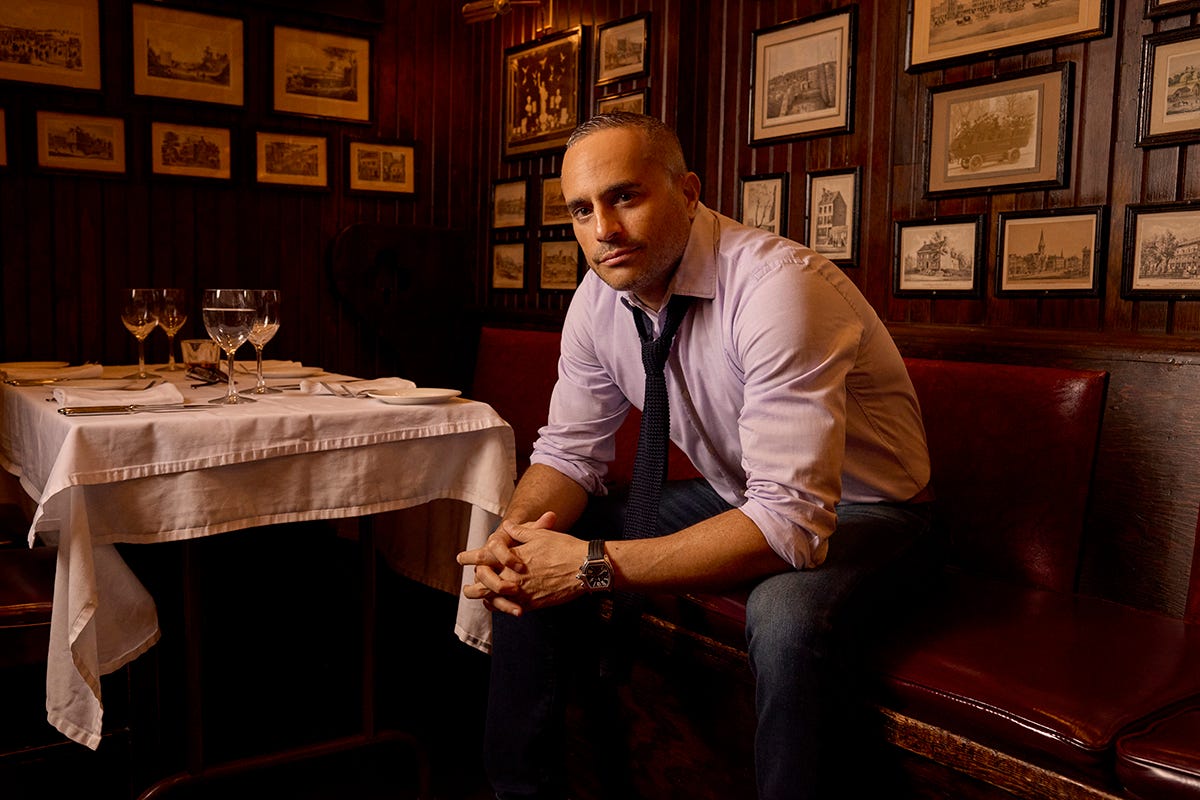
Saturday morning wasn’t Saturday morning without a bagel. Onion. Garlic. Everything.
The smell hit you before your feet hit the floor. Growing up in New York, that bagel was the most reliable thing in my week. I didn’t have a word for it then. I do now: it was home. My therapist would probably have something to say about that. But some things don’t need analysis. Some things just need cream cheese.
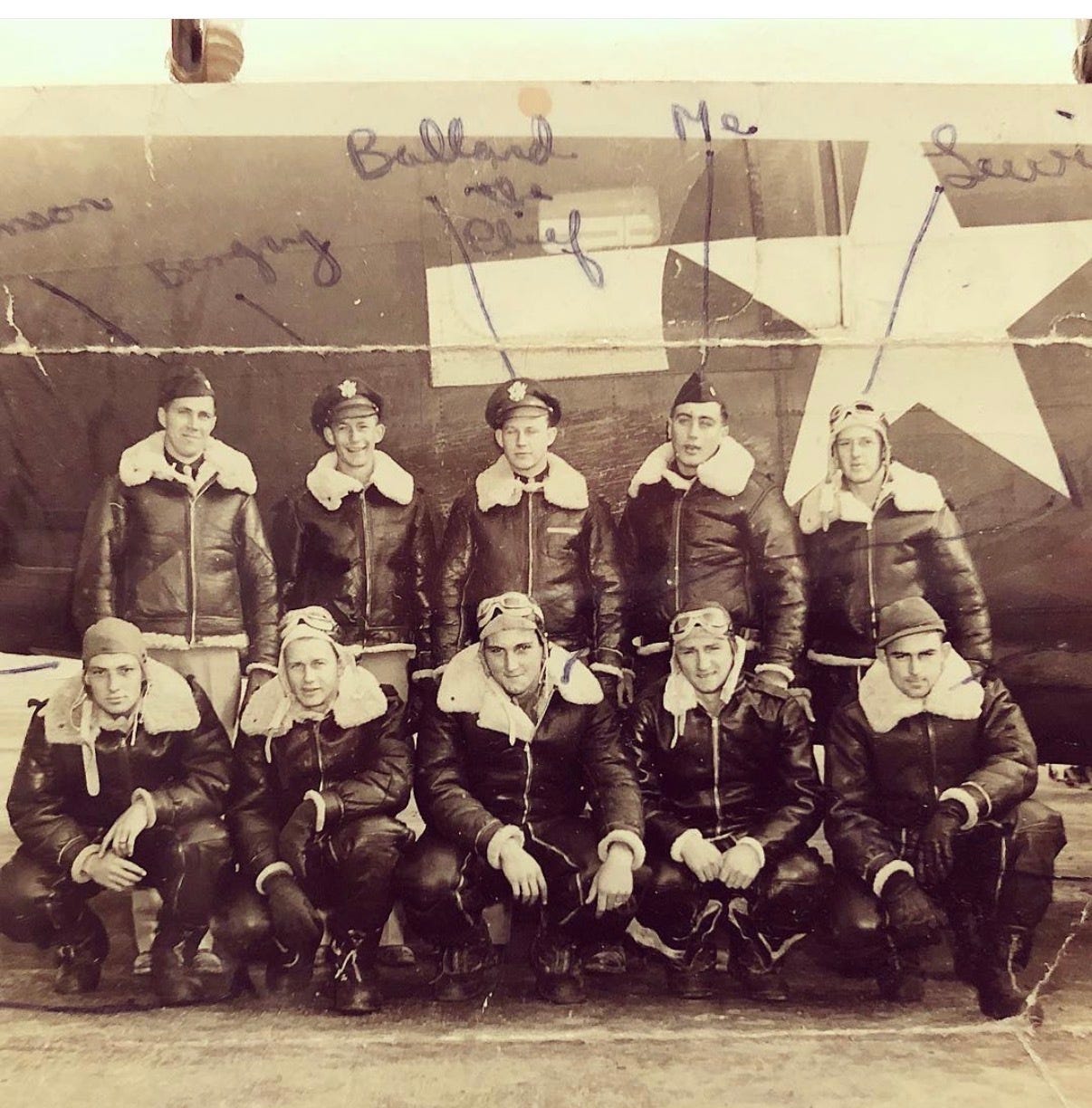
The man who first took me for those bagels was my grandfather Eugene James Singer. His grandparents came from Eastern Europe, Jewish immigrants who arrived on these shores with nothing but the belief that this country was worth everything. Two generations later, Eugene was born in Brooklyn, American to his bones. He grew up, put on an American uniform, and flew bombing missions over Nazi Germany during World War II, a Jewish man flying for America against the people trying to exterminate his people. I think about that photograph of him, young, leather jacket, standing in front of a bomber with the American star on its side, surrounded by his crew, and I understand exactly where my love for this country comes from. It was earned at altitude, by a man I wish I’d had more time with. That is the America I believe in. The one that took his family in. And the one he gave everything to protect.
The first food my grandfather ate when he came home from the war was a hot dog at the original Nathan’s. A German sausage on a Coney Island boardwalk, handed to a Jewish soldier who had just bombed the country the sausage came from. It was his favorite food. Think about that.
Food was my first language.
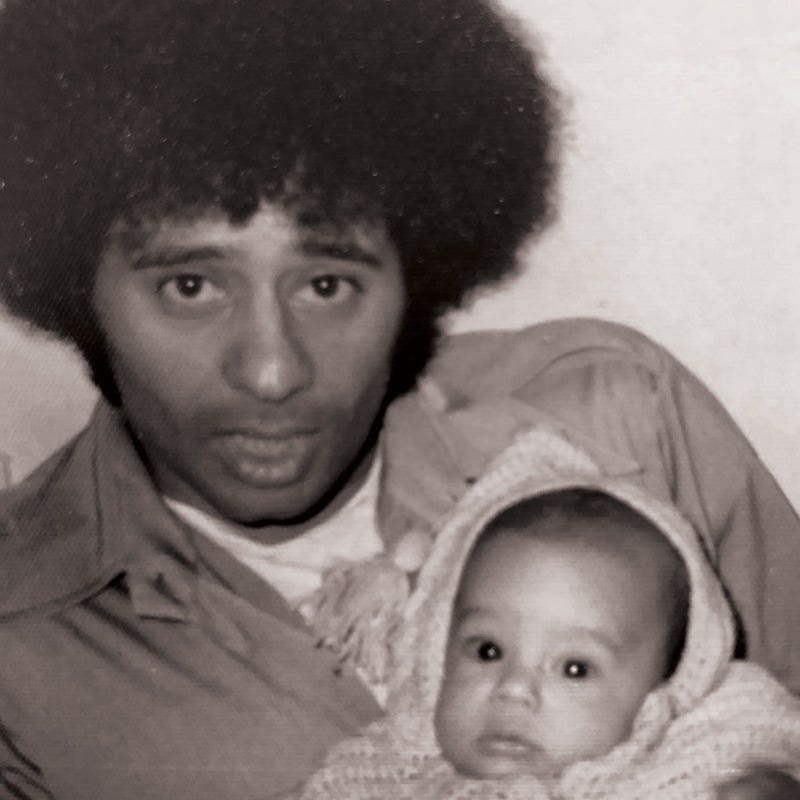
My father came from the other side of the world, from a Yemeni village in Israel with no electricity, no running water. He moved through America at a disadvantage. He could not always find his footing, but he could always find the stove. He spoke love through his hands. Hummus so smooth it didn't seem real. The neighborhood kids called it Smush Smush. We had a basketball hoop, which meant our driveway was everyone's driveway. But on the days my father lit the grill, the game stopped. Kebabs. Ground beef and lamb, parsley worked through the meat the way only he did it. The smell pulled every kid off the court and onto the lawn. If they couldn't stay, they lingered at the fence a little longer than they had to. That smell is my greatest childhood memory. My friends will tell you it was theirs too. In a house where I love you didn't always find its way into words, it always found its way to the table.
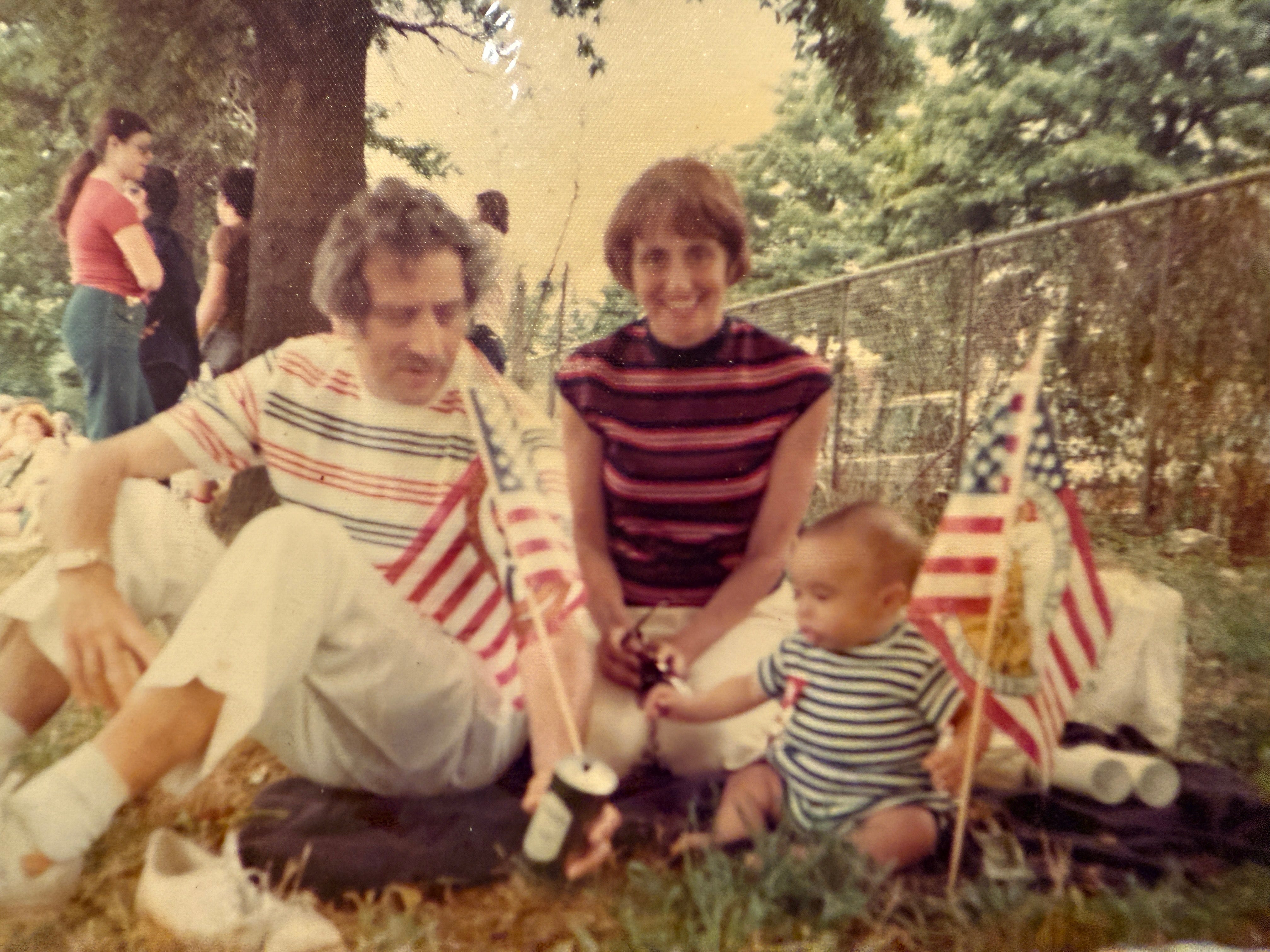
My grandmother said it both ways, out loud and then with three hours at the stove. Her cheesecake had a reputation in the neighborhood the way home cooking almost never does, and her spaghetti, meatballs, and garlic bread met you at the door. Her family had been in this country long enough that nobody called the food Italian anymore. It was just what we ate. Peace and war took turns in our house, but at Nanny’s house they never did. Her kitchen was my refuge from all the things a kid shouldn’t have to carry.
Restaurant meals were for special occasions. My appetite was not. So I did what any resourceful New York kid would do: I ran a black market food exchange. My father’s hummus for my Italian friend’s mom’s homemade chicken parm. His kebabs for my Jewish friend’s house account at Chen’s Chinese Kitchen. My Turkish friend smuggling me baklava from his mother’s kitchen. I was ten years old and already running a food marketplace. I just didn’t have the website yet.
Then I left New York for Nashville and America destroyed me, in the best possible way. Biscuits at the Loveless Cafe that made me question every decision I’d made up to that point. Hot chicken I was completely unprepared for. Dry rub ribs and pulled pork that had been tended since before I woke up. I drove three hours for that barbecue. I would drive six. I had grown up in the greatest food city in the world and somehow Nashville made me realize I had barely left the driveway.
So I kept going. A bowl of gumbo that carries three centuries in a single spoonful. A Texas brisket that has been in the pit since midnight. A slice of New Haven pizza that makes every other pizza you have ever eaten feel like a rough draft. Nobody talks about American food as a cuisine, which has always been crazy to me. It is the kind of food that makes you close your eyes and call someone. And yes, sometimes it is Taco Bell at two in the morning. Has been since I was fifteen. You can’t win a fight with nostalgia.
* * *
I’ve come to believe we live in the greatest food country on earth, and almost every dish in it came from somewhere else. Every great American food traveled. It crossed an ocean or a border or a kitchen door and came out the other side changed. The pizza that left Naples met coal ovens and a city that eats standing up, and what came out was not Neapolitan pizza. It was something Naples never made and never would. Someone in Hawaii put pineapple on a pizza and half the country still has not forgiven them. Every one of them broke a rule somebody somewhere thought was sacred.
Every broken rule made the food better. Nobody set out to reinvent American food. They just cooked with what they had, carried what they knew, and refused to make it the way someone else said it should be made. The dishes became more alive than the rules they broke.
But “collision” is too clean a word for what happened here. The kitchen was already here: thousands of years of Native knowledge before America had a name. Black people were brought here by force and made to feed the country that enslaved them. Black cooking is not a tributary; it is the spine of American food, built on women’s labor and memory, with their names too often missing from the story.
The most extraordinary food in America was not built for scale. It was built for obsession. It often lives in one shop, in one kitchen, or in one pair of hands. And when the person who makes it is gone, the food goes with them. That is why the record matters.
For 25 years, I have had a rare vantage on American appetite. I built and curated the place where America’s cravings revealed themselves: what people miss after they leave home, send when words are not enough, and chase across the country because nothing else will do. But the deeper lesson was never what America craves. It was what America loses.
That is why I am writing The 250 Dishes That Made America. Not as a critic looking down. Not as a historian working only from the archive. But as someone who has spent his life close enough to the food to know what disappears when nobody writes it down.
It is not a list of the fanciest dishes. It is the record of the most American ones: the ones people carried with them, argued into existence, sold for a living, fed to their children, and kept making until the country could not imagine itself without them. Every one of them belonged to somebody before it belonged to America.
The record was never written.
Now I’m writing it down.
Joe Ariel
July 2026
No posts
Comments
Nothing yet. Say the first thing.
Sign in to join the conversation.