
Queensland is really popular. A holiday spot genuinely worth drooling over, especially for anyone in the midst of a northern European winter.
And yet Australia offers so much more if you go looking for it.
For instance, Tasmania, Australia’s second oldest and smallest state, packs an enormous punchful of nature, and adventure, for it’s size.
Forget sedate harbour cruises where the biggest thrill is choosing between chardonnay and sauvignon blanc (although that’s nice!) Get out on Tasmania’s wild waters and you’ll be sure of an adrenaline rush.
You’ll possibly encounter fur seals, Southern Ocean swells that’ll test your sea legs, and possibly a rendezvous with a Drunken Admiral.
I learned this on a single unforgettable day that took me from Hobart’s civilized waterfront to the raw, untamed coast off Bruny Island. One moment I was sipping wine aboard a luxury catamaran, contemplating Tasmania’s fascinating convict past.
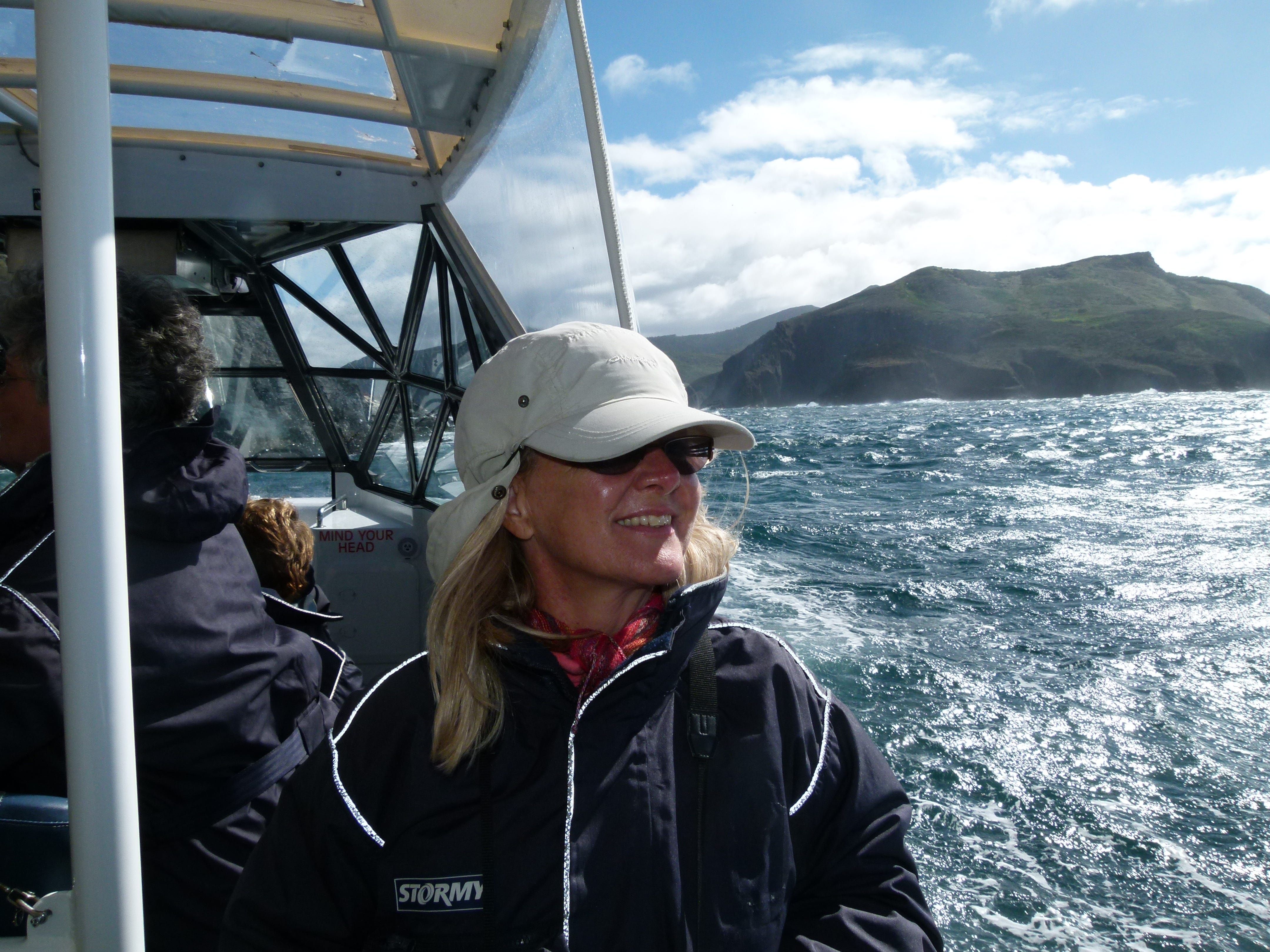
The next, I was clinging to the sides of a coastal exploration vessel, spray in my face, as we powered into a remote fur seal colony where hundreds of these magnificent creatures barked, lounged, and completely ignored our awestruck faces.
This traveller’s tale isn’t the advertorial of Tasmania’s glossy brochures. This is the island as it actually is: wild, historic, delicious, and exhilarating. It was first published in the Travel Magazine of the West Australian Newspaper, and now I’ve updated it for my Substack readers.
(Please re-stack or share if you enjoy it.)
Want to experience Tasmania yourself? I’ve included practical links you’ll need to plan your own Tasmanian watery pursuits or boat adventures. And yes, I’ll explain who (or what) the Drunken Admiral is and why you absolutely should encounter him.
Subscribe to get more honest travel stories that go beyond the tourist trail—and tell me in the comments: what’s the wildest boat trip you’ve ever taken?
Now, let me take you back to where it all began...
The air is brisk and Salamanca Market is in full swing, its 250 or so stalls sandwiched between historic sandstone warehouses and an avenue of oak trees that are now, in some places, turning a mellow yellow as autumn approaches.
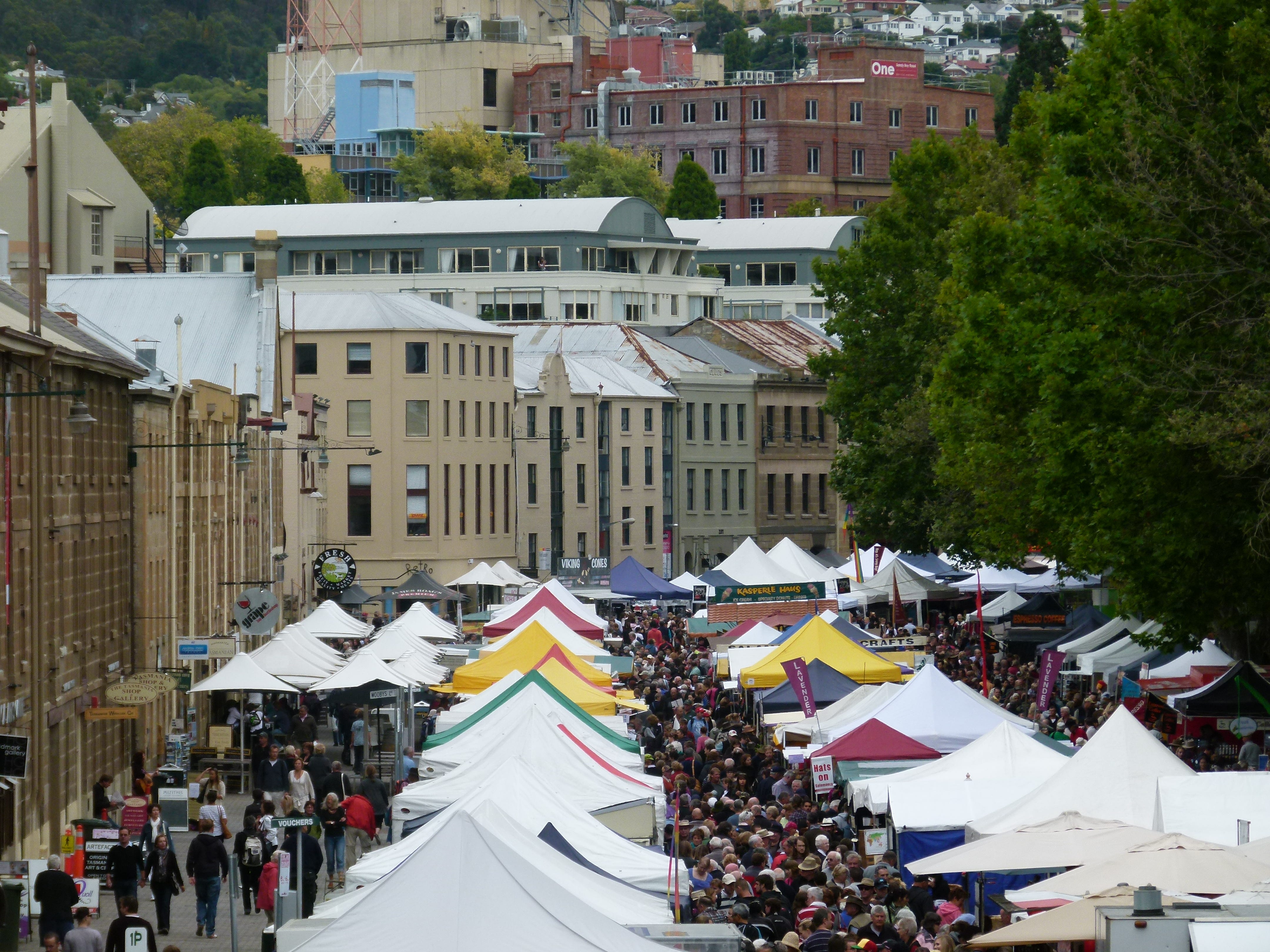
But I am not interested in this iconic market today despite its arty appeal, the smell of coffee and croissants, and the sounds of buskers singing the blues. Because today is a very special day and an adventure boat trip leaving from the waterfront, just a short walk away, is where I’m heading.
The thrill and anticipation of the sea is palpable on this fresh morning. Today there’s an antarctic research ship docked in the harbor along with sleek yachts (think Sydney to Hobart yacht race), a couple of early morning kayakers prowling Sullivan’s Cove, plus ferries, and fishermen unloading deep sea catches which will later today be dished up at restaurants along Hobarts’ café chic and increasingly epicurean trail. There’s also the Sea Shepherd anti-whaling ship, the jet black Bob Barker, moored at the jetty with its Jolly Roger flying at full mast, but that’s another story.
Due to its island status, Tasmania’s personality is … maritime, so it makes sense to make the most of its boats and waters and today we’ve booked on the Bruny Wildlife Adventure.
The Peppermint Bay 11, a luxury 24 metre catamaran with floor to ceiling windows and three viewing decks lulls us into the first leg of the full day excursion; a luxury cruise.
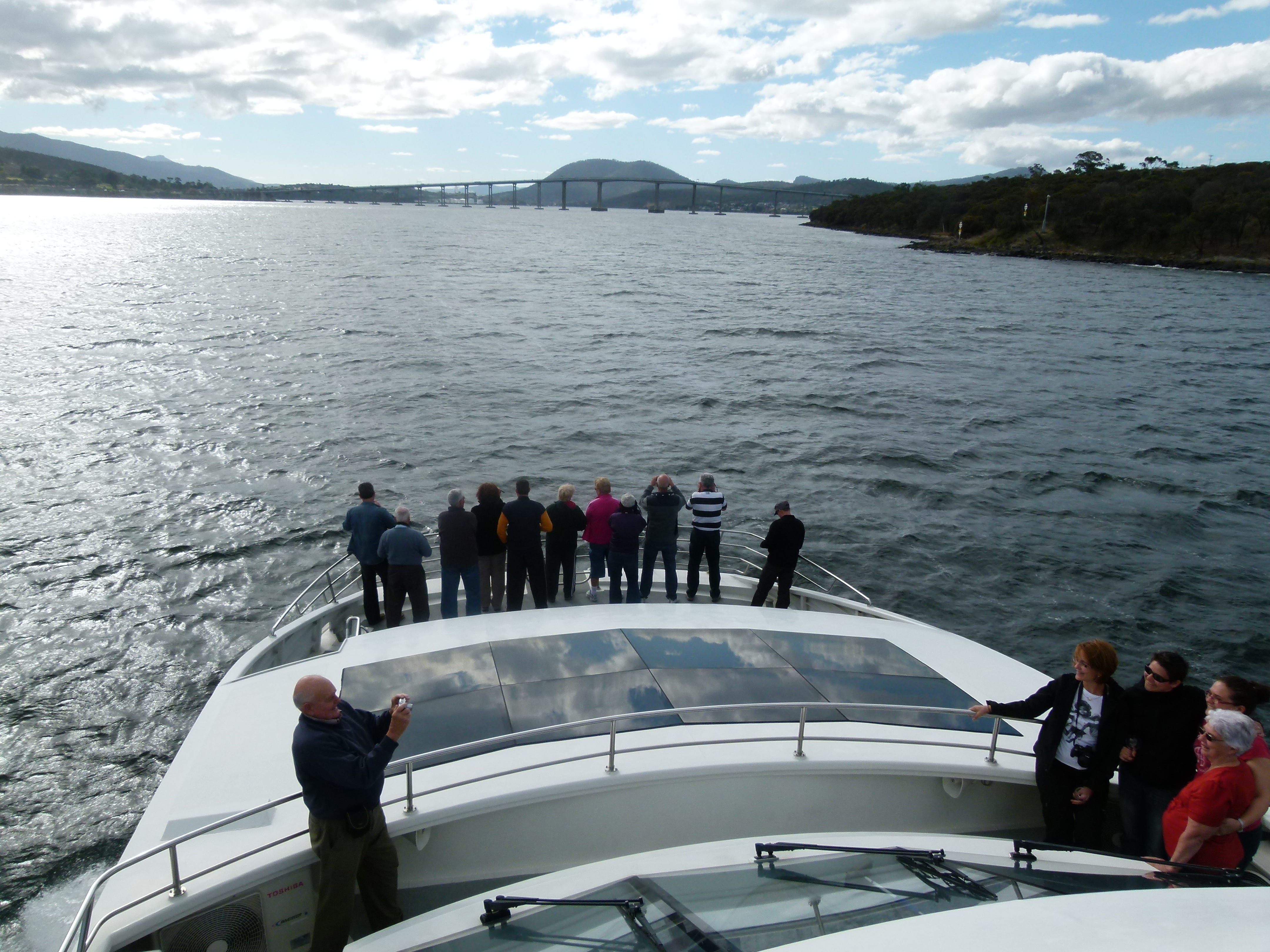
I’m sitting starboard, drinking coffee and eating blueberry muffins, and as we head out around Battery Point the scenery on the Derwent Estuary and the D’Entrecasteaux Channel is beguiling, two dimensional under the auspices of Mount Wellington.
I have under my arm my full-length, navy blue expedition jacket which I’ve tried on, and which is decidedly unflattering, although later on I shall be glad of this Antarctic apparel.
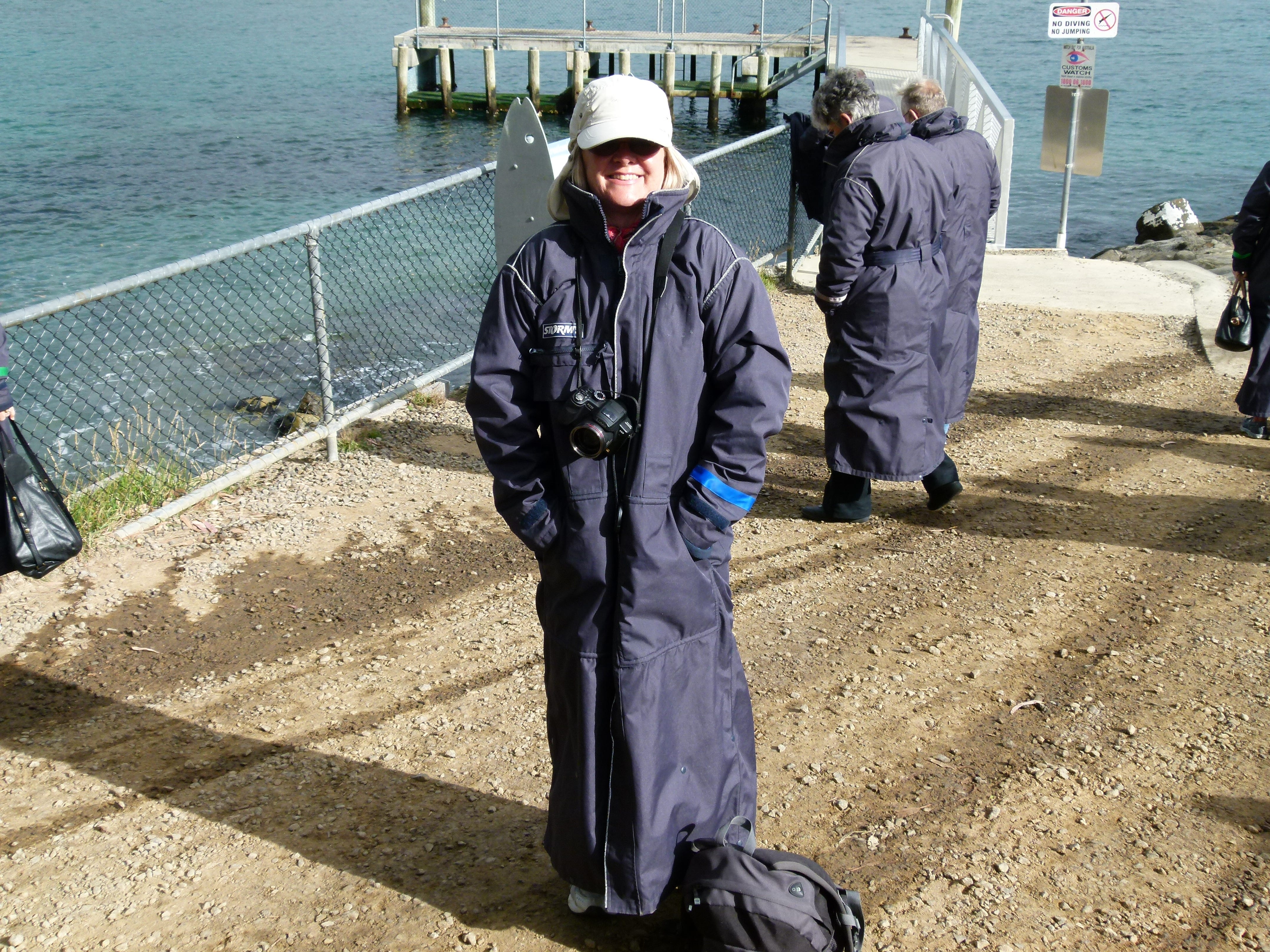
After 45 minutes we dock on Bruny Island at Roberts Point and board a minibus for a 20 minutes scenic drive to Adventure Bay that takes us over ‘ the isthmus’ a narrow neck which joins the two distinct landforms of North and South Bruny. The island has about the same land mass as Singapore, but Singapore’s population is 4.5 million and Bruny’s is around 800. It’s practically empty and it feels really remote.
“There used to be a whaling point here at Adventure Bay”, explains Ben, our guide for the day. “The sea would be red with blood and the air thick with smoke from burning blubber,” he continues as we survey a very different scene today; clear, blue water and fresh, clean sea air all the way from Antarctica.
Humpbacks and Southern Right whales can be sighted these days in Tasmania in May and June, September and October, but the whale population was decimated in the early 19th century by whalers hunting them for their oil which was exported to England for street lamp fuel, candles and industrial use.
“From here we will be setting off on an environmental expedition in a 14 metre, fast, purpose built NAIAD expedition vessel powered by four 350 Yamaha outboards,” Ben tells us. Someone is heard to ask why we need so much horsepower. “Later on you’ll understand,” says Ben. “And it’s not just for speed.”
We are given ‘nutritionally designed expedition snacks’ and bottled water, and as I look at the small boat motoring towards us I wonder if we’re going to need them because I’m already full with muffins and surely we don’t need more sustenance … unless there’s an emergency.
The three hour trip turns out to be a 50 kilometre hell and high water expedition. Today there are unusually big swells and lashing waves, a few people are sea sick almost instantly, but I’m more fortunate and bypass queasiness, invigorated by the rush of adrenalin. I’m also glad I accepted the complimentary ginger tablets dished out on the Peppermint II for potentially queasy passengers. Nonetheless, I can’t help thinking if we capsized in these waters we would have no need of the life jackets stored under our seats.
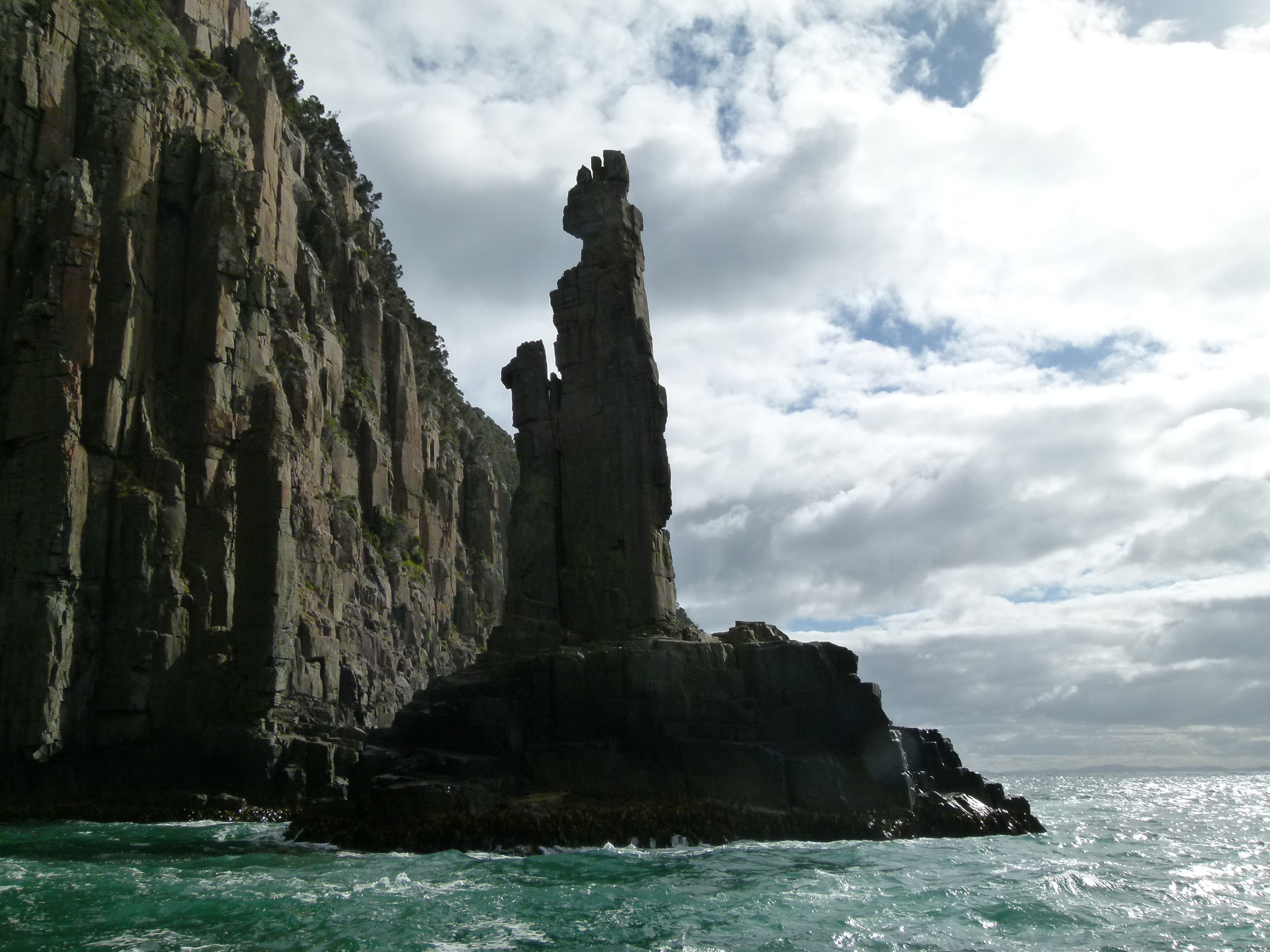
Bruny’s oldest rock is Permian mudstone and Triassic sandstone which dates back 265 million years. Right now we’re under some towering sea cliffs in the Bay of Islands, “Jurassic Dolerite,” Ben says, “Slightly younger rock that dates back to around 165 million years ago.”
There are spectacular columns, (notably The Totem Pole), ancient sea caves and dramatic rock formations, while some of the cliffs are topped with eucalyptus forests.
We bob on the swell of the Tasman Sea, and inch closer to the sheer cliff face, very close to the rocks, before heading out to the great Southern Ocean where the waves crash over the boat. I begin to feel vulnerable, at the mercy of the sea as we are pummelled by waves and now understand the need for expedition jackets, powerful engines and a skillfull captain who knows how to read the sea.
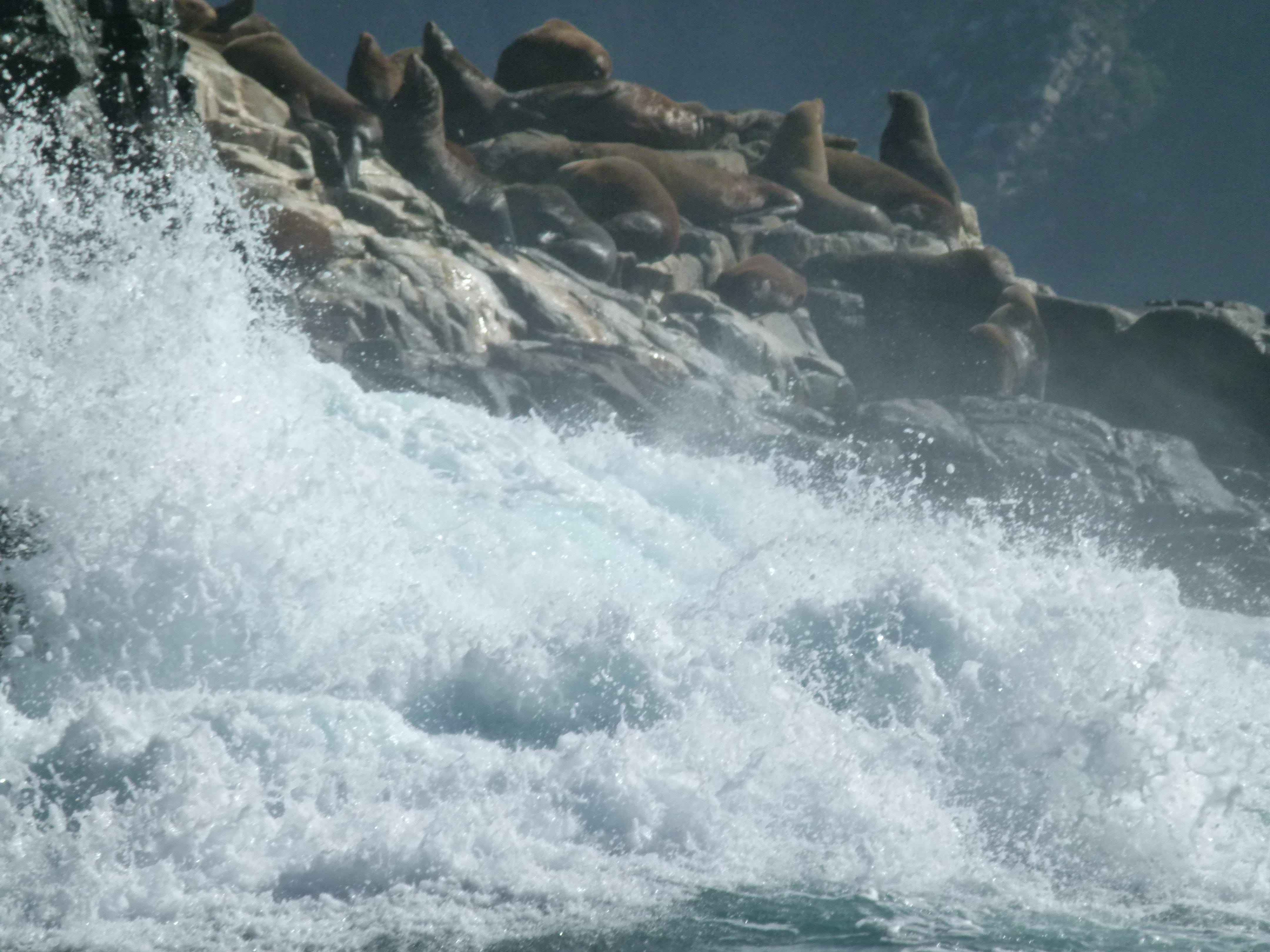
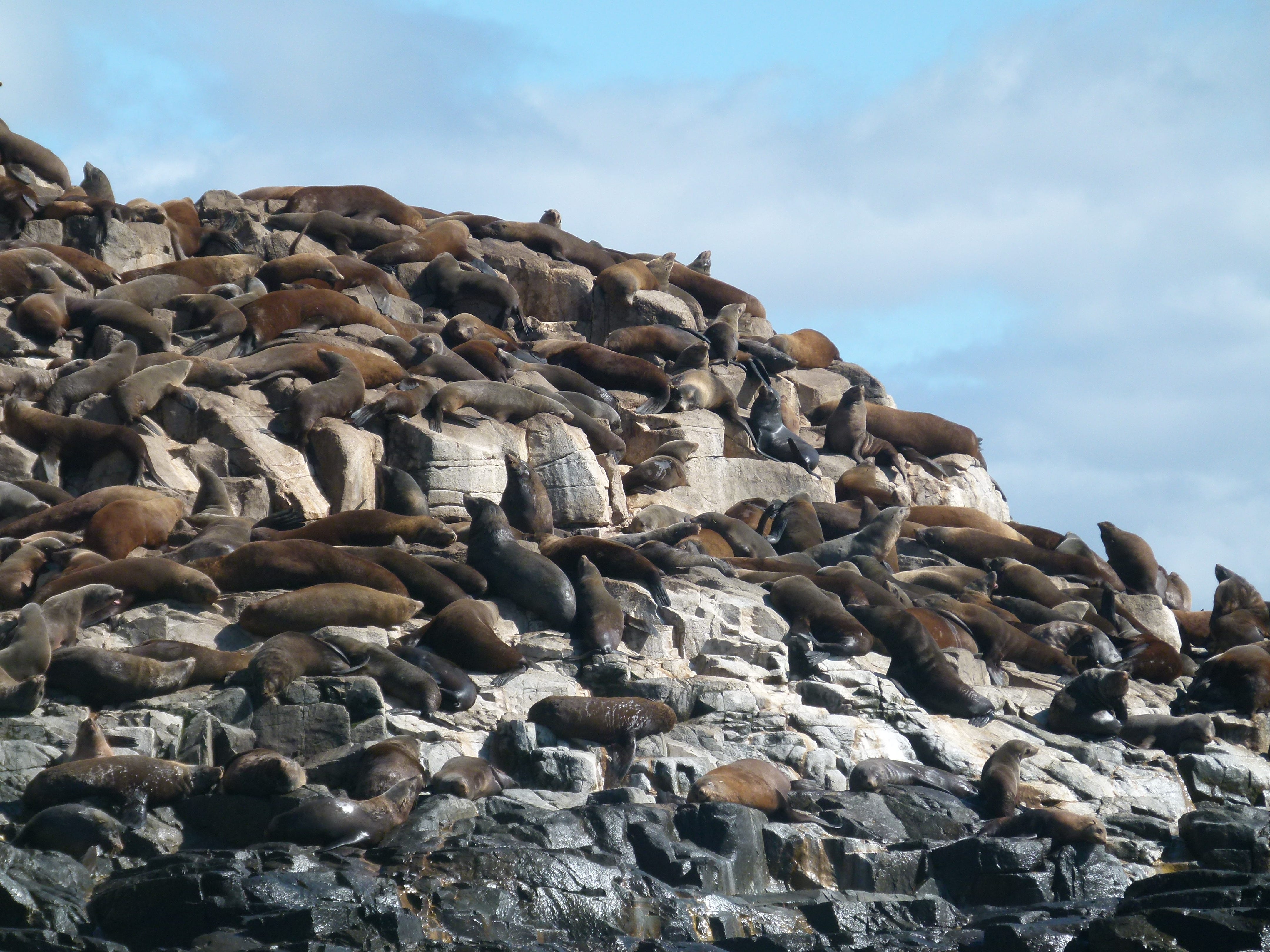
But my lily-livered unease is tempered with great excitement. As we ride the crest of huge waves and thump, bone shatteringly to their base we spot sea eagles, an albatross and seals with which we come up close and personal at The Friars where a colony of hundreds of Australian and New Zealand fur seals preen and cavort theatrically on rocky crags that jut into the sea.
After three hours we’re captained back to Adventure Bay, with a couple of fast water turns in the bay to pump the adrenalin back to fever pitch before we board the bus again and stop off for a gourmet lunch that includes fresh shucked oysters, wine tasting and, just in case any of us are still hungry, fudge and cheeses.
Then it’s aboard the Peppermint II for the sail back to Hobart and along the way we spot the arresting, 33 metre brigantine, Windeward Bound, Tasmania’s largest tall ship, which provides disadvantaged young people with an opportunity to enjoy sailing and learn skills that might otherwise be out of their reach.
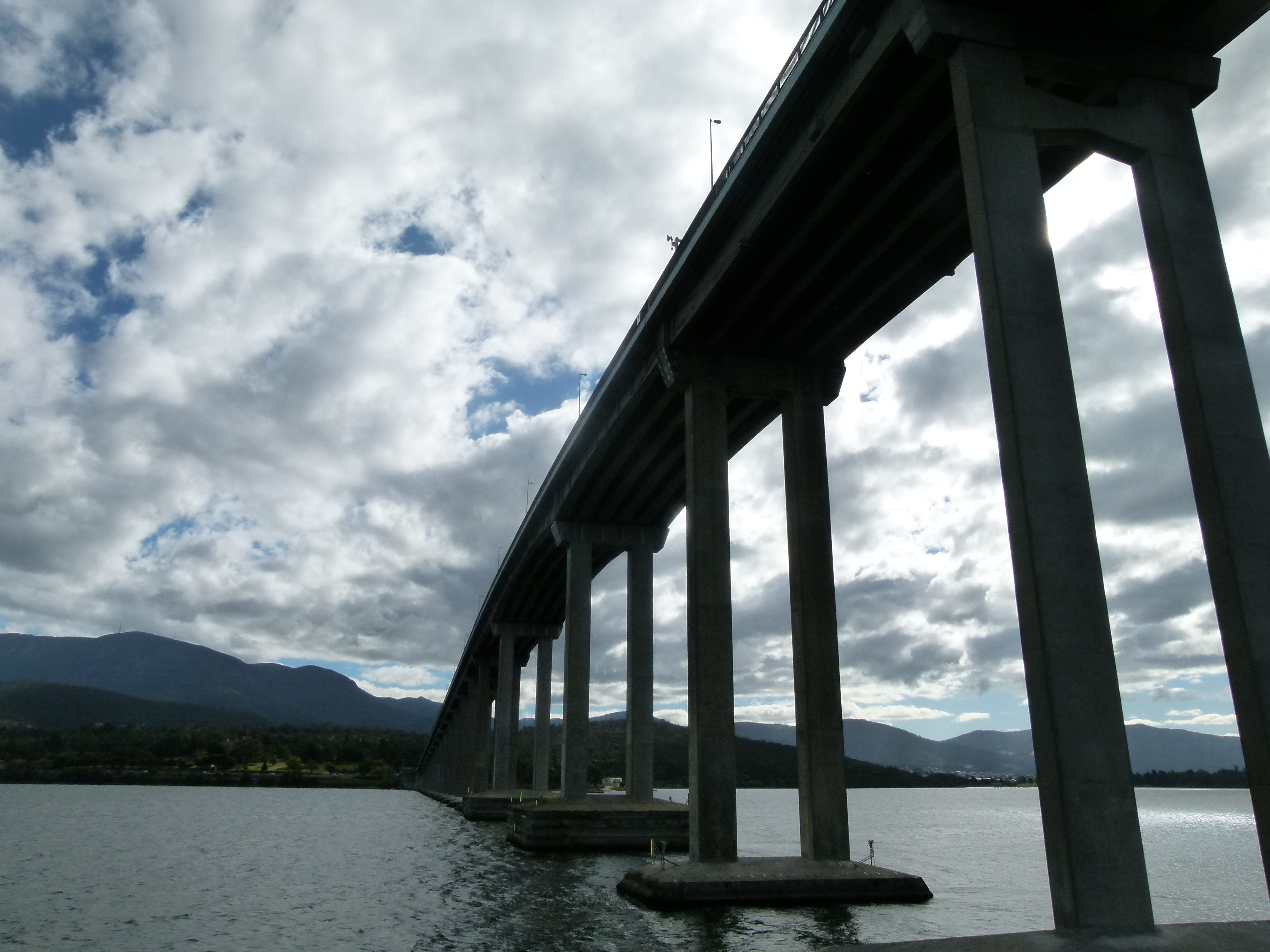
Further on we pass under the Tasman Bridge a five lane bridge crossing, which was the scene of a maritime disaster one overcast drizzly evening in January 1975 when the bulk ore carrier, Lake Illawara, fully laden with 10,000 tonnes of zinc concentrate crashed into one of the pylons. The boat sank within 7 minutes killing seven crew members, the lights on the bridge went out and 4 cars driving across it, failed to see the chasm, killing 5 motorists. There’s a hush as we comprehend the fatality and the wreck that’s lying in a watery grave right beneath us, and the trip ends on a somber note.
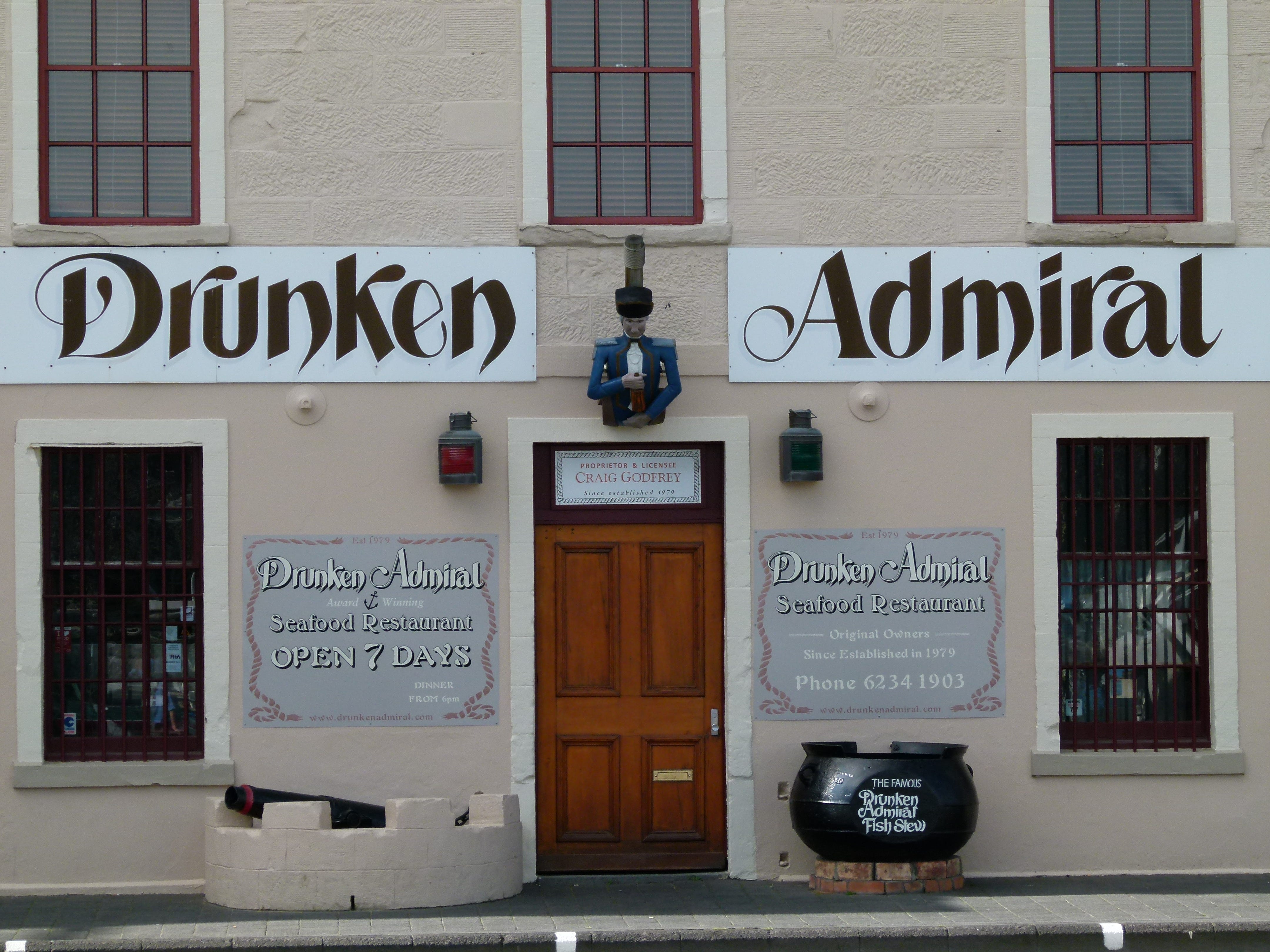
I’m not unhappy to hand back my incredible hulk jacket, although it’s served its purpose, but I am sad to be stepping ashore. Though would you believe it, later on, we’re hungry again, and with the spirit of the sea in our veins we head to the waterfront once more, to the Drunken Admiral, an aptly named restaurant in a heritage building which is filled with maritime memorabilia, and among other delights offers a tasty fish stew.
I have not been paid, nor undertaken complimentary trips to promote any of the following companies, but I hope these links might be helpful if you’d like to plan your own adventure trip, or discover more about Tasmania.
Until next time,
Jo x
Comments
Nothing yet. Say the first thing.
Sign in to join the conversation.