
For years I was not interested in using my sketchbooks as a reference tool. People would assume the purpose of my sketchbook was to gather information for more art. Proper art. I resisted this interpretation.
For me, they were a place to start from scratch. Every time. To develop my drawing skills. I rarely looked back in them. I was focused on the next drawing, not the ones that had gone before. For years I was resistant to using my own drawings as a reference. So I’m aware you might be too!
Paid subscribers might have watched the last replay and seen me showing the drawings that changed my mind about this. If you missed that session, it might be a helpful place to start this month in addition to the suggestions below.
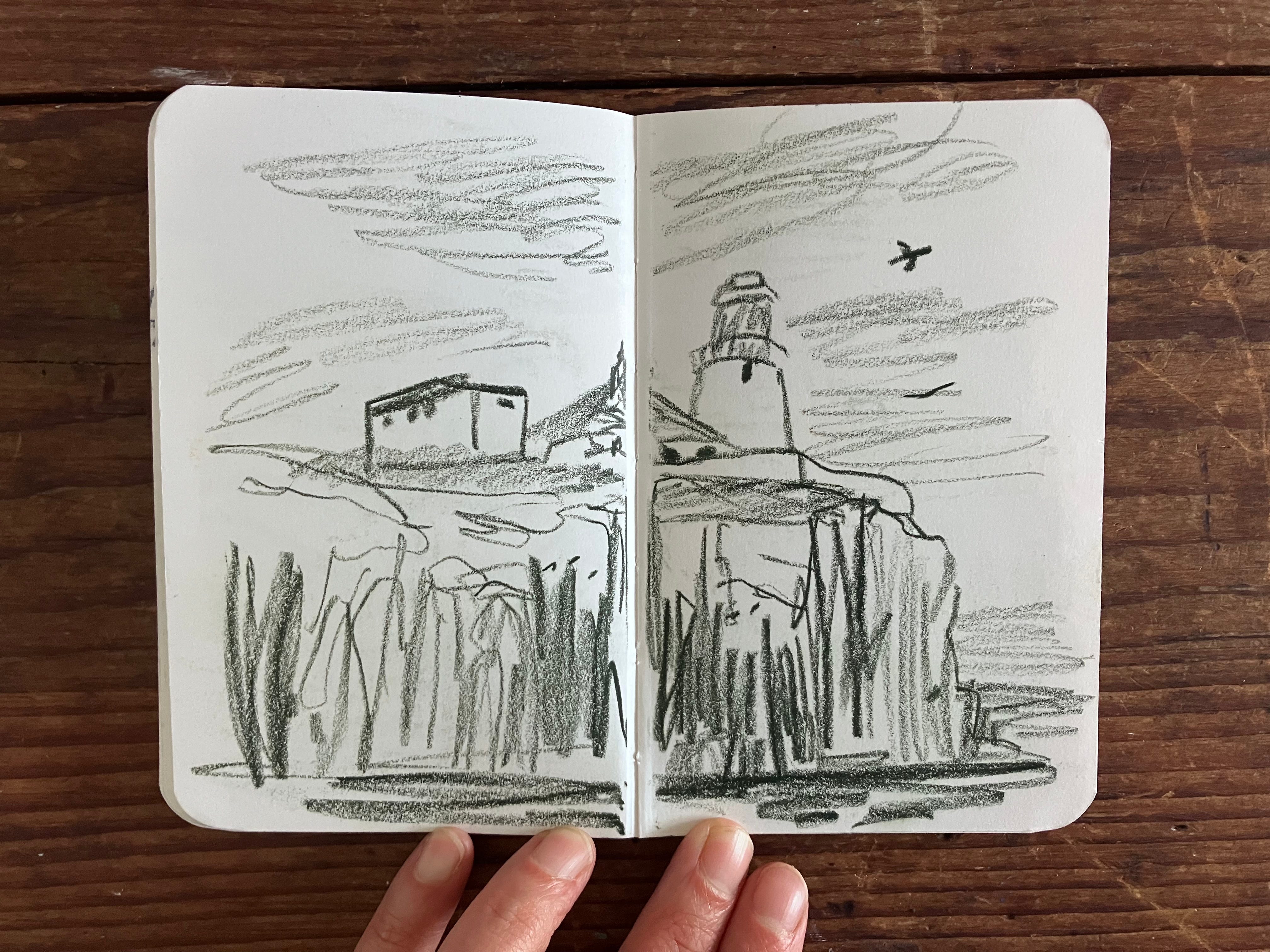
Lots of people tell me that knowing what to draw is a huge barrier to drawing at all. They want to draw but they don’t know what. This approach bypasses that hurdle altogether! Wouldn’t it be great to remove that anxiety and just get straight on with drawing?
Try it now:
Open a sketchbook at a random page or select a sketch that invites you to redraw it. This is your subject for the steps below. (A simple line sketch will probably work best for these steps)
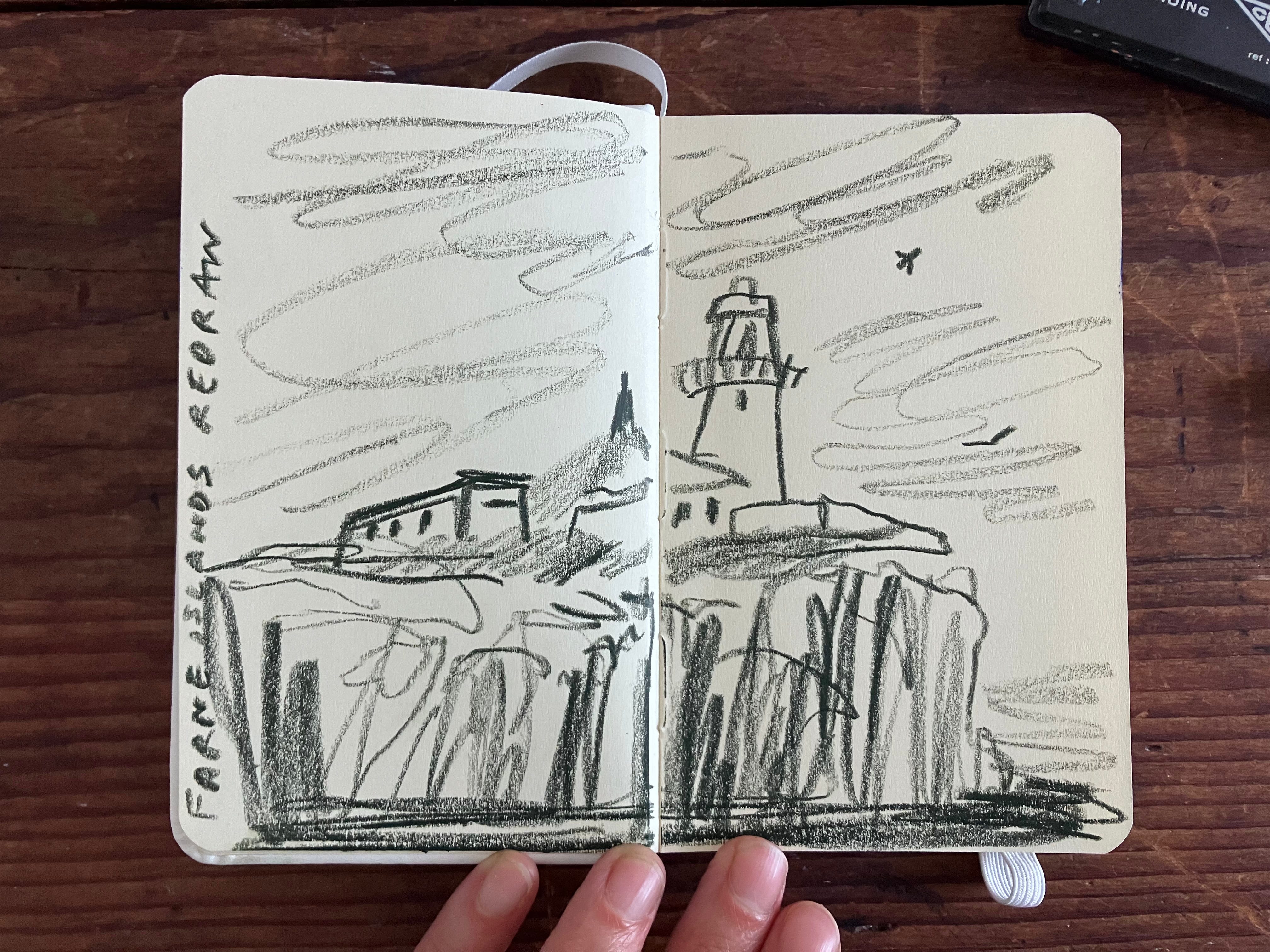
Drawing from observation can be a very taxing mental exercise. There are so many factors to consider and micro decisions to make. This can be what makes drawing so absorbing. I find it a peculiar blend of super relaxing, whilst also taxing.
Using an existing drawing as reference means lots of decisions have already been made for you. You do not have to deal with the most difficult stuff. A subject has already been interpreted into a series of marks on paper. Your job is simply to respond to that information. Of course, decisions will have to be made. But with the task of constructing the drawing completed we are free to focus on other things.
Try it now:
Make a quick copy of your drawing. Don’t attempt to change anything. Just get your hand and eye moving together and enjoy the experience.
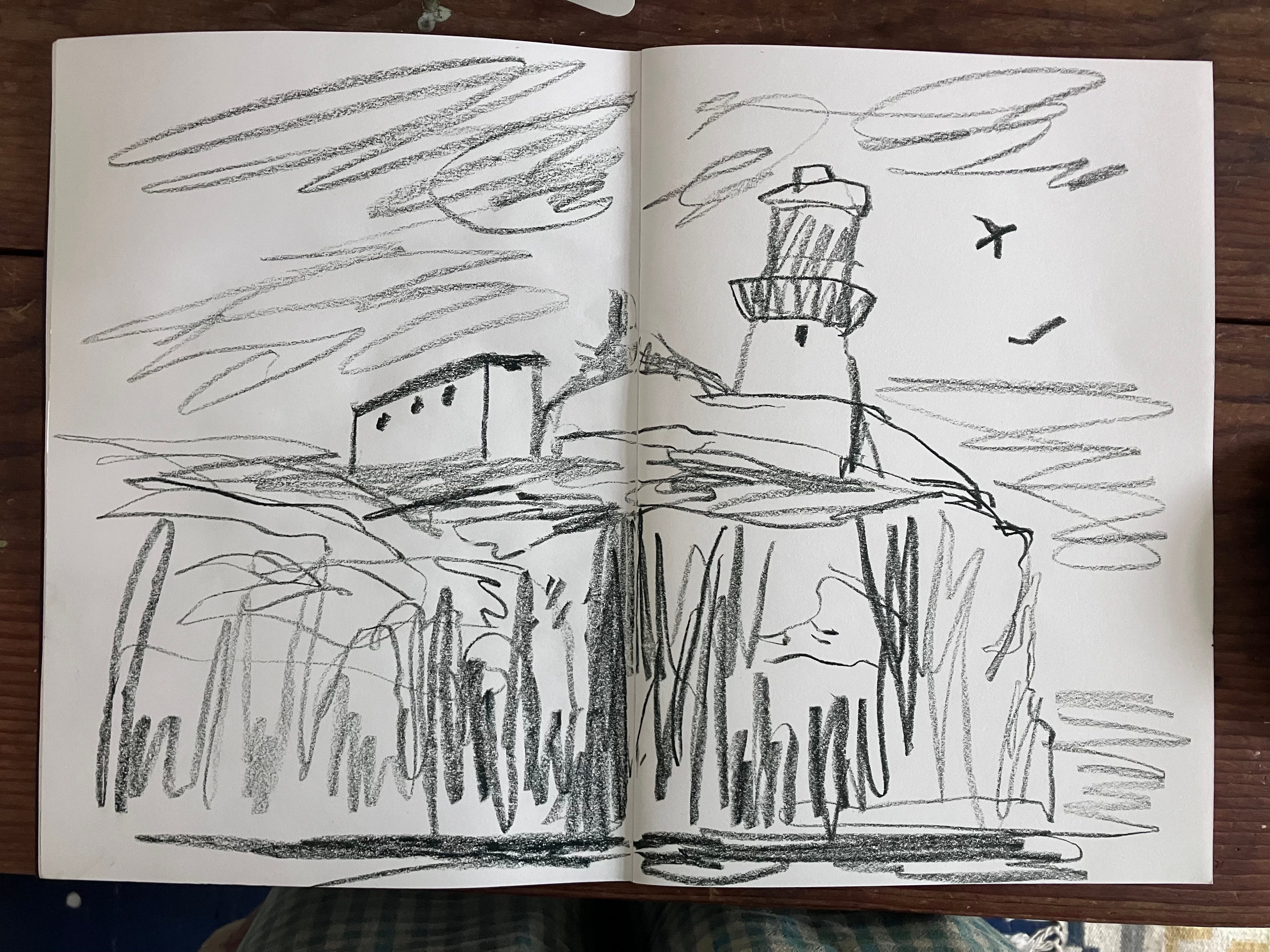
Being free of the mentally taxing job of constructing a drawing means we can focus our energy on other skills - such as our mark making, our use of colour or ways of working with certain media. The existing drawing offers a framework. We can take that framework and make as many or as many or as few changes as we like.
Try it now:
Now (continuing from above) draw from the original sketch again, with the same media as above but at a larger scale. Then try at a smaller scale. How does the scale change your marks, movements, process or outcome?
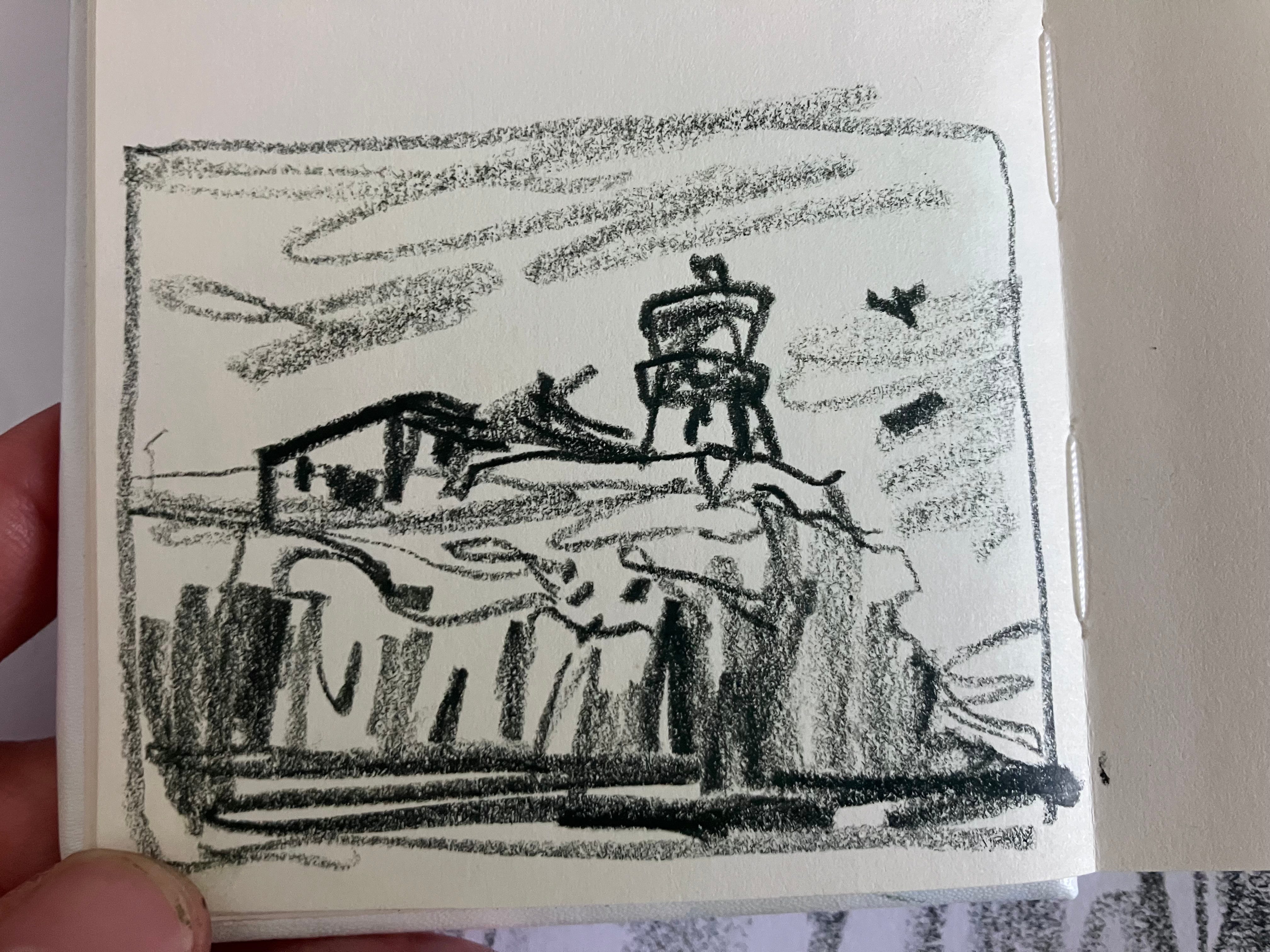
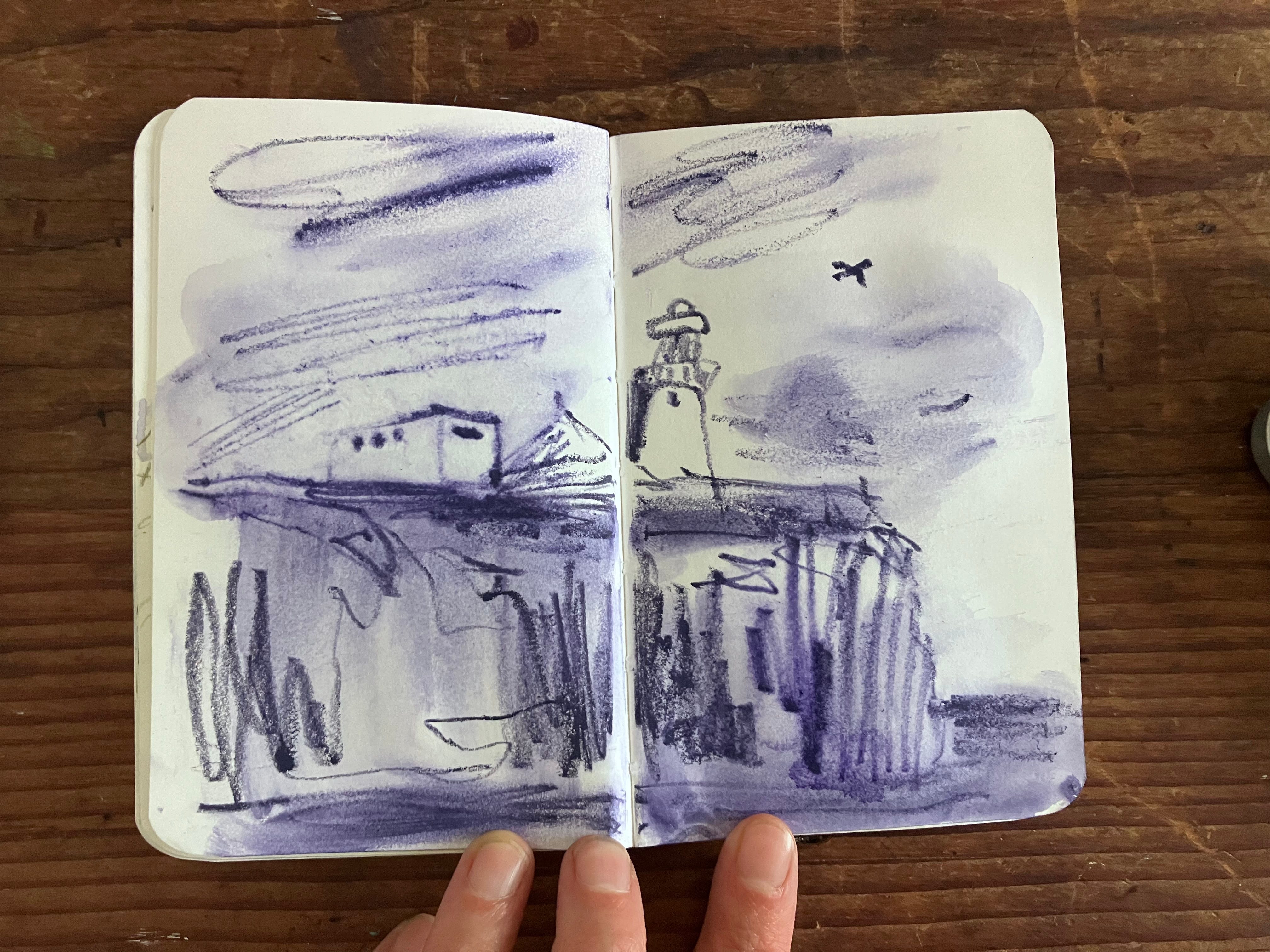
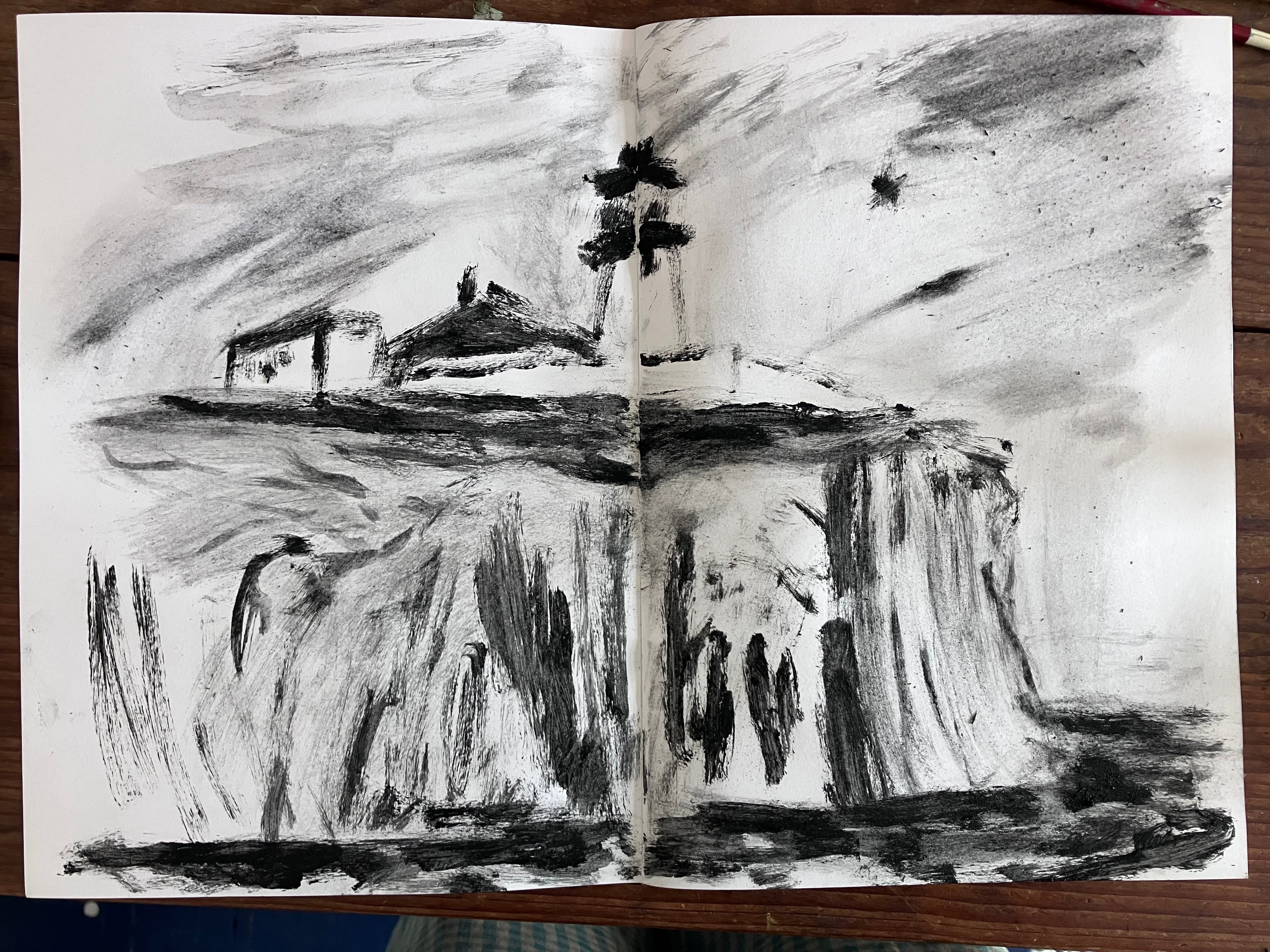
Some people find play a tricky concept. It can be too unstructured. Some people enjoy it but aren’t sure how to start.
Having our starting point provided (by an existing sketch) I suspect will make play a little easier. Play is just asking and exploring one question at a time. Eg. ‘what might happen if I use X media instead of X?’ or ‘What might happen if I work with colour instead?’
Try it now:
Now re-draw the same drawing with media that offers something totally different Eg. Pencil > Ink or Pen > Charcoal. (Your choice of scale)
Drawing from our drawings helps us analyse what makes a drawing more or less successful. It might be that the composition would be better cropped. Maybe you feel you ‘went too far’ and it’d be better with less detail. Perhaps you feel there’s something missing. Drawing from a drawing gives us the permission to test out alternatives. To find out if X really would have been better. Obviously we won’t make an exact copy with edits, like a computer could do! But we can still learn from the drawings we’ve made previously as part of this creative process.
Try it now:
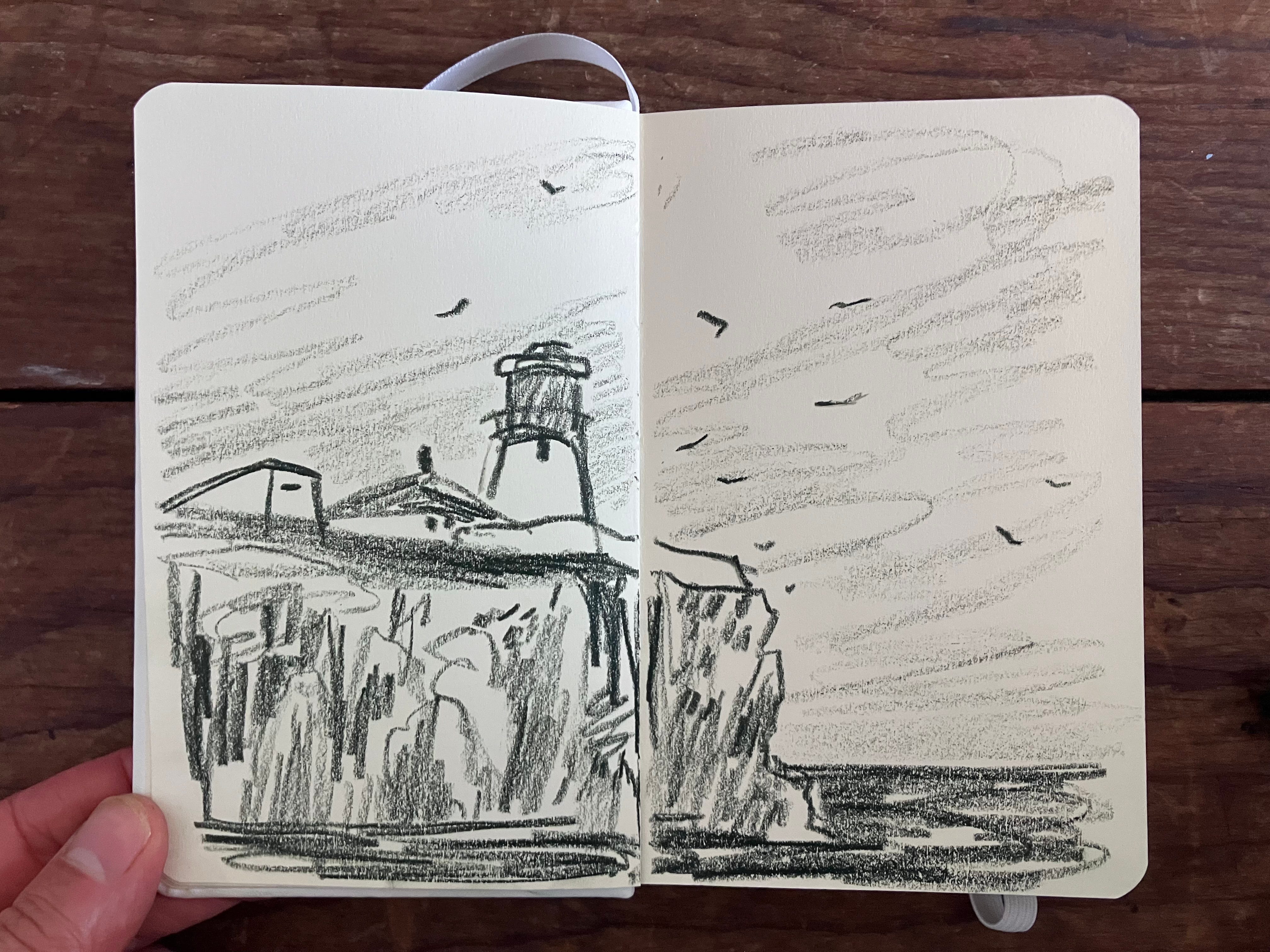
Look at the original reference sketch & ask yourself - what did you do well? What could be improved?
In my example sketch - I liked the inclusion of birds and the movement and scale they added but one of them looked more like an aeroplane! I also noticed that the drawing sat across the centre of the sketchbook in a way I felt detracted from its overall impact.
This process, as discussed, helps us analyse and test. It can help us see that our drawings are malleable. They are material in themselves to be adapted, played with, explored. They can open up new creative pathways! They can help us step away from pure observation and begin to trust our own instincts. Confidence in your decision making is critical in drawing. A drawing progresses one decision at a time after all! Building your capacity to trust in each of those choices can help make the whole process so much more enjoyable.
Try it now:
Leave something out or add something new to improve the composition
In the example above - I added more birds, left out my accidental aeroplane and shifted the composition more to the left. It’s getting somewhere! Next I might add more sky, if I were to keep developing this composition.
What makes a good drawing to draw from?
What approaches might help us get the most out of the process?
Where might drawing from our drawings lead?
These are all questions we’ll be looking at together this month. There are so many ways we can approach drawing from our drawings! I hope you’ll join me for our live calls or replays to discover the fun and benefits for yourself.
Thanks for reading and I hope to scribble with you soon!
Jo
Tuesday 11th August - 1 - 2pm BST
Monday 17th August - 1 - 2pm BST
Tuesday 25th August - 1 - 2pm BST
Thanks for reading Scribbles in the Sky! This post is public so feel free to share it.
Comments
Nothing yet. Say the first thing.
Sign in to join the conversation.