
Something has gone deeply wrong in the conversation between men and women.
Brittle masculinist subcultures flood the digital lives of teenage boys before they've had a first date. Young women, meanwhile, are reporting an extended dry season with less and less interest in dating at all. These, of course, are not two separate weather systems. They are an interconnected climate crisis, each side's alienation feeding the other's.
I don't think it gets fixed by better manners or better dating apps. I think it gets fixed—if it gets fixed at all—years before anyone downloads Hinge, while children are still forming ideas about power, fairness, gender, and what love is supposed to look like.
The terms of relationships have changed dramatically over the last half century, yet we have done surprisingly little to help young people understand why.
Straight women no longer have to tiptoe around male fragility or tolerate misogyny simply because they lack alternatives. Education, economic independence, birth control, and divorce have fundamentally altered what women expect from partnership. They are rejecting the social roles and scripts of heterosexuality and have other sources of purpose and community. It is not they don’t want male love—they do. But they also want equality, shared responsibility, emotional maturity, and respect.
For that to happen, men have to unlearn ideas about masculinity and relationships absorbed from fathers, classrooms, the media and countless everyday interactions that taught them what it means to be a man.
To go from being raised with the assumption—however unconsciously—that your needs and comfort will be prioritized, to being steeped in messages like “the future is female” and “empower women” would be confusing. A boy who has never been taught the history behind those messages may not hear it as a call to correct inequality, but as a message that he is personally the problem. It’s like being handed the slogan without the syllabus. And that’s a vacuum the manosphere has been all too happy to fill.
But even for the men who strive to meet modern expectations, the transition isn't simple. Sensitivity, emotional openness, and communication skills—the qualities many women now seek—aren’t typically modeled or rewarded in boys growing up. And, as Faith Hill recently wrote in The Atlantic, men are often asked to satisfy (supposedly) contradictory expectations: pay for dinner but treat women as equals; initiate romance but never make someone uncomfortable; be confident but emotionally vulnerable; masculine but nurturing.
If those expectations feel contradictory, it's because they're sitting on top of centuries-old gender scripts. Scripts that organized people around gender rather than personality and desire.
It’s like being handed the slogan without the syllabus.
Many men overestimate the power and liberation women have and underestimate how deeply those scripts continue to shape women's lives. And many women are exhausted from repeatedly explaining that to them. Equality feels like such a basic moral premise that having to defend it, or point out the endless ways it still falls short, can be maddening. And, frankly, it isn't women's responsibility to keep educating the men they date, so plenty of them give up on dating altogether.
This exhaustion has a name.
Heteropessimism
The cultural theorist Asa Seresin coined the term1 to describe the increasingly common belief that heterosexual relationships are, almost by definition, frustrating, unequal, and emotionally unsatisfying. Women’s dissatisfaction with heterosexual norms is a major strand of it, but it shows up in men too — the ones who gripe about their nagging girlfriends, or incels who blame women for their loneliness.
The internet offers no shortage of cures. Women are encouraged to master the art of seduction, manipulate male psychology, or embrace tradwife femininity, parking your ambition at the chapel and submitting to your husband so he can feel respected enough to love you (and maybe even do the dishes from time to time). Men are told to reclaim dominance, hierarchy, and "traditional masculinity." The assumption is men and women are fundamentally locked in an adversarial relationship.
These methods promise to help people survive patriarchy instead of helping them understand and dismantle it. Sure, our pessimism allows us to take back control; to laugh through the pain with friends who get it. But maybe, as Seresin asserts, it produces nothing but more of itself.
What if, instead of teaching people to out-strategize, control, and manipulate their way into love and being treated with dignity once they’re already living inside heteropessimism, we taught them where it comes from before they ever get there?
What if we stopped expecting young people to intuit one of the biggest social transformations of the last century and instead gave them the historical context to understand it?
I don’t mean including more of women’s contributions in history textbooks, or assigning more novels with female protagonists, although yes, those too. And I don't mean relationship-skills training or another social-emotional learning unit.
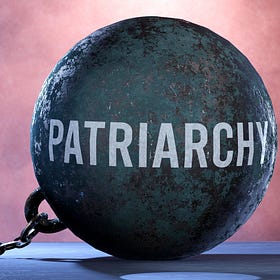
I mean teaching students one of history’s most important explanatory frameworks: the concept of patriarchy
We already teach certain frameworks. We teach capitalism, colonialism, slavery, fascism, communism, and democracy not simply because they happened, but because they continue to shape the world students inhabit. These systems help explain how societies were organized, how power was distributed, and why the present looks the way it does. We don't teach these frameworks to tell students what to think. We teach them to help students think.
Patriarchy deserves to be taught for exactly the same reason.
At its simplest, that means teaching what it means to be part of a social system that has historically organized power, authority, and resources around men, while assigning women and men different roles, rights, and expectations. Understanding patriarchy as a social system is useful in a way that goes beyond activism or ideology.
Students stop memorizing that women couldn’t vote until 1920, that married women once lost their independent legal identities under coverture, and that women were welcomed into the workforce once men went to war as isolated trivia. They begin asking the more interesting questions: Why were these rules created? What beliefs justified them? And how much of that logic still shapes our lives today?
Instead of a series of disconnected facts, patterns begin to emerge. That’s the beginning of critical thinking.
We don’t teach these frameworks to tell students what to think. We teach them to help students think.
Right now, we wait until college and hope the students who most need a gender studies course happen to enroll in one. But by then, many young people have already spent years absorbing explanations about gender from TikTok, YouTube, dating podcasts, grifters with monetization incentives, and algorithms.
I don’t think most students (let alone adults) grasp the extent to which women have historically been treated as less fully human than men. From biblical law to English common law to the early American republic, women’s rights, bodies, voices, and choices have repeatedly been subordinated to men’s. That pattern determined who was considered capable of reason, leadership, ownership, education, political participation, and even full legal personhood.
Understanding patriarchy reveals how deeply gender shapes the way we see the world. It helps us recognize that knowledge itself gets shaped—and sometimes distorted—by cultural assumptions.
Science itself offers a useful lesson. Researchers often assume they're simply observing reality, when in fact they're also interpreting it through the lens of their culture. For decades primatologists watched monkey troops and centered the story on male competition and dominance. Then researchers like Sarah Blaffer Hrdy and Jeanne Altmann took a look and discovered that females weren’t just passive background characters. They were making choices, forging alliances, and shaping the social lives of their groups in ways earlier researchers had largely missed.
Similarly, anthropologists celebrated “Man the Hunter,” as though human civilization had been built almost exclusively by men with spears, overlooking the extensive evidence that women’s labor was essential to human survival. In medicine, male bodies became the default, delaying breakthroughs in everything from heart disease and pain to ADHD, autism, and female sexual health.
These weren’t neutral oversights. They were the predictable result of viewing the world through a narrow lens. What if children understood that the growing diversity of researchers in these fields led directly to different questions being asked, different patterns being noticed, and greater accuracy overall?
Maybe they'd be less inclined to dismiss diversity as a woke political project and more inclined to see it as a pathway to better questions and better science.
When you understand that women's current wariness of centering men isn't just a trend, but the accumulated residue of a very long, very specific history, the "empower women" messaging stops looking like an attack on boys and starts looking like a correction to a system — something to evaluate on its merits rather than take personally.
Teach students the history of patriarchy and suddenly the world starts making more sense. Here are a few ways that understanding might show up in their lives:
Beauty ideals are downstream of a long history in which women's bodies were priced, displayed, and trafficked as commodities, and that history has left fingerprints on what we now call attractive. Knowing this, women and girls might reconsider trading freedom for beauty, enduring physical and psychological suffering in pursuit of an ideal that never stops moving. That context matters in an era of filters, influencers, and dating apps that reduce people to a photo grid or a swipe.
Dating scripts—who pays, who initiates, who’s expected to pursue and who’s expected to be pursued—aren’t timeless rules of attraction. They’re leftovers from an era when women had little independent economic power and courtship was, in many ways, a financial negotiation. Once they recognize these scripts as historical rather than natural, they can decide which traditions still serve them and which they’re simply running on autopilot.
Long-term relationships tell a similar story. Emotional labor in relationships— remembering birthdays, knowing the shoe sizes, managing the household’s feelings—still falls disproportionately along the same lines patriarchy assigned centuries ago, when women’s value was tied to caregiving and men’s to providing. Recognizing that division as historical rather than natural is the first step toward renegotiating it instead of resenting a partner or pretending not to see it.
The same framework changes how boys understand themselves. Men’s emotional stoicism—the pressure not to cry, ask for help, or admit fear—is as much a patriarchal inheritance as any constraint placed on women. If women were cast as weak, men had to be cast as strong: invulnerable rather than emotionally expressive, dominant rather than nurturing, sexually experienced at the expense of respect, consent, and genuine intimacy. Understanding that helps boys recognize the costs patriarchy has imposed on them, too, rather than experiencing gender history as a story about blame.
It also helps explain women's mistrust of men. It isn’t simply a personality trait or a bonding ritual among girlfriends. It's a rational response to generations of harassment, discrimination, and violence. Naming that history explains the caution without requiring every individual man to personally account for it.
Gender policing creates unnecessary identity confusion. Too many children grow up believing they're bad at being a boy or bad at being a girl, when they're just bad at squeezing themselves into a stereotype. Aggression, tenderness, ambition, and nurturance aren’t inherently masculine or feminine. They’re human capacities that can be expressed well or badly by anyone. Understanding where those stereotypes come from frees young people to become more fully themselves instead of performing who they’re told they’re supposed to be.
Consumer culture becomes easier to decode. The pressure to prove masculinity or femininity through clothing, body types, cosmetic procedures, achievements, or possessions is itself a marketplace built around gender. Recognizing those expectations as manufactured rather than natural makes it easier to stop performing gender and start making choices that actually reflect who you are.
Imagine what that could look like day to day.
Girls could believe their worth has more to do with the lives they build than the faces, voices, and mannerisms they feel pressured to police and present to the world. Boys could stop treating emotional openness as a threat to their masculinity.
Women could spend less time with their friends dissecting the latest Tinder date who turned hostile the moment she wasn't interested, or the husband who still doesn’t get why the mental load feels so crushing, and more time talking about books, work, travel and her internal life. They could walk to their cars without keys threaded between their fingers. A woman could say she doesn't want children without hearing that she'll change her mind. And when women voice a complaint, men might actually engage with their concern instead of dismissing it because it’s delivery wasn't softened and perfectly expressed.
Men, too, would have more room to become fully themselves. He could choose a lower-paying but more meaningful career without having to defend his masculinity. He could tell his friends he's scared or struggling and trust that they would stay in the conversation instead of cracking a joke. A father could take paternity leave without feeling it signals insufficient ambition, because he would not be the exception. He could ask for help or directions without experiencing it as a small failure.
If we want children to become thoughtful citizens with healthy relationships, we cannot teach them only the history of presidents, wars, and inventions while leaving out the system that shaped who was allowed to become a president, who was allowed to be educated, whose inventions were recognized, and whose voices were ignored.
Kids who understand how gender roles were constructed are better equipped to recognize when an arbitrary hierarchy is being handed to them disguised as common sense. More importantly, they're better equipped to imagine—and create—something different.
For easy ways to explain gender relations and sexism to kids, your partner, your parents, or or even yourself, check out Sexism & Sensibility: Raising Empowered, Resilient Girls in The modern World
Or take a look at my latest for Stop Sexual Assault in Schools: What to Say When You See Sexism: A Practical Toolkit for Teachers, Parents, Adult Allies, and Students
Male Bashing Is Not the Same as Female Empowerment
·
February 14, 2024

The day after Miley Cyrus’s megahit, “Flowers,” a song about female independence, won two Grammys, the parent of a 16-year-old straight girl I see in therapy happened to leave me a voicemail asking if I could help her daughter not despise men. She added, “She’s got a good dad, and her brother has a good heart when he’s not being a jerk, but she and her friends act like they’re too cool and independent to date. Apparently it’s more fun to bash men”
Breaking Free: Boys and the Chains of Patriarchy
·
June 5, 2024
In graduate school I had the privilege of being a research assistant for the famous “Still-Face” experiment” with its creators, Ed Tronick and T. Berry Brazelton. This experiment was pivotal in showing that parental attunement is essential to an infant’s thriving and development. If you don’t know about the Still-Face Paradigm, I recommend you watch
Is The P-Word Just Feminist Rhetoric?
·
June 5, 2025

We toss around the word patriarchy—and its byproducts, misogyny, and sexism—so often they can start to feel overused or stripped of meaning. I was initially hesitant to even introduce the word patriarchy into my book even though the entire book is about sexism. But I quickly realized, there’s no more accurate word to describe a culture whose core institutions—modern democracy, medicine, the justice system, even the nuclear family—were designed by and for men, even though women depend on them too.
Asa Seresin later began calling it heterofatalism to avoid confusion with Afropessimism
Comments
Nothing yet. Say the first thing.
Sign in to join the conversation.