
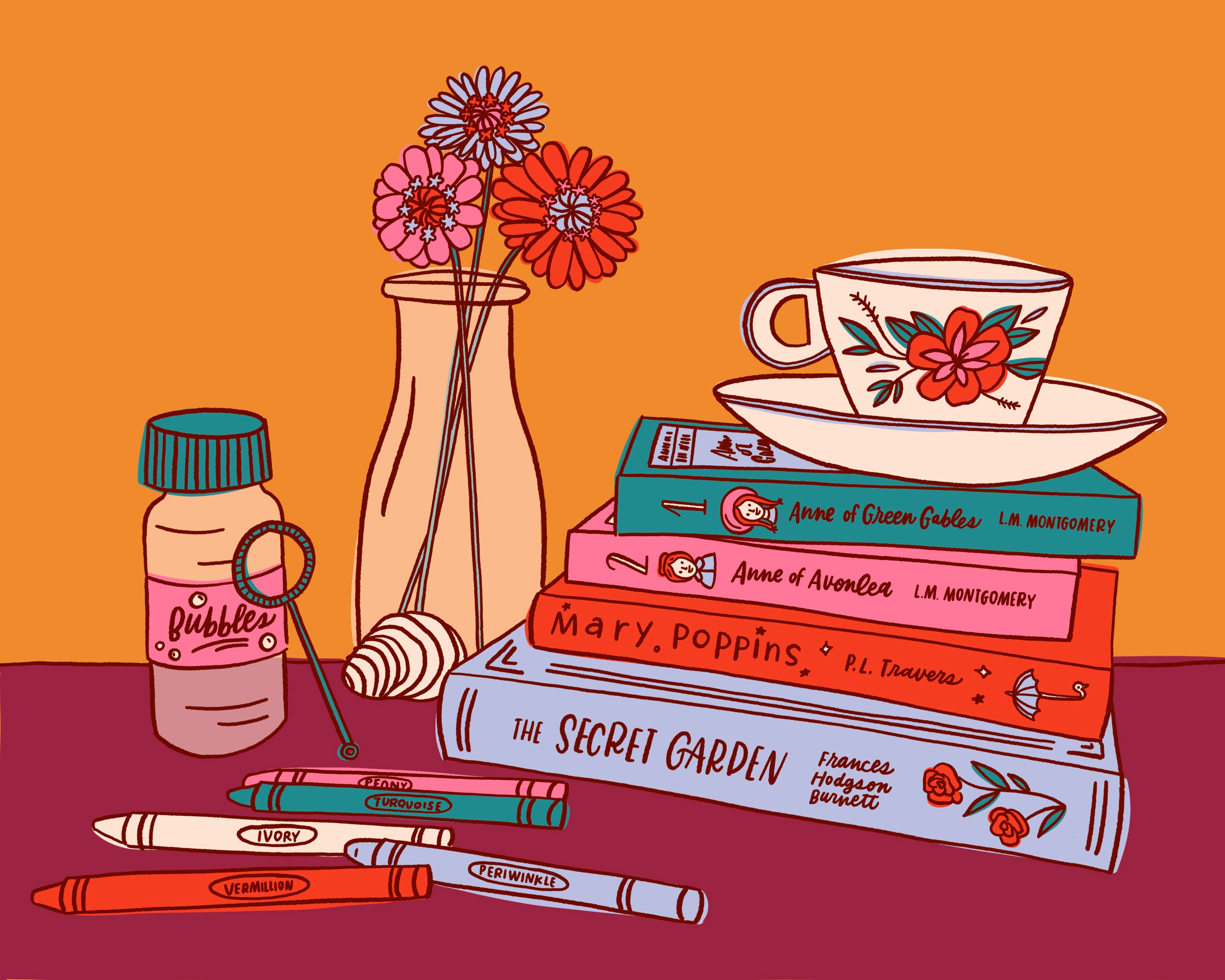
These timeless classics are rich with all that is good and true about life. They are abounding in meaningful friendships that push you to grow. They don’t shy away from the hardships of life; instead, they offer tried-and-true solutions to grow in virtue amongst life’s trials.
My 6-year-old daughter, Liesel, has been one of my greatest teachers. From the moment she was born, she taught me to slow down, live in the present moment, and how to look for magic in the everyday.
I remember holding her in my arms shortly after she was born. I gazed into her dark but bright eyes as she gazed back at me. Her intent stare seemed to see past my eyes and directly into my soul. I clasped her tiny fingers and considered never moving from this moment. Her very existence felt like a miracle, like magic. I worried if I blinked or looked away, she might disappear, so I was content to stay in that moment with her—still and quiet, seemingly doing nothing and everything all at the same time.
I’ve always been a high achiever, and I have had a habit of demonizing rest. My inability to slow down and take care of myself has not served me well, and I resisted the need to change until Liesel made me a mom.
As she has grown older, she has reignited my sense of wonder. I’ve always maintained a childlike wonder about the world (a trait I inherited from my parents), but she stoked the dulling embers to a roaring fire. Seeing the world through her eyes meant magic was around every corner again. The trick to seeing magic is the same as the one she taught me as she lay cradled in my arms on the day of her birth—blink, and you might miss it.
In the spirit of revisiting a childlike sense of wonder, I poured myself into classic children’s literature. I read books I read as a child and ones I’d always meant to read.
I’ve learned that my life can’t be so full of obligations and chasing accomplishments, or I’ll miss the beauty in the present moment. I can’t fill every second of my day with tasks and to-do lists if I want to relearn how to view life through the eyes of a child.
This summer, I deleted social media from my phone, wrote no new articles on Substack, and tackled nearly no new illustration projects to focus solely on being present with my family. I did what felt like a modern form of rebellion—I opted out of the online world to pour more time into the real one. I took to heart the words of American poet, Mary Oliver:
“And I am thinking: maybe just looking and listening is the real work.”
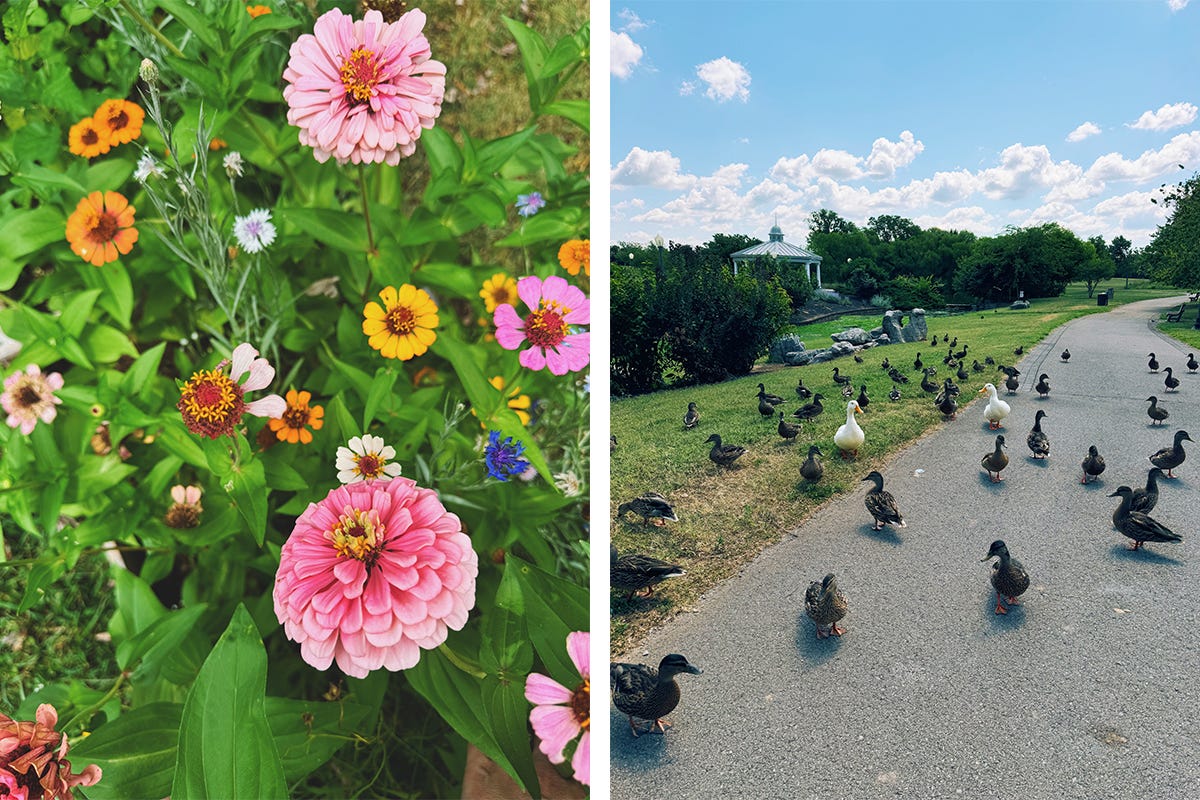
We planted a vegetable garden that died rapidly in the oppressive Tennessee heat, but that’s not the point, is it? We grew a cut-flower garden of zinnias, cosmos, and wildflowers to cut to make homemade bouquets for our elderly neighbors. We fed the ducks (a lot of ducks).
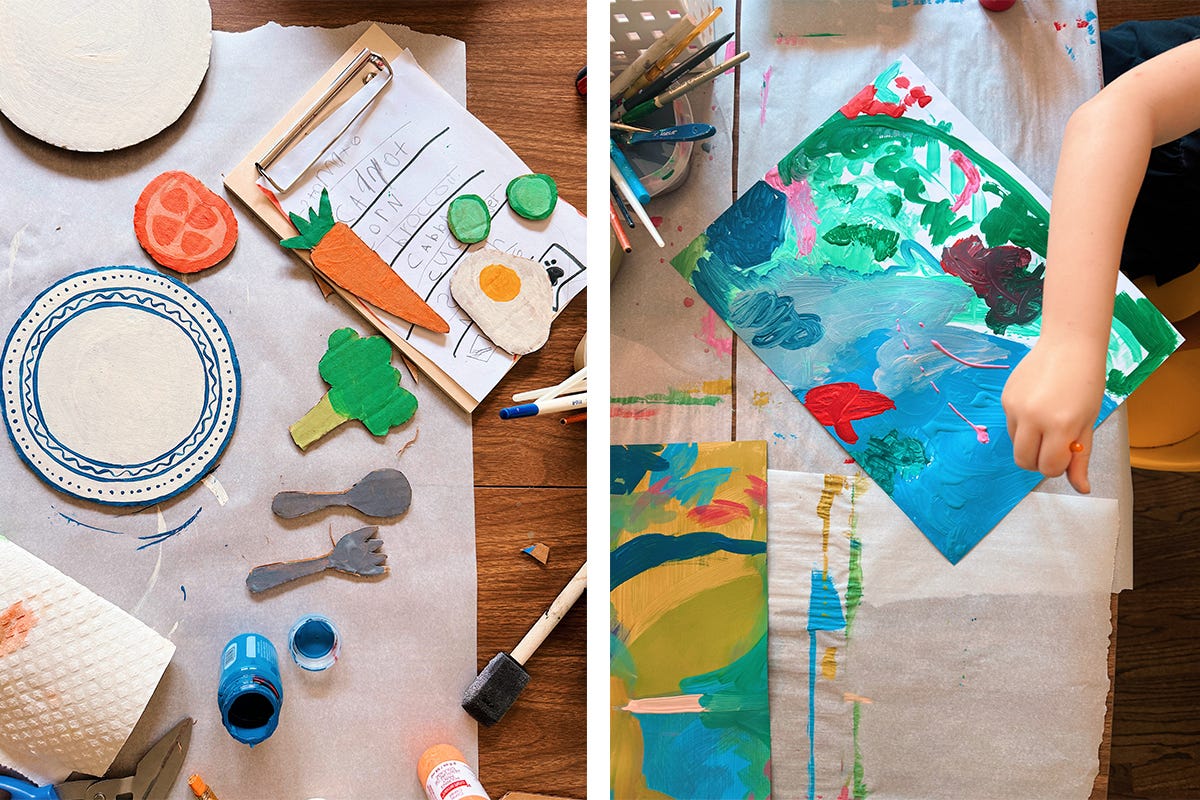
We painted abstract art and made toys out of cardboard. We hosted tea parties with stuffies while listening to Tchaikovsky with our pinkies in the air. We went to the beach while pretending we were a family of royal mermaids.
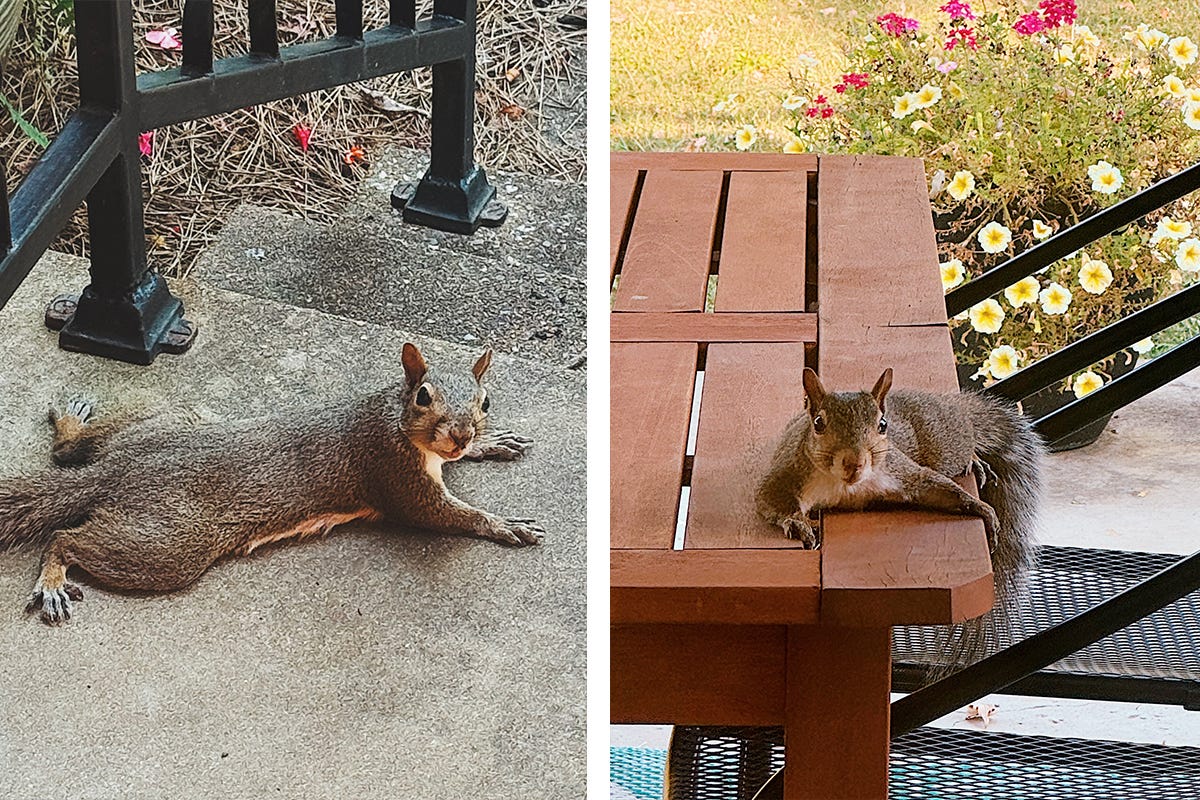
We continued to feed a squirrel named Sam, who, at this point, has essentially become an outdoor pet. He arrives at our door for walnuts every morning (and late morning, and afternoon, and night). We started our mornings in prayer and ended them with bubbles. We committed to seeing magic everywhere.
In the spirit of revisiting a childlike sense of wonder, I poured myself into classic children’s literature. I read books I read as a child and ones I’d always meant to read. When I cracked open the spines of novels like Anne of Green Gables or The Secret Garden, I expected to find a sweet and simple child’s version of the world—one I’d like to visit from time to time. I hadn’t anticipated wanting to live permanently within the pages of these novels.
These timeless classics are rich with all that is good and true about life. They are abounding in meaningful friendships that push you to grow. They don’t shy away from the hardships of life; instead, they offer tried-and-true solutions to grow in virtue amongst life’s trials.

Reading Anne of Green Gables and later Anne of Avonlea felt like I was revisiting a childhood friend (my poor husband feels like he visited her too based on how many times I would stop and read a whole passage to him). I went on absurd but highly entertaining adventures with Mary Poppins. I became quickly devoted (just as I had in childhood) to Aslan in The Lion, the Witch, and the Wardrobe. I was reminded of the healing power of good friendships and time spent in nature while reading The Secret Garden.
I’ve spent some time wondering why I ever stopped reading kids’ books in the first place. Perhaps it was born out of an adulthood arrogance that deluded me into thinking I was too old, too mature, too well–read to read kid’s literature. But the secret is you are never too old for a well-written children’s book, and if you think you are, that’s evidence you probably need to read them all the more.
My 95-year-old neighbor is evidence that you never outgrow children’s classics. Early in August, I asked her if she’d ever read Anne of Green Gables. When she said she hadn’t, I immediately bought her a copy. She grew up in a world much like Anne’s, and I was sure she’d love her as much as I do.
A few weeks after I gave her the book, she invited my daughter and me over for a slice of homemade strawberry cake. We sat around her kitchen table, the zinnias from our garden sat in a mason jar atop her lacy doile tablecloth. She was eager to share her thoughts about Anne.
“Oh, Joanna. That Anne! She sure knows how to make a mess of things, but don’t you just love her anyway?” She went on to say, “This is the kind of book you just might need to read at least 2 or 3 times.”
And that’s what is so special about a good children’s book—they beg to be lived in, to be read over and over again.
No posts
Comments
Nothing yet. Say the first thing.
Sign in to join the conversation.