
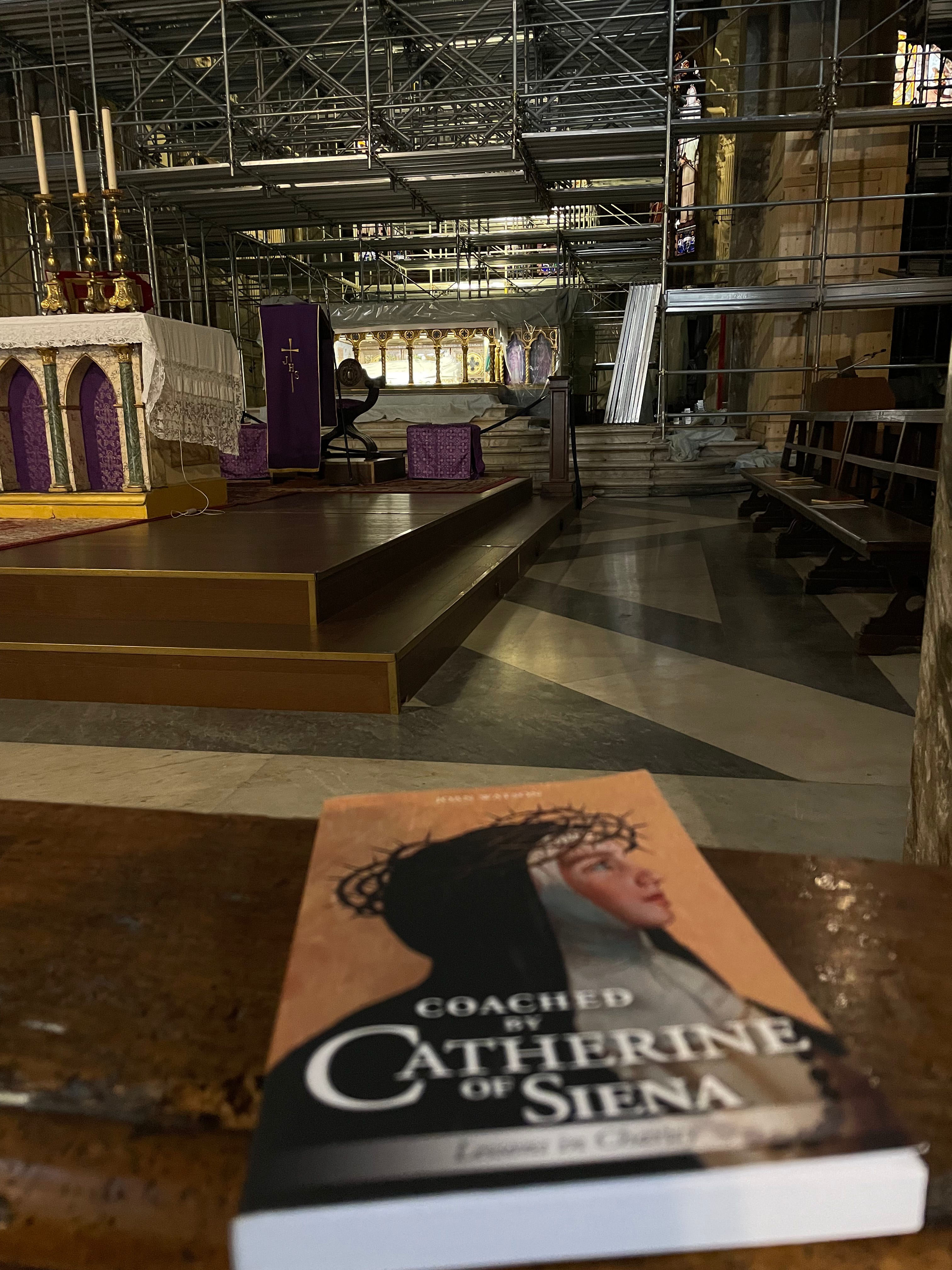
The last section in my book focuses on loving the Church.
Let’s be clear here. When people toss ideas around such as we’ve never seen darker times in the Church or that we’ve never faced scandals and failures in leadership like we’ve endured this last years, I have to point them to Catherine’s day. She dealt with some real doozies.
Are schisms still happening in the Church today? Sure. There’s a huge one we take for granted now, which started in 1517. And there are many others happening in people’s hearts and minds as they speak words of loyalty but tweet division and hatred.
If anyone found reason to bad-mouth the Church, it was Catherine. (Along with Joan of Arc, but that’s for another book.)
But she didn’t.
I have been disappointed and hurt by people in the Church. I have friends who have been abused. I have friends who have been slandered and abandoned by leaders that were supposed to be their fathers. The sexual abuse scandals, mismanagement and leadership failings, and public arguments among bishops and other Church leaders have Catholics across the globe feeling unmoored.
Is it naive to be in love with such an unloveable Church?
Is it foolish to evangelize and invite people to join a Church that has hurt you?
If you have been hurt by the Church, I am deeply sorry. You will not find all the answers in these pages. There is no story, definition, or Scripture verse that will make the hurt disappear or make complete sense of what happened to you.
But as a fellow earthen vessel, I pray that Catherine can help us love the Church even in her brokenness.
“What debt do we owe the Church? A proper respect, a filial love — and not only in words but by coming to our father’s aid in time of need, as true children. We should consider any harm done to him as if it were done to ourselves, and we should contribute whatever we can to deliver him from his enemies beforehand.
But we do just the opposite. We pick up a false excuse, saying, ‘His sins are so great that we get nothing but evil from him;’ so he doesn’t deserve respect or assistance. If only he were what he is supposed to be, and would attend to spiritual affairs rather than temporal!’
And so, thankless and unappreciative as we are, we give him neither respect nor obedience nor assistance. In fact, we often sabotage those who want to help him, with great disrespect, as people blinded by selfish love. We don’t see that our excuse is faulty because we must never in any way hold back what we owe or fail to pay our debt, whether he is good or evil. Our respect is not paid to him for his own sake but to Christ’s blood and to the authority and dignity God has given him for our sake. That authority and dignity are not lessened by any deficiency in him, nor does he administer that authority in our regard with any less power, nor is its strength diminished.
We, therefore, must not lessen our respect or obedience, or we would be living in a state of damnation. Nor must we refrain from helping him, since to help him is to help ourselves. And because his deficiency does not prevent our getting what we need from him, we should be grateful and appreciative and should do what we can for the good of holy Church and for love of the keys God has given to the pope.”
-Catherine of Siena
Don’t forget- these are the last few days to take advantage of the promo code CATHERINE20 on Scepter’s website to get 20% off!
Thanks for reading Joan in Ordinary Time! This post is public so feel free to share it.
No posts
Comments
Nothing yet. Say the first thing.
Sign in to join the conversation.