
Digging in with Joan Fernandez” is a weekly newsletter with ideas for you on shattering limits to reaching your true potential, told through bits from the life of Jo van Gogh (the woman that would not allow Van Gogh to die twice). Please sign up here.
If only I had a crystal ball. . .
If only the right tea leaf pattern could accurately predict my future. . .
Because then I could make my move. Declare my decision. Swagger my strut! All with radiant inspiring confidence, right?
Except that it’s becoming clearer to me that confidence does not lie in the future. It’s an illusion to cling to what I think I want, instead of wanting to be where I am.
This moment, right now, percolates ideas. Jump ahead too fast and I run the risk of overlooking what’s at hand, listening to others’ opinions instead of my own voice, rushing a decision.
Let me share a story about Vincent and Jo van Gogh to illustrate.
At the end of May, 136 years ago, a train pulled into a small village north of Paris, carrying a broke, troubled artist and a crate of supplies.
Like the teetering of a domino before it falls, Vincent van Gogh didn’t know it, but that step off the train in Auvers-sur-Oise was the first tip—the precise moment that set in motion a spectacular, unstoppable chain reaction between a lifetime of work and then the representation of it.
For in the next 70 days he would add to his inventory one final, feverish outburst of creativity. In just over two months he would produce a staggering 74 paintings and more than 30 drawings and sketches. An average of more than one painting per day.
These works would become the final, crowning addition to the colossal lifetime output of roughly 900 paintings and 1100 drawings Vincent produced in his short life time.
Six months later, after he and his brother Theo were deceased, the sea of canvas would constitute an overwhelming inheritance. It would be Jo—his sister-in-law— who would ultimately need to protect, position, and shepherd it into the world.
Where the rest of the world saw a tragic end and a mountain of unsellable, avant-garde paint, Jo saw raw potential. Entrepreneurs often see what others don’t: an ordinary problem that could be solved, value where others see only waste. This vision—and knowing what to do with it—is magical.
It’s a magic that’s making Jo increasingly relevant for today’s independent thinkers. Credit the gig economy or a collective yearning for self-direction, but entrepreneur fervor is alive and well. I’ve spent the last several months sharing Jo’s twelve core strategies in a presentation designed for modern business owners, and seeing the increasing demand for that talk made me realize something bigger: it’s time to write the non-fiction book.
For the ideas Jo executed in the 1890s are just as vital, transformative, and empowering in 2026.
Here’s one of her core strategies: Jo didn’t just sell the paint on the canvas; she preserved, curated, and framed the letters Vincent wrote to tell the story of a tragic genius. As the eminent Van Gogh scholar Hans Luijten documents in his research, Jo realized that the public couldn't separate the art from the artist.
By slowly introducing Vincent's raw, deeply articulate, and heartbreaking letters to the world alongside his art, she didn't just find buyers—she created a cultural phenomenon. She taught us that a true masterpiece requires both a visual canvas and a compelling human story.
Now, in a modern marketing textbook, Jo's strategy would be labeled as “brand storytelling” or “transparency marketing.” Long before corporations realized that vulnerability drives consumer trust, Jo was utilizing Vincent's letters to build an unbreakable emotional connection between the artist and the audience. Her efforts were so effective and heartfelt, this emotional connection continues today.
And it’s commonsense. It’s relevant. A talk I gave last week to the St. Louis Female Investor Group is the perfect example.
Imagine a conference room energized by an inclusive group of engaged, energized women with diverse backgrounds gathering for education and evaluation of entrepreneur pitches.
Take, for instance, a moment from that evening that perfectly captured this synergy: Two female founders stood before us, pitching an innovative end-to-end distribution model designed to bring trust and credibility to consumer brands in emerging global markets. It was a brilliant, highly strategic solution to an incredibly complex problem, yet they were facing a universal scaling hurdle—how to fund and navigate the logistics of a rapidly expanding regional supply chain.
Right there in the room, the three pillars of the group instantly went to work:
Supporting Female-Owned Businesses: The group didn’t just offer blind encouragement; they offered the rigorous feedback those founders needed to succeed. While the room collectively evaluated whether the capital injection was viable, a seasoned executive stepped forward with candid mentorship, offering direct strategies to help them restructure their distribution model and tighten up their pitch for the next room.
Fostering Financial Education and Literacy: When the group dove into the numbers, things got real. The initial valuation felt too rich for the risk involved, and the quoted revenue numbers were inconsistent. But instead of shutting down, the room transformed into a live masterclass. The sharp, targeted questions asked by experienced members became a collaborative, jargon-free lesson in risk management, empowering everyone in the room to understand how to spot financial red flags and evaluate true equity value.
Building a Resilient Economic Network: Even with a risky venture, collective wisdom was pooled. By sharing diverse perspectives on international trade, IP protection laws and regional logistics, the network did exactly what it was designed to do: it protected the group’s capital while providing the founders with invaluable, real-world stress testing that money simply cannot buy.
Notice how their exact modern goals mirror the private, strategic letters and calculated business moves Jo van Gogh had to make in her own era. Jo, too, had to master the complex financial mechanics of the 1890s art market, offer unwavering mentorship and belief to an unproven creative asset, and fiercely build a network of international dealers to ensure a sustainable legacy.
In that St. Louis conference room, 136 years later, the tools have changed, but the magical blueprint of female economic empowerment remains exactly the same.
You don’t need a magic 8-ball to make your next move (Besides my favorite roll is no help: “Reply hazy, try again” lol!).
A part of me wishes the future would perfectly align before I declare a decision, but that’s not going to happen. Besides, waiting runs the risk of running out of time altogether.
Looking at the staggering output Vincent produced in his final 70 days, or witnessing the sharp, collaborative debate of modern female investors, reminds me that real confidence belongs to the present.
That is exactly why I stopped dilly-dallying for the perfect future moment and have decided to write this non-fiction book now. Jo’s twelve strategies aren’t just historical artifacts; they are a living, breathing blueprint for how we can navigate our own complex entrepreneurial landscapes in 2026. It’s time to make these readily available.
I want to get this book out to you as soon as possible, but in the meantime. . .
The blueprint is already in your hands; I can feel the energy.
Let’s go!

P.S. Because the die inside the Magic 8-ball is a 20-sided regular icosahedron, each of these answers has an exact 5% (1 in 20) chance of appearing on any given shake. This means Jo van Gogh actually had better strategic odds relying on her own intuition than anyone ever would shaking a toy—the ball gives you a 25% chance of a non-answer and a total toss-up for the rest!

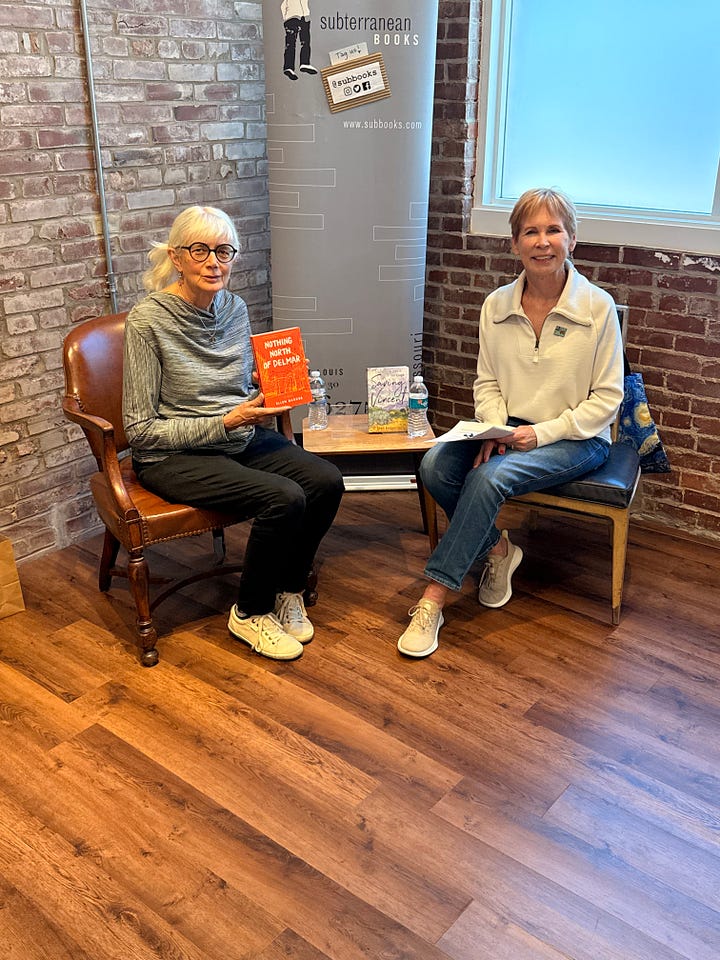
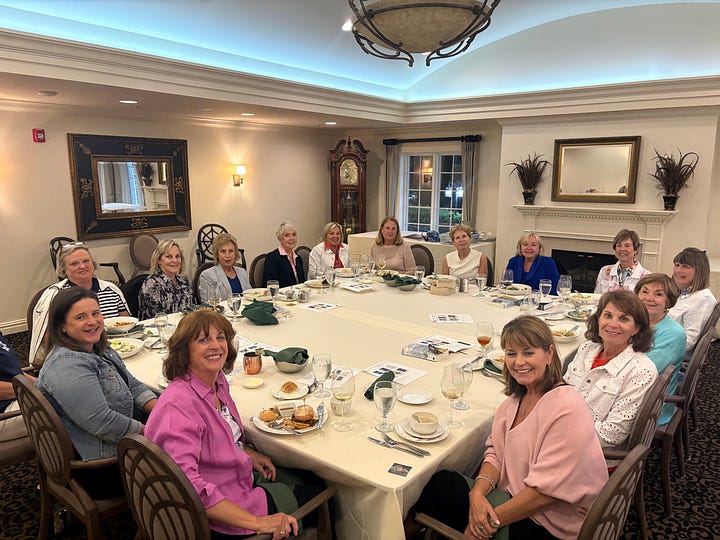

(Captions are left to right)
Terrific evening with the St. Louis Female Investor Group, presenting my “Building a Billion-dollar Legacy” talk. I’m pictured with founders Asma Usmani, Carol Lister and Siresha Samudrala.
What happens when two authors talk histfic shop: Ellen Barker and I are in conversation at Subterranean Books.
Wonderful Saving Vincent conversation and dinner with a St. Louis book club!
Cheerful sunflowers celebrate Van Gogh at this lovely book club luncheon!
What would happen if we stopped letting history sideline courageous women—and started reclaiming their rightful place? Imagine a world where their stories weren’t hidden, but held up as beacons that shatter the limits we’ve inherited.
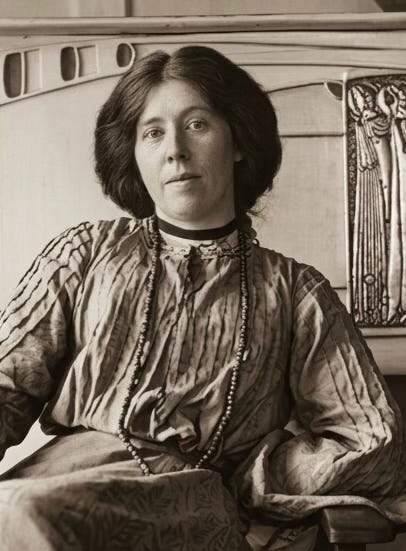
Margaret Macdonald Mackintosh (1864–1933) – Art Nouveau designer A British artist who worked in Scotland, and whose iconic design work became one of the defining features of the Glasgow Style during the 1890s to 1900s.
Margaret Macdonald Mackintosh was a visionary Art Nouveau designer whose ethereal, symbolic panels helped shape the distinctive style of the Glasgow School. Her work deeply influenced her husband, Charles Rennie Mackintosh, yet she was often credited merely as his “assistant.” Behind the dreamlike beauty of their shared aesthetic was Margaret’s bold, imaginative voice—integral, not incidental. Today, her contributions are being reclaimed as central to the movement she helped define.
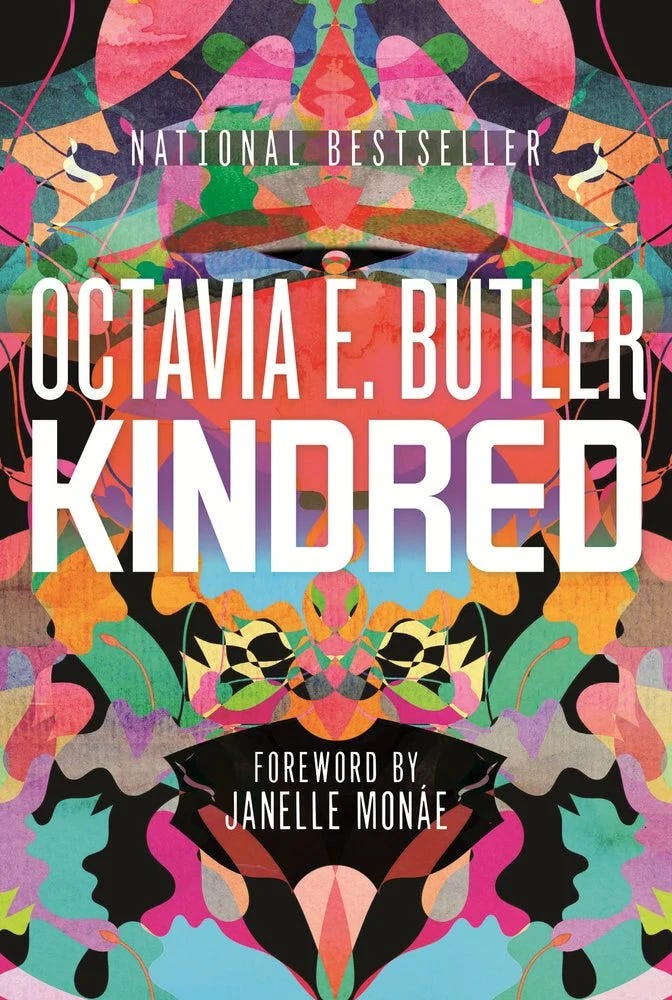

Kindred: A masterclass in genre-blending storytelling. Now I know why Octavia Butler’s Kindred is a modern classic. By mixing head-spinning fantasy time-travel with unflinching, visceral realism of historical fiction, Butler jolts the reader directly into the horrors of antebellum slavery. It’s an unsettling, profoundly nuanced study of power, resilience, and survival where the stakes couldn't be higher. Her complex characters navigate power dynamics, manipulation and survival with the constant risk of losing her life. Profound and powerful.
Well-Read Black Girl: Fresh from reading the provocative fiction Kindred, I pulled a volume of essays out of my TBR stack: Glory Edim’s Well-read Black Girl’s collection of essays. The twenty-one essays are a terrific celebration of self-definition, community, and the vital importance of representation. Two of the essayists—Jesmyn Ward and Gabourey Sidibe—share the powerful moment of first seeing themselves in literature. Their essays are fantastic heartfelt indictments against today’s book banning tidal wave. Plus, the collection includes reading lists of historical and contemporary Black authors. More reading gold for my TBR stack!
Order Octavia Butler's Kindred Here Order Well-Read Black Girl Here
Comments
Nothing yet. Say the first thing.
Sign in to join the conversation.