
I was five when my father bought our first TV, a Zenith. It had a small screen, like a dinner plate, and a tuning knob that you had to twist with both hands. When I was old enough to sit still and settle down before the set, it along with my parents, formed what I think of as our third parent. It taught us, day after day, showing us wash-out black-and-white films, without ever letting us down.
Father worked,mother worked twice as hard and the television made sure that we, the others, were properly educated. The way the work was divided between us was never a problem
Perhaps it isn't, these days. I'm 67. Perhaps if my early-viewing diet had made room for some later, more subtle shows, the frontier melodrama and the lawyer shows that gave us a code of conduct that wasn't openly discussed, we might have ended up differently.
The TV was positioned so it was visible by anyone sitting at our kitchen table, which is where, it seemed, my father lived. He sat in a recliner that faced the set so that to change channels, he had to get up, which gave him a vested interest in any programs we might see. He seemed, from his vantage-point, to have the better life than us, the couch potatoes. We kids sat around him, no different than when he and Mom would pull up to the communion rail, to watch.
No one bothered to look, not if it was turned off. When it was on, we still hardly noticed it, like the porch lamp or the dinner bell for 6 o'clock; it was just the world as it is.
There was a ritual to it, none of us ever put a name to it. Mother would finish drying her hands on the apron she wore to clean up, as soon as the theme music to the news began, as if it still had to do its duty. My sister took the good end of the couch by virtue of arriving there first, which none of the rest of us dared question. She got up from the dining room easier than anyone else, as soon as the meal was over. I sat on the floor close enough to the TV to see the little sparks shower down from the edges of the screen, close enough that Mother would tell me to move, before I hurt my eyes, which I never did, she never made me. That was how it was most nights, we had places we sat, we had our own seating plan, we all gathered like a congregation that had long since forgotten about the ushering. And it's likely that the best and worst things I learned in that decade, never came from the TV, but from the hushed murmur of the family, sitting in the dark all facing one direction, waiting for some sign, none of us could say what.
The Frontier as a Morality Laboratory
Let's start with the westerns. Frankly, most of the time, there was nothing else to watch. Gunsmoke, Have Gun Will Travel, Rawhide, Wagon Train, The Virginian, The Big Valley, Bronco, all those showed us that the wilderness, so distant from any laws, could be kept orderly if upstanding men, willing to do the work, stepped up.
Gunsmoke, Father's favorite, I still remember the first time I heard the title, was a big one; but Have Gun Will Travel seemed to get my father's best attention, week in and week out, for his seven o'clock spot. Each day, around seven, Father watched the man with the walking stick, with his neatly folded card, bring the villain to justice. Always there was the Pabst beer the sweating barman would have placed in front of my father, on a sweat-soaked mat.
The thing about the men in these shows that struck me most deeply was that their guns only got picked up because no other man was available to take that responsibility on. The way Lucas McCain took Mark on his ranch the size of Texas and didn't say a word about it was his way of saying it was the normal thing to do, a single man raising an his son.
Paladin quotes Shakespeare to a would-be mob leader from beneath his straw hat before, when it was legal to do so, accepting the contract. I was so sure he would be considered a man of word, though I didn't know of the contract for a lynch mob until later.
There's one particular episode of Gunsmoke for which I have never seen any details but that I will always remember. It was about a rancher who, with his knowledge of the local laws and fine print, used his leverage to deny his neighbors the water they needed to survive. There was, technically, nothing criminal about his actions, he had papers on the laws he'd used, and no one on the farm was smart enough to read the papers, let alone understand them, and so nothing for the law, which was a very long way from town, to do. What I remember about the Gunsmoke episode was the town decided to step in, using its own brand of intervention, to ensure justice.
It wasn't a shot in this one, but I learned more from that one episode about the difference between law and justice than any episode involving shootouts. The moral: in the face of legal inequity, the citizens must ensure justice prevailed. That the law in the west was, as was put many times on shows, a long way from town, and it was up to responsible citizens to see that justice was done anyway.
That was a lesson in political philosophy, a lesson none of those shows admitted to, but it was a lesson they all lived. The law will always be late to the game, if at all, and it's the responsibility of individuals to take action when it lags.
The Court, the City, and the Case Against Easy Answers
Perry Mason was an interesting man because he was one of the few fictional attorneys who acknowledged that the system he worked within was rigged to convict, not to exonerate.
I still remember one episode in particular, where DA Hamilton Burger seemed ecstatic after his preliminaries, leaving me squirming in my seat. He'd set up this poor little defenseless man for the kill, and even though we, the viewing audience, knew he was innocent, we could feel the frustration of this helpless little man at the mercy of a skewed system. That was something that those programs had in common: they made us care wholeheartedly about a person doomed to fail in the eyes of the system, but who would, of course, ultimately prevail just in the nick of time, usually five minutes before the end of the show.
The Defenders tackled the really sensitive issues, the ones that other programs steered clear of, like abortion, the blacklist, the draft. The Fugitive showed us how important it was for ordinary citizens to help the innocent avoid being punished, and how their ordinary efforts could work to bring the guilty to justice. Route 66 revealed to us that our country's heartland was not simply cowboys and Indians and that some problems could be solved in ways that did not involve simply killing the bad guy.
My guess is that for anybody who watched those shows seriously, their conclusion would be the same: someone needed to act to bring about justice or justice would never be served.
The War We Watched From the Couch
Combat! was our generation's five-year lesson on what Vietnam was truly about, by presenting, indirectly, a different war. But we had already figured it out through other programs.
My cousin Danny used to join me on Tuesday nights to watch Combat! before his service turn, sitting so close to the set that my mother would warn us to move before our eyes began to cross. He could chat endlessly about other things, ball-games or his mother's meatloaf, but as soon as that familiar theme music began, his voice would fall silent until it had faded away.
Danny came home eighteen months later, and he was not the same. He had become polite in a way he had never been before, and that was worse than if he had returned a raging alcoholic, because at least I would have known what to do with an alcoholic. He watched Combat! with me a couple of times during my first year back home, in the same spot on the floor where he used to lean close enough to make my mother worry about his eye sight, and he didn't say anything at all, not even during the moments that used to make him grab his knees in a white knuckled grip. I kept the same volume, and the same night, and everything else the same, as if by some miracle the very repetition of it all might serve to recreate the past, and return the boy to the man I'd once known. It didn't happen. I stopped inviting him around after a while, not because he asked, but becuase I understood, suddenly and with that cold clarity that only comes in the teenage years, that it really hadn't been a rehearsal for something bigger, because he had already been there, and he had already seen the show. I watched the rest of that war from a place he could not see, even six inches away on the same floor.
Sergeant Saunders was always most effective when he was losing men and always seemed surprised at their deaths, perhaps because they were so like his own.
We already knew some things about how soldiers die even before Combat!, but we'd already been getting the lesson nightly from Walter Cronkite. At five-thirty, after the plates had been cleared, after we'd all done our homework, we'd gather for Cronkite. Mother never permitted television watching during dinner except for Mr. Cronkite, an exception no one questioned. Father always turned the volume up as loud as it would go to drown out our clatter, until the Cronkite segment was complete. Father seldom discussed his thoughts on the war, but his every statement seemed intended as a kind of prayer or perhaps a solemn declaration. He'd be half asleep some nights, but he'd read aloud the names of the day's fallen, a somber dirge into the night.
With Cronkite nightly, Combat! weekly, there was little room for doubt about what was happening in our nation and the world, or so it was made to seem.
The Twilight Zone and the Country That Was Being Talked About
Rod Serling came along at just the right time to speak for a nation seemingly adrift, lacking a coherent voice on the campaign trail or elsewhere. He never named McCarthyism or the Cold War, but he spoke of our nation's fears, both spoken and unspoken, and left us to attach labels and meaning to them.
One particular episode of The Twilight Zone that lingers in my mind tells of a suburb where, one night, a power outage reveals neighbors' suspicions that one of them is a Martian in disguise. In truth, the problem wasn't supernatural at all, and it ended with some ordinary people outside with guns and flashlights, accusing each other of being from Mars, while the actual alien observed them from behind a nearby hill. Although I couldn't have defined it as an allegory at the time, I know as a child I was frightened not by the alien but by something much closer to home.
Gene Roddenberry did a similar thing with Star Trek, but he placed his subtle yet profound social commentary in a futuristic setting. He made us look forward to a time when our nation could accommodate a Russian at the navigation console and a black woman at communications, neither of them subordinate to a talented white male crew member in a way that wasn't acceptable to him even then.
I, as a seven-year-old on the floor in my pajamas, eating peanuts, didn't understand any of it then. I just knew I liked it, and I always wanted to see it again.
I once had a personal experience that very much paralleled the episode with the Martians. It was a cloudy summer night, about a week or so after the episode had run, and there was a power outage due to a storm. My sister had a candle in the kitchen window and my father went to the porch to look up and down the street, as he always did when there was a mishap of any kind, as if the street were about to provide answers. Mrs. Halloran's television was on and blue lights from it came through the window,on a different circuit from ours, and my father said with a semi-serious sigh that perhaps she'd gotten to the fuse box before us, and no one seemed to contradict him. My mother told him to come back in before he caught pneumonia and he did so reluctantly, still looking at the lit window as if it might have had something to do with the power being off, and I didn't realize until many years passed how very much he must have been trying to act out the episode we'd seen,suspicion carefully wrapped in politeness, and how easily he'd almost revealed that Serling had gotten through to him after all, the remark about Mrs. Halloran's fuse box being the closest he'd ever got to saying it.
The Ones Nobody Remembers Anymore
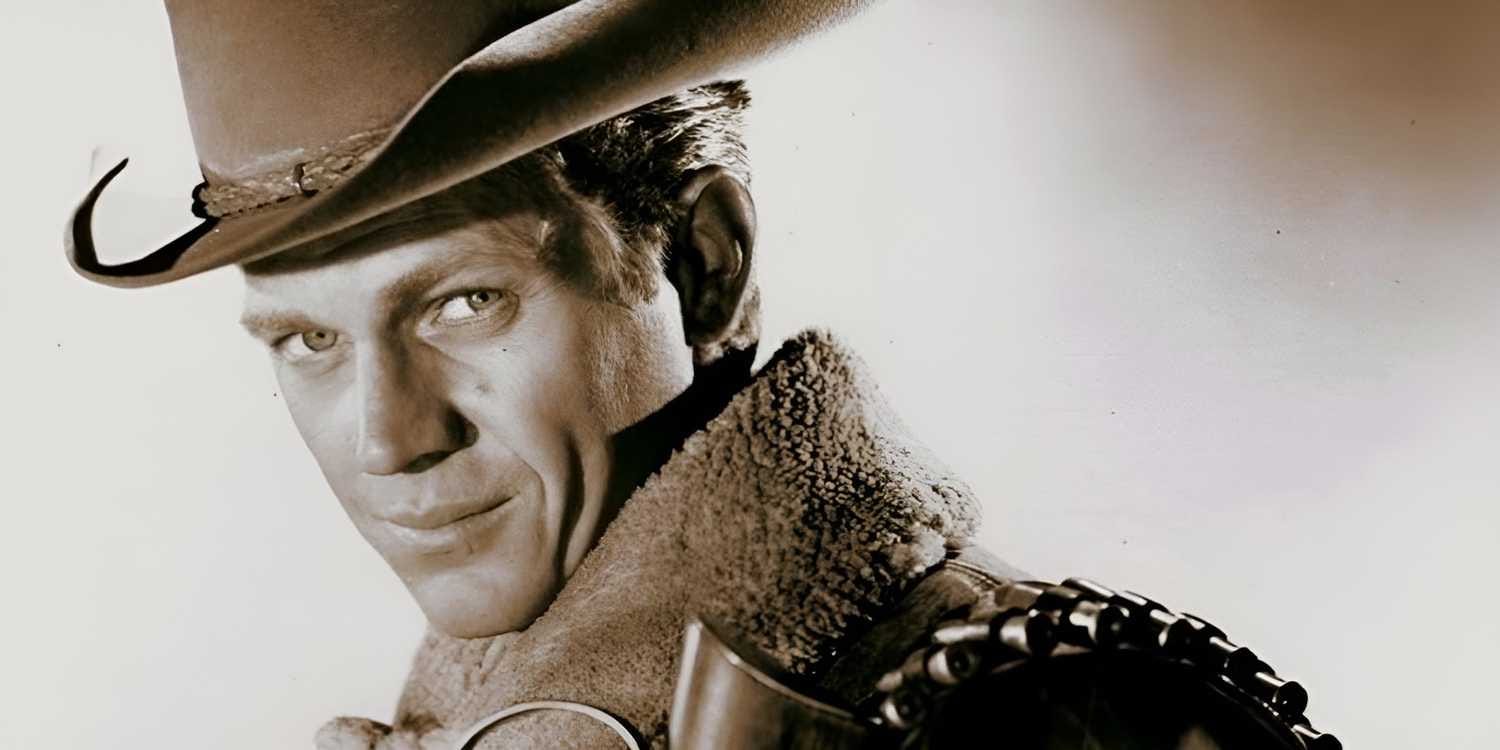
We went out on Friday nights to restaurants that featured bars in front and dinette areas in the back. I'd sit on a stool and eat my bowl of peanuts while Father watched an old western on the television in the corner. The show was Wanted: Dead or Alive, and I remember watching Steve McQueen, gunslinger-with-a-sawed-off Winchester on his hip, the bounty hunter, and I had no sense of any real code of honor. He was paid the same to bring in a living man or a dead one, which didn't make him any less of a killer.
I know I enjoyed watching him, but I thought he was a bad guy doing a poor job of acting good.
East Side/West Side, with George C. Scott, took place in a New York City social workers office and explored issues that seemed to have no simple solutions. I Spy, the first show to put a black man and a white man on the screen together as equals and partners, went by without anyone seemingly noticing that it was such a significant breakthrough. There was no special emphasis on a sidekick structure or a discernible hierarchy among the lead actors, and it was only later that I recognized how important that was.
It was Wednesday evenings when I Spy aired. My father, who rarely commented on television, told me that he didn't think the show would last; he predicted that too many people would take offense at seeing a black and white man work together as partners on TV. Do you think that way, Daddy? I asked.
He watched the television for a while before answering, It hardly matters what I think, does it? meaning, I believe, this was the country we lived in. Although I didn't realize it at the time, he'd expressed two unsaid messages simultaneously.
Naked City featured a theme song about eight million stories, most of them involving people whom the rest of us might not care to acknowledge, told in the Naked City. Judd for the Defense addressed drugs, dissidence, and the draft without actually naming any of those subjects.
These shows didn't last, but they were necessary.
What Got Passed Down
I wouldn't say that the political commentary of these programs was particularly liberal or conservative in the current sense of the word. It was more a general lesson in the necessity of keeping our institutions honest, and the individual responsibility of seeing that they remained so.
That was the lesson of these programs: they brought attention to important aspects of American life by dramatizing them, even when there was no inherent entertainment value.
These are not simply liberal or conservative lesson plans, if you want to look at it that way. They are practical politics viewed through the lens of Gunsmoke, Combat!, Perry Mason, and The Twilight Zone. They presented a version of America that understood that its mechanisms, its institutions, especially our laws, were only useful when they served our nation, and therefore they had to be held accountable.
This lesson may be what made Cronkite the ultimate public servant; he understood the hidden curriculum of these television programs and recognized, as few politicians ever have, that democracy is a fragile system that requires honest enforcement of the laws that govern it to function properly for its citizenry.
Today, my grandson watches something on his phone, perhaps, wearing headphones, in a room I can't see into. I don't know what he's watching, because the algorithm decides for him, and chances are it's not the sort of material that will be discussed, or even silently endured, over dinner, the way Combat! and Cronkite were. No one argues with him, as perhaps my father never really argued with me about Have Gun Will Travel, though we watched it together and he undoubtedly had his reservations.
The fact is, there wasn't much else on, and that was sufficient reason for him to watch it, if he wanted to. I don't know what he might be learning, but I can almost bet that whatever he is learning, it's not being learned in my line of sight, together with him, the way we did.
They didn't tell us what to think.
They gave us things to think about.
Please consider becoming a paid
Comments
Nothing yet. Say the first thing.
Sign in to join the conversation.