
Two trillion dollars would buy the state of Nebraska. Outright. Every acre, every pasture, every small town between here and Omaha, more than thirty times over.
That's not what America's wealthiest households own.
That's what they gained.
The top one percent of American households hold about thirty percent of the country's wealth. The bottom half hold two and a half percent. All of them. Combined.
Those aren't opinions. Those are the Federal Reserve's own numbers. The last time the split looked like this was the peak of the first Gilded Age, back when the word was coined as an insult and not a compliment.
The Nineteen Months
In March of 2020, as the pandemic shut the country down, America's billionaires held a combined $2.95 trillion. Nineteen months later, in October of 2021, that same group held $5.05 trillion.
Two trillion dollars, gained, while unemployment peaked near fifteen percent and working families lined up at food banks that had never seen lines like that before. A seventy percent increase in nineteen months, according to the joint analysis by Americans for Tax Fairness and the Institute for Policy Studies, built on Forbes's own data. Not a projection. Not a guess. A measured fact, tracked in real time, while the rest of the country tracked something else entirely, layoffs, school closures, funerals held over video calls.
Wages, over that same stretch, rose a few percent. Barely enough to keep pace with what things cost.
Both of those numbers happened in the same stretch of time. In the same country. To the same economy.
That is not a coincidence. That is a seesaw with one very heavy end.
Where the Money Actually Goes
There's a question that never gets asked plainly enough. If a company is doing well, if profits are up and the balance sheet is healthy, where does the money go.
It used to go three places, mostly. Wages. New equipment and expansion. Dividends to people who owned a piece of the company.
In 2025 American corporations spent more than a trillion dollars buying back their own stock. Not building anything. Not raising a single paycheck. Purchasing shares off the open market so that the shares left over would be worth more, which mostly benefits the people who already own the most shares, which is not the man on the line and not the woman at the register.
The twenty largest companies in the S&P 500 account for about half of that trillion dollars, on their own. Four of them, tech companies you've heard of, spent fifty-five billion dollars in a single quarter buying back their own stock.
Fifty-five billion dollars. In three months. From four companies. To make their own existing shares worth more to the people who already held the most of them.
A trillion dollars is not an abstraction if you put it next to what it isn't buying. It isn't a raise. It isn't a plant reopened in a town that lost one. It isn't a pension fully funded. It is a company paying itself, quietly, with money that used to have somewhere else to go.
Hank at the Register
My friend Hank works the counter at Johnson Cashway, the lumber and hardware outfit over in Gering. Hardware side, the part of the store that sells fasteners and fence posts and the kind of thing a man needs on a Tuesday without planning for it.
He told me about a fella who came in for something ordinary, the kind of purchase that shouldn't have needed a second thought, and stood there at the register doing the math out loud without meaning to. Not angry exactly. Stuck on it. Said he'd bought the same thing not that long back for a good deal less, and wanted to know what happened.
Hank didn't have a real answer. Nobody behind a counter ever does. He rang it up anyway, told him what he always tells people, everything's up, same as it is everywhere else. The man paid and left, still shaking his head a little on his way out the door.
Hank's told me some version of that story more than once now. Different item, different customer, same look on the face, the same short pause before the wallet comes out anyway, because what else is a man going to do, stand there and not buy the thing he came in for. A man standing at a counter, doing math that used to add up, watching it not add up anymore, and nobody on the other side of that counter able to tell him why, because the answer isn't standing behind the counter. It's somewhere else entirely, in a room neither one of them will ever be invited into.
What the First One Looked Like
In 1890, the richest one percent of Americans held something close to half the country's wealth. Standard Oil controlled ninety percent of the nation's oil refining before anyone in Washington decided that number was a problem worth solving. The men who ran the railroads charged whatever the traffic would bear, which meant a farmer with one line to his town paid triple what a shipper in a city with three competing lines paid for the same distance, because there was nowhere else to take his grain.
Those men had names people said out loud. Rockefeller. Carnegie. Vanderbilt. Morgan. You could point at a portrait in a newspaper and say, there, that's the one.
It took decades to break. The Sherman Antitrust Act passed in 1890 and mostly sat unused for years, because using it required someone with the will to bring the case, and the men who'd have to bring it were often funded, one way or another, by the men they'd be bringing it against. Standard Oil wasn't broken into pieces until 1911. Twenty-one years between the law existing and the law being used against the company it was written for.
Twenty-one years is a long time to know the answer and not act on it. We are somewhere inside that same stretch of years right now, except this time the monopoly doesn't need a single famous name to hide behind. It needs four companies, or twenty, or a tax code nobody reads past the first page.
The Price of Admission
A house used to be the first big purchase of an adult life, not the reward for surviving one. Home prices have climbed about fifty percent since 2020. Wages have climbed about twenty-nine percent over the same stretch. That gap, twenty-one points, isn't a rounding error. It's the actual shape of what happened to a generation of people trying to do the one thing every generation before them managed to do without needing years longer to get there.
I don't need statistics to know this one firsthand. My daughter Allie and her partner Luiz moved here from Arizona not long back. Luiz is a welder, a skilled trade, good pay, the kind of job that used to mean a family could plant itself somewhere without much trouble. They looked at houses from here to Cheyenne, a hundred miles of country between them, and could not find anywhere to live for under two thousand dollars a month, not in this town, not in that one, not anywhere in between. Not a house. Anywhere. A hundred miles of looking, and the number never moved. A good job wasn't the qualifier it used to be. It was the price of admission to keep looking.
Gold on the Outside
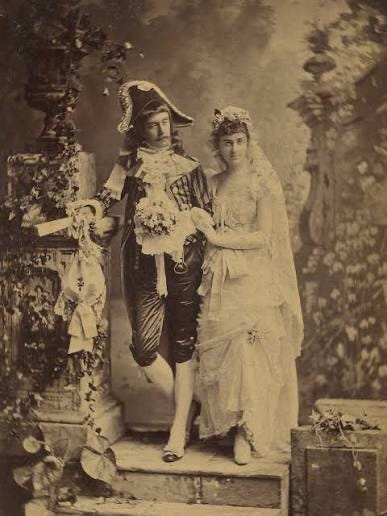
Twain didn't call it the Golden Age. He called it Gilded. A thin coat of shine laid over something cheaper, meant to look valuable from ten feet away.
The market keeps closing at record highs. The wealthiest households keep pulling away from everyone else at a rate that would have embarrassed the original robber barons. And most Americans, when you ask them plainly, say the gap between rich and poor has gotten too wide. That's been true for years now, and it isn't only Democrats saying it — the agreement thins out across party lines, but it doesn't disappear, which in this country right now counts as something close to remarkable.
Most people also believe the richest Americans pay a lower tax rate than they do. That belief happens to be accurate for a great many of them, since a fortune sitting in stock never gets taxed the way a paycheck does. That is not an accident of the tax code. That is the tax code working exactly as the people who wrote it, and the lobbyists who bought the writing of it, intended it to work.
I'll say plainly that not all of this wealth came from nothing. Some of these fortunes sit on top of real companies making real things people use every single day, and that's worth saying honestly rather than pretending every dollar at the top was stolen outright. But a company doing well and a founder's paper wealth climbing seventy percent while his employees' wages climb four are not the same story, and pretending they are is its own kind of dishonesty.
Whose Fault This Is
I want to be plain about this, because plainness is the whole point of writing at all.
The billionaire class did not stumble into two trillion dollars of pandemic-era gains. Nobody accidentally grows a collective fortune seventy percent in nineteen months while the rest of the country stands in unemployment lines. That kind of growth gets engineered, protected, and lobbied for, year after year, by people with the money to make sure the rules never tighten around them.
And the government did not fail to notice. Congress has the tools right now, today, to break up concentrated industries, to tax unrealized stock gains, to close the exact loopholes that let a fortune grow untaxed for a decade before a single dollar of it is ever touched by the IRS. Those tools sit on the shelf. They are not used, and they are not used because the people who would be taxed by using them are also the people funding the campaigns of the people who'd have to vote to use them.
That is not a broken system. A broken system fails by accident. This one is functioning exactly as designed, and the design was paid for.
There is a mechanism at the center of it worth naming plainly, because it does more work than any other single rule in the tax code. A fortune held in stock is not taxed the way a paycheck is taxed, not until the stock is sold. A man who works a shift and takes home a check pays that year, on that income, no matter how modest. A man whose wealth grows by a hundred million dollars because his shares went up pays nothing on that increase unless and until he decides to sell, which for the wealthiest households is often never, because the same fortune can be borrowed against instead of sold, at low interest, using the stock itself as collateral. Buy, borrow, die, is what the tax lawyers call it, plainly enough among themselves. Buy the asset. Borrow against it instead of selling it. Die, and let the heirs inherit it with the tax basis reset to its value at death, erasing the gain entirely. Three steps, and a fortune can pass through an entire lifetime, and into the next generation, without ever once being taxed the way Hank's wages are taxed the day they land in his account.
That is not an oversight sitting quietly in the fine print. It has a name in the industry that uses it every day. It works exactly the way its architects built it to work.
Every session that ends without that bill passing is not Congress failing to act. It is Congress choosing, again, who it answers to.
Thirty-Two Nebraskas
I opened with that number because I wanted it to sit with you before anything else did. Here's where it comes from.
Grazing land in this state runs about thirteen hundred dollars an acre right now. Not cropland. Not the irrigated ground that costs four times as much. Grass. The kind under my boots most evenings, the same kind my nephew Scot runs our family's cattle on, nine miles from here, the kind every rancher in this state is standing on right now, one way or another.
Nebraska is about forty-nine million acres, corner to corner. Every county. Every pasture, every river bottom, every wheat field and feedlot and small town from here to Omaha.
At that price, the whole state would run you something like sixty-four billion dollars.
America's billionaires gained more than two trillion dollars in wealth over nineteen pandemic months. Not their total worth. Just the gain. What got added on top of what they already had.
Divide it out and that's thirty-two Nebraskas. Bought and paid for, more than thirty times over, from money that got added on top of fortunes that were already enormous, while the rest of us watched fence wire and beef and rent do what they've been doing. Not the whole economy. Not something built. Just the increase. Just the part that got added while nobody was looking directly at it.
I want that number to sit there a minute before I say anything else about it, because I don't think it needs much added on.
The single richest man in the country crossed a trillion dollars this year. A trillion. A number that used to describe the size of national budgets, now sitting in one man's private accounts.
Before the pandemic, that same fortune wasn't close to a tenth the size it is now. It didn't grow because he built ten times as much as he had before. It grew because what he already owned kept climbing, the way water finds the low point in a field, except in this case the water keeps finding the highest point instead, and nobody with the power to cut the channel has been willing to pick up the shovel.
They have had the shovel this whole time.
The Old Fix
The first Gilded Age didn't end because anyone at the top had a change of heart. It ended because the country used tools that already existed, over the fierce, well-funded objections of the men those tools were aimed at. Antitrust law. Progressive taxation. Regulation of industries too large to answer to anyone but themselves. None of it was given. All of it was taken, by people who organized until the people writing the laws had no other choice.
There's a bill sitting in Congress right now that isn't so different. A small annual tax on fortunes above fifty million, a further slice above a billion. The people it would touch could fit inside a single high school gymnasium. It polls well. It has for years, across party lines.
I won't pretend a wealth tax is easy to write well, and I'd rather say that plainly than let someone else point it out first. Scot could tell you that on paper, once you added up the land and the cattle and the equipment, plenty of actual ranchers in this state would look wealthy enough to worry about a badly drafted version of this bill, even though most of that value is dirt and livestock, not a brokerage account you can pull from with a phone call. Any bill worth passing has to know the difference between a fortune that can be liquidated by lunchtime and a ranch that's been in a family for four generations, one that would have to be broken up and sold off just to cover what's owed on paper. The bill sitting in Congress claims to make that distinction. Whether it survives contact with the lawyers who'll be paid to find the gap in it is a fair question, and I don't have a confident answer to it.
It hasn't passed. It hasn't come close to a vote that matters.
That is not a mystery. It is not a policy puzzle waiting on better economists. Every senator who won't bring it to the floor has a reason, and the reason has a name and a phone number and a seat at a table that costs more than most Americans will earn in a decade. Call it lobbying if you want a clean word for it. It is closer to the truth to call it ownership.
The Porch
I still go out most evenings. No phone. Just a cigar and the dark coming down, indifferent to whatever the market closed at that day. An ash caught my pants leg out there not long ago and burned clean through before I noticed. Never did get around to fixing the hole. Didn't seem worth the trouble for a pair of pants nobody's grading on their shine anyway.
Nothing out here needs gilding. There's nothing to sell.
But I know the numbers now, the way you know a thing once you've looked it up and can't put it back down. Thirty held by one. Two and a half held by half the country. One man crossing a trillion dollars in a single year, and a Congress that has known how to fix this since before I was born and has decided, session after session, not to.
We've been here before, or close enough to know the shape of it. The country scraped the gold off once, and found out what was underneath, and made the men underneath it pay for what they'd taken. It did not happen because they agreed to. It happened because enough people stopped asking politely.
Scot's out there somewhere tonight doing his own math on a legal pad. Hank's shutting down the register, same shrug waiting for tomorrow's version of the same question. Allie and Luiz are still looking for a number that never moved, somewhere between here and Cheyenne. Somebody in Washington already knows why all three of those things are true. They've known for years, and they've decided none of it is a question they're required to answer, as long as the votes keep arriving anyway, four years at a time, no questions asked in return.
That's the whole racket. Not a mystery. A choice, made over and over, by people who could choose differently and don't.
Comments
Nothing yet. Say the first thing.
Sign in to join the conversation.