
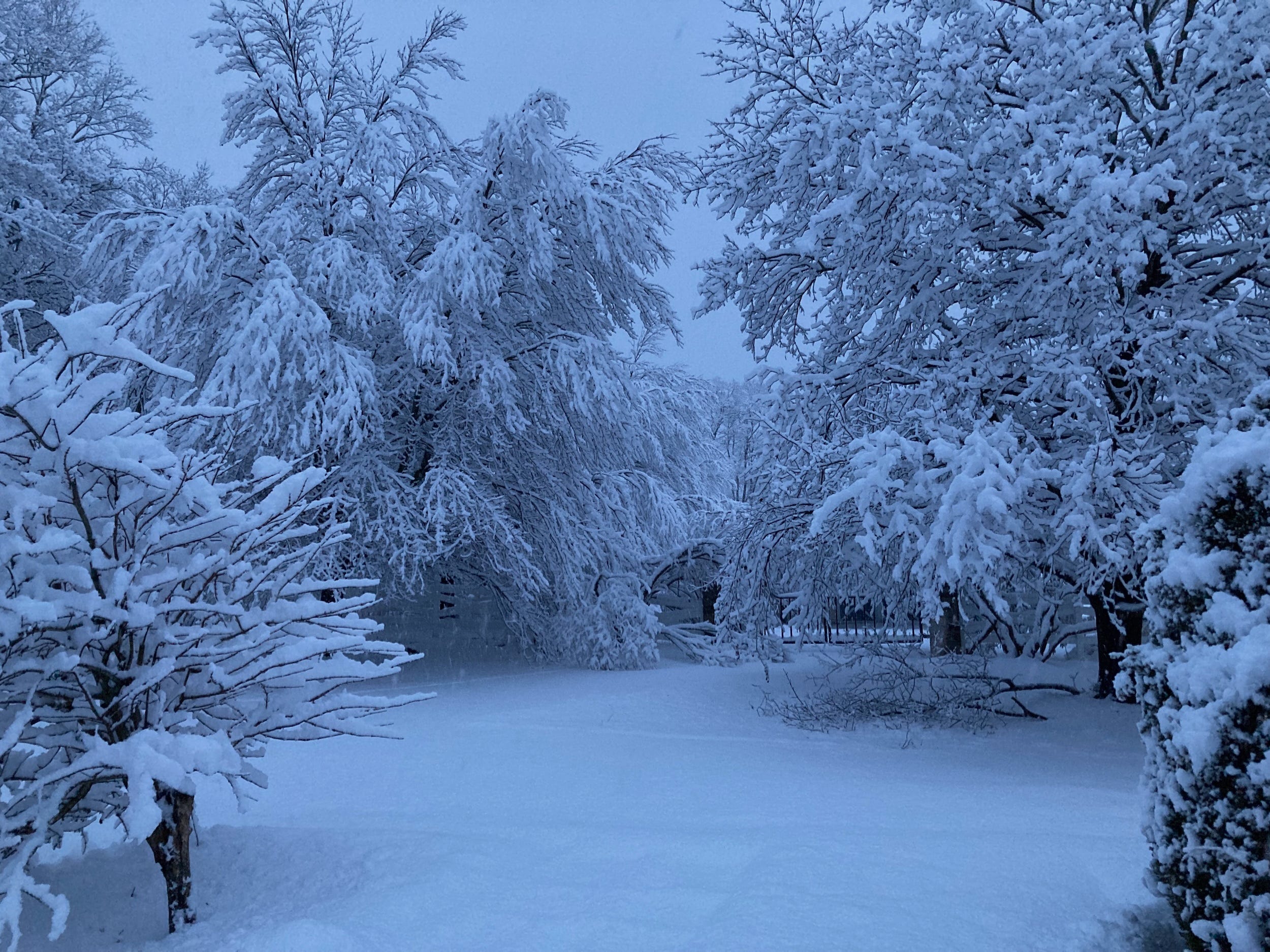
I usually complain about summer. I don’t do well in the heat and I hate the bugs. So do the horses. So, when winter rolls around, it’s no fun, but I usually don’t mind it too much unless there is a lot of snow or ice. For the last few years, we’ve had pretty mild winters here in the Northeast—at least where I live. The weather here can get cold, but snow is usually minimal. So this winter has taken us a bit by surprise.
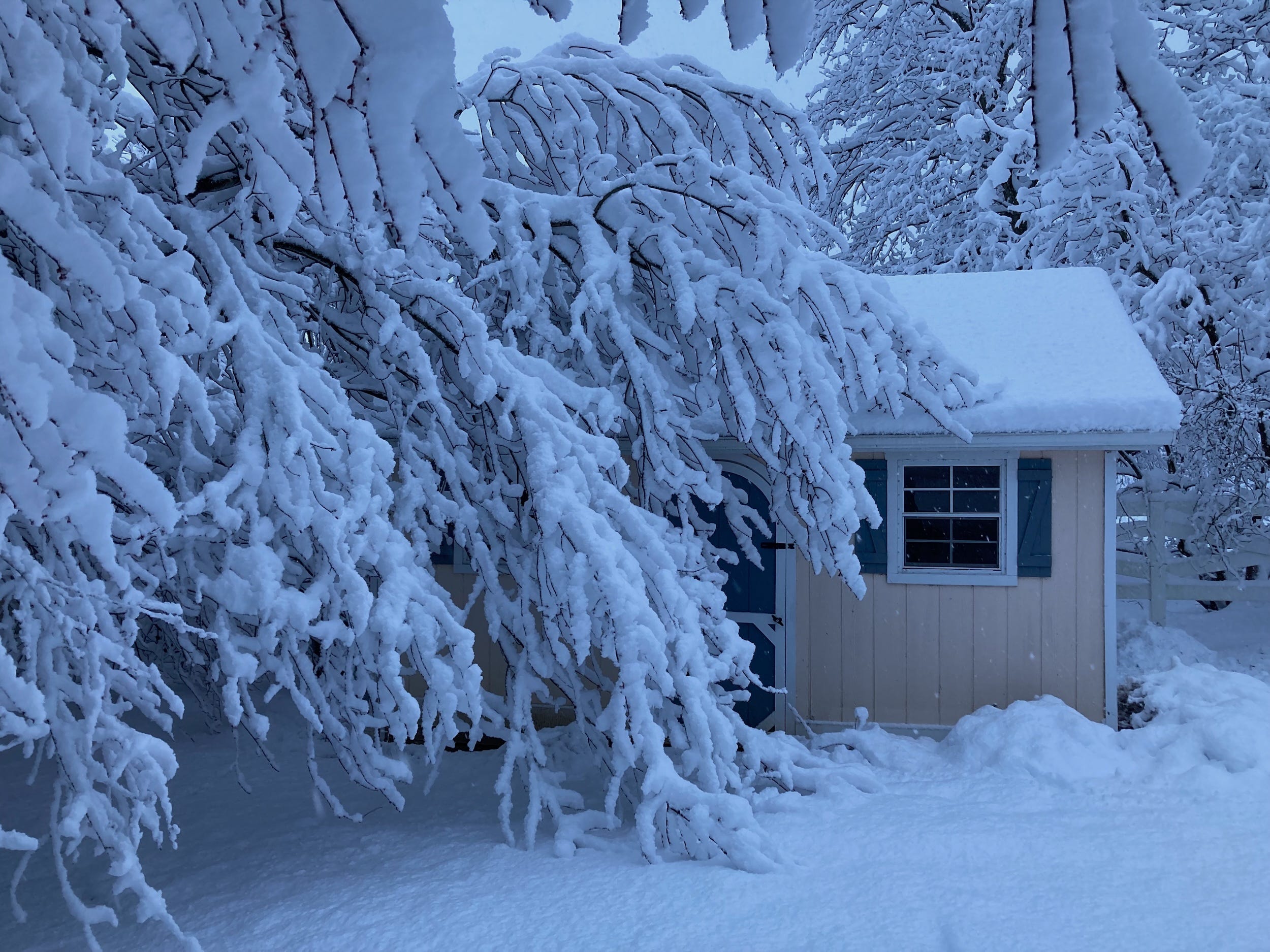
We’ve had several severe snow storms including a nor’easter/blizzard, and weeks on end of sub-zero temperatures. Most of our infrastructure isn’t designed for this, and many homes in the area have suffered from ice dams, frozen and burst pipes, and other issues related to the extreme cold and unusual weather.
All those storms we thought we missed over the past decade? They were just on hold. Instead of spreading them out evenly over many years, we got to enjoy them all in a single season. I guess that’s one way of doing it. . . .
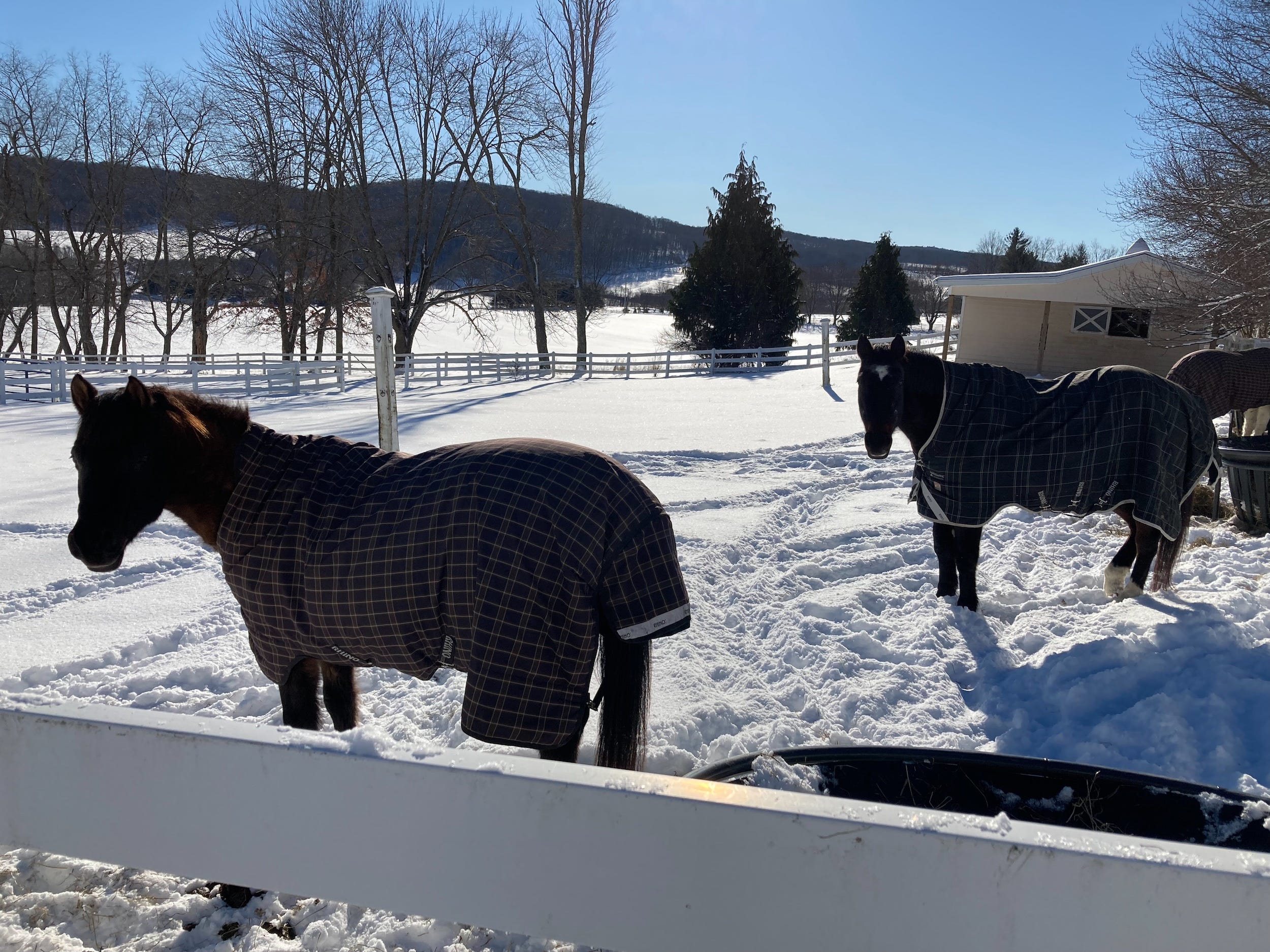
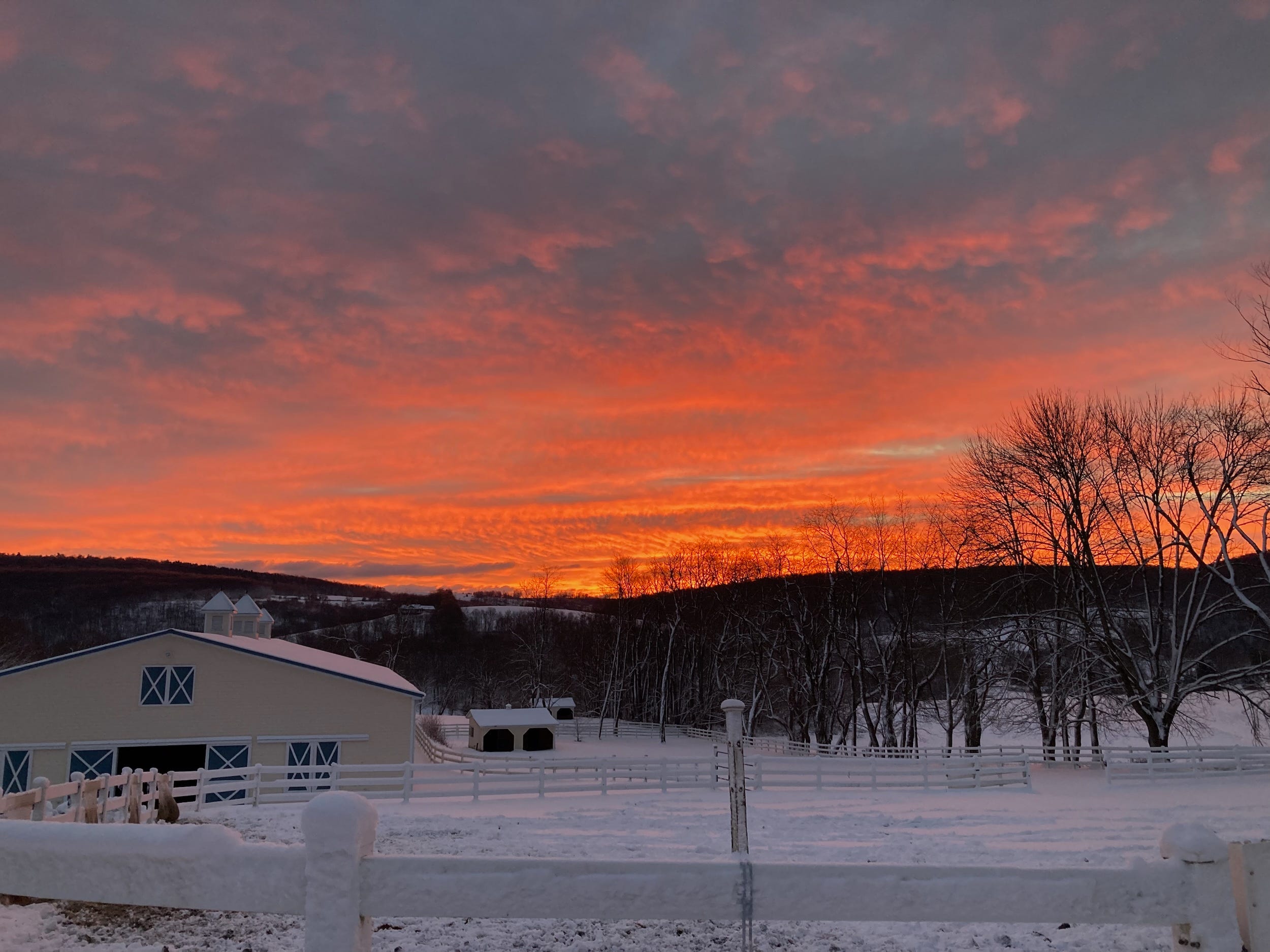
It’s also meant a lot of extra work around the farm. If anyone is imagining a Currier & Ives vision of the rural countryside or farm life in winter, this is very much not that. Winter is probably wonderful if you grow crops and can sit indoors in front of the fire and enjoy the fruits of your labors. But if you have animals to care for and a farm to maintain, it means a lot of extra and unpleasant work. As well as just getting around, you have to consider things like keeping lanes clear of snow for farm and emergency vehicles. You have to make sure you can get deliveries of feed and that the surfaces aren’t slippery where the people and animals might be walking.
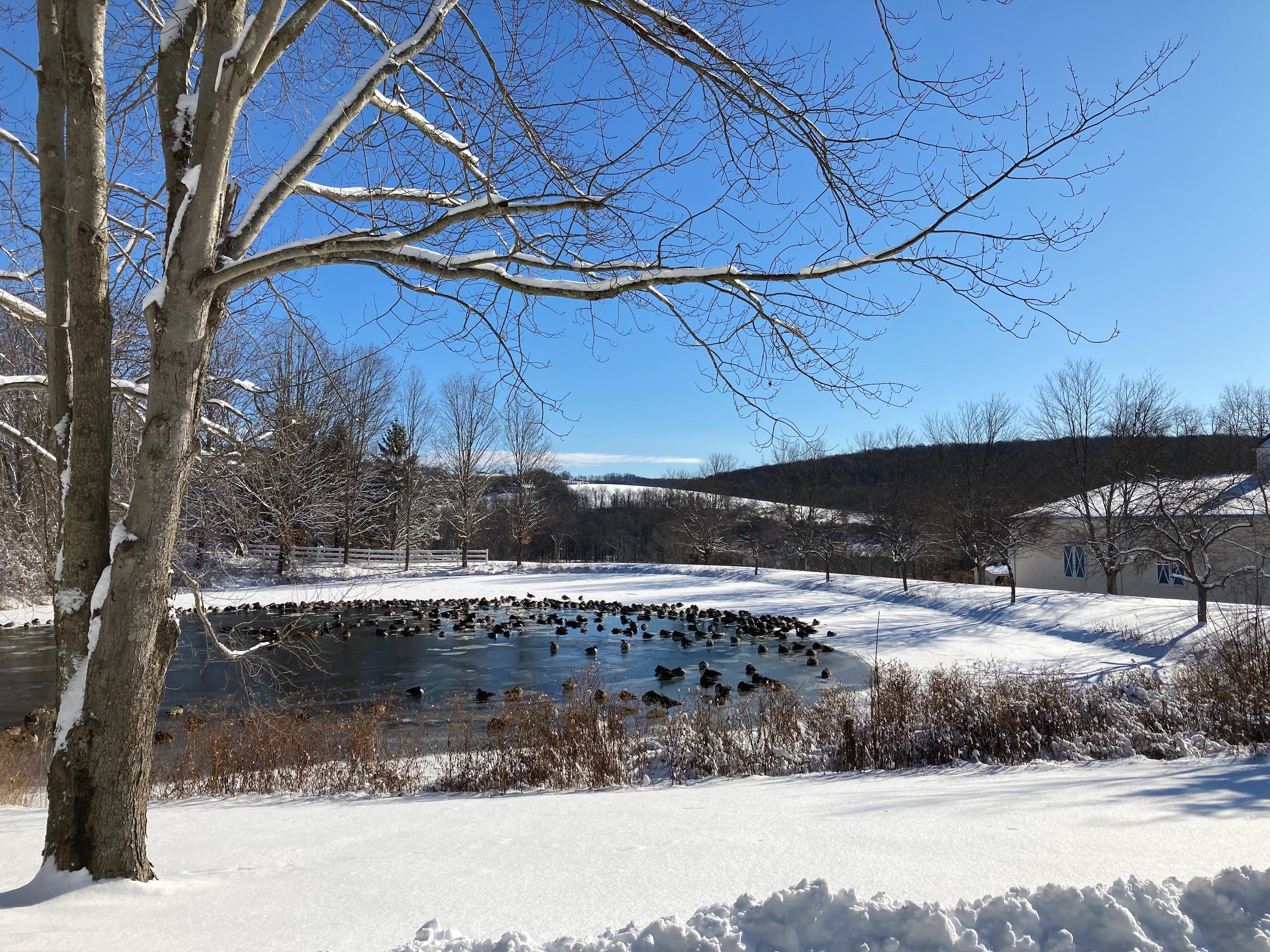
We also have a pond, and making sure the animals don’t go near it when it’s frozen and covered in snow is a major worry. There was an incident one year where the horses ran across the top of the partially frozen pond after shoving through the pasture gate and getting loose one night as I brought them in after work (I get home after dark in winter, and spirits run high on cold, windy nights). It nearly stopped my heart. After that, we fenced the pond off, but I had to remove the fencing to do some renovation on the pond last year after the banks had eroded. Since I no longer use that gate to bring them in, I didn’t put the fence back up. But the worry remains.
Another consideration is drinking water. At past farms, I had to deal with frozen water buckets and troughs in cold weather and worried about horses not having enough to drink. A leading cause of winter colic is horses simply not drinking enough in frigid temperatures, so making sure they have access to water is crucial. But keeping it thawed is tricky. In the past, I used floating tank deicers outside, but having electricity nearby isn’t always possible, and extension cords can be their own nuisance. At the current farm, we’re lucky enough to have Nelson automatic waterers, which are heated. But even these are not infallible. The heating elements and thermostats can wear out over time, and then they’ll freeze up. We have frost-free hydrants near all the paddocks and inside the barn, so if I need to fill troughs or buckets, I can, even if it’s not ideal. I also have insulated bucket covers that work great for inside the stalls. I’ve been airing one of these out ever since Hanz’s waterer froze up. But they’re a temporary measure.
I discovered the hard way two weeks ago that the automatic waterers in the barn, which were retrofitted, were installed improperly with steel fittings instead of brass. Over the years they have corroded and one of them burst and flooded the barn.
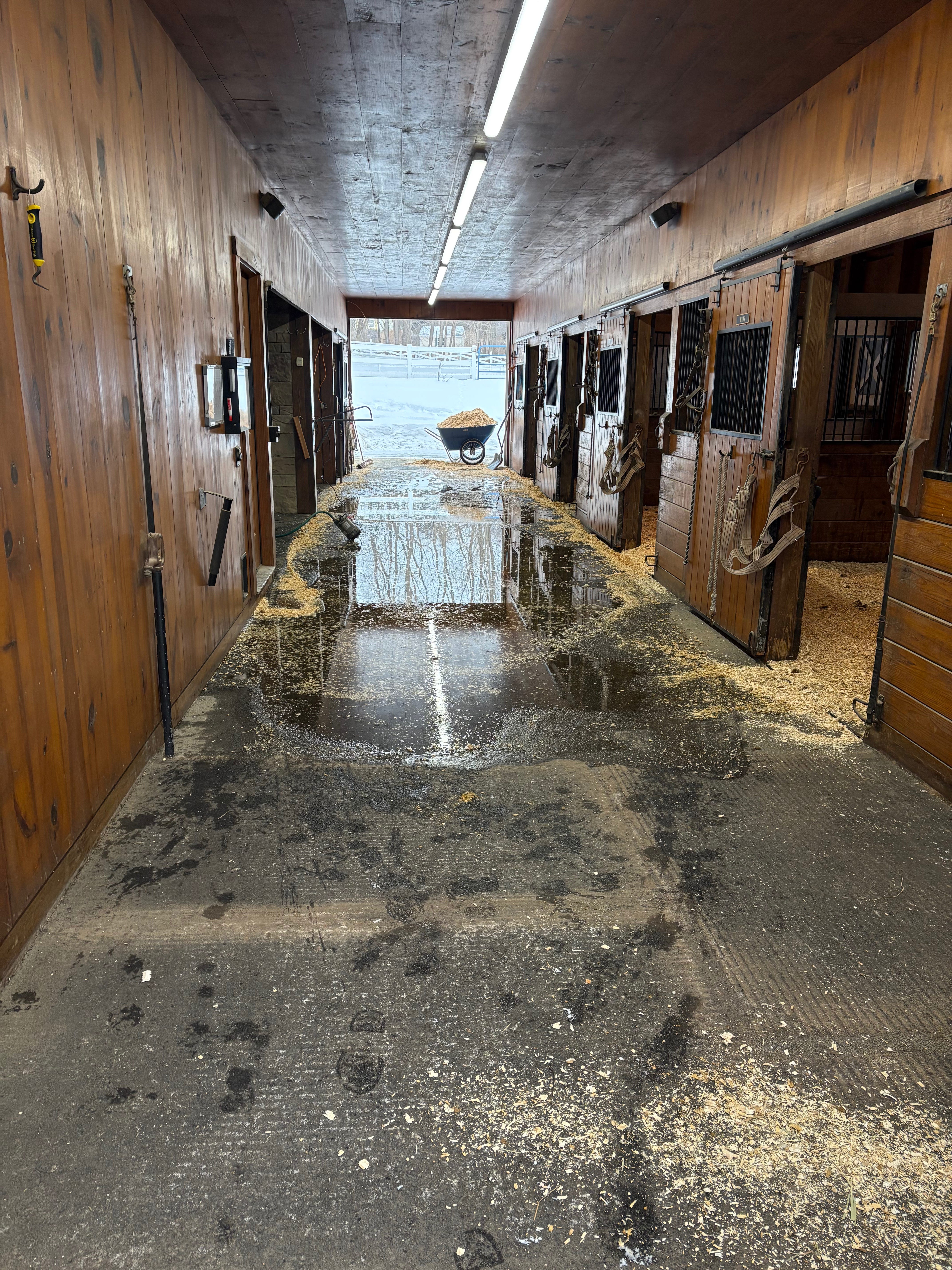
This was its own exercise in the necessities of stable management, and a reminder to me of the things it’s good to be prepared for:
Know where all the water shut offs are for the property: Our property was configured oddly, and some of the water lines branch directly off main line coming from the well, while others run to the barn first and then branch from there. So, not all of them can be shut off with the main valve near the well pump, like it would in a house. Some are managed with their own underground curb stop valves (vertical pipes with round metal caps that lead to the valve below) outside and need to be turned off with a T-shaped key, a special wrench inserted into the pipe to turn the valve. If you don’t know where these valves are or you don’t have one of these special keys, you’re not turning the water off if there’s an emergency. In my case, I had to dig under a few feet of snow to find the valves (luckily, I knew approximately where they were), and the one I needed had its cap damaged by the landscapers who used to mow the grass here, crimping the pipe with the lawnmower blades, so I needed to shut off the whole barn at the well. Which meant first filling a water trough by hand with buckets. This all wasted valuable time while the flood continued.
Know how to turn the well pump on and off (and/or where the breaker is).
Know how to turn the heating elements (and other electrical functions) on and off from the circuit panel. When water is gushing everywhere, it’s good to kill the electric at the panel. The plumber might also ask you to do this before he works on anything.
Have a submersible sump pump (or two—one always seems to burn out) for dealing with floods and standing water. I had an old one that apparently no longer worked and a newer one from my old hot tub. It burned out halfway through, but was better than nothing. The rest I did with a push broom.
If planning your facility from scratch, make sure there’s a place to put excess water: Luckily, we have a huge drain grate behind the barn for water (currently under a huge pile of snow) and a wash stall with a drain that goes to a leech field. I pumped into the wash stall drain and tunneled into the snow bank to reach the grate behind the barn. Then I used a broom to push the rest of the water out to the big grate. Slow, but it works.
Even with our many modern conveniences, we still run into problems, and life on a farm is never easy, especially in this part of the world, especially in winter. It makes me wonder how people managed before they had neat things like electricity, running water, and automatic heated waterers. As much as these gadgets can be a nightmare when they fail, they’re a huge labor savor. Even when I hauled water buckets every day, I had electricity and running water to make the process easier.
I’m constantly at odds with the technology I use because I rely on it so much, and when it fails I feel so keenly how helpless I am to fix it. Where I am, help is not very reliable, and being without the means to repair all these complicated fixtures, tools, and machines myself is almost worse than not having them at all. There is something so appealing about being able to manage a farm like mine with simple means and simple tools that don’t require that kind of dependency.
But I’m not sure I could ever give up the convenience they provide now that I’ve known it. Move that pile of dirt with the wheelbarrow and a shovel or the tractor? Cut up that tree with an axe or the chainsaw? Shovel an entire farm’s worth of snow by hand, or use the plow? Break ice and haul water for the horses, or use my Nelson waterers? Knowing in an emergency I can rough it and survive by those simpler methods is a comfort. But it’s not even a choice. And I’m even more in awe of those who never got to make it.
Comments
Nothing yet. Say the first thing.
Sign in to join the conversation.