
Podcast: Check out the latest episode of the Corn Belt Newsletter Podcast with Matt Helmers of Iowa State University!
Acreage and Grain Stocks: Historically, the June Acreage and Grain Stock reports have been market movers. In today’s reports, there wasn’t much to get excited about. Corn acres were the same as reported back in March at 95.3 million acres. The USDA said, “This represents the fourth highest planted acreage in the United States since 1944.” Soybean acres were 85.4 million acres, up from 84.7 million acres in March. Grain Stock numbers came in around expectations. Corn stocks were 5.29 billion bushels, and soybean stocks were 1.06 billion bushels. The market's attention will now turn to U.S. weather. We will continue to watch and see if China buys U.S. soybeans.
Input Costs: The latest estimates from USDA show that input prices will be the highest they have ever been for the 2027 growing season. Check out the second chart, which shows how much input prices have increased over the last twenty years. The squeeze continues. 2027 could again be a very difficult year unless we see prices for commodities increase. Watch this space.
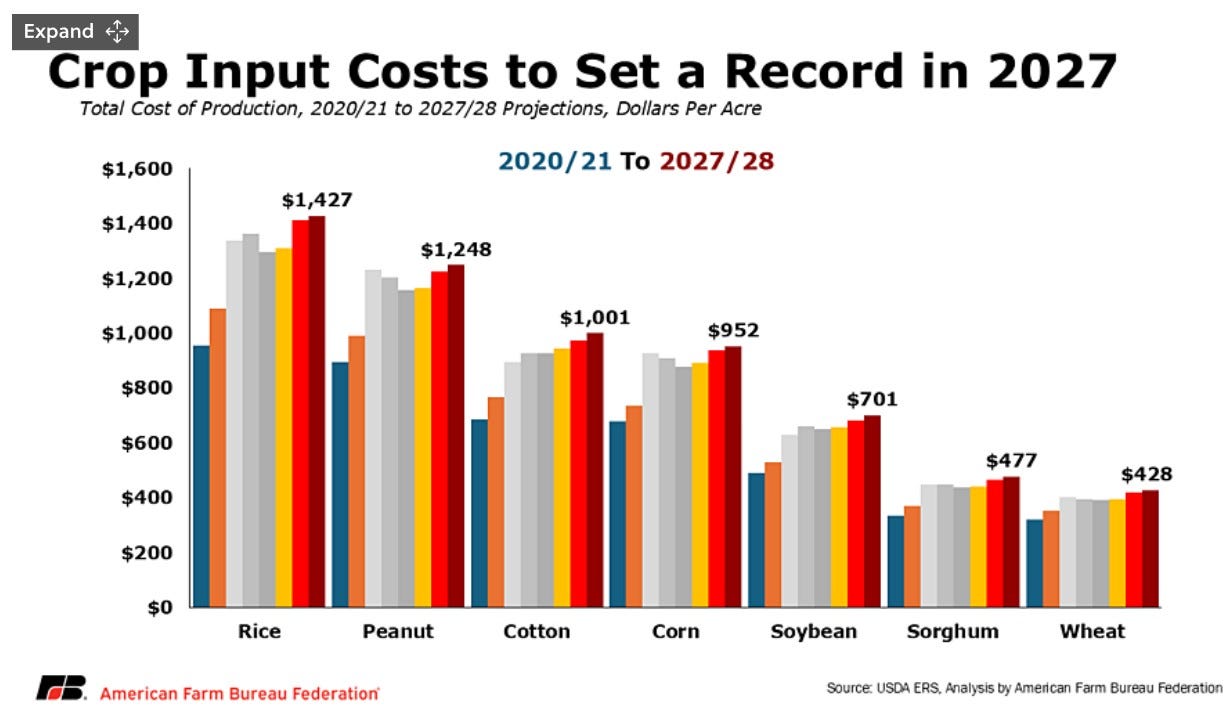
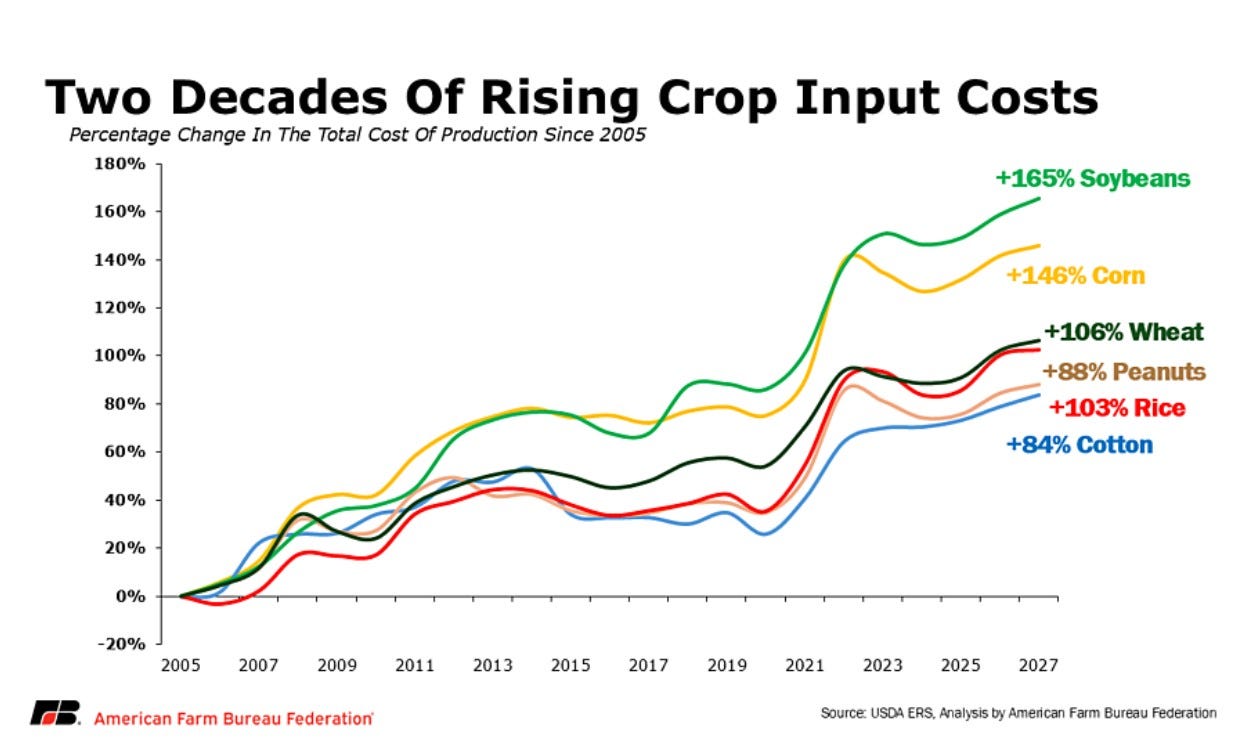
Link: Production Costs Expected to Reach New Highs in 2027
Link: Grain Stocks
Link: Acreage
Quote of the Month: “I have no special talents. I am only passionately curious.” Albert Einstein
Farmland Sales: Below are a few notable farmland sales from May.
75 acres sold in Clinton County, IA. The farm had a CSR-2 rating of 84 and sold for $13,000 per acre, or $154 per CSR-2 point.
106 acres sold in Hardin County, IA. The farm had a CSR-2 rating of 91 and sold for $11,976 per acre, or $131 per CSR-2 point.
149 acres sold in Jasper County, IA. The farm had a CSR-2 rating of 86 and sold for $15,083 per acre, or $158 per CSR-2 point.
Link: Corn Suitability Rating (CSR-2) Explainer
Check out the rest of the newsletter for key indicators affecting the land market and agriculture.
Commodity Markets
Corn:
Feed and Residual Use: USDA’s latest estimates were kept the same as last month’s report. 6.100 billion bushels are to be used for feed and residual use during the 2026-2027 marketing year.
Why it Matters: Feed and residual demand account for about 40% of corn usage. With the recent cattle inventory report showing the smallest cattle herd in over seventy years, it’s difficult to see feed numbers increasing.
Ethanol: Recent USDA estimates kept projections for the 2026-2027 marketing year the same at 5.600 billion bushels for ethanol use.
Why it Matters: Ethanol accounts for roughly 40% of corn usage. Continue to monitor developments from Washington regarding biofuel policy. Year-round E-15 would be a welcome policy change.
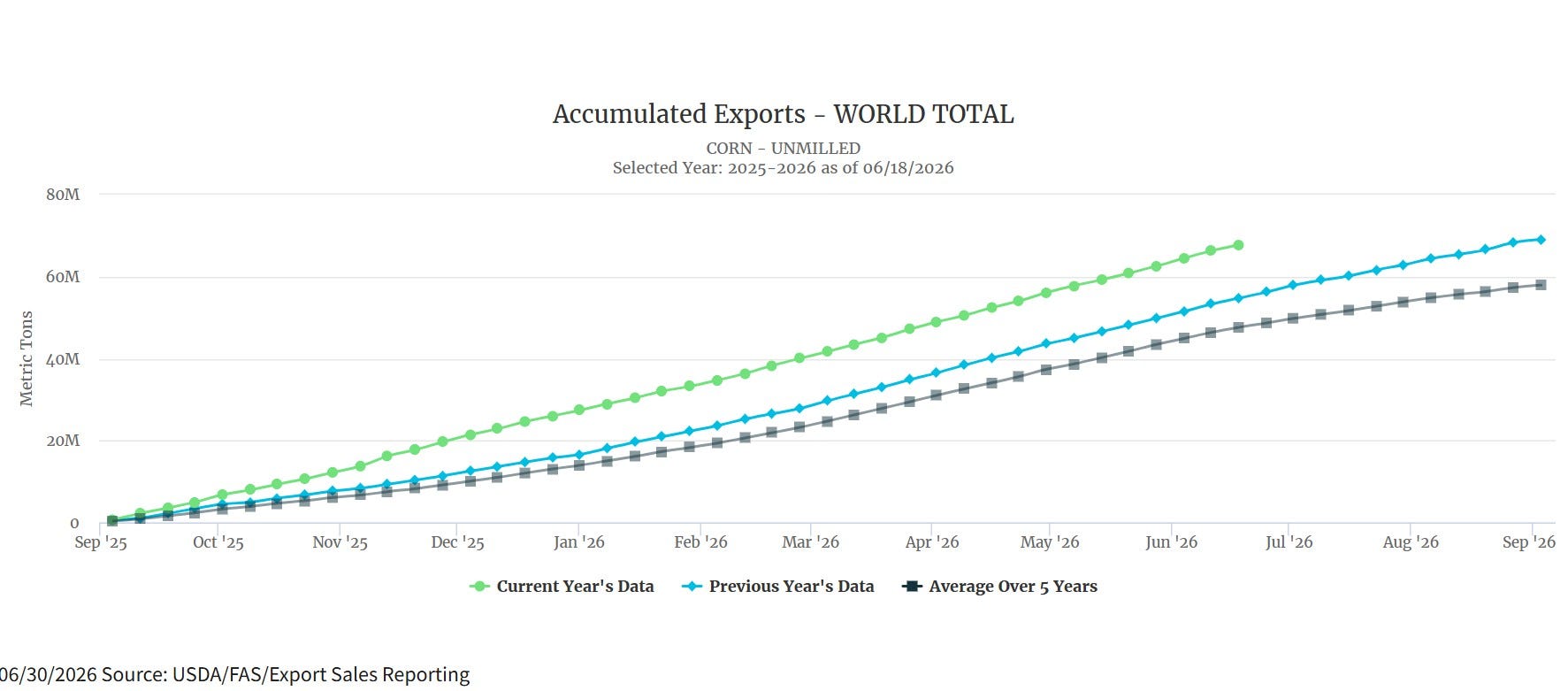
Exports: USDA’s latest estimate of exports for the 2026-2027 marketing year was kept the same as last month’s report at 3.150 billion bushels.
Why it Matters: Exports comprise about 20% of U.S. corn demand. U.S. corn sales remain very strong. Mexico remains our biggest buyer. Japan is our second-biggest buyer.
Link: WASDE
Link: Exports
Soybeans:
Crush: The National Oilseed Processors Association (NOPA) crush data for May was 208.8 million bushels, up from 192.8 million bushels a year ago.
Why it matters: Roughly 55% of U.S. soybeans are used for crush and soybean oil production.
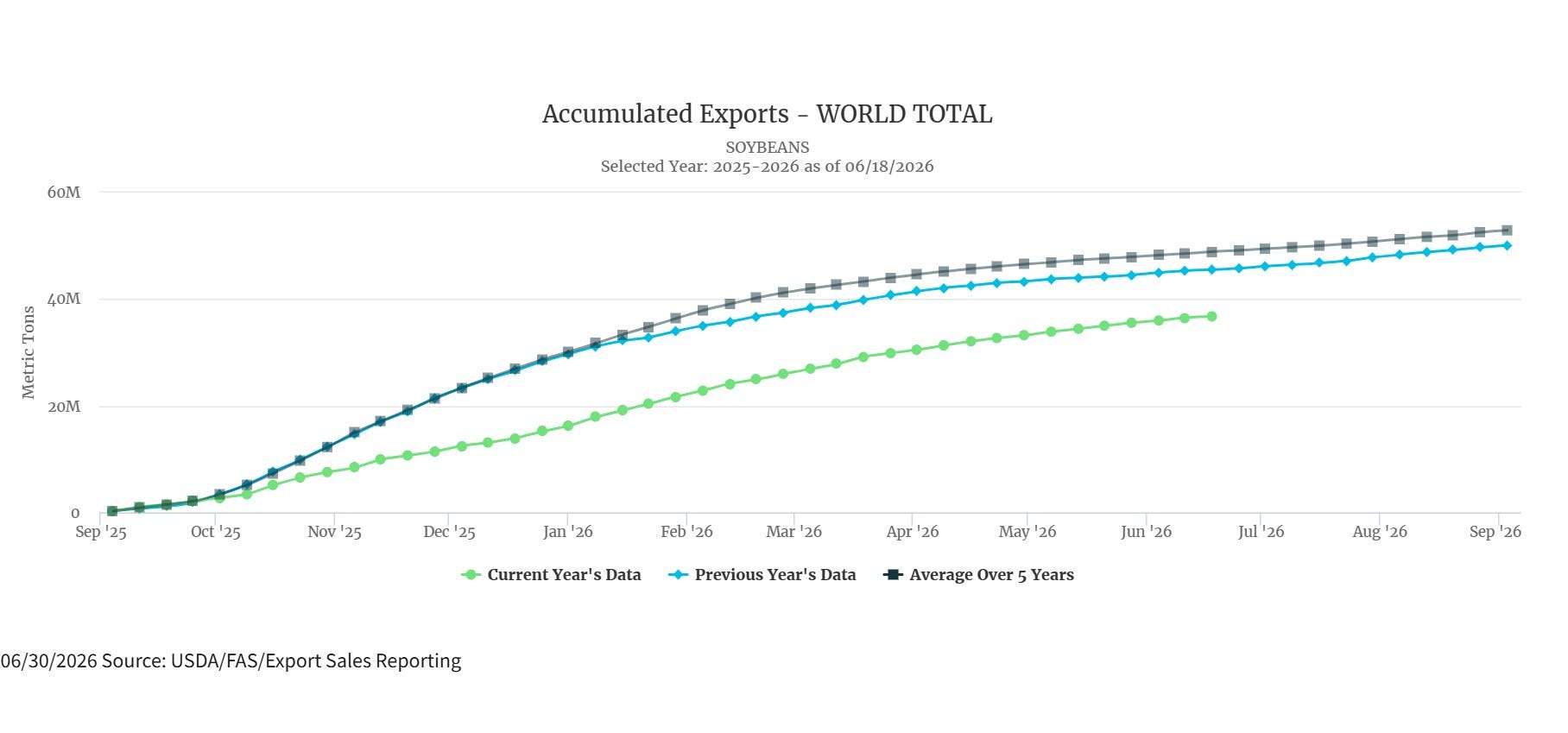
Exports: The USDA’s recent export projections estimate 1.630 billion bushels of soybeans for export during the 2026-2027 marketing year. This number was kept the same as last month’s report.
Why it matters: About 45% of our U.S. soybean crop is exported. China is still our biggest buyer. Mexico is our second-biggest buyer. Watch to see if China keeps its commitment to buy 25 million metric tons a year of soybeans until 2028.
Link: WASDE
Link: Exports
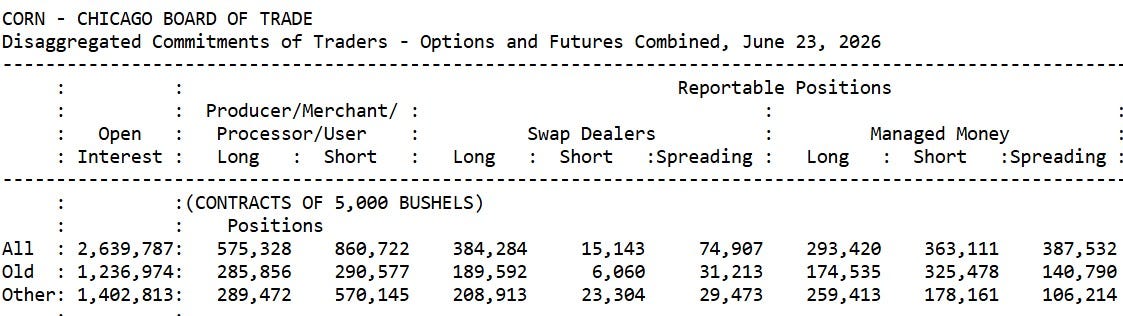
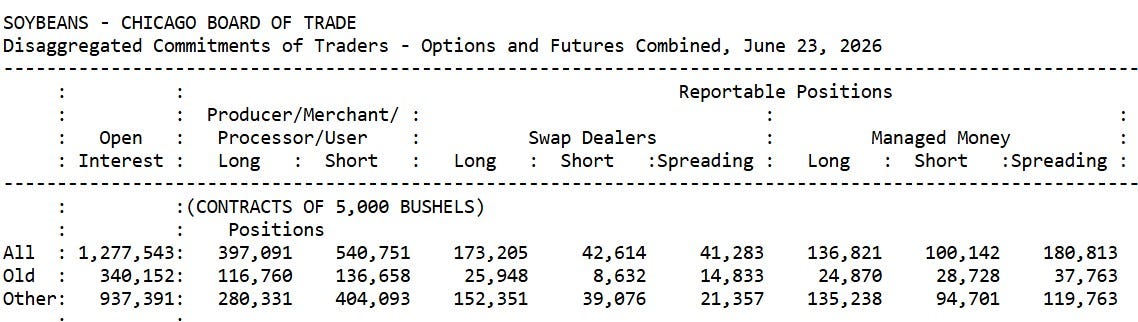
Commodity Futures Trading Commission: The Commodity Futures Trading Commission (CFTC) showed that managed money has a short position in the corn and soybean markets. Short corn contracts of (69,691) and short soybean contracts (43,992).
Why it matters: This has been a fairly large reversal from long to short for the funds over the past thirty days. Prices for both commodities have dropped since the last newsletter. July corn is currently at $4.12 per bushel, down .34 cents over the past thirty days. July soybeans are at $11.16 per bushel, down .65 cents over the past thirty days.
Link: CFTC
Link: Corn and Soybean Prices
Interest Rates (30-year mortgage): The current 30-year mortgage rate is 6.49%, down from 6.77% a year ago.
Link: 30-Year Fixed Rate Mortgage Average in the United States
Why it matters: Interest rates are a major factor in agriculture. They are one of the fundamentals to watch in the land market.
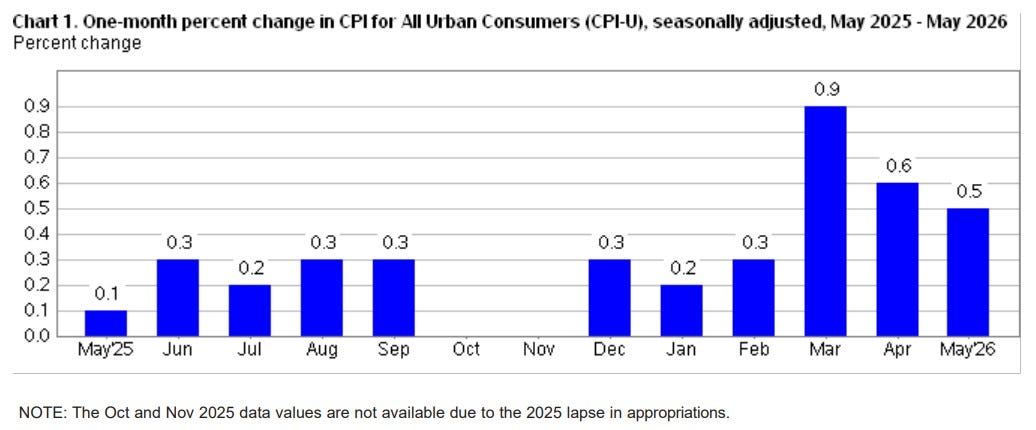
Inflation: The Labor Department’s monthly Consumer Price Index (CPI) showed a 4.2% year-over-year increase in its latest report.
Why it matters: Year-over-year CPI increased in May to 4.2%. This was up from 3.8% in April. The Federal Reserve met in June and left rates unchanged. Even with a ceasefire, the War in Iran has disrupted energy and fertilizer markets. It is not surprising to see inflation continuing to rise. The average price of a gallon of gas is $3.84. The average price of diesel is $4.85 a gallon.
Link: CPI
Link: AAA Gas Prices
Link: Federal Reserve
Fertilizer Prices: According to the USDA Production Cost Report, Anhydrous Ammonia (NH3) averaged $1,084 per ton. A year ago, it was $774 per ton. Potash averages (POT) $490 per ton. A year ago, it was $469 per ton. Phosphate (MAP) averages $920 per ton. A year ago, it was $845 per ton.
Why it matters: The conflict in the Middle East has disrupted supply chains. It may be months before things are back to normal. Continue to watch and see if the ceasefire holds. What will fertilizer prices be this coming fall? The 2027 growing season will be interesting, to say the least.
LINK: Iowa Production Cost
U.S. Weather: A heat wave is making its way across the Corn Belt this week. How much will this affect the crops? The way the markets are reacting, not much. Time will tell, however. Check out Eric Snodgrass and his daily weather updates at the link below!
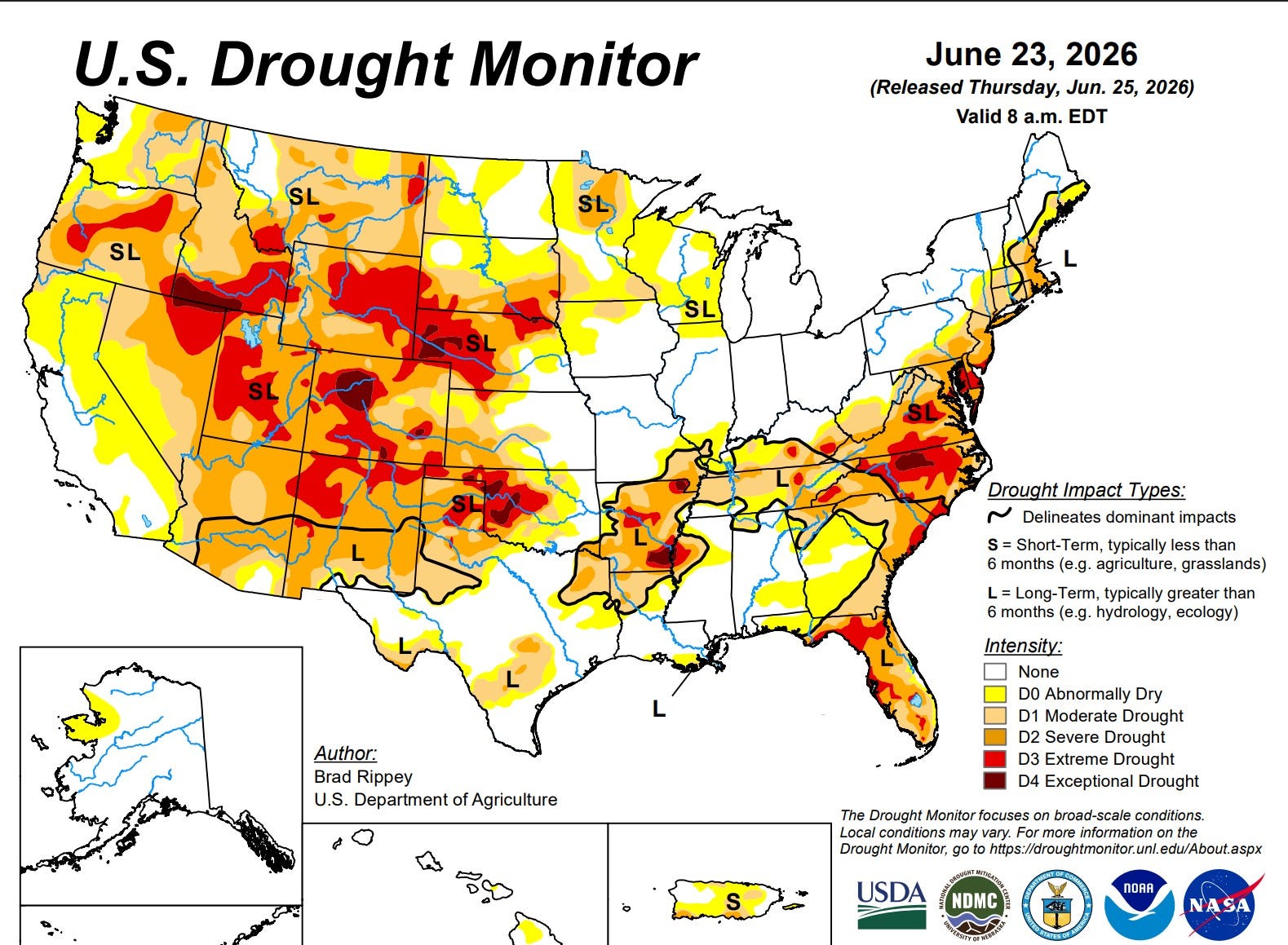
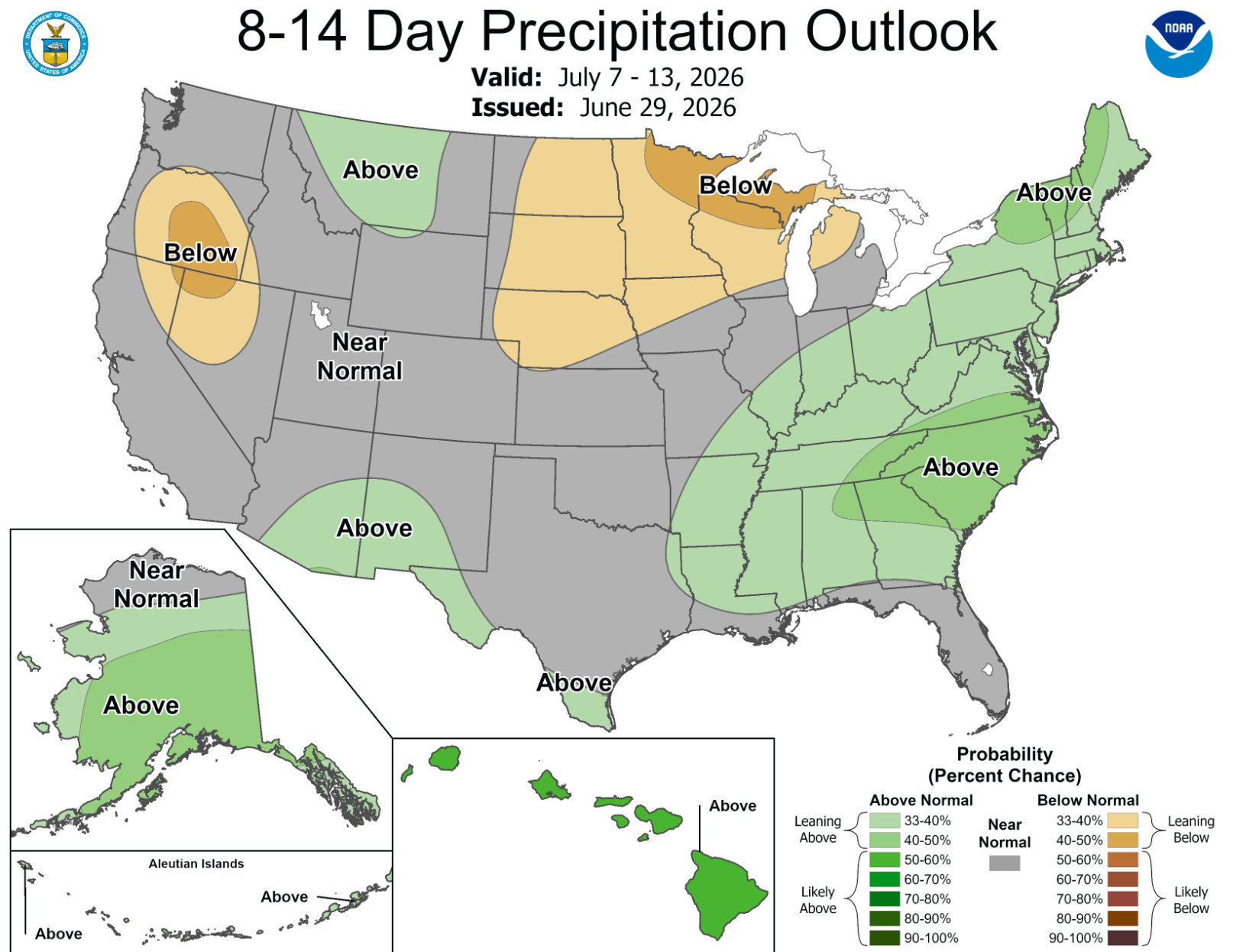
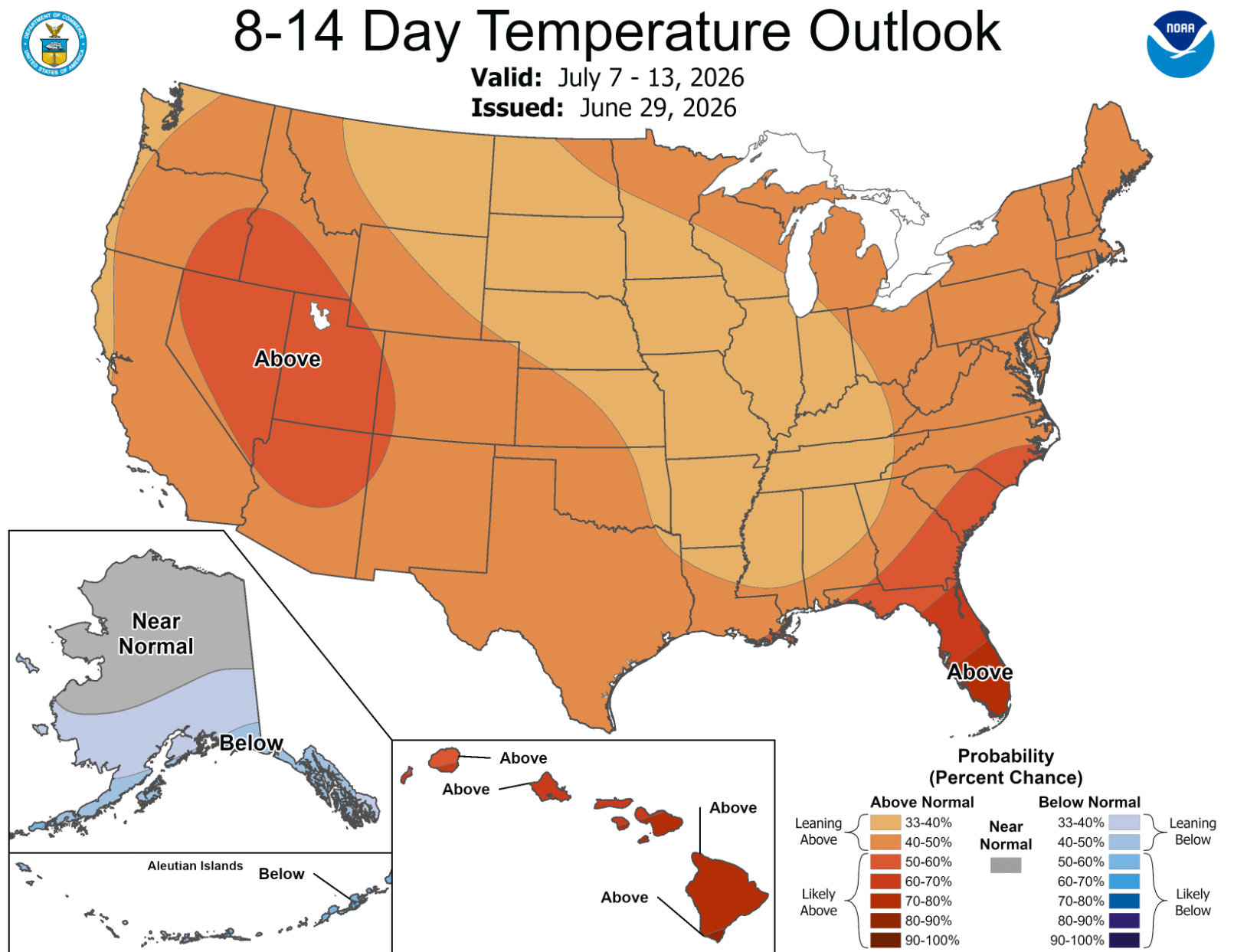
Link: National Weather Service Climate Prediction Center
Link: U.S. Drought Monitor
Link: Ag Weather
Agriculture News of Note:
U.S. Tractor Sales Fall 21.6%, Combine Sales Drop 56% From 2025
Survey Finds Rural Americans Most Concerned About AI Data Centers
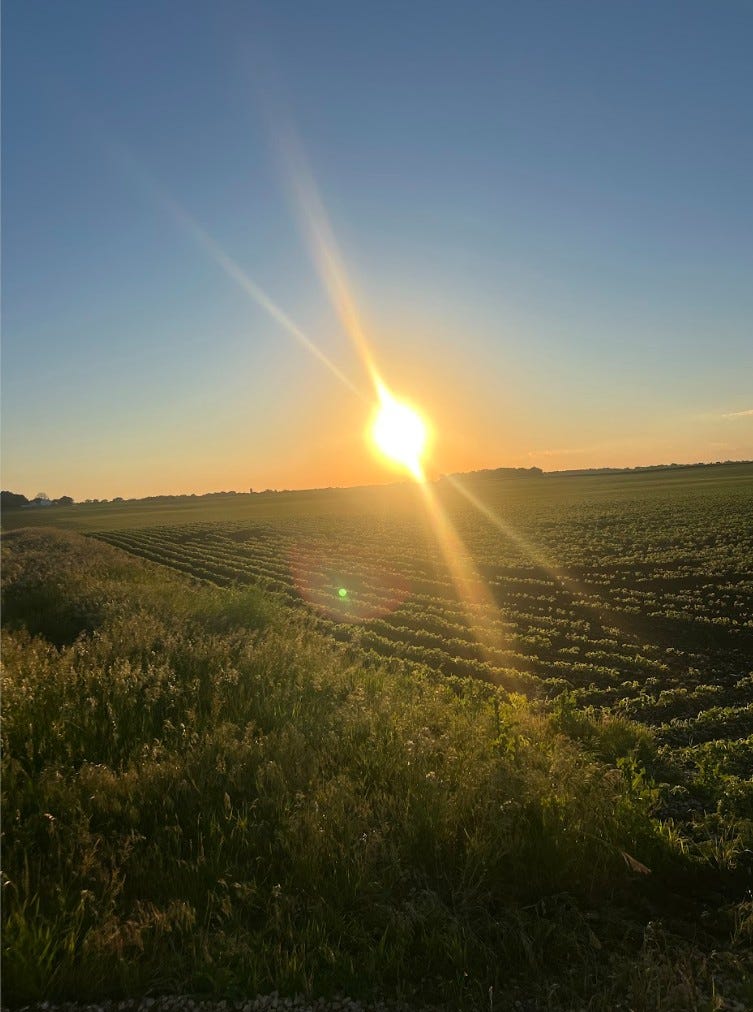
One For The Road: Sun setting on a soybean field in Northern Iowa.
Thanks for reading the Corn Belt Newsletter! If you’re looking to buy or sell farmland or would like an evaluation of your property, please reach out to me.
Contact Information: Joshua Manske (Farm Real Estate)
Cell: 515-707-1774
Email: joshuahmanske@gmail.com
Farm and Home Services LLC
No posts
Comments
Nothing yet. Say the first thing.
Sign in to join the conversation.