
“You shall not bow down to them or serve them, for I the LORD your God am a jealous God, punishing children for the iniquity of parents to the third and the fourth generation of those who reject me.” (Exodus 20:5, NRSVue)
“The person who sins shall die. A child shall not suffer for the iniquity of a parent nor a parent suffer for the iniquity of a child; the righteousness of the righteous shall be their own, and the wickedness of the wicked shall be their own.” (Ezekiel 18:20, NRSVue)
These two Bible verses used to bother me. The tradition of Christianity in which I’d been raised encouraged us to resolve such tensions rather than to concede their existence; the Bible was to be understood as the inerrant, univocal, and perfectly consistent Word of God, as opposed to a vast library of separate texts written over a millennium by various authors who sometimes disagreed. This particular pair of verses seemed to challenge my view of the whole Bible.
In high school, I tried to resolve the tension by understanding the texts as dealing with two separate problems. Perhaps Exodus is referring to the “earthly” consequences of sin (e.g., how dad getting a DUI affects the whole family), whereas Ezekiel could instead be referring to our eternal, individual guilt before God (i.e., you won’t be judged for someone else’s sin). This synthesis worked well enough to alleviate some of the anxiety that these verses stirred in me. But beneath the exegetical chess, a more personal question persisted.
The “generational sin” on my mind at the time was our family’s history of addiction. From a young age, I was counseled by my parents, aunts, and grandma alike to be really careful about drugs—and I mean really careful. Nearly every man on my dad’s side grappled with at least one form of addiction, with several of them dying in the process, including my grandpa, my uncle, and my cousin. There was rampant speculation about the men in our family being subject to bad blood, bad genes, or perhaps even a divine curse.
The ethos of the Christian sub-culture at our local church countered my concerns about this particular superstition while reinforcing my aspirations for a life of total sobriety. My parents were hippies who had tried just about every drug on the market before meeting in AA and becoming Evangelicals through the “Jesus Movement,” a counter-counterculture originating in southern California that sought to bring the Gospel to the flower children. My mom is arguably the prototype: a former psychonaut and astrologist, she was eventually baptized in Corona del Mar, trading moon readings and AA meetings for daily devos and women’s Bible studies. I grew up attending Calvary Chapel North Phoenix, a direct descendant of my parents’ former church, where we wore flip-flops to service, drank non-alcoholic grape juice for communion, and sang along to praise songs reminiscent of U2.
Motivated by the idea that the apple might not fall far enough from the family tree, I became a devoted student of our church’s hidden curriculum on abstinence. Between Sunday services, I attended a massive public high school, where I’d sometimes wait outside the bathroom to keep watch as some of my early friends hit blunts without me. As one of the first football players to get his driver’s license during our sophomore year, I happily used the excuse of needing to stay sober so as to drive everyone else between parties; the marginal social capital this role afforded me was quickly offset by the cost of tearing out the upholstery of my dad’s truck after an inebriated teammate vomited molten McNuggets across the seats. And though I eventually found a group of friends with values closer to my own, my original commitment to abstinence held fast. I have a vivid memory from my senior year when, after having just had four impacted wisdom teeth removed without sedation, I crumpled up the dentist’s paper prescription for Percocet and threw it out the window of my pickup truck, moved to tears by the glow of my own integrity. (When the pain kicked in later that evening, I cried for different reasons.)
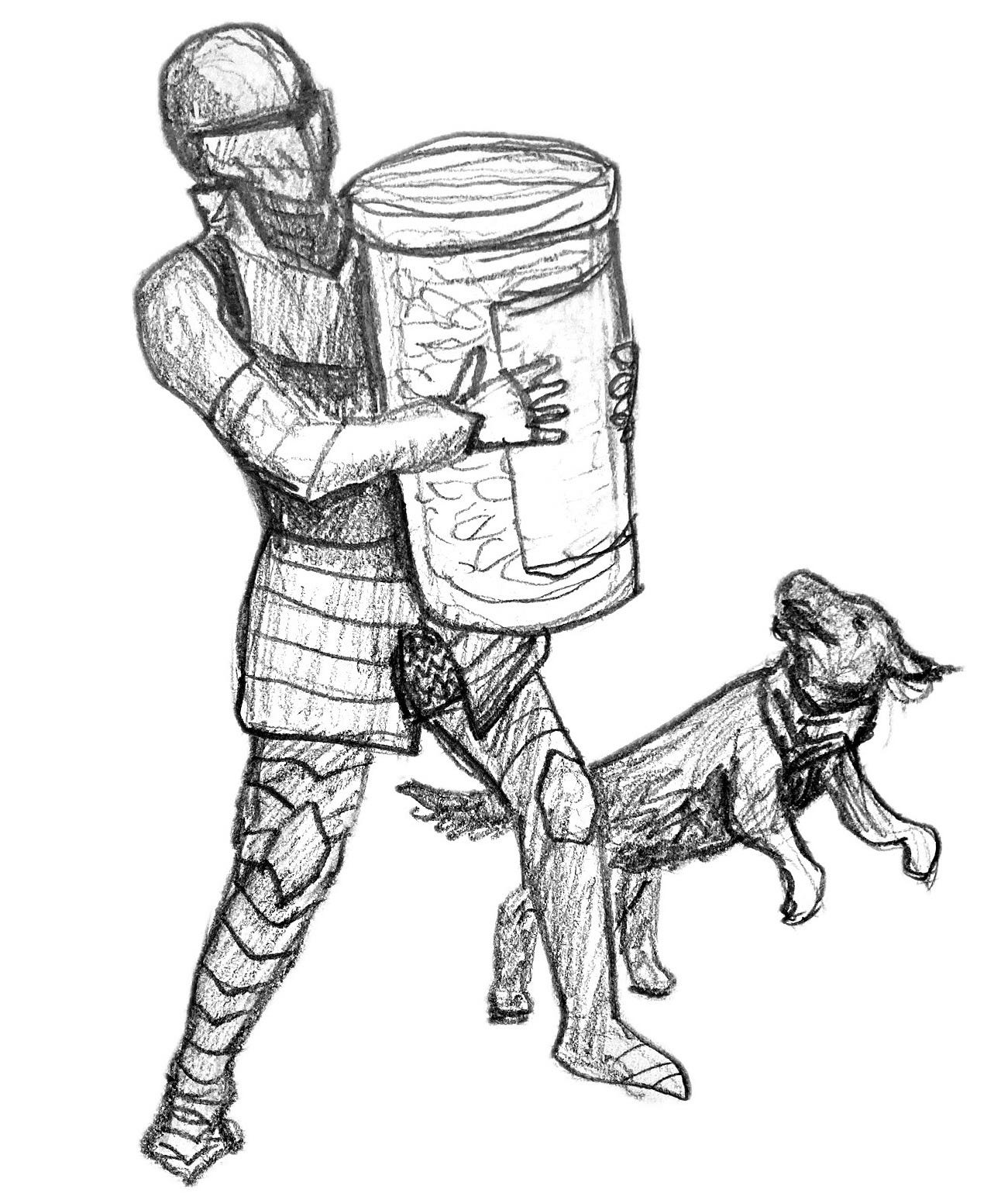
As my approach to the Bible and my Christian faith as a whole continued to evolve throughout college and beyond, though, I gradually relaxed my white-knuckled grasp on abstinence. Slowly and carefully, I came to realize that, despite alcohol and a handful of other drugs having passed through my system, I remained more or less the same person with the same virtues and vices as before—but why? Even if I wouldn’t have articulated it as such, for most of my life, I’d more or less operated under the idea that I was genetically predestined to become addicted to some drug if only I were exposed to it. Throughout my education and medical training, however, I’ve come to appreciate that the story is much more complicated—and much more hopeful—than that.
While my family’s sincere warnings were probably protective, the data to date tell a less dire story regarding the heritability of addiction. Decades of twin and adoption studies suggest that genetics accounts for roughly 40–60% of our vulnerability to addiction [1,2]. For perspective, that’s similar to the heritability of type 2 diabetes, which family and twin studies estimate at roughly 30–70%, and of high blood pressure, which twin studies place at around 40–50%—conditions that few of us would attribute to bad character or a family curse [3,4,5]. Strikingly, children of folks with alcohol use disorder are three to four times more likely to develop the condition themselves, even when adopted at birth and raised by parents without it [6,7]. At the same time, it’s important to appreciate that a high-risk family history is not destiny: the rearing environment meaningfully shapes whether that inherited vulnerability is ever realized [8]. This is in part because addiction, again like diabetes, is “polygenic”—it’s not the product of any single “bad gene,” but a consequence of the complex interplay of multiple genes across multiple systems tangled up with inputs from our environments and experiences; indeed, any single gene variant is thought to explain only about 1–2% of the risk [6,3]. We don’t inherit our family’s addictions directly; we inherit some degree of vulnerability that other features of our lives may or may not expose.
The picture becomes even more interesting when we consider the role of epigenetics in addiction. While the field of genetics classically deals with how our genes encode information that influences our experience, epigenetics flips this on its head, exploring how experience itself changes the way that our genes are interpreted. At the time of my writing, there exists ample evidence that our experiences can in fact leave chemical marks on our DNA—not changing the genetic code itself, but changing which genes get turned up or down, sort of like annotations scribbled in the margins of a book [9,10]. These “epigenetic” modifications can be caused by stress, trauma, and even drugs [9,10]. Recent animal studies have shown that some of these marks can be passed from parent to offspring, altering the next generation’s brain chemistry and behavior even if that generation never touches the drug [11,12]. In rodent experiments, for example, a father’s exposure to alcohol before conception has been shown to change how his pups behave and how their brains regulate dopamine, and maternal or periconceptional exposure to cocaine and alcohol likewise alters offspring gene expression and behavior—findings that perhaps lend some credence to the biblical idea of the sins of the father being passed on to the next generation [11,12,13]. But, unlike the genetic code, epigenetic marks are, at least in principle, reversible; new environments, new relationships, and new experiences can rewrite them [10]. Which is all to say, even in the domain of epigenetics, what gets inherited is not so much a predetermined fate as a rough draft—one that the next generation, with the right conditions, can continue to revise.
Just as the literature to date challenges the idea that either genetics or epigenetics alone is wholly responsible for addiction, so, too, does it resist the story that the problem is the drug all on its own. In the early 1970s, at the height of the Vietnam War, epidemiologist Lee Robins was commissioned by the U.S. government to study heroin use among returning soldiers. To everyone’s surprise, she found that, although roughly one in five U.S. soldiers had developed symptoms of heroin dependence during their service, only about 1% became re-addicted in the first year after coming home—and this was true even though most received no formal treatment for heroin addiction [14]. These results clashed with popular notions of addiction as a lifelong battle as well as the idea that it was the drug, as opposed to the person’s genetic and psychological makeup and environment, that was most responsible for the addiction [14,15]. What had changed, of course, was not so much the soldiers’ brain chemistry as it was everything else; many of them had left the boredom, terror, loneliness, and easy access to cheap heroin that characterized life in Vietnam in favor of families, jobs, and communities that offered very different reinforcements [14].
Around the same time, psychologist Bruce Alexander was coming to a similar counter-cultural conclusion through his separate line of work with animal models. You may be familiar with the classic experiment in which a rat hits a lever for cocaine until it dies. What folks talk less about is the fact that these experiments involved locking rats in Skinner boxes hardly larger than their bodies with nothing else to do but sit around and hit the lever. And let’s be honest—if you were in that situation, trapped in a small cage without social support or other activities to pass the time, what would you do? In his now-famous “Rat Park” experiments, Alexander showed that rats who were instead housed in enriched social environments consumed far less morphine than isolated, caged rats, and later work confirms that environmental enrichment reduces voluntary morphine consumption even in animals previously made dependent on it [16,17]. Together with Robins’ findings, this string of studies helped establish what has since become a foundational insight of addiction psychiatry: the environment in which a person encounters a drug often matters as much as if not more than the drug itself [14,15]. Whatever curse might be at work here, it looks less like fate and more like circumstance—which, for all its upshots, probably makes for a stickier problem.
With all this rich data in mind, let’s return to our original exegetical puzzle: which verse is correct? Does God punish children for the sins of their parents, or is punishment confined to the individual?
These days, rather than trying to resolve the tension of those two verses with some questionable synthesis, I find it more fruitful to instead use the tension as leverage in order to get a better vantage point on my own situation, as well as those wrestling with addiction all around me. On the one hand, the practical and spiritual consequences of our addictions are indeed felt deeply by those we love, shaping them in complicated ways that transcend even our richest models of personal development; the suffering and trauma we experience as friends and family of loved ones wrestling with addiction may give us both our greatest weakness and our greatest strength. On the other hand, a sense of personal responsibility without blame remains paramount in overcoming our addictions. Having faith that one’s situation can get better and making an individual commitment to this end, even in the face of thousands of past failed attempts, is probably still the most promising posture in the wake of a relapse. And yes, it’s true that holding both these views together requires a capacity for complexity—but with a problem as complex as addiction, perhaps this is evidence that we’re at least on the right track.
References
Genomics and epigenomics of addiction. Maldonado R, Calvé P, García-Blanco A, et al. American Journal of Medical Genetics. Part B, Neuropsychiatric Genetics : The Official Publication of the International Society of Psychiatric Genetics. 2021;186(3):128-139. doi:10.1002/ajmg.b.32843.
The Heritability of Alcohol Use Disorders: A Meta-Analysis of Twin and Adoption Studies. Verhulst B, Neale MC, Kendler KS. Psychological Medicine. 2015;45(5):1061-72. doi:10.1017/S0033291714002165.
Current Insights and Emerging Trends in Early-Onset Type 2 Diabetes. Misra S, Ke C, Srinivasan S, et al. The Lancet. Diabetes & Endocrinology. 2023;11(10):768-782. doi:10.1016/S2213-8587(23)00225-5.
Genetic Contribution to the Variance of Blood Pressure and Heart Rate: A Systematic Review and Meta-Regression of Twin Studies. Wang B, Liao C, Zhou B, et al. Twin Research and Human Genetics : The Official Journal of the International Society for Twin Studies. 2015;18(2):158-70. doi:10.1017/thg.2015.8.
Genetic Screening in Arterial Hypertension. Rossi GP, Ceolotto G, Caroccia B, Lenzini L. Nature Reviews. Endocrinology. 2017;13(5):289-298. doi:10.1038/nrendo.2016.196.
Diagnostic and Statistical Manual of Mental Disorders. Dilip V. Jeste, Jeffrey A. Lieberman, David Fassler, et al. American Psychiatric Association (2022).
An Extended Swedish National Adoption Study of Alcohol Use Disorder. Kendler KS, Ji J, Edwards AC, et al. JAMA Psychiatry. 2015;72(3):211-8. doi:10.1001/jamapsychiatry.2014.2138.
The Rearing Environment and the Risk for Alcohol Use Disorder: A Swedish National High-Risk Home-Reared v. Adopted Co-Sibling Control Study. Kendler KS, Ohlsson H, Sundquist J, Sundquist K. Psychological Medicine. 2021;51(14):2370-2377. doi:10.1017/S0033291720000963.
Impact of Nicotine, Alcohol, and Cocaine Exposure on Germline Integrity and Epigenome. Zeid D, Gould TJ. Neuropharmacology. 2020;173:108127. doi:10.1016/j.neuropharm.2020.108127.
Alcohol as an Early Life Stressor: Epigenetics, Metabolic, Neuroendocrine and Neurobehavioral Implications. Ciafrè S, Ferraguti G, Greco A, et al. Neuroscience and Biobehavioral Reviews. 2020;118:654-668. doi:10.1016/j.neubiorev.2020.08.018.
Chronic exposure to ethanol of male mice before mating produces attention deficit hyperactivity disorder‐like phenotype along with epigenetic dysregulation of dopamine transporter expression in mouse offspring. Kim P, Choi CS, Park JH, et al. Journal of Neuroscience Research. 2014;92(5):658-70. doi:10.1002/jnr.23275.
Maternal Cocaine Administration in Mice Alters DNA Methylation and Gene Expression in Hippocampal Neurons of Neonatal and Prepubertal Offspring. Novikova SI, He F, Bai J, et al. PloS One. 2008;3(4):e1919. doi:10.1371/journal.pone.0001919.
Periconceptional Ethanol Exposure Alters Hypothalamic-Pituitary-Adrenal Axis Function, Signalling Elements and Associated Behaviours in a Rodent Model. Burgess DJ, Lucia D, Cuffe JSM, Moritz KM. Psychoneuroendocrinology. 2020;122:104901. doi:10.1016/j.psyneuen.2020.104901.
Lee Robins’ Studies of Heroin Use Among US Vietnam Veterans. Hall W, Weier M. Addiction (Abingdon, England). 2017;112(1):176-180. doi:10.1111/add.13584.
Brain Disease or Biopsychosocial Model in Addiction? Remembering the Vietnam Veteran Study. Becoña E. Psicothema. 2018;30(3):270-275. doi:10.7334/psicothema2017.303.
The Effect of Housing and Gender on Morphine Self-Administration in Rats. Alexander BK, Coambs RB, Hadaway PF. Psychopharmacology. 1978;58(2):175-9. doi:10.1007/BF00426903.
Effect of Environmental Enrichment on Physical and Psychological Dependence Signs and Voluntary Morphine Consumption in Morphine-Dependent and Morphine-Withdrawn Rats. Hammami-Abrand Abadi A, Miladi-Gorji H, Bigdeli I. Behavioural Pharmacology. 2016;27(2-3 Spec Issue):270-8. doi:10.1097/FBP.0000000000000197.
No posts
Comments
Nothing yet. Say the first thing.
Sign in to join the conversation.