
A few weeks ago, my wife and I watched an episode of the HBO show Hacks. It was the one in which Deborah gets screwed out of an audience at her Madison Square Garden date and pivots quickly to a free show in Central Park.
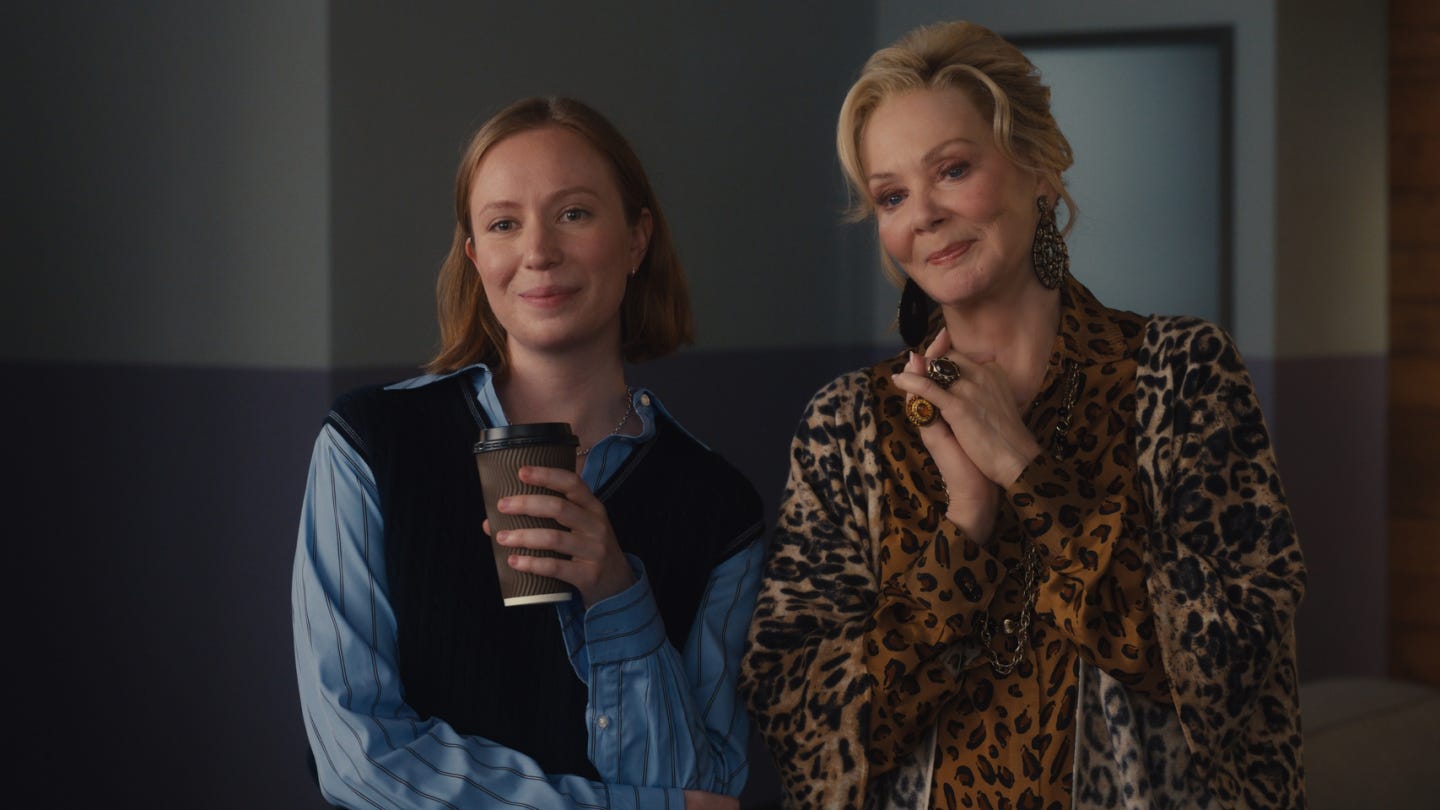
The episode closed with Deborah and the people closest to her in a huddle near the stage just before the show, celebrating the success of outmaneuvering her biggest nemesis and emerging triumphant before tens of thousands of eager fans. As that scene went to black, I turned to my wife and said, “That was the perfect way to end a great series.”
Fast-forward to a few days ago, when my wife and I were visiting with my sister and sister-in-law, and the conversation turned to shows we each had been watching. Chris, my sister, brought up Hacks, and I said, “Yeah, we just finished with that one. Wasn’t that a great ending, with everyone finally together and on top of the world?” Chris gave me a funny look, and said, “Wait, you didn’t see the one in which Deborah and Ava went to Paris?” And I gave her a funny look and said, “Wait, what? I didn’t see that one.” I turned to my wife and said, “Did we miss one?’
Oops. Turned out we did.
So, last night, Sue and I watched the “finale” that had aired ten days before. (Is “aired” still the right term? Probably not.) We watched it, enjoyed it moderately, and after it was over, I turned to my wife and said, “I think I preferred the previous episode as the perfect ending.”
I then spent some time unpacking that response in my mind. It comes down to a few things:
• Really, what more did the show have to say? Deborah’s comeback was complete. She was going out—or going on—on top. Ava’s future was secure. Her foe was outfoxed. Her inner circle was reunited and fully supportive. Jimmy and Kayla were nominally down, but did anybody really worry about what would come next for them when they had America’s top entertainer in their corner? What story or character arc was incomplete?
• I fucking hate cancer as a storytelling deus ex machina. In storytelling, it is often deployed with precision timing to milk maximal sympathy, to erase all unpleasantness, to magically redeem all sins. It is a Golden Ticket, a Get Out of Story Jail Free card. (And don’t get me started how nobody with TV cancer ever looks like they actually have cancer, or the fact that the longer they go with cancer, the healthier and more glowing they look.) Yes, cancer happens, but in most storytelling in my experience, it is a cheat code, a contrivance, a conflict-killer. Is unearned redemption the primary side effect of TV cancer?
It isn’t used this way, quite, in Hacks, but why was it used at all? Deborah’s arc was complete. So was Ava’s. So who is this for? The audience? All I can think is that this feeds the audience that is there primarily for the show’s camp elements, and in the world of entertainment, few things are campier than cancer, where it’s the embodiment of the universal “Now everybody has to be all about me all the time” fantasy. It’s just … Deborah has already earned my sympathy by everything she went through up to that point. Why compound that with an injection of unearned sympathy?
• I think what bothers me the most about the Hacks finale is the way the episode plays to the lowest common denominator of audience expectations. My personal preference is for stories that don’t give away everything — stories that offer enough context clues and cues to allow me to infer what isn’t being revealed. By being invited to interpret those cues and clues, I feel invited inside the story to a far greater degree than a story that holds nothing back. And it helps me better engage emotionally with the characters, to worry about them and to release that worry when the characters are active agents in their own outcomes. I like that feeling. Enjoying a story shouldn’t be a passive experience … but that’s just me. A friend has told me that there are millions of readers who feel differently. Maybe you’re one of them, a reader who just wants the story to wash over them and warm them like a bath, something you don’t have to think too hard about. I’m just not wired that way, though sometimes I wish I was.
That all said, despite its inessntiality I did enjoy the finale, and especially the “big hands” reveal between Deborah and Ava, which made me laugh out loud. And despite my aversion to camp, I enjoyed the series as well, as at its heart it was all about female friendship, and the obstacles ambitious and competitive and ego-consumed women have to overcome to find the truest parts of each other … and of themselves. And I find those stories immensely satisfying. My wife and I regularly rewatch the three seasons of Dead To Me just for the fuck-you-but-fuck-anyone-who-fucks-with-you dynamic. Now that show had a finale with a great deal of story value.
No posts
Comments
Nothing yet. Say the first thing.
Sign in to join the conversation.