
In June 1776, Thomas Jefferson turned in his draft of the Declaration of Independence. But that was far from the final version that most Americans know, and revere, to this day. The document was handed over to a five-member committee of the Continental Congress, and those folks — Benjamin Franklin, John Adams, Robert Livingston and Roger Sherman, along with Jefferson — spent the next two days red-penning and revising Jefferson’s words.
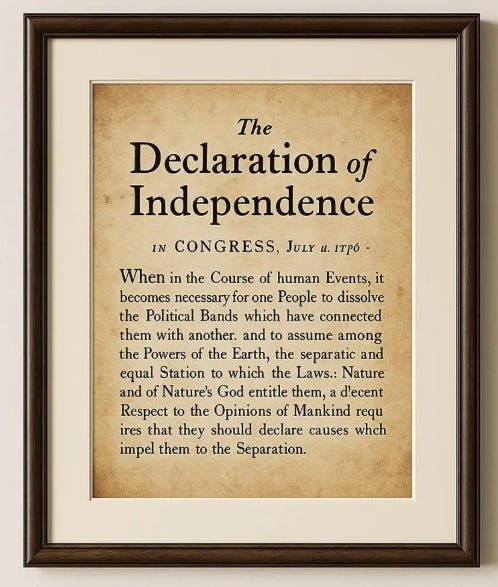
The final draft that emerged from those sessions, the one signed and ratified on July 4, did not make Jefferson happy. According to constitutionfacts.com, the other members of the Declaration committee “made 86 changes to Jefferson’s draft, including shortening the overall length by a fourth.” As a result, “Jefferson was quite unhappy about some of the edits.”
Jefferson biographer John Ferling wrote that the future third American President felt the committee had “mangled” his work. (Even though, Ferling added, the final draft was “the majestic dociment that inspired both contemporaries and posterity.”)
At least everybody knew who did what. And that’s important.
* * * * *
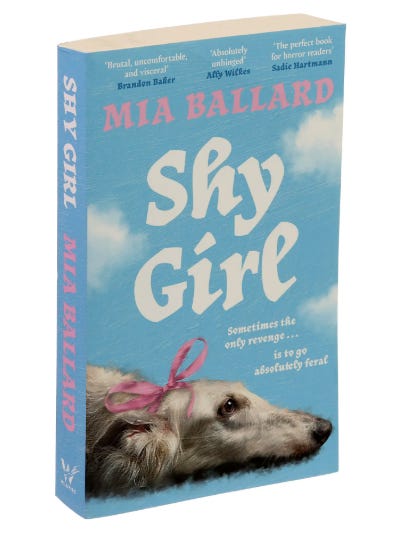
Fast-forward 250 years, to the present day and the story of author Mia Ballard and her novel, Shy Girl.
Many of you know the basics: Shy Girl was a self-published phenomenon, and its thousands of enthusiastic Goodreads review prompted Hachette, a major New York publishing house, to pick it up. And at some point, a growing chorus of suspicion that the novel had been written in large part through A.I. tools prompted Hachette to review the novel, and that review found that the novel was in fact largely the product of A.I. (The New York Times broke the story; here’s a free copy of that article.) As a result, Hachette canceled the publication of Shy Girl, citing their belief that any work of art should be solely the product of the author’s artistry.
All that’s fascinating, but as a longtime editor, here’s what struck me from the article:
In an email to The Times late on Thursday night, Ballard denied using A.I. to write “Shy Girl,” contending that an acquaintance she hired to edit the self-published version of the novel had used A.I.
“This controversy has changed my life in many ways and my mental health is at an all time low and my name is ruined for something I didn’t even personally do,” she wrote, noting that she could not elaborate on how the book had been edited with A.I. because she was pursuing legal action.
Insert the sound of a needle scratching a record here.
I had so, so many thoughts.
One, I’ll bet anything the editor — if the editor even exists — is not to blame.
Two, is there even an A.I. tool that allows an editor to replace human writing with bot writing? (I admit that I’m not very current on such technology, but I do keep half an ear to the ground for the sake of the relevance of my business, and I know of no such thing. Feel free to educate me if I’m wrong.)
Three, why didn’t the author see what the editor had done and change all the changes back to her own words in her revisions before publishing the novel? What author wouldn’t go over every single word to verify that they were exactly as she had intended them to appear?
Four, what editor would do this, and why? I know no editor like this, and I know a lot of editors. None of them would risk their reputations by being associated with A.I. use.
I’ve been a full-time manuscript editor for seventeen years (following more than a decade as a newspaper editor). I’ve worked with more than a thousand clients on more than three thousand novels during that time, and every single editing job I’ve done has ended the same way — me delivering the edits to the author to accept or jecet as they see fit before they publish the work themselves or submit to a literary agent or a publishing house.
How much work they do between my delivery of the edits and whatever they do with the work is not always clear — in a few cases, elderly clients bumfuzzled by technology have asked me to re-send them a version in which all edits are accepted in Track Changes — but the option to shape my work as they see fit has never not been there. It’s their work, after all.
This is not to say that every single client has been happy with my work — in one case, in the early days of my practice, one client angrily wrote to me to say that my final edit had been rife with errors. He wanted me to waive my fee and fix the mistakes, and I did. (I found about twenty minor proofing-level errors, such as two spaces between sentences, as opposed to the “hundreds” he claimed, in a careful line-by-line review. Later I asked him for examples of my perceived errors, and almost all the examples he provided were not in fact errors.)
But that’s nowhere close to the author just taking ny work on faith and moving it along. Because what author with any pride of ownership over their original work would do that?
* * * * *
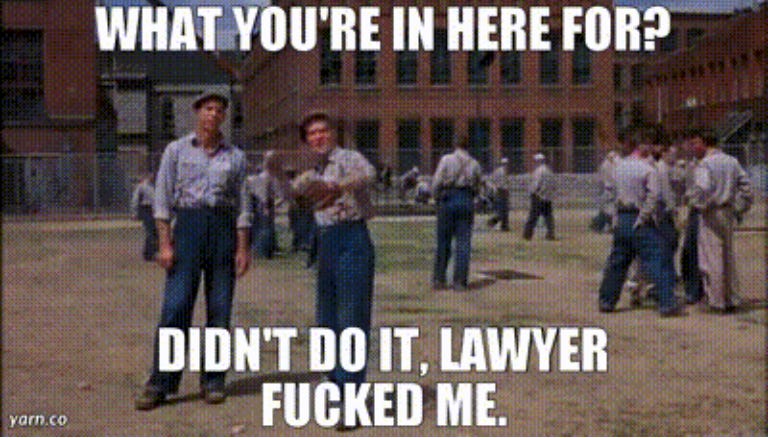
That said, I get it. Editors are convenient scapegoats when mistakes are found in the final, published product. It’s from the “dog ate my homework” school of blame, and reminds me of the classic line from the film The Shawshank Redemption, in which Red, the film’s point-of-view character, learns that his new prison buddy Andy claims to be innocent of the murders for which he has been convicted. Red chuckles knowingly, tells Andy “Don’t you know that everyone in here is innocent,” and turns to his buddy Heywood to make his point:
RED: “Heywood, what you in here for?”
HEYWOOD (automatically): “Didn’t do it. Lawyer fucked me.
(Now I’m cracking up, thinking of Thomas Jefferson saying: “Didn’t write it. Franklin fucked me.”)
We editors are easy to blame, because, like Andy in the movie, how do we prove we didn’t do it? I could show my edits to anyone who cared to see them, but I suppose the author could claim that I fixed my mistakes after the fact, after they were raised. (Luckily I’ve never had to do that; the client in the above anecdote never aired his claims on social media or any other public platform.)
But it does happen, and while I think I’m pretty good at what I do, I make no claim to perfection. But I always strive for it — my typical line-edit involves two complete passes through the manuscript, and sometimes a third if I get that nagging itchy feeling that there might still be more to catch and clean up. I want a good reputation in this business, and reputation really is everything — especially considering how much of my work calendar is filled with jobs obtained through referrals from clients past and present. If I didn’t give my absolute best every time out, I doubt I’d have that reputation — and I’m pretty sure my calendar would have a lot of holes in it as a result.
And it’s not just me. I read The New York Times in depth every day, and every so often I come across a correction at the bottom of an article that begins: “Because of an editing error …” A Times copy editor even wrote a piece about it, and tried to get at the heart of what makes an editor hurt a story by trying to improve it:
My latest foray into the Corrections list came last month when I wrote a photo caption identifying Senator Tom Udall of Utah. And by Utah, obviously, I meant New Mexico. Because that’s the state he represents. (Until this week.)
… So how does this happen? In many wonderful and colorful ways. In this case, I’m pretty sure I typed “Udall” and then typed “Utah” because of the alliterative assonance. The brain plays funny tricks like that. You can be absent-minded: I have typed the first names of friends who have the same last name of the person I was actually writing about. Or you can simply be lazy: I misspelled both “Micheal Jordan” and “Wayne Gretsky” … in the same headline.
I have had conversations with my fellow editors about how our work is not the kind that rewards a grind-it-out ethic. That we have only so many hours of what I call our “A-game brain,” and when A starts slipping into B, it’s time to set the work aside for the day because the risk of missing errors — or introducing them — is too great to risk it. But , I admit, I don’t always know when A slips into B, especially when I’m pounding away at a deadline, and … well … yeah. Shit happens, and shit publishes.
But those are all human errors made by humans. Like every other credible editor I know, we are responsible for the quality of every document we return to our clients. And there’s no way I’d risk my reputation for that by trusting my work to anything outside of my brain beyond basic programs for checking spelling and grammar — and I check those checks as I go, because sometimes they’re wrong. Whatever I do and whatever I use, the responsibility for responsible use of these tools lies solely with me.
And the author who goes through everything and decides on their own when it’s good enough to put out into the world with their name on it.
* * * *
So, I find myself extremely interested in Mia Ballard’s claim that she is planning to pursue legal action (against who isn’t clear, though).
Because the minute she files a lawsuit, the burden of proof is on her to show that she was the victim of a wildly overzealous editor, and that she had no ability to check that editor’s work before she published. I can’t imagine any world in which that could be proven or presented as a plausible.
But even more interesting that that is the fact that she would have to identify that editor who did this horrible thing to her, and even have that editor explain how they substituted the judgment-free judgment of artificial intelligence for human discernment — and how she allowed this happen when she should have had positive control over the entire pre-publication process as a self-publishing author.
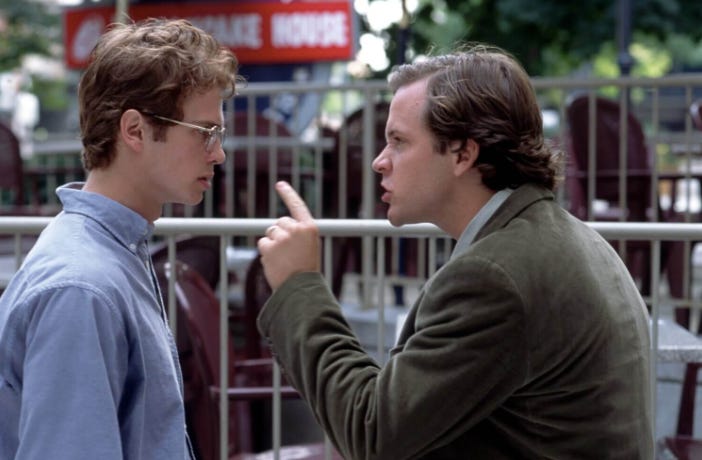
I think what would happen in such an instance would be something very like what happened to Stephen Glass, the New Republic writer who invented most of his stories for that magazine in the late 1990s. When confronted with facts that couldn’t be verified in his published work, he came up with more lies to prop up hies lies — including creating fake websites, falsified emails and voicemails, and other flimsy deflections. He even deployed that most classic lie of all in publishing — that many of his “mistakes” were made in the editing process. (See Shattered Glass, the film about it — it’s excellent.)
None of it held up, and soon Stephen Glass was gone. Banished. As I suspect Mia Ballard will be if she continues to blame her “editor.”
No posts
Comments
Nothing yet. Say the first thing.
Sign in to join the conversation.