
Switzerland’s national debt brake is often cited as the world’s most effective constitutional limit on federal government spending and debt. The Swiss debt brake was ratified via referendum in 2001 by 85% of Swiss voters and effective as of 2003.
I burned through over an hour of ChatGPT and Claude compute time (about $25 combined vendor cost to provide that service), involving several waves of error detection and correction to produce the below “lessons learned” charts. Subject to caveats (non-comparable data and policy, correlation/causation, I am not a statistician, etc.), we can safely conclude that constitutionally-imposed fiscal limits in the U.S. would:
Reduce consumer inflation and interest rates over time. If U.S. mortgages were at Swiss interest rates, a typical household purchasing a median priced U.S. home today with a fixed rate 30-year loan, homeowners would save almost $9,000 every year, more than one-quarter million dollars over the life of the mortgage. A life-changing savings.
Not require poorer healthcare outcomes or weaker retirement income security. Note that Switzerland spends significantly more on retirement income security as a percentage of its economy.
The comparative debt/GDP and healthcare system data show three key differences between the U.S. and Switzerland:
The U.S. spends 3% more of our GDP on deadweight debt service, that is interest payments for past spending, almost none of which contributes to current government services and darkens economic prospects for younger generations.
The U.S. spends 2% more on defense, a difference likely to rise given increasing national security threats, and, left and right populism notwithstanding, our likely continuing key role in global security. Switzerland benefits from this at very low cost to its taxpayers.
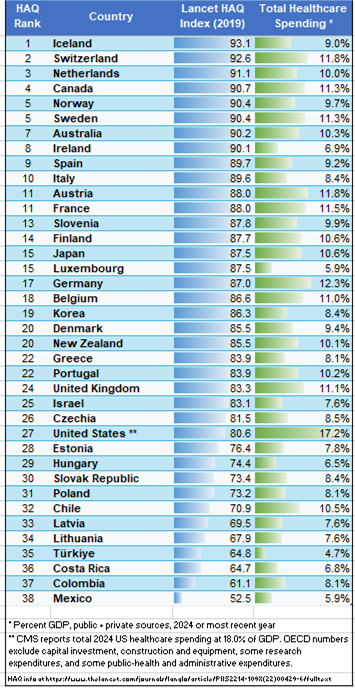
The U.S. has by far the world’s most costly, yet grossly underperforming healthcare system, ranked 27th in the world in outcomes, a damning measure of quality and effectiveness. The Swiss have the world’s second most expensive healthcare system, ranked second and nearly topping the world in outcomes. If total U.S. healthcare costs were reduced to the still second-highest-in-the-world Swiss levels, the federal share (31%) would be reduced by almost $600 billion annually, 2% of U.S. GDP. (The 2% savings figure is derived as follows from 2024 data: US minus Swiss spending as % US healthcare spending * federal spending share including state Medicaid match * U.S. healthcare spending = (18.1-11.8)/18.1 * 31% * 5.3T = $570 billion = 2% of US $29.3T GDP.)
Is the Swiss healthcare system less costly because it is more “socialized”? By the numbers, no. Thirty percent (30%) of Swiss health care is government funded, 47% for the United States. However, the less socialized Swiss system mandates lifetime health insurance coverage provided by competing private nonprofit carriers with income-related government premium subsidies.
For decades, Congress has failed to grapple either with its debt addiction or to reform our costly, poorly performing healthcare system. When implemented and over time, the needed fiscal responsibility constitutional amendment will yield a reduced federal debt service burden and will force healthcare system reform, without which a fiscally responsible federal budget will not be possible.
Purely to illustrate feasibility, over a 10-year phase in, we could reduce annual deficits from the current 6% to 2% of GDP by reducing annual debt service by 2% of GDP and federal healthcare spending by 2% of GDP, yielding a fiscally sustainable federal budget without any other budgetary changes or tax increases.
We cannot make light of the immense policy and behavioral challenges posed by trimming U.S. healthcare spending by 30 percent plus, a reduction which would nonetheless leave us with the world’s most expensive healthcare system. Among the needed changes are: cost reductions across the board for services and drugs, reduction of administrative complexity, simplification of current fragmented financing, increased care continuity and reduced care fragmentation, more robust anti-trust enforcement, increased emphasis on and prompt access to primary care, reduction in defensive medicine and malpractice insurance costs, and voluntary adoption of healthier lifestyles and diets to yield reduced chronic disease.
For example: Swiss and American adult obesity rates are 12 and 40 percent. Swiss and American adult diabetes rates are 5 and 15 percent. Insulin is ten times more costly in the US than in Switzerland. While physician pay is very similar, Switzerland has 60% more physicians per capita.
Chart 1: 15-year fixed mortgage rates, U.S. vs. Switzerland, 2016–2026
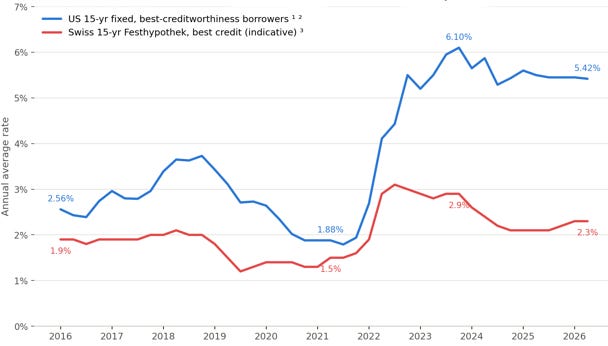
Chart 2: Consumer price inflation: U.S. vs. Switzerland, 2016–2026
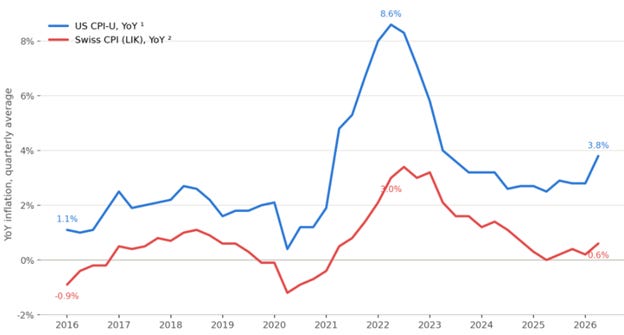
Chart 3: Government gross debt all levels: U.S. vs. Switzerland, 2000–2025
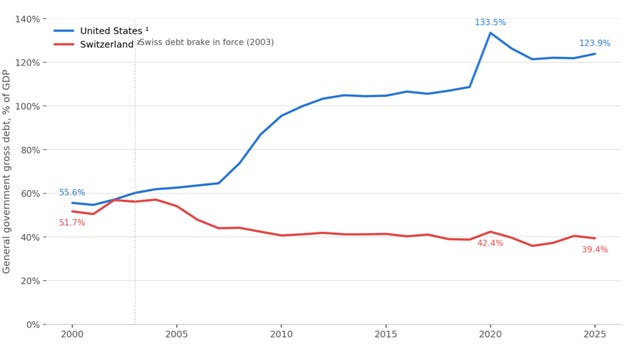
Chart 4: Federal government and healthcare spending as a share of GDP, U.S. FY 2025 v. Switzerland 2024/2025
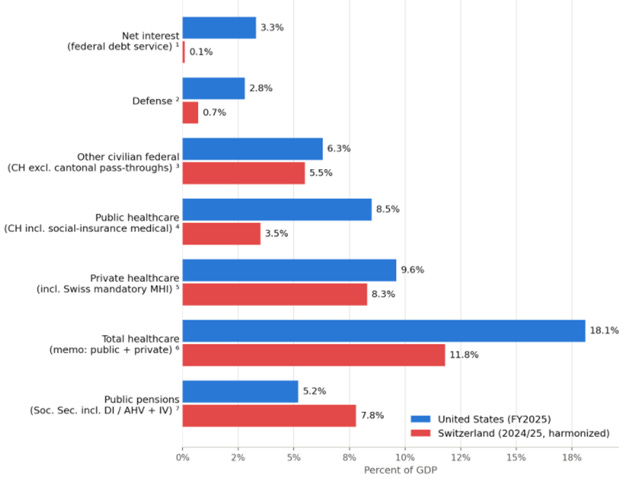
Chart 5: OECD Healthcare Access & Quality and Healthcare Spending
Please reply if you’d like to see notes, assumptions, and sources for these charts.
National Seniors Policy Center: How Government Debt Default Would Catastrophically Undermine the Social Security Trust Fund
“While much attention has been paid to Social Security’s projected 2034 [updated to 2032 in June] trust fund depletion and demographic challenges, these concerns pale in comparison to the catastrophic and immediate threat posed by a potential US government debt default. Unlike the program’s long-term actuarial shortfall — which is predictable, manageable, and solvable through incremental policy adjustments — a debt default would instantaneously and irreversibly destroy the foundational premise upon which Social Security’s entire financial structure rests: the full faith and credit of the United States government.
The Social Security Trust Fund currently holds approximately $2.4 trillion in special-issue Treasury securities. These are not merely accounting entries but legal obligations backed by the government’s promise to pay. A debt default would not only compromise the Trust Fund’s ability to redeem these securities when needed but would trigger cascading financial, economic, and systemic failures that would make Social Security’s existing challenges appear trivial by comparison.”
Comments
Nothing yet. Say the first thing.
Sign in to join the conversation.