
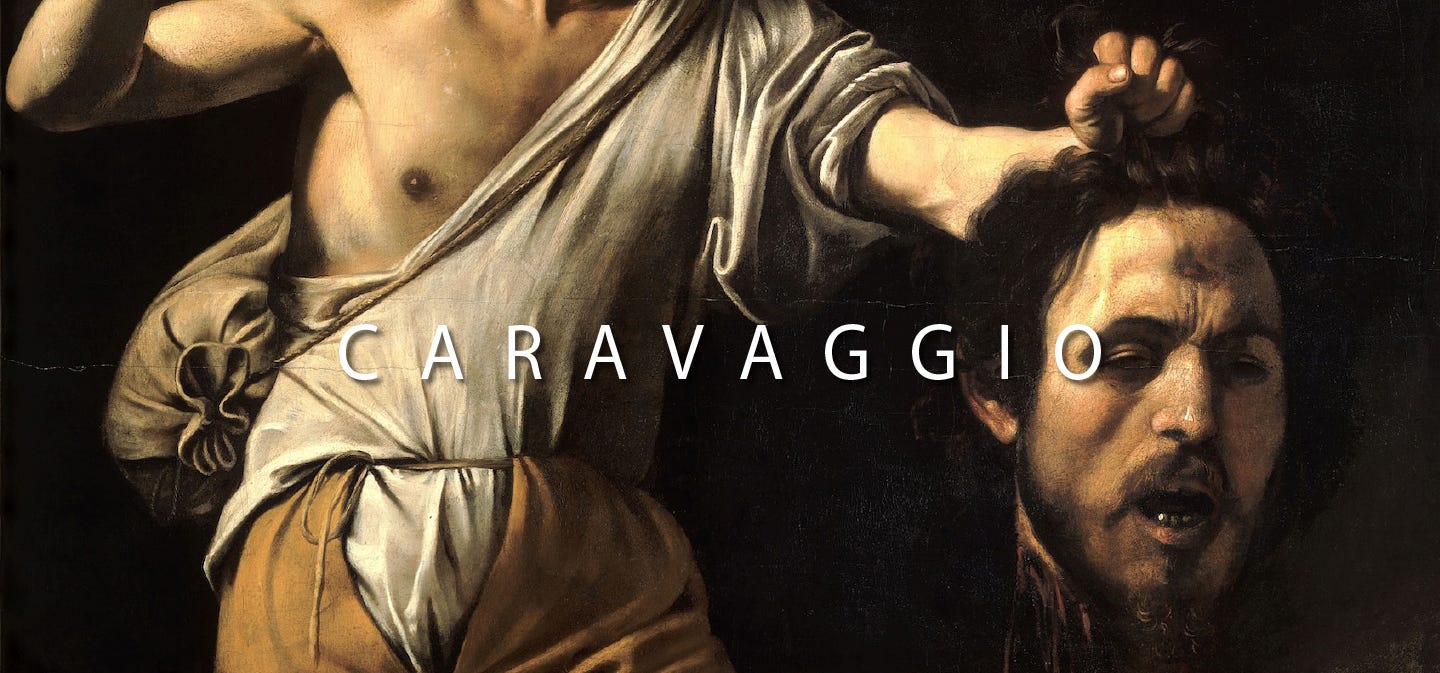
Years ago, I went to the Louver and Versailles, among other notable art destinations in France. Especially at Versailles, I remember zoning out on all of the large, religiously themed Renaissance art. Although it required a level of skill, it just felt devoid of feeling. Fortunately, an artist arrived on the scene to put an end to that 200-year era and usher in the Baroque era.
Thank you, Michelangelo Merisi da Caravaggio (1571–1610).
Although I’m not a fan of many of his personal choices of conflict, crime, murder, and exile, I do love his radical realism, dramatic illumination, and how he chose to interpret stories differently than those who came before him.
I’ve often wondered if the tough challenges he faced early on in his life spilled out into his paintings. After being orphaned early in life after the plague killed his family, he served a four-year apprenticeship under the Milanese painter Simone Peterzano, where he learned the fundamentals of Lombard painting. This style focused more on simple observation, emotional intimacy, and atmospheric light. Before this, most artists were more focused on intellectual geometry and precise draughtsmanship, and unemotional things like that.
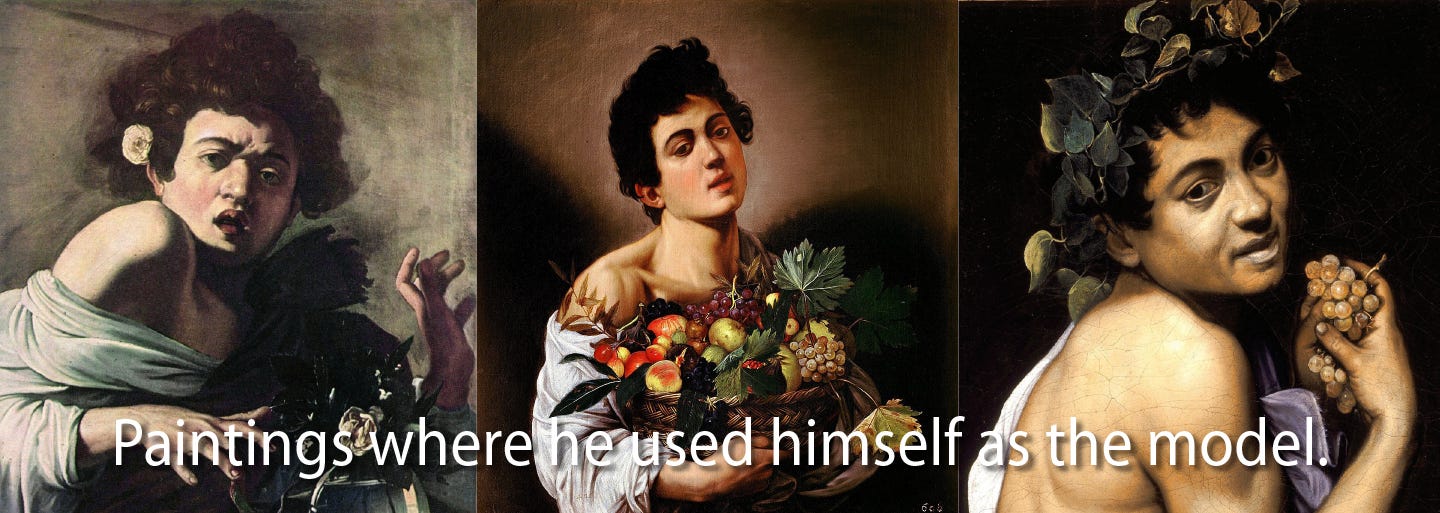
Instead of idealizing figures according to classical standards, he selected ordinary, working-class people—laborers, street youth, and prostitutes—to serve as models for biblical figures and saints. Of course, he upset many traditionalists with his art.
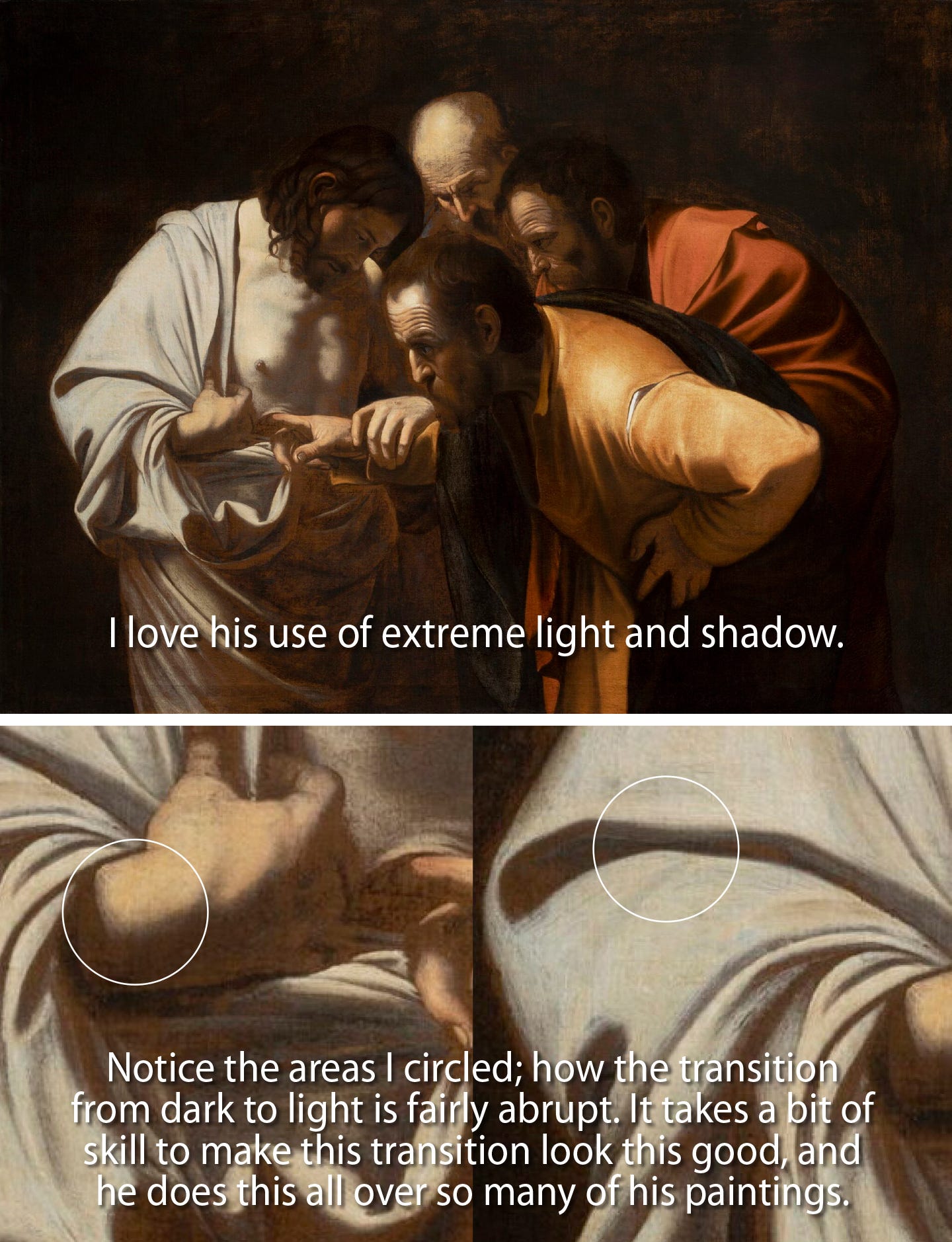
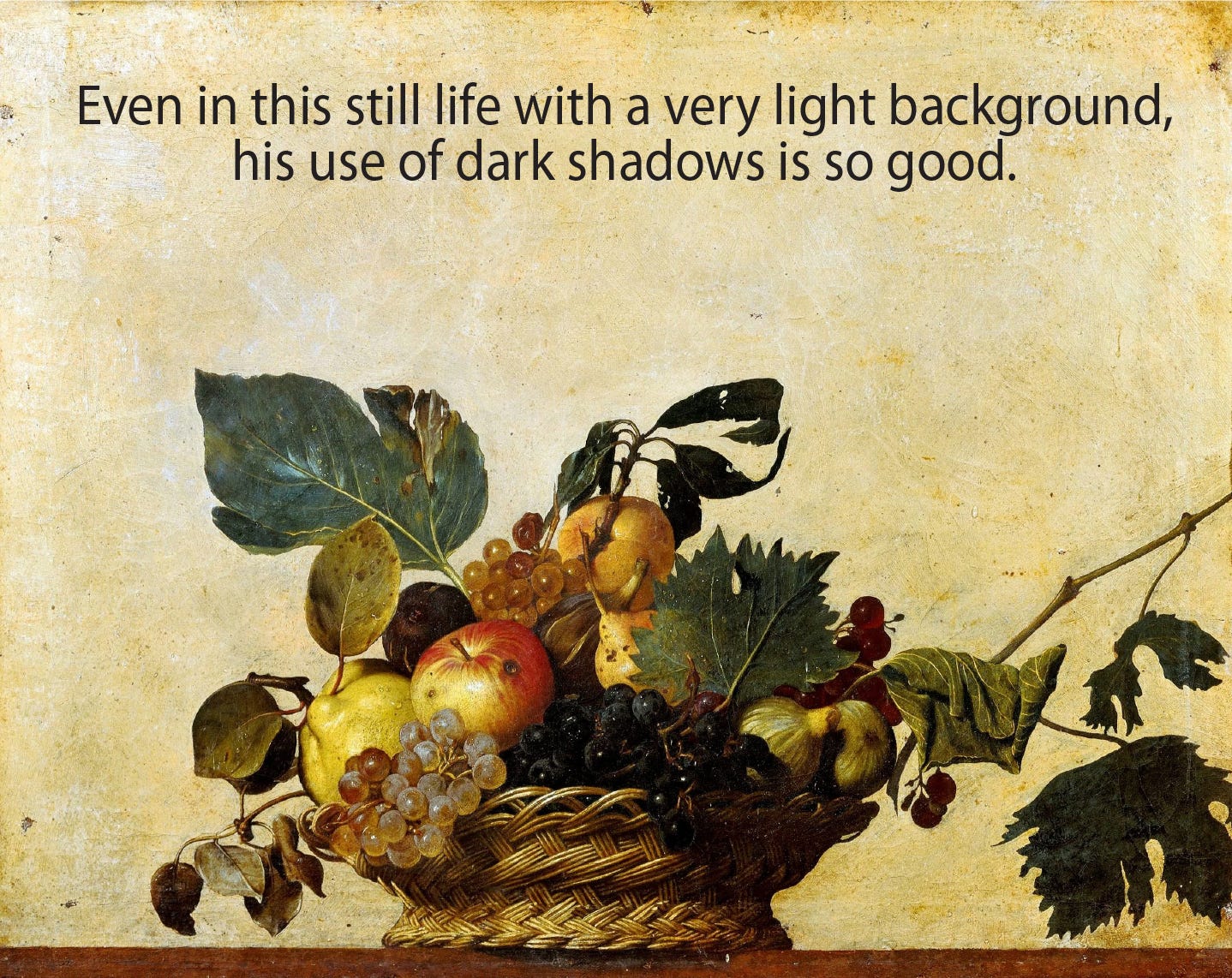
I had never heard of Tenebrism until I studied Caravaggio. It stems from the word tenebroso, meaning gloomy or dark. It is a style where darkness becomes the dominant feature on the canvas. Caravaggio often worked in this technique, marked by extreme contrasts between deep shadows and intense, focused light, creating theatrical, high-stakes narratives on his canvas.
• His gritty portrayals of sacred themes frequently sparked scandals among religious authorities.
• He killed a man named Ranuccio Tommasoni over a dispute.
• He left Rome and spent his remaining years after the murder in exile across Naples, Malta, and Sicily.
• After injuring a high-ranking knight in Malta in another brawl and was imprisoned until he escaped.
• In 1610, receiving word that a papal pardon was being negotiated, Caravaggio set sail back toward Rome. He fell ill along the journey and died in Porto Ercole at the age of 38 under mysterious circumstances.
• His work deeply influenced masters such as Rembrandt, Peter Paul Rubens, and Diego Velázquez.
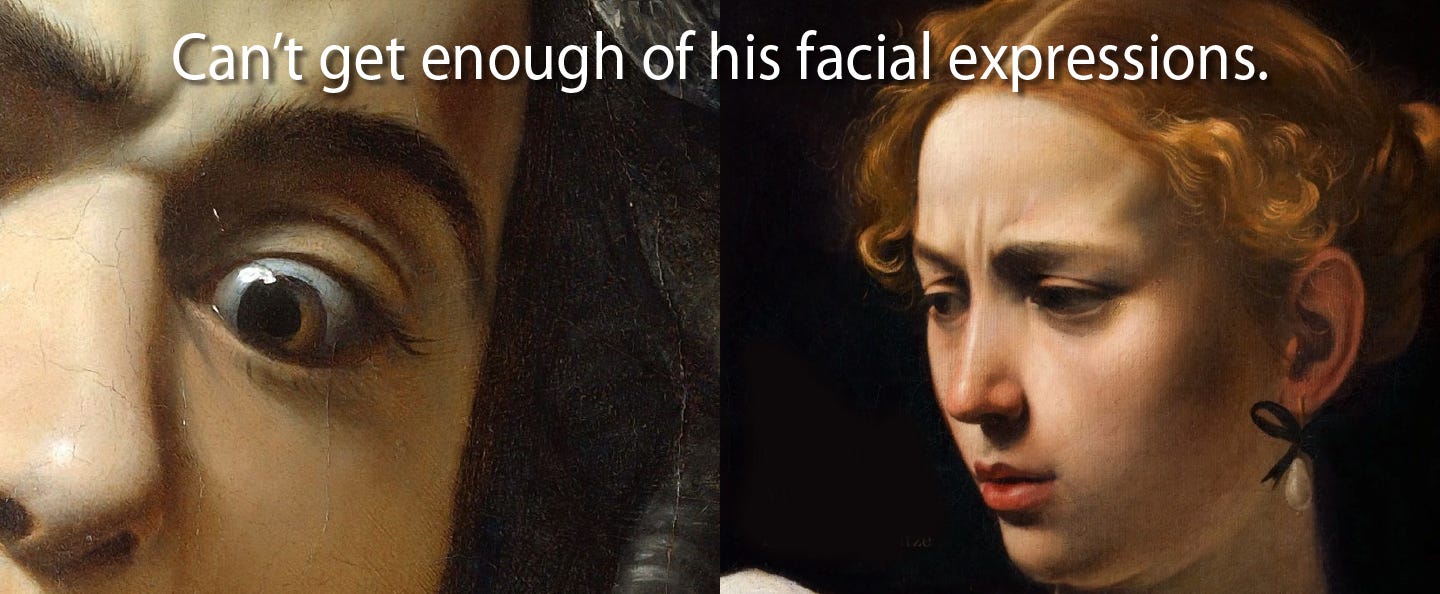
So, I do believe that his tumultuous life spilled out into his art, and that he celebrated this idea. Had he not, it’s possible that his paintings would have just been another painting that I glossed over at Versailles.

No posts
Comments
Nothing yet. Say the first thing.
Sign in to join the conversation.