
One of the questions we all wrestle with on Substack is who we are writing for.
You may quickly react saying “No, I know who I write for, I write for me!”
Or you swing the other way: “No, idiot, I am writing for my audience and I know exactly who THEY are!”
I am not here to tell you who to write for, or how to write.
What I do know is that most of us swing on a vast pendulum, and few of us have resolved where we will land.
On the one side, writing for your audience. On the other, writing for your Self.
Personally, I think of it this way:
1/ Essay
In my weekly Substack, I am always trying to work with a genuine problem I am facing in my creative life. I figure that if I can solve it, or shed some light onto it, that will in turn help my readers. Sometimes I can’t solve it, but the very naming of the problem helps.
So my essay is written for myself first, but very much with audience in mind. Inwards and outwards facing at once.
2/ Notes
My notes are 70% audience first — sharing my own insights on creativity in a way that can help others. The other 30% is about my artistic journey, keeping my audience up to date on whatever project happens to be currently torturing me (!)
3/ Replies
My replies to other people’s Notes and comments are 100% about the reader and trying to help where I can. These conversations bring me a lot of joy.
I was mulling all this over when I stumbled upon this quote, which inspired the video:
“Your audience is one single reader. I have found that sometimes it helps to pick out one person, a real person you know, or an imagined person, and write to that one.” — John Steinbeck, in a 1962 Paris Review interview
What I love about this is that it’s a good frame for when you are stuck or unsure.
It is easy to dilute what you are trying to say by going too broad. You pull back from specificity, or worse, you pull back the sharpness of an opinion by trying to write for everyone.
I think good writing says something.
So what exactly are you trying to say?
Are you daring to be you in your writing? I think you should — because I see writing as the way the unformed Self gets to know itself a bit better.
Beyond that, the environment has changed since Steinbeck’s time. You don’t have to imagine your reader. In Substack Notes, your audience is always speaking to you. You can read what they are thinking.
In terms of — forgive me the phrasing — the tactics of a newsletter, that is very useful. Because while you want to offer your gift through your writing, you also want to help others on their own journeys.
Which means simply: read what they are telling you. If it strikes you in the heart, tell them. If you see a pain point you might help with, take the time to try.
They subscribe because you are articulating a thought in a way that makes sense to them. If you can be precise in your language, and meet them in that liminal space between one thing and the next, they may well subscribe.
Of course, people also subscribe to wonderful writing for its own sake!
But here’s the thing. A newsletter is not really for you or for your audience. It is both.
That is not a hedge. It is simply to say that a Substack is wonderfully dynamic, and if you frame it right you can use it as a vehicle for your own inner adventure while offering something to others along the way.
Since I understood that, my Substack started growing far quicker.
The change?
By writing for the one, I realised I was writing for the world.
If you have any questions about your Substack, or would like me to take a look, drop a comment below. I will be slow as I’m off on holiday, but I will reply to every comment.
Love Jim
p.s. if you want to learn how to better promote a creative life, check out “The Substack Workstation” below.
I spent a lot of time thinking about how creatives can better promote a creative life.
To help me visualise it, I put everything I’ve learnt into one workspace.
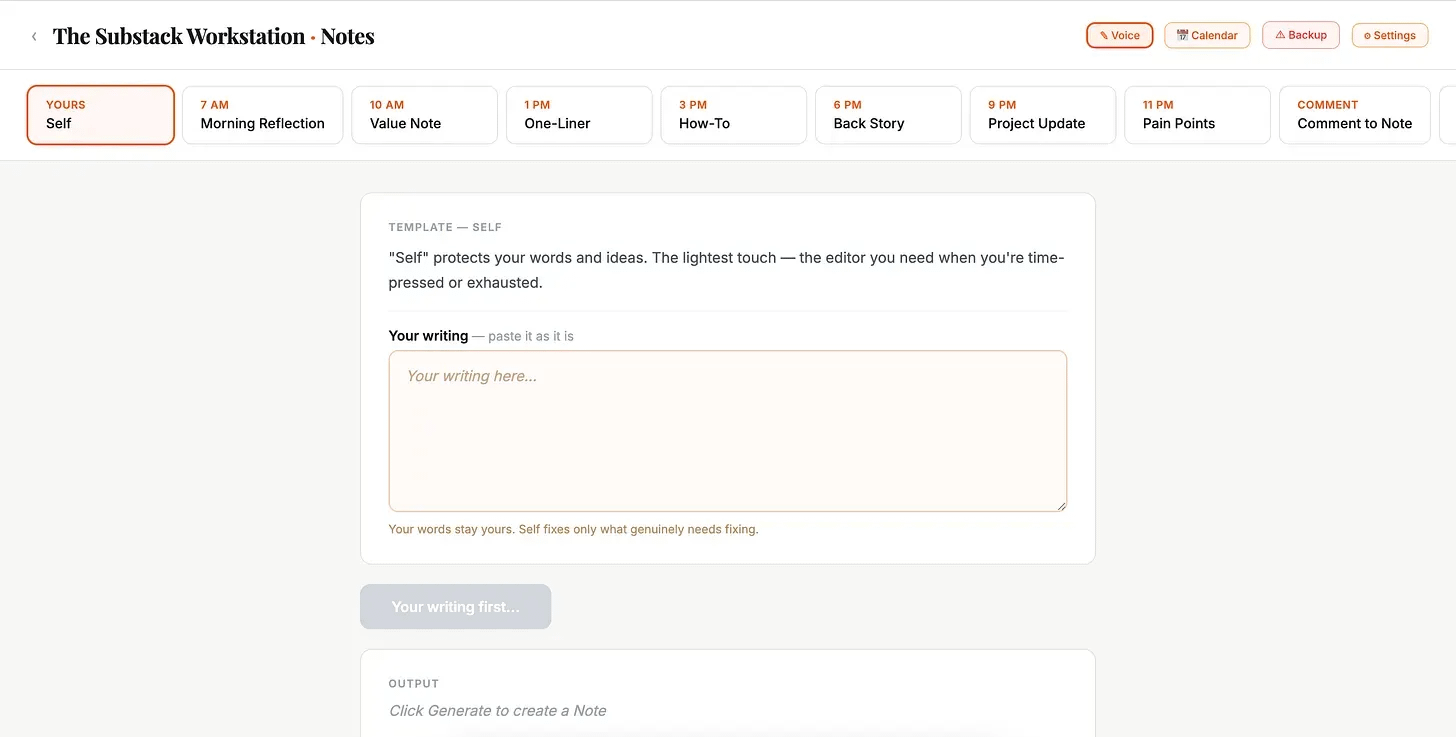
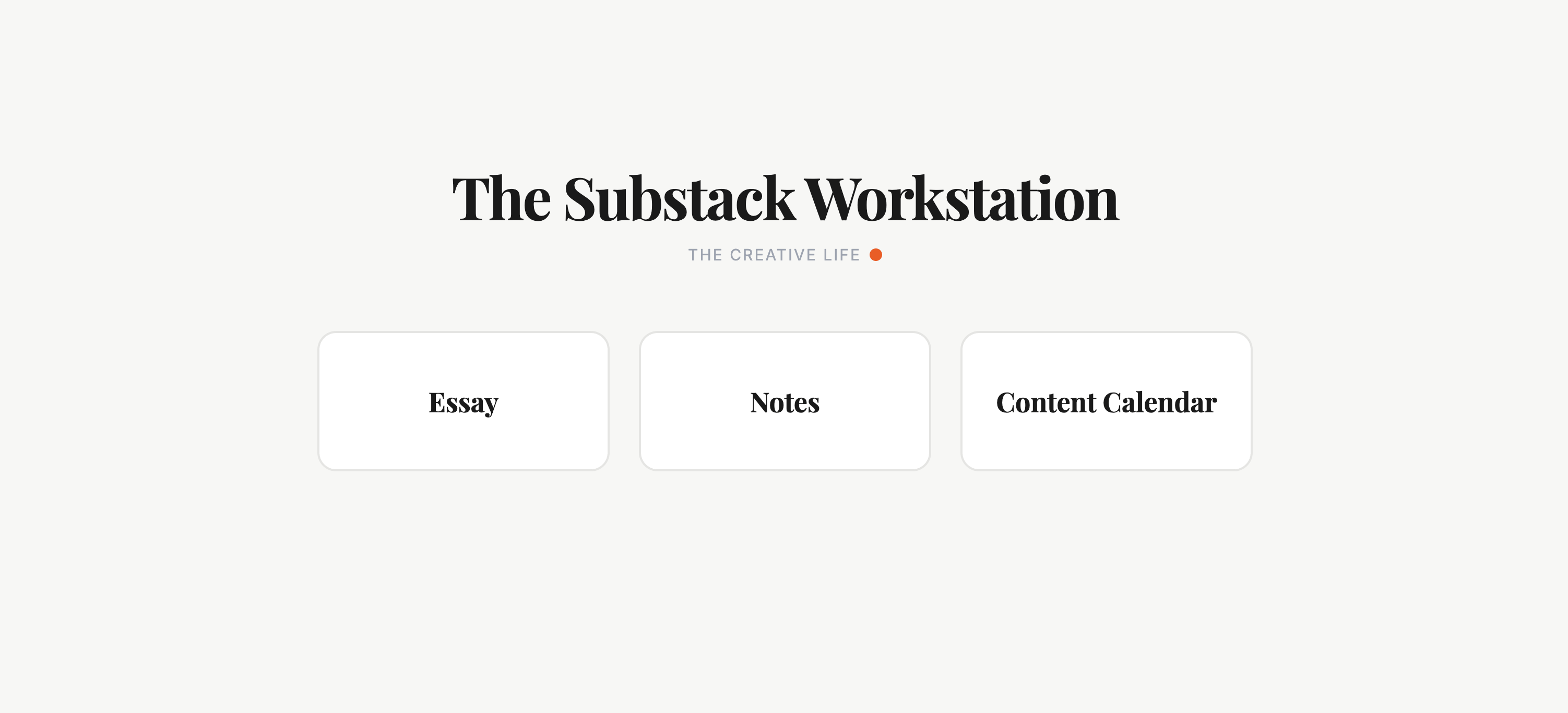
The Substack Workstation helps me:
1) Extract the best “Notes” from my weekly Substack Essay Beyond that, it deals with the promotional side of Substack, so that I can spend the time writing, researching and thinking. You can check it out for free here:
2) Turn comments I leave elsewhere into Notes of my own
3) Think of posts as a body of work rather than one-offs
Comments
Nothing yet. Say the first thing.
Sign in to join the conversation.