
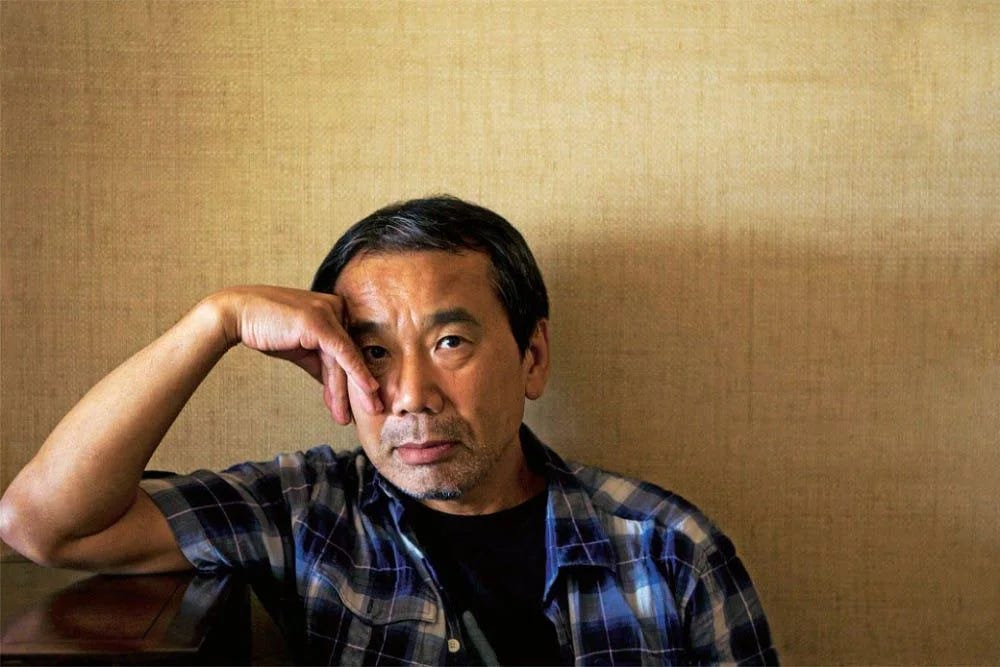
In Short: Murakami on running is not a book about creative process, but a way of life. Here's what it's teaching me about mine.
While on holiday I reread several books that have inspired me. I drew even more joy from Murakami’s “What I Talk About When I Talk About Running” than on first reading. What an extraordinary field guide to one man’s unique process.
In today's Substack I'm going to walk through my personal reflections on Murakami's process, and what I take from it. I am no Murakami scholar, this is simply a reflection on how a creative great is inspiring one human life.
I hope this light format gives you some ideas to quickly grab, implement — or reject — as you busy about your own projects.
With love, Jim
The Substack Workstation: I built a workspace to help creatives promote creative life
On My Radar: my life is uplifted for having indie author Orna Ross📚 in it
Substack System: I use this free tracker daily — comment “system” and I will send.
I hope a few of my thoughts dig beneath Murakami 101 — and I want to ground this in a curiosity that is so obvious that it is easy to miss.
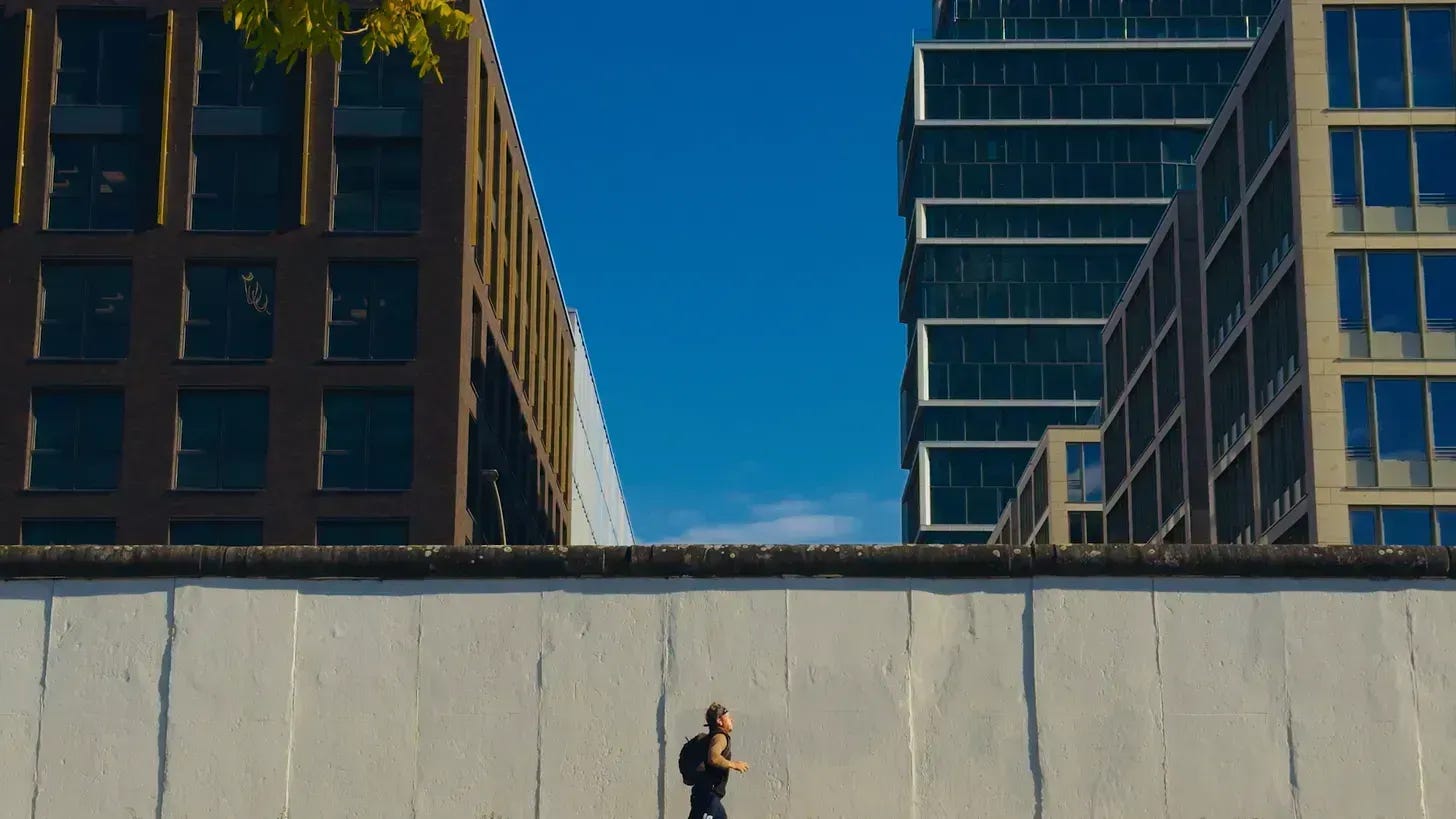
Murakami runs!
Yes, but what does that mean for us?
I look at creativity as the curation of energy. Not the energy in the artwork, but the energy that you bring to the artwork.
So when I look at the creative routine of others, I am often looking for how they cultivate it.
Many, like Francis Bacon used drink, of which he said: “I think perhaps the drink helped me to be a bit freer.”
Yet in the next turn he says, “I don’t actually believe that drink and drugs help me.”
At this stage of my life, I am interested in what does help me.
So when I look at someone’s creative process, I am looking not just at what they are doing in the creativity itself, but at how they prime themselves before they enter it.
Murakami’s book is not about creative process specifically — it is about a way of life.
As you read, you realise that though running is a separate activity from novel writing, it becomes harder and harder to see the line between the two. Each exists to serve the other; each is educated, informed and sustained by the other.
My takeaway is that the sooner you start considering your creative life a living ecosystem, the sooner you will unlock new reserves in yourself.
Can you say “no” to one activity because you know, deep down in your heart, that it is not serving your greater purpose?
When you look at the best in the world, in almost any field, their whole life points toward the work — even if, as with Murakami’s running, you could miss it on the surface.
I know, I know.
We resist it.
“I’m not a runner.”
Or the murmuring voice inside: “ach, I just don’t have time for the gym.”
I’m going to say it directly to you, because I’ve said it so punishingly to myself: horseshit.
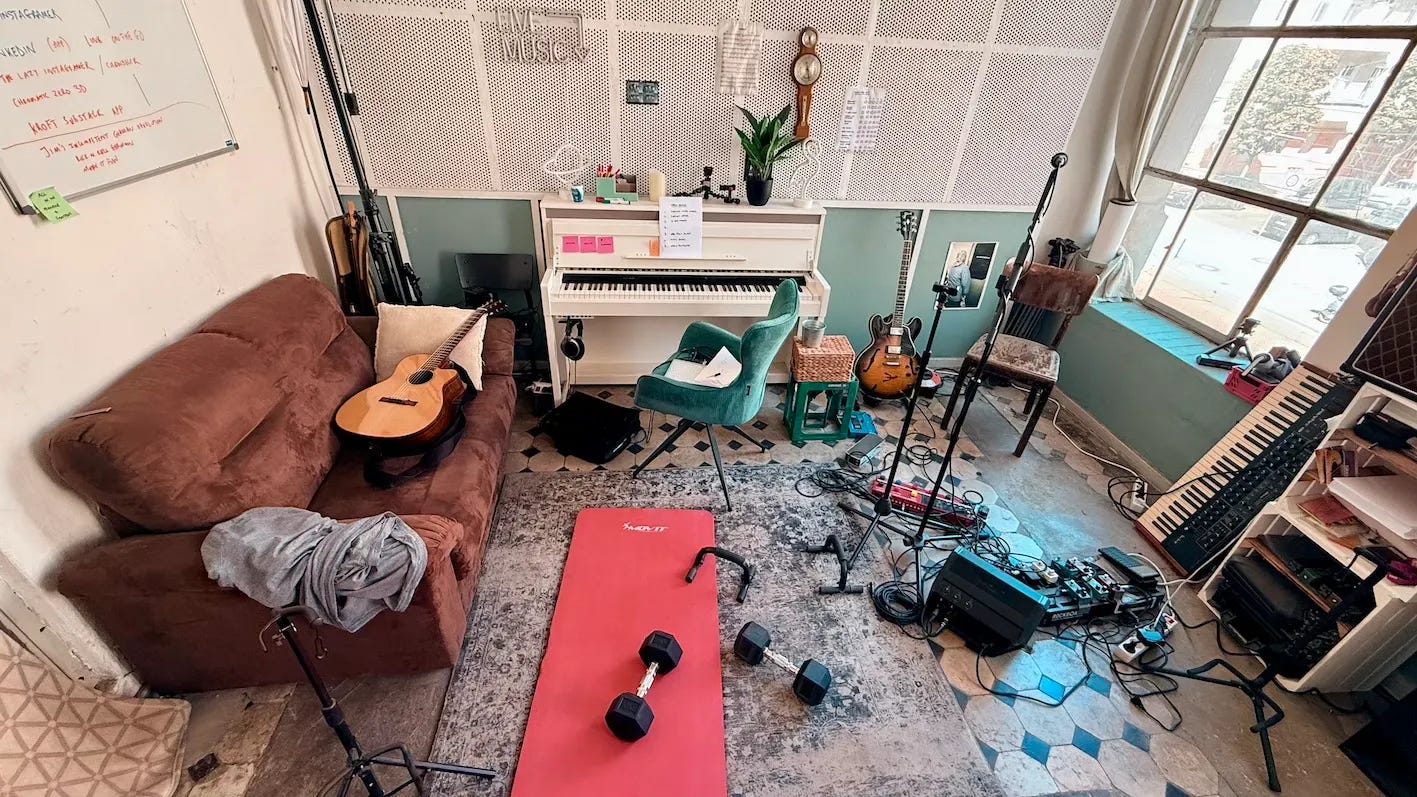
You need to move, and probably more than you are now.
“If you don’t exercise, your muscles will naturally weaken, as will your bones.”
— Murakami
There is hardly any life that wouldn't be improved by more movement — and yes, I'm challenging you here, however much you've already moved this week.
Many — maybe most — creatives struggle (or have struggled) in some way with their mental health, Murakami included.
The danger with mental health is the loops we find ourselves in. The depressive thoughts that rotate like sludge and deprive us of any feeling that the work we do today will have any effect on our lives. The anxiety that dances its insane dance like the moth around the flame. The burden that whatever we could do is worthless because we could have started earlier.
In my life, the single most important decision has been the decision to challenge my own negativity with continued gusto.
My abyss remains under assault. And my, how it has relented.
Why does Murakami really run every day? We will get into that — but even in the most casual reading, you sense there is a dragon being held at bay by the “156 miles” he runs “every month, which for me is my standard for serious running.”
So before going on, I want to share two things that have helped me.
First, the absurdity of deciding, as someone heroically unsporty, and at the age of 47:
I am an athlete.
Second, what it means for me. It means, simply, that I do something active every day. No, not like Murakami.
But whatever happens, there is a run, some weights, yoga or the gym.
Personally, I really don’t care about quantity. I care simply that I do it: have my atoms had a chance to zing about today? Have my blood cells been pushed through my capillaries for a visit to my outermost fringes?
In this I distinguish between having a goal and having a system.
For a “normal” person, I think a goal — like a marathon — is far less useful than having a system.
My system is simply this: how am I moving today?
This links back to the first entry; you are looking for a way of life, not short-term triumph or occasional bursts.
Order the weights. Join the gym. Get the yoga mat. Just do it — it improves everything.
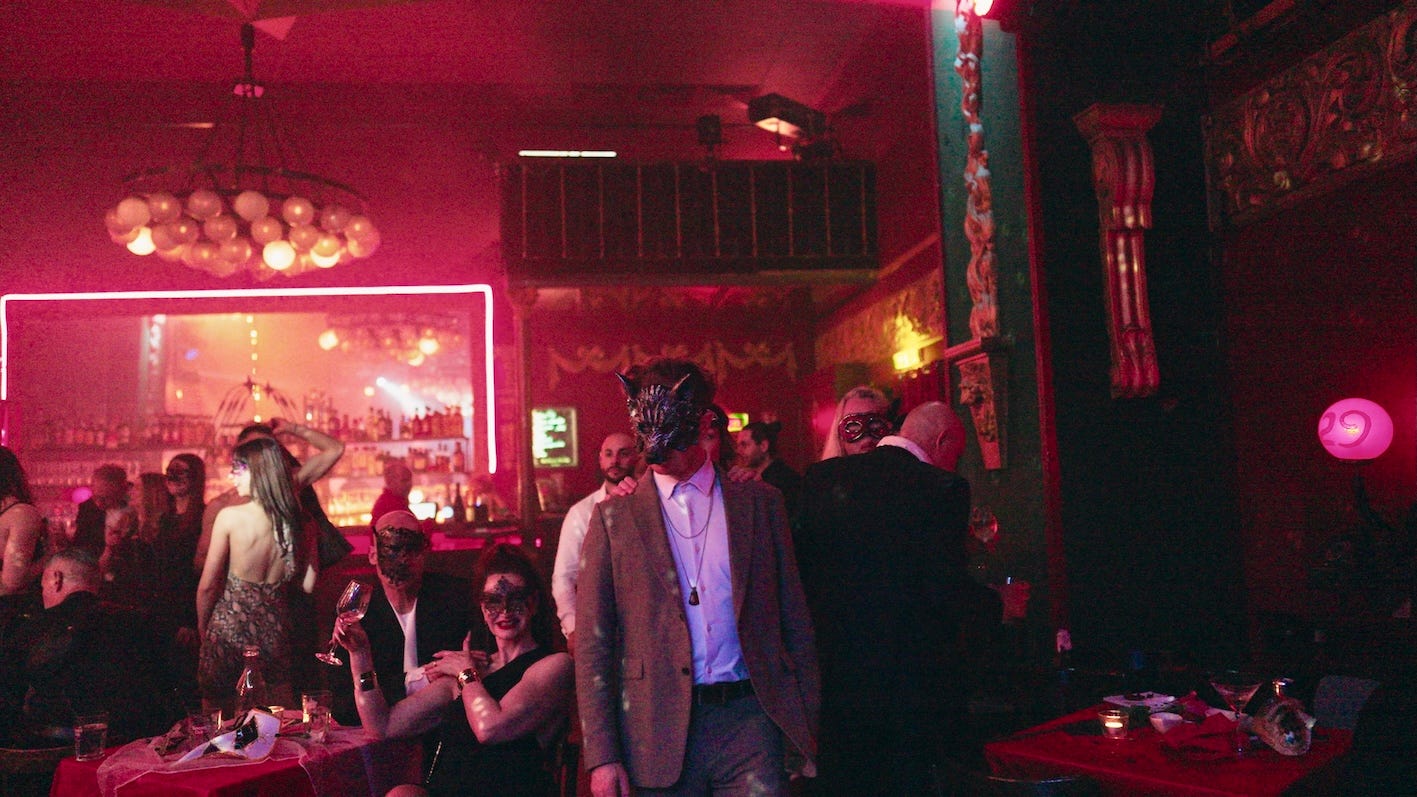
Berlin 2025, drawing from Harry Haller in the lonely ol’ Steppenwolf…
Okay, now into the nitty gritty — and this passage winded me in a way no hike did while I was in Slovakia:
“When we set off to write a novel, when we use writing to create a story, like it or not a kind of toxin that lies deep down in all humanity rises to the surface. All writers have to come face-to-face with this toxin and , aware of the danger involved, discover a way to deal with it, because otherwise no creative activity in the real sense can take place.” — Murakami
To be a creative is to risk encountering every part of you. It is why you have been called to it — whether you know it yet or not.
You are risking communicating with every aspect of your history, your potential, and your absurd, beautiful dream of how the world might be.
But it is a dangerous business.
You will encounter toxins. You will wade into unknowable swamps. You will find yourself stranded in deserts, or in crowds you call out to but find no ear to hear you.
You are welcoming all that is in the world — and the fuller your welcome, the greater both your potential art and your exposure to peril.
Do you have a plan for it?
Murakami does, and though it may not be the right template for you, it at least points to a problem you must solve if you are going to have a long-term creative life.
Murakami says we have to develop an “autoimmune system that can resist the dangerous (in some cases lethal) toxin that resides within.”
For him, running is an antidote — somewhere he can deposit the darkness he must face while writing.
“You have to find that energy somewhere, and where else to find it but in our own basic physical being?”
I think it is human nature to want help when we find ourselves excruciatingly alone on our path.
And though I believe to the bottom of me that we must reach out when it feels there is no going on, I also know from my own life that there are questions our own demon asks of us, that are ours alone to solve.
It is easy as you set out, because you are full of the verve of adventure and the excitement of new things.
Yet sure enough, you will be challenged.
You will likely not have the tools you need to meet the challenge as it comes, and often it is within the fight itself that you have to grapple around the cave like Odysseus, trying to find the weapon that might defeat this particular foe.
Yet the more experienced you become, the more you realise that you can prepare.
And it is this ability — to find what works for you — that can give you the edge, that can help you in the long journey of making things over a lifetime.
I have seen thousands of young men come to Berlin in my 19 years here — armed with dreams, blessed with looks, very often with some outstanding talent in their pockets.
Yet so many have been bludgeoned by things they couldn’t control.
They were seduced by the sirens of the clubs, the never-ending lure of the night life, the social allure of a city that will eat you alive if you let it.
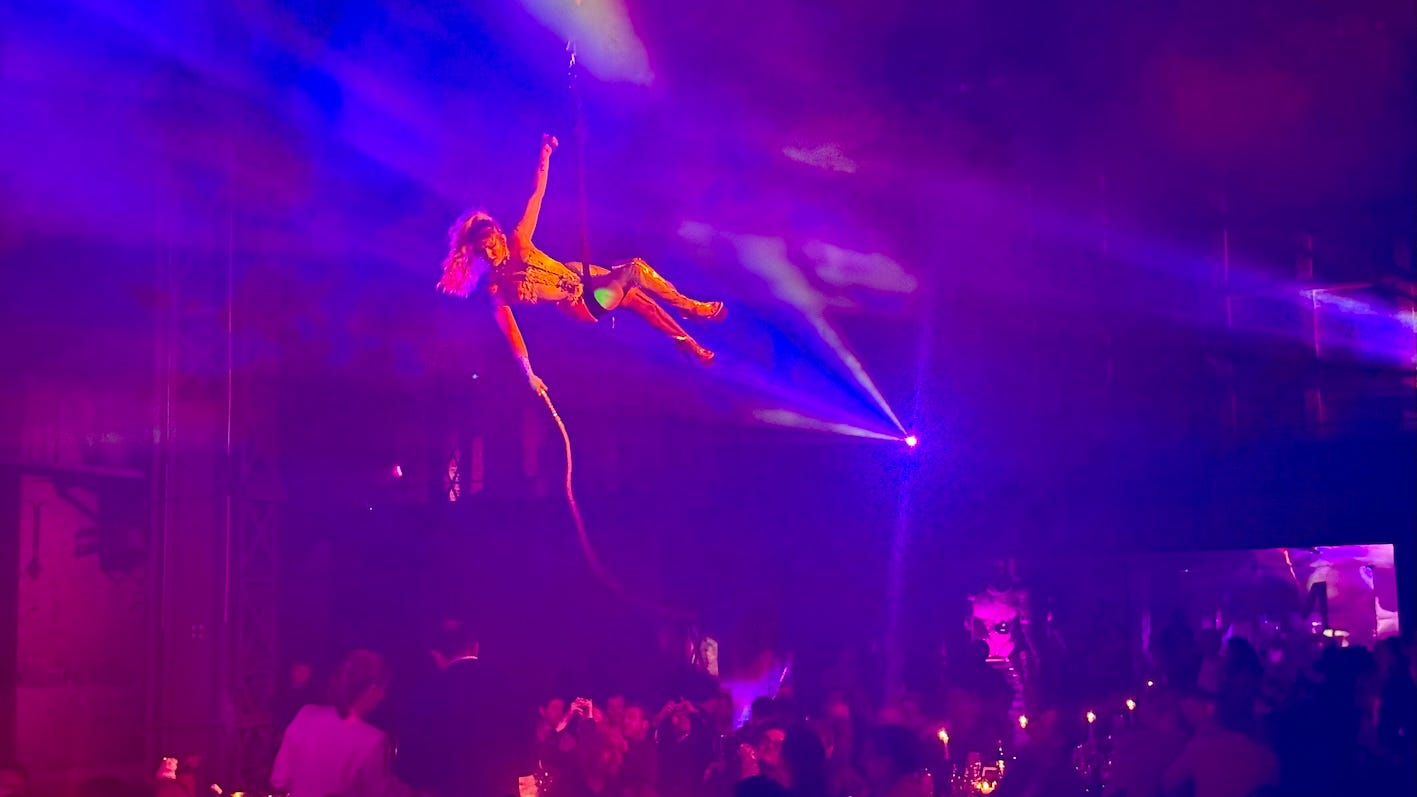
Mahalla, 2026
I have met, sometimes even lived in, these temptations. And yes, I have drawn from them, even while being desecrated by the toxins they left in me.
But you have to have a fucking plan.
Not just what you can say “no” to — but what you say “yes” to: a resistance to the darkness, and a compensation for it.
As Murakami writes, “To deal with something unhealthy, a person needs to be as healthy as possible. That’s my motto.”
The point he makes is that you need to find out how to counterbalance your life.
It is not about cutting out all your exposure to dark things, or even experimenting with what you might discover in the unexpected shadows of evening.
But it is about respecting them, and actively balancing the forces you encounter in yourself and in the world:
“The healthy and the unhealthy are not necessarily at opposite ends of the spectrum. They don’t stand in opposition to each other, but rather complement each other, and in some cases even band together.” — Murakami
Comments
Nothing yet. Say the first thing.
Sign in to join the conversation.