
Hi everyone,
I hope you had a great weekend!
Be sure to check out the announcements below regarding the updates to the “SGR - Turn Signal”. This is the biggest change to the indicator since its launch!
Okay, with that out of the way, let’s jump into this week’s newsletter…
For those who may not know, I have developed an indicator on the TradingView platform which I refer to as the “SGR - Turn Signal”.
The SGR - Turn Signal is a “Buy/Sell” indicator based on my proprietary algorithm which attempts to discern when a market or security is beginning to “make the turn” and reverse course from its previous direction.
In addition to the SGR - Turn Signal, regular readers have heard me discuss extensively my proprietary framework for analyzing markets, which I call “The Market Map”.
The Market Map framework considers two important factors in its analysis:
Market Structure
Turn Signal
As the name implies, Market Structure is the study of the structure of the market.
The market is not random; there is a structure to it. If you understand this structure, you’ll understand where the important levels are and where the market is likely to go next.
When we combine these factors (Market Structure + Turn Signal), it provides what I call the “Market Bias”.
The Market Bias tells us the possible direction (Bullish 🟢, Bearish 🔴, or Neutral 🟡) of each asset class or security over the short- to medium-term.
Historically, the SGR - Turn Signal lived as a standalone indicator that did not consider or evaluate Market Structure.
That all changes today.
I have taken my SGR - Market Structure indicator (historically, not publicly available) and combined it with the SGR - Turn Signal indicator to create an all-in-one system which I’m calling the SGR - Market Map System.
Now, instead of simply knowing if a security is a “Buy” or “Sell”, the SGR - Market Map System allows you to evaluate each signal within the greater context of Market Structure.
This gives us the ability to know the following for every market or security we may be evaluating:
Structure - Bullish or Bearish?
Bullish = the market or security is biased to move higher.
Bearish = the market or security is biased to move lower.
Signal - Buy or Sell?
Buy = know when to initiate a long.
Sell = know when to initiate a short.
Signal Grade?
A+ = Strongest pro-trend signal
A = Strong pro-trend signal
B+ = Strongest counter-trend signal
B = Strong counter-trend signal
Let’s look at an example from one of last week’s S&P 500 top performers:
Marathon Petroleum Corporation (MPC)
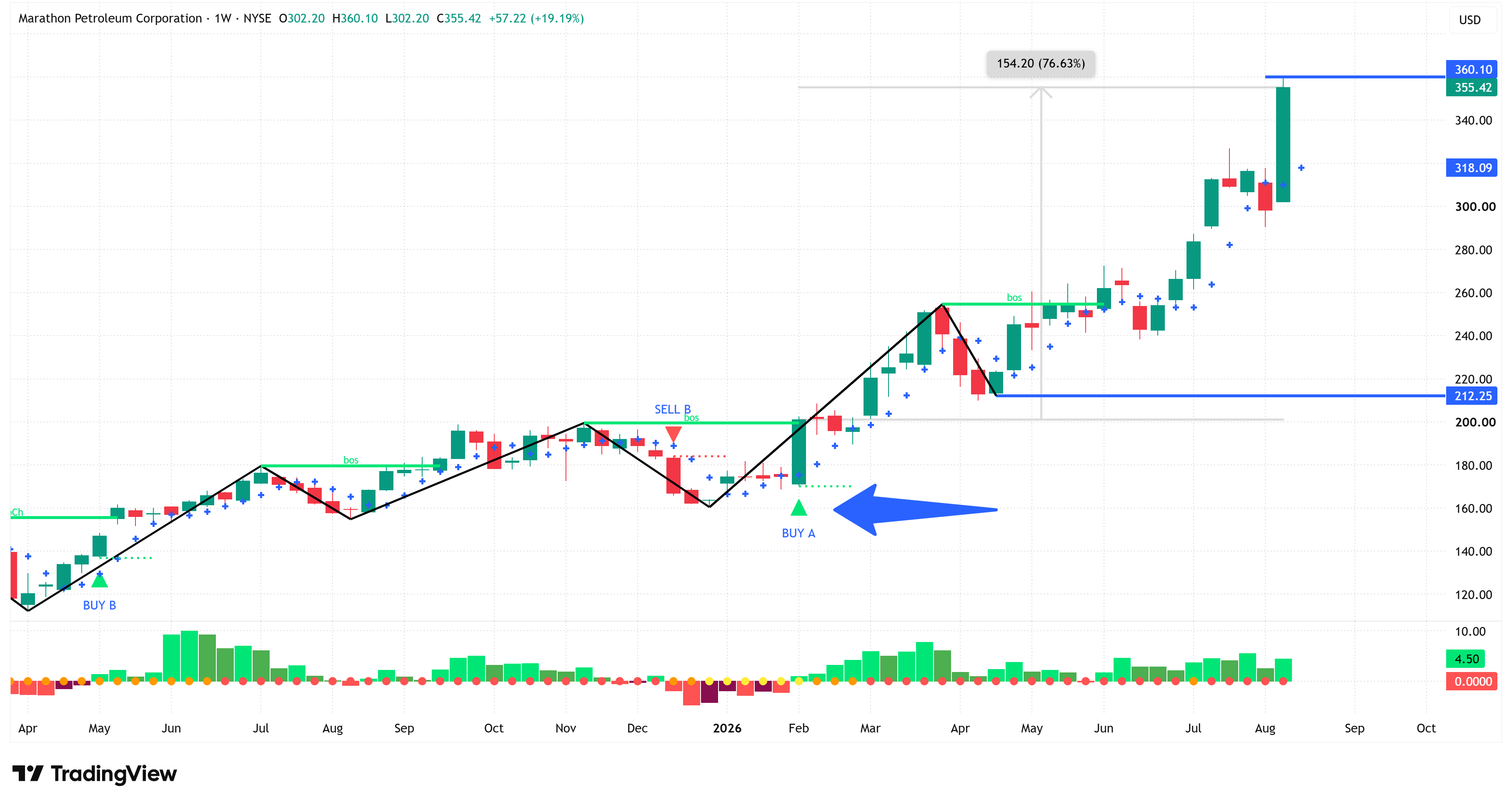
MPC returned 19.19% last week.
On February 6, 2026, MPC fired a “Buy” signal. More specifically, it was an “A” signal.
“A” = a strong pro-trend signal where structure and signal are aligned. All else being equal, that signal suggests a continued move higher.
Since February 6, 2026, MPC has returned 76.63%.
With the SGR - Market Map System, you could have entered a long position in MPC more than 6 months before last week’s breakout.
If so, consider joining our FREE LIVE webinar this Tuesday, August 18th, at 7:00 pm (ET).
We will discuss the SGR - Market Map System, how it works, and how you can get access to it.
Can’t join live? No worries, the presentation and recording will be provided to all who register.
👉 Click here to grab your seat: Webinar Registration
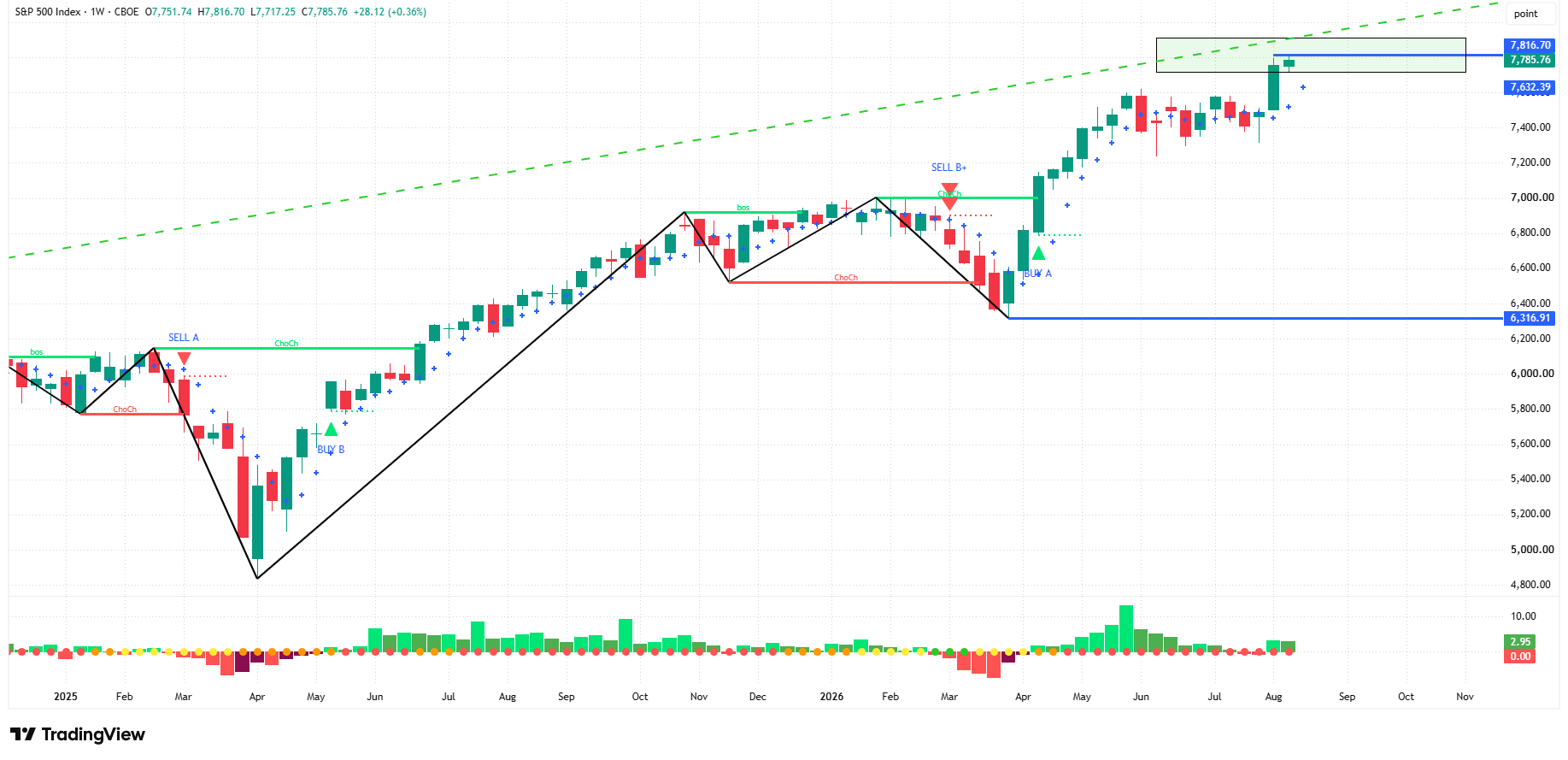
Structure = Bullish
Signal = Buy
Signal Grade = A
Minimum Target = 7,912
Stop Loss = a weekly close below 7,497
Reward-to-Risk = 0.4x
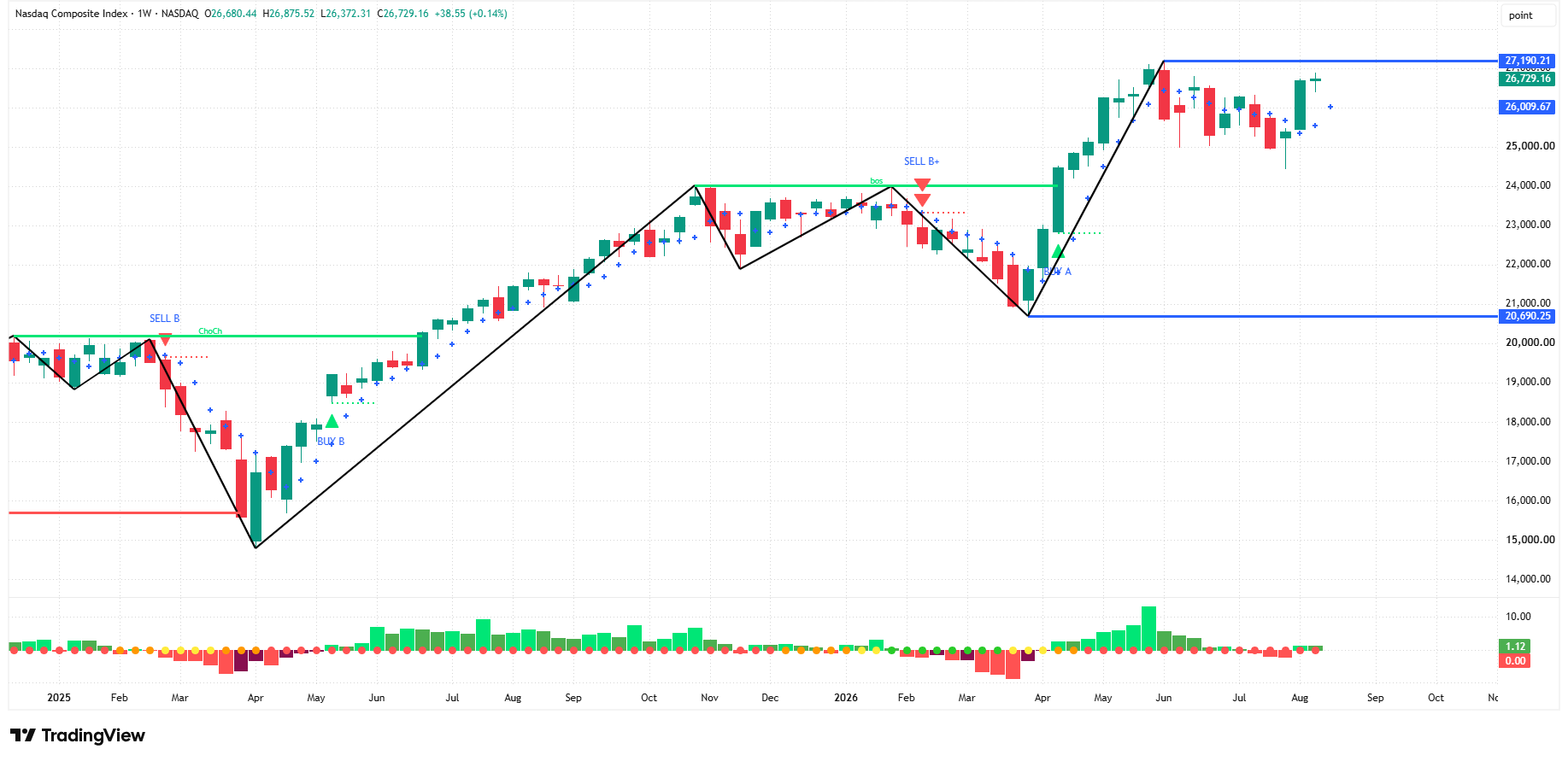
Structure = Bullish
Signal = Buy
Signal Grade = A
Minimum Target = 27,190
Stop Loss = a weekly close below 25,240
Reward-to-Risk = 0.3x
Each week, I analyze over 150 global ETFs across seven broad asset classes using my proprietary systematic process, which I call “The Market Map.”
The Market Map combines my proprietary “Market Structure” methodology with my proprietary “Turn Signal” indicator to provide a “Market Bias” for each asset class.
The Market Bias tells us the possible direction (Bullish 🟢, Bearish 🔴, or Neutral 🟡) of each asset class over the short- to medium-term.
The Market Map is a rules-based, systematic framework that removes emotion from the investment decision-making process.
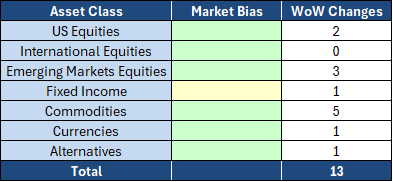
The commodity complex was the primary driver of the move last week. Not one fund or one sector, more of a broad move across various commodities.
Keep an eye on the commodity complex as we move forward.
Summary of the Week-Over-Week changes:
Neutral 🟡 —> Bullish 🟢 = 8
US Equities, Fixed Income, Commodities (5), Currencies
Bullish 🟢 —> Neutral 🟡 = 3
Emerging Markets (2), Alternatives
Bearish 🔴 —> Neutral 🟡 = 1
US Equities
Neutral 🟡 —> Bearish 🔴 = 1
Emerging Markets
XLB (Materials Select Sector SPDR Fund): Neutral 🟡 —> Bullish 🟢
Structure = Bullish
Signal = Buy
Signal Grade = A+
Minimum Target = 53.70
Stop Loss = a weekly close below 52.22
Reward-to-Risk = 3.6x
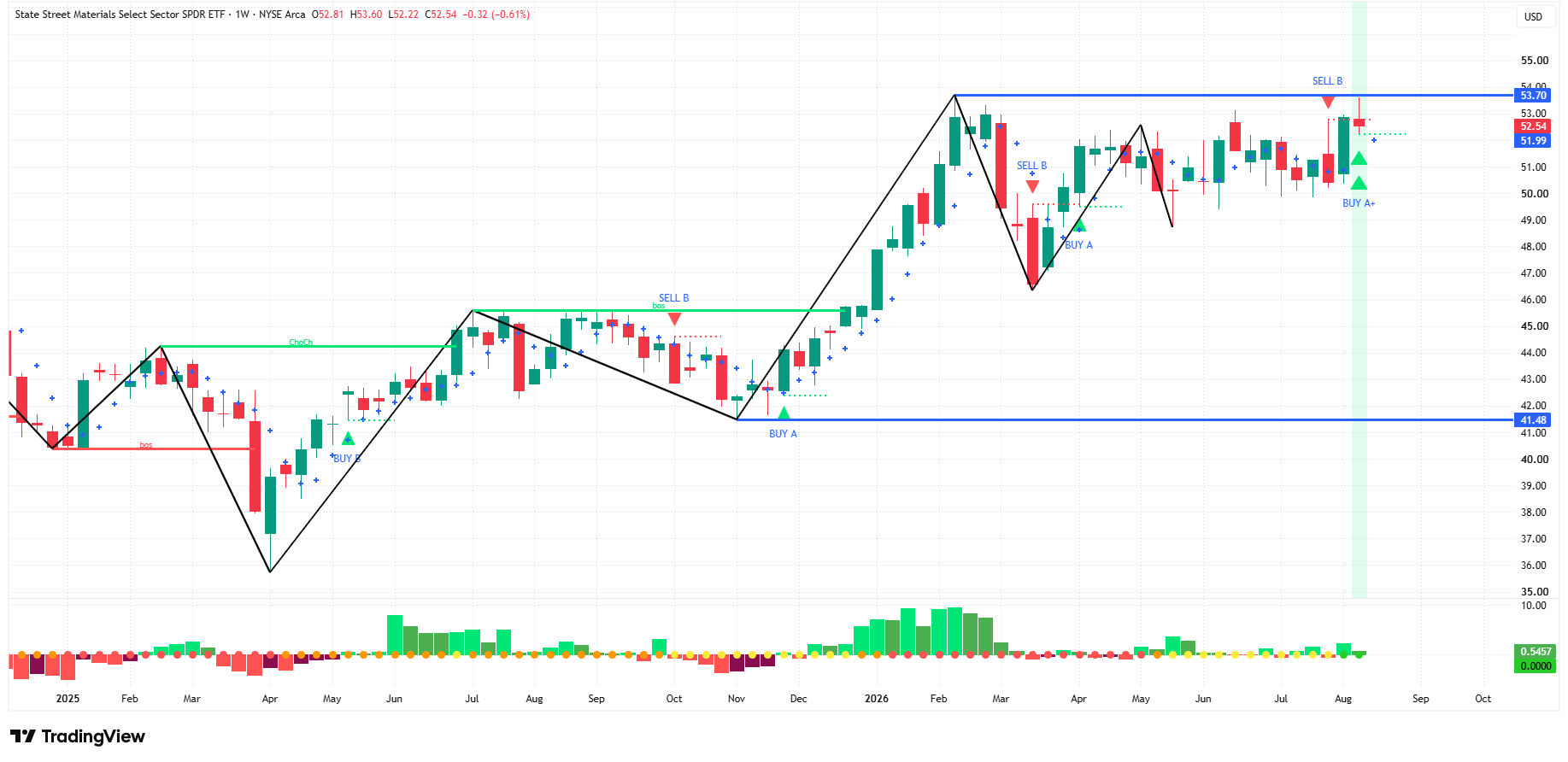
“Signal Grade” = quality of the setup and has one of the following four grades:
A+ = Strongest pro-trend signal
A = Strong pro-trend signal
B+ = Strongest counter-trend signal
B = Strong counter-trend signal
“Minimum Target” = a conservatively based target that I believe will be achieved. Key word here is “minimum”, it could go beyond this minimum threshold.
“Stop Loss” = price where you exit the trade, no questions asked.
“Reward-to-Risk” = a measure of the target price vs. the stop loss price based on an entry at Friday’s close.
Note: A high-grade signal can have a poor “Reward-to-Risk” if price is already extended.
Would you like to see the same analysis for the other 12 securities that changed on a week-over-week basis? Plus, the current Market Bias for all 150+ securities?
If so, check out our paid section below.
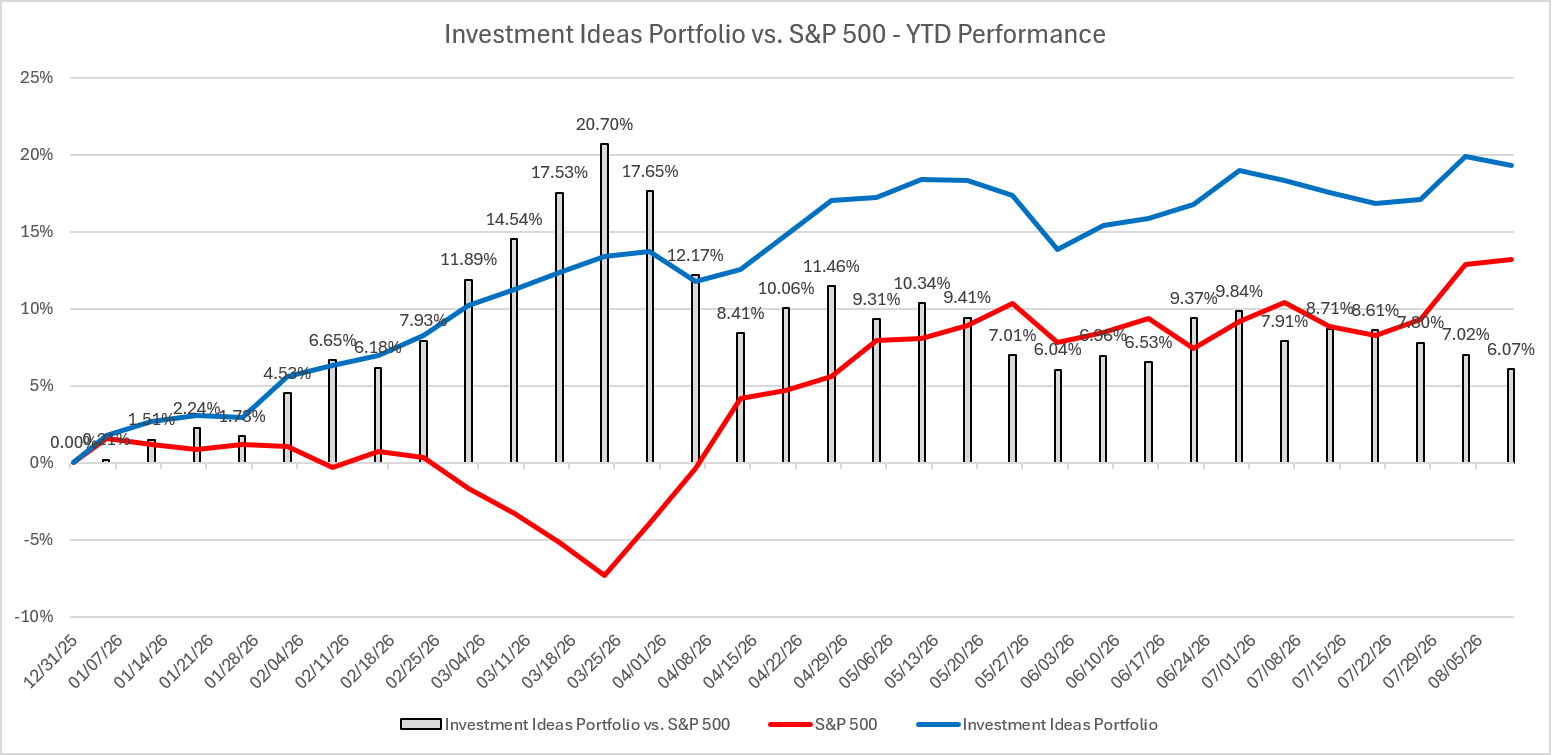
Paid subscribers receive access to our Investment Ideas portfolio each week.
The Investment Ideas portfolio uses our “Market Map” methodology to sift through hundreds of securities each week to create a portfolio of our best ideas.
Year-to-date, our Investment Ideas portfolio has returned 19.30% and has outperformed the S&P 500 by 6.07%.
Would you like access to our Investment Ideas portfolio each week?
If so, consider becoming a paid subscriber by clicking the link below.
Comments
Nothing yet. Say the first thing.
Sign in to join the conversation.