
If you’ve ever been to Italy, you know the embrace of the country’s hospitality—so natural, so palpable and so culturally ingrained that sometimes it’s challenging to describe.
That’s why when I learned that a friend and fellow writer was releasing a book steeped in the intangible concept of Italy’s version of je ne sais quoi, I knew I wanted to dive in; to learn her perspective about discovering the definition behind her book, Italianity.
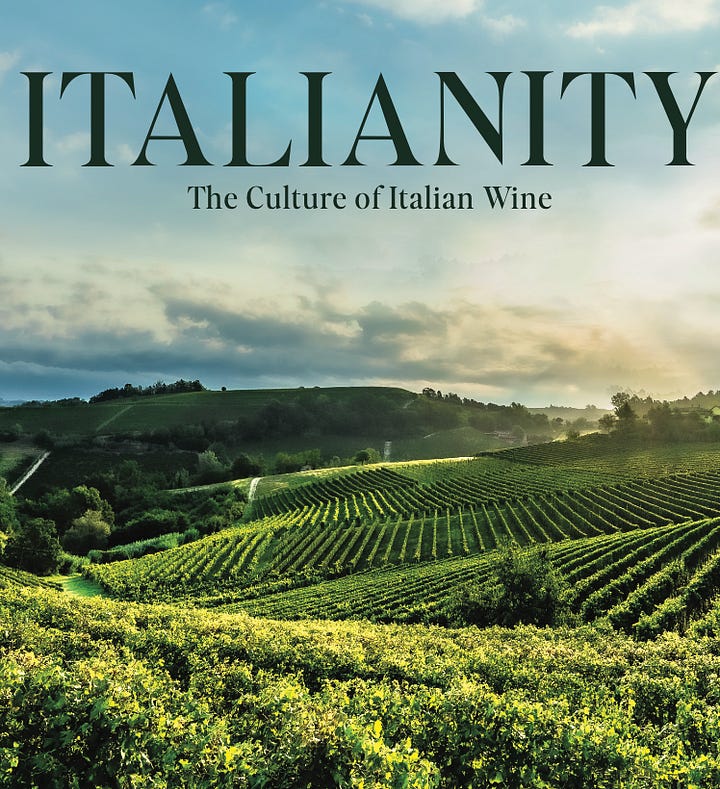
Released yesterday, Jessica Dupuy co-authored Italianity: The Culture of Italian Wine with Valpolicella-born enologist and master of wine, Andrea Lonardi. The duo met during an interview in Montalcino where Jessica explains, “Andrea kept circling the same conviction: that Italian wine has an identity you can feel across the entire peninsula, something held in landscape, in ritual, in hospitality, in the social life around the table.”
Ironically, Jessica and I met in Italy—in Alto Adige, which you’ll come to learn budded into one of her favorite regions in the country. It was one of those press trips where our group bonded quickly and when I think back on it, Italy always encourages that; probably because of Italianity, which Jessica describes as far more than a feeling.
“Italianity isn’t a marketing word for hospitality. It’s what happens when a place has been tended, continuously, for so long that its rhythms and its people and its food and its wine become a single expression of each other,” she says.
As Jessica realized this term was describing the very thing she’d encountered on every trip to Italy without knowing what to call it, she knew Italianity deserved more than an article. “It had to be a book,” she said.
Now, hot off the press, Jessica explores the concept with us by reflecting on the first time she experienced Italian hospitality as well as how her favorite regions have become a symbol of Italianity, peppered with her advice for wine lovers on where to visit next.

Tuscany & Venice. I was 21-years-old, at the end of a study abroad year split between Dublin and Strasbourg, when my grandmother flew over from Texas. She’d always dreamed of Florence and Venice, so we built the trip around her, with a few days in Paris first. What I didn’t fully understand at the time was that she was both lactose intolerant and celiac. Three days of Parisian pastries and café lattes had quietly undone her, and by the time we reached Florence she was too sick to leave the hotel for most of the week. I grieved the trip she didn’t get to have but I did what she’d have wanted me to do. I wandered. I ducked into small galleries, walked long stretches along the Arno, and did what most American university girls abroad do: sat at bistro tables with an Aperol spritz or a gelato or a cappuccino, scribbling in a journal, pretending I had any idea what I was looking at.
I don’t remember much from those days. I didn’t speak the language. I had no guide, no framework, no sense of what I was supposed to be tasting or noticing. But here’s the thing I do remember, and it’s the thing that’s stayed with me through every trip since. I felt welcomed. Even as a clueless 21-year-old with a phrasebook and a sick grandmother, I felt absorbed into the rhythm of the place. Italy didn’t ask me to perform belonging. It just handed it over.
It came as an assignment, years later, when I was invited to Montepulciano to help judge A Tavola con il Nobile, a culinary competition held in the days leading up to the Bravìo delle Botti, the town’s annual barrel-rolling race between its eight contrade.
I arrived with a wine writer’s agenda not expecting to have my definition of terroir quietly dismantled by a woman named Vittoria. She was a tiny, sharp-eyed grandmother with a cast on her wrist, representing Contrada Talosa. She’d already won the competition three times and couldn’t cook that year because of her injury, so her son and granddaughter rolled the dough under her watch. Her dish, pici with a sugo of local beef, guanciale, and Pecorino, arrived as our eighth pasta of the day and somehow still felt like a crescendo. She flipped through a scrapbook of past victories, offered second helpings, told stories I could only half-follow. I caught the fragments. I understood the message completely: welcome, pride, come closer. She won her fourth plaque that night, and when she lifted it on stage, I felt an absurd swell of pride, as if I’d been adopted into her contrada in a matter of hours.
It was the realization that in Italy, terroir isn’t just soil and exposure. It’s a broken wrist and a granddaughter’s concentration, flour-dusted hands and a grillman’s laugh, the conviction that feeding people is a form of identity.
Franciacorta. Tucked up in Italy’s northern lake country, between Milan and Lake Iseo in Lombardy, Franciacorta is Italy’s most serious sparkling wine zone. It doesn’t look like the Italy on the calendar. No warm stucco, no red-tiled roofs, no verdant Piemontese ridges. It’s a different register entirely, more restrained, more northern, where old farming families like Ricci Curbastro and Mosnel share the landscape with industrialists who came out from Milan and poured their ambition into vines: Vittorio Moretti at Bellavista, Maurizio Zanella at Ca’ del Bosco, the Berlucchi family before them.
Drink: A satèn from a smaller, family-run house — Mosnel is where I’d start. Satèn is Franciacorta’s own idiom, a Chardonnay-led, lower-pressure style that drinks softer and more textural than a traditional brut. It’s the bottle that makes the region make sense.
Eat: Lunch at Dispensa Pani e Vini, the Moretti family’s trattoria in Torbiato. It’s the unfussy counterpart to their more formal dining at L’Albereta — long tables, honest Lombard cooking, local salumi and cheeses, and a wine list that treats Franciacorta like the everyday drink it ought to be. Order whatever the pasta of the day is and a glass of whatever the server recommends.
Do: Take an afternoon off the vineyards and drive 20 minutes to Lake Iseo. Catch the ferry to Monte Isola, the largest lake-island in Europe, where cars are banned and the rhythm drops to the speed of a fisherman mending nets. It’s the palate cleanser the region deserves — and a reminder that Franciacorta isn’t a standalone destination so much as a doorway into a whole slower, quieter corner of northern Italy most travelers skip entirely.
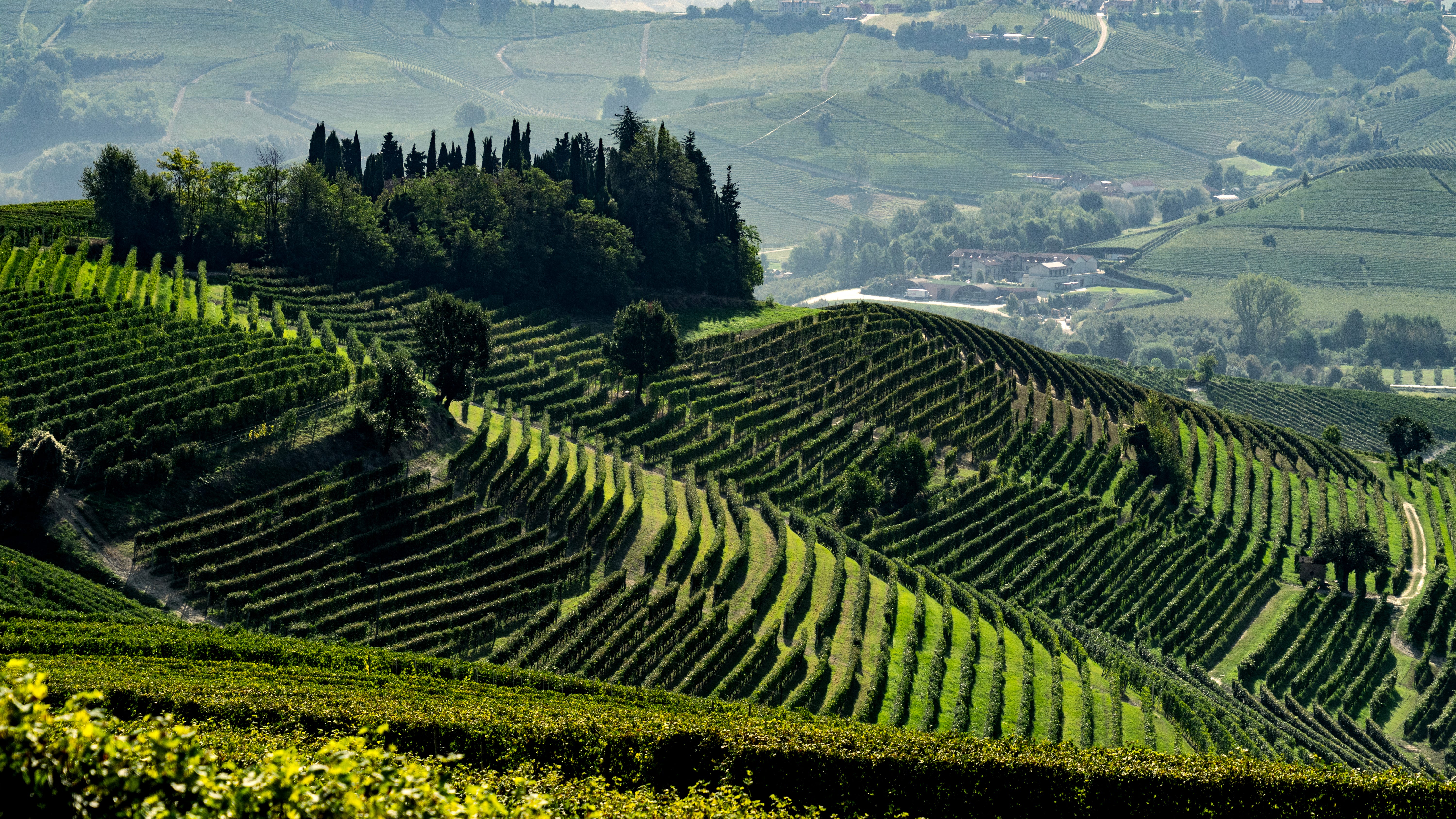
I have two, one for the mountain half of my soul, one for the heart of it.
Alto Adige: I’m a mountain girl at the core. I grew up fleeing Texas summers the way most Texans do, up to the Rockies, fly-fishing and riding horses in Colorado, and when I first laid eyes on the jagged ridgelines of the Dolomites with those impossibly steep vineyards climbing up toward them, something in me just clicked. But Alto Adige isn’t only the landscape. It’s a cultural collision. Germanic architecture, Austrian food traditions, a German-Italian bilingual rhythm to daily life, and still, somehow, unmistakably Italian. The Adriatic isn’t far, and you can feel its warming reach in the wines: taut, mineral whites and quietly serious reds that carry both alpine lift and Mediterranean warmth at once. I’ve visited multiple times and loved it so much that last summer, I brought my family over and we lived in an Airbnb in Merano for five weeks. That was the real tell. You don’t move your family across an ocean to a region you merely admire professionally. You do it for a place that feels, somehow, like a second self.
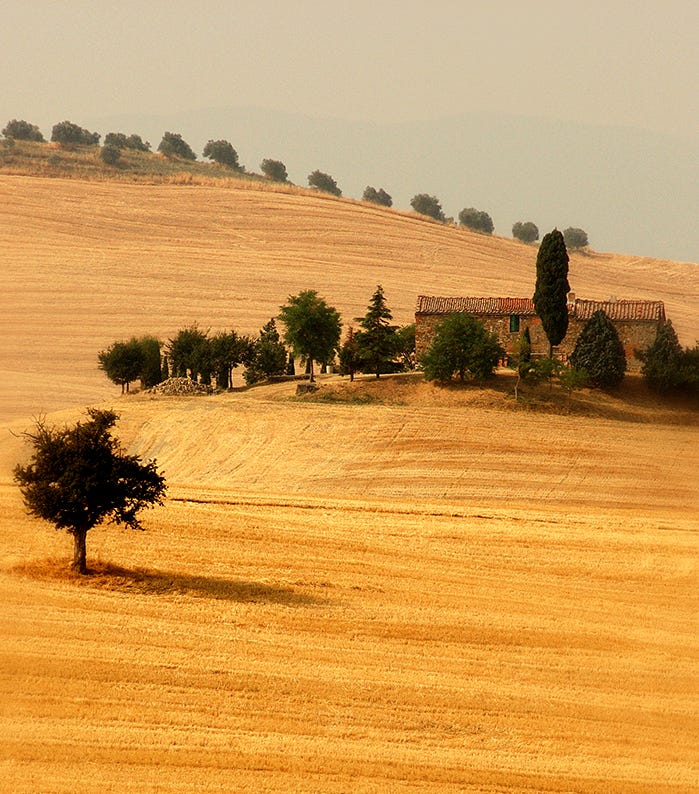
Interior Sicily: Not the coastal Sicily of guidebook postcards, but the raw, quiet inland Sicily most visitors never see. I spent a few days at Feudo Montoni in early spring, before the sun had baked the landscape into its familiar gold, and the hills were astonishingly green, wheat fields rolling out like an emerald sea. Feudo Montoni is one of the island’s oldest continually cultivated estates, founded in 1469, still a working farm as much as a winery: ancient ungrafted vines, heirloom legumes, fava beans, olives, durum wheat, all tended by hand. What struck me there was the same thing that struck me in Alto Adige, just in a completely different key. In Sicily, trust is built slowly, through quiet observation, shared meals, showing up over time. Between the two regions they hold the range of what Italy does best: that it can be many things at once and still feel, unmistakably, like itself.
I’ll take you to Feudo Montoni, in the interior of Sicily where Fabio Sireci is the third generation of his family to farm it. His wife, Melissa Muller, was born in New York and followed the thread of her grandmother’s memory back to Sicily, where she ended up falling in love with both the place and the man. Together they run Montoni as it’s always been: part vineyard, part working farm, part sanctuary. Ancient, ungrafted pre-phylloxera vines grow alongside heirloom legumes, fava beans, olives, durum wheat. What comes out of the field goes into the kitchen, and what comes out of the kitchen goes on the table.
That’s where I felt it. You can’t separate the Lagnusa Nero d’Avola from the olive wood fire, from Fabio’s quiet gravity, from Melissa’s story of finding her way home through a grandmother’s memory, from the wheat outside moving in the wind. The wine tastes like all of it. Lifted, sinewy, earthy. A wine that speaks in tone rather than volume. Which, by the way, is not the Nero d’Avola most drinkers expect. It’s something subtler and truer, and it makes sense only when you’ve seen where it comes from. At Montoni, you don’t taste a wine so much as you sit down inside a life, and the wine happens to be what’s in the glass.
My first piece of advice is almost always: don’t try to do it all. Italy is too vast and its regional cultures too distinct to check off in a single trip. The traveler who tries to see Venice, Florence, Rome, the Amalfi Coast, and Sicily in 10 days will come home with a blur rather than a memory. Pick one region, or one idea, and go deep.
The framework Andrea and I built Italianity around is a useful tool for that kind of focused travel. We organized the book along what we call the Red Spine of Italy, the four native red varieties that run the length of the peninsula and, more than any others, express the Italian signature: Nebbiolo in the northwest, Alpine varieties across the north, Sangiovese through the center, and Nerello Mascalese on Etna in the south. Pick one. Let it lead you. And say yes to the invitation that wasn’t on the itinerary. That’s how you end up in somebody’s kitchen on a Tuesday afternoon eating pici with a grandmother named Vittoria, and that’s the trip you’ll still be telling stories about ten years later.
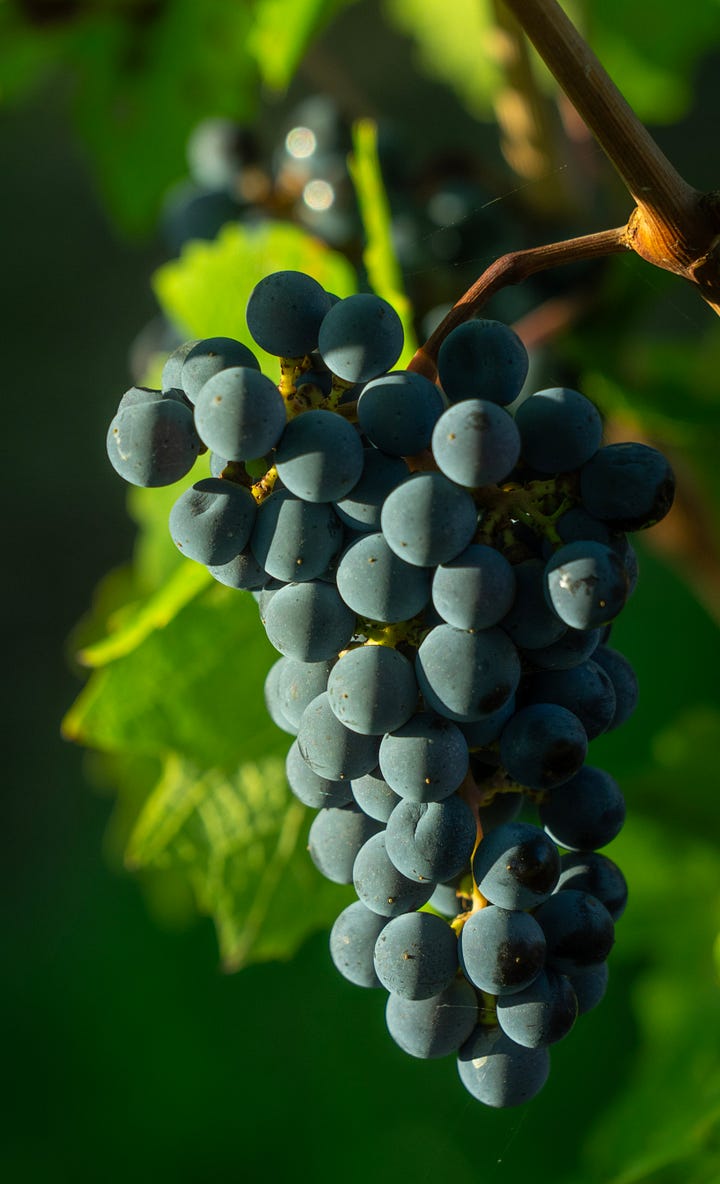
Valtellina. It’s Nebbiolo, the same grape that gives you Barolo and Barbaresco, but in a completely different voice. About 220 kilometers northeast of the Langhe, tucked into the southern face of the Alps in Lombardy, Valtellina is where Nebbiolo (called Chiavennasca here) grows on stone terraces carved vertically into the mountainside. No rolling fog-covered hills. No château-style estates. Just severe, hand-worked vineyards clinging to the slopes between sky and rock. Andrea describes the landscape in the book as Nebbiolo’s northern frontier, the last place the grape can survive, and he borrows from his mentor Denis Dubourdieu the idea that a grape’s best terroir is the place where its limits become its identity. Valtellina is exactly that.
The wines show it. If Barolo is architectural and commanding, Valtellina is vertical and transparent. Lighter in color, sometimes almost see-through. Aromas of red fruit, dried mountain herbs, wildflowers, with this stony nerve running underneath. On the palate it doesn’t spread. It rises. Andrea has a lovely image for it: he says Nebbiolo here is like the stambecco, the Alpine ibex. Agile, wiry, perfectly adapted to impossible rock. The muscle is hidden; the elegance is on the surface. For a Barolo lover, it’s the perfect next step because it lets you feel how radically place shapes a single grape.
Same variety, different altitude, different soils (acidic, loamy, fractured rock instead of Langhe’s clay-limestone), different labor, different wine entirely. You end up understanding Barolo better after drinking Valtellina, because you’ve felt what changes when the mountain takes over.
Before I send them to a different grape, I’d send them to better Pinot Grigio. Most of what Americans know as Pinot Grigio is the industrial version, the wine that became a category rather than a place, especially after it exploded in the American market in the 1980s and ‘90s. But the grape’s original home is in northeastern Italy, and in the hands of serious producers up there, it’s a completely different animal. So I’d send them to Alto Adige first. The altitude, the cool nights, the mineral-rich soils give Pinot Grigio a stony backbone and a citrus clarity that the cheap stuff simply doesn’t have.
Then, Friuli-Venezia Giulia, for something with a little more weight. Maybe a touch of skin contact, a bit of lees texture, that soft but serious mouthfeel the region is known for. And while they’re in Friuli, introduce them to ramato, the copper-hued, skin-contact expression of Pinot Grigio that dates back centuries there. Earthy, structured, saline, almost tea-like on the finish. If standard Pinot Grigio is a gray suit during the work week, ramato is that same suit on a Sunday with the sleeves rolled up and a story to tell. Same grape. Completely different wine.
Next, Verdicchio from the Marche, which delivers a saline, almond-tinged precision that rivals serious Chablis. Or Trebbiano d’Abruzzo, the real, seriously-made version, which is one of the most improbably profound white wines in Italy, a grape most of the world writes off that a handful of growers transform into something nearly immortal in the bottle. Or Garganega, the backbone of Soave, where single-vineyard Classicos show a quiet, volcanic-soil elegance that bears almost no resemblance to the cheap Soave of decades past.
Let me share a handful of bottles I loved from my recent trip to Verona for Vinitaly, where we launched Italianity. These are the wines that made me pause mid-sip across a week of very good sipping.
Ferrari Brut NV (Trento DOC). Italy’s great metodo classico from the Dolomites, and proof that serious Italian sparkling doesn’t have to come from Franciacorta. Crisp, creamy, endlessly drinkable.
Cantina Terlano Pinot Bianco 2010. Drinking a fifteen-year-old Pinot Bianco from Alto Adige is a small miracle that Italians take for granted and the rest of the world hasn’t caught up to yet. Nutty, honeyed, still alive with acid.
Alois Lageder “Porer” Pinot Grigio 2023. Biodynamic, with partial skin contact and partial whole-cluster fermentation. Not your grandmother’s Pinot Grigio. Bold on the nose (beeswax, roasted nuts, orchard fruit) and textural in a way that reframes the grape entirely.
Travaglini Nebbiolo Coste della Sesia 2023. Gattinara’s entry-level Nebbiolo and a beautiful introduction to Alto Piemonte. Lighter, fresher, and more floral than Barolo, with the bright acidity and dusty tannins that make Nebbiolo from this northern corner so food-friendly.
Planeta Etna Bianco 2024. Carricante from the volcano. Saline, smoky, citrus-edged, with that electric mineral snap that only Etna seems to produce.
Querciabella Sa-La Gran Selezione 2021. A new single-vineyard Chianti Classico Gran Selezione from Lamole, one of the highest and coolest corners of the appellation. Sinewy, perfumed, lifted. The kind of Sangiovese that argues for Chianti Classico’s place among Italy’s great reds without raising its voice.
Boscarelli Vino Nobile di Montepulciano 2022. A Montepulciano benchmark, and a bottle that loops right back to where this Q&A started. Elegant, deeply Tuscan, the kind of wine you want on the table when the food is honest and the conversation is long.
Fattoria Alois ‘Morrone’ Pallagrello Bianco 2022. From Campania, made from Pallagrello Bianco, one of Italy’s most obscure indigenous white grapes and a variety Bourbon nobility reportedly favored in the 18th century. Stone fruit, herbs, a gentle waxy texture. Proof that Italy still has secrets.
As for pairings, the best one I can recommend isn’t a dish. It’s a long table, no hurry, people you love, and whichever of these bottles happens to be in front of you. Italian wine knows what to do from there.
I’ll keep this short and sweet. On the topic of wine, this is my favorite stemware brand by a mile. The glasses are currently sold out, but keep refreshing and in the meantime, invest in this featherlight decanter. That’s all.
Think you know the dirtiest place on the plane? Think again.
Still haven’t joined a social club? Here’s what to know on the latest openings.
Like to experience the world through a glass? Taste the Amazon on this river cruise.
XO,
No posts
Comments
Nothing yet. Say the first thing.
Sign in to join the conversation.